de
Translingual
Etymology
Symbol
de
- (radio slang) from (operator), this is (operator)
English
Etymology 1
Alternative forms
- dee (Northumbria)
Verb
de (third-person singular simple present diz, present participle dein, simple past did, past participle dyun)
- (Northumbria) To do.
References
- The New Geordie Dictionary, Frank Graham, 1987, →ISBN
- Newcastle 1970s, Scott Dobson and Dick Irwin,
- Northumberland Words, English Dialect Society, R. Oliver Heslop, 1893–4
- A Dictionary of North East Dialect, Bill Griffiths, 2005, Northumbria University Press, →ISBN
Etymology 2
Eye dialect spelling of the.
Article
de
- Pronunciation spelling of the, representing African American Vernacular English.
Anagrams
Alemannic German
Alternative forms
Article
de
- (definite) the
Declension
| Alemannic German definite articles | ||||
|---|---|---|---|---|
| Masculine | Feminine | Neuter | Plural | |
| Nominative/Accusative | de dr (Bern) |
d | s ds (Bern) |
d |
| Dative | em | der | em | de |
- Masculine nominative/accusative singular de has the form der before a vowel, e.g. der alt Maa ‘the old man’
- Dative plural de has the form den before a vowel, e.g. den alte Fraue ‘(to) the old women’
- Feminine singular d and plural d have the variant di before an adjective, e.g. di jung Mueter ‘the young mother’
Asturian
Etymology
Preposition
de
Usage notes
- The preposition de contracts to d' before a word beginning with a vowel or h-: d'Asturies (“of Asturias”), d'hermanu (“of a brother”).
Derived terms
Bambara
Pronunciation
- IPA(key): [dè]
Particle
de
- emphatic particle
References
- 2007. The UCLA Phonetics Lab Archive. Los Angeles, CA: UCLA Department of Linguistics.
Catalan
Etymology 1
Pronunciation
Noun
de f (plural des)
Etymology 2
Pronunciation
- (Balearic, Central) IPA(key): /də/
- (Valencian) IPA(key): /de/
Preposition
de (before vowel or h d')
Further reading
- “de” in Diccionari de la llengua catalana, segona edició, Institut d’Estudis Catalans.
Cebuano
Etymology
Preposition
de
Related terms
Central Franconian
Pronunciation
- IPA(key): /də/
Article
de (definite, reduced)
- (most dialects) feminine nominative and accusative
- (most dialects) plural nominative and accusative
- (many dialects) plural dative
- (some dialects) masculine nominative
- (some dialects) masculine accusative
- (few dialects) feminine dative
Usage notes
- (masculine): Three territories must be distinguished: 1.) Ripuarian, in which the accusative takes the form of the nominative; 2.) western Moselle Franconian, in which the nominative takes the form of the accusative; 3.) eastern Moselle Franconian, in which nominative and accusative are distinct.
- 1.) In Ripuarian, the reduced masculine article in nominative and accusative is de only in a few places, including Bonn; most dialects have der. The full form is always dä.
- 2.) In western Moselle Franconian, the form is de, but becomes den before vowels, h-, and dental consonants. The full form is dän.
- 3.) In eastern Moselle Franconian, the reduced masculine article in the nominative is de in many dialects, der in others. The full form is där. The accusative takes den (full form: dän).
- (feminine): Virtually all dialects use de as the reduced feminine article in nominative and accusative. The full form is die. In the dative, de is used in a few dialects of Ripuarian; the general form is der. The full form may be där or dä.
- (plural): Virtually all dialects use de as the reduced plural article in nominative and accusative. The full form is die. In the dative, de is used in most dialects of Ripuarian. In Moselle Franconian the form is the same as the masculine accusative (see above). The full form of the dative plural may be dä, dän, or däne.
- Westernmost Ripuarian has no case distinction whatsoever. Only the nominative forms are relevant for these dialects.
Dalmatian
Etymology
Preposition
de
Related terms
Danish
Pronunciation
- IPA(key): /di/, [d̥i]
- Rhymes: -i
Article
de
- plural definite article
- de grønne huse
- the green houses
- de grønne huse
Pronoun
de
- they (third-person plural nominative pronoun)
- those (plural demonstrative pronoun)
- De kager smager ikke godt.
- Those cakes are not delicious.
- 2000, Mon farven har en anden lyd?: strejftog i 90'ernes musikliv og ungdomskultur i Danmark, Museum Tusculanum Press →ISBN, page 90
- De huse er meget store, både som sommerhuse og som helårshuse for de gamle hvis de flytter tilbage som pensionister uden børnene.
- Those houses are very large, both as summerhouses and all-year-houses for the old people, if they move back, being retired, without their children.
- De huse er meget store, både som sommerhuse og som helårshuse for de gamle hvis de flytter tilbage som pensionister uden børnene.
- 2015, Lynne Graham, Claire Baxter, Den lunefulde kærlighed/Min bedste ven, min elskede, Förlaget Harlequin AB →ISBN
- De borde var normalt forbeholdt VIP'erne og arrangørerne.
- Those tables were usually reserved for the VIP's and the arrangers.
- De borde var normalt forbeholdt VIP'erne og arrangørerne.
- De kager smager ikke godt.
See also
| Number | Person | Inflection | Nominative | Accusative | Possessive | Reflexive | Reflexive possessive |
|---|---|---|---|---|---|---|---|
| Singular | First | common | jeg | mig | min | ||
| neuter | mit | ||||||
| plural | mine | ||||||
| Second | common | du | dig | din | |||
| neuter | dit | ||||||
| plural | dine | ||||||
| formal | De | Dem | Deres | ||||
| Third | masculine | han | ham | hans | sig | sin | |
| feminine | hun | hende | hendes | ||||
| common | den | den | dens | ||||
| neuter | det | det | dets | sit | |||
| plural | sine | ||||||
| Plural | First | — | vi | os | vores | ||
| common | vor | ||||||
| neuter | vort | ||||||
| plural | vore | ||||||
| Second | – | I | jer | jeres | |||
| formal | De | Dem | Deres | ||||
| Third | – | de | dem | deres | sig | ||
Dutch
Etymology
An unstressed variety of Middle Dutch die. See die for more information.
Pronunciation
- IPA(key): /də/
Audio (file)
Article
de
- the (definite article, masculine and feminine singular, plural)
- De man ― The man (masculine singular)
- De vrouw ― The woman (feminine singular)
- Het boek ― The book (neuter singular)
- De boeken ― The books (neuter plural)
- De oude man en de zee. ― The old man and the sea.
Usage notes
Inflection
| Masculine | Feminine | Neuter | Plural | |
| Nominative | de | de | het | de |
|---|---|---|---|---|
| Genitive | des | der | des | der |
| Dative | den | der | den | den |
| Accusative | den | de | het | de |
Derived terms
Descendants
- Afrikaans: die
See also
Anagrams
Esperanto
Etymology
Pronunciation
- IPA(key): /de/
- Hyphenation: de
Preposition
de
- from
- Mi ne aĉetas ion ajn de ĉi tiu vendejo!
- I don't buy anything at all from this store!
- of, possessed by
- La aŭto de Davido estas nigra.
- David's car is black.
- done, written or composed by
Fala
Etymology
From Old Portuguese de, from Latin dē (“of; from”).
Preposition
de
- of
- 2000, Domingo Frades Gaspar, Vamus a falal: Notas pâ coñocel y platical en nosa fala, Editora regional da Extremadura, Chapter 1: Lengua Española:
- Español falan millós de persoas.
- Millions of people speak Spanish.
- Español falan millós de persoas.
-
Usage notes
Contractions:
Faroese
Noun
de n (genitive singular des, plural de)
Declension
| Declension of de | ||||
|---|---|---|---|---|
| n4 | singular | plural | ||
| indefinite | definite | indefinite | definite | |
| nominative | de | deið | de | deini |
| accusative | de | deið | de | deini |
| dative | de, dei | denum | deum | deunum |
| genitive | des | desins | dea | deanna |
See also
- (Latin-script letter names) bókstavur; a / fyrra a, á, be, de, edd, e, eff, ge, há, i / fyrra i, í / fyrra í, jodd, ká, ell, emm, enn, o, ó, pe, err, ess, te, u, ú, ve, seinna i, seinna í, seinna a, ø
French
Etymology
Pronunciation
- IPA(key): /də/
audio (file) - Rhymes: -ə
Preposition
de
- of (expresses belonging)
- 1837, Louis Viardot, chapter I, in L’Ingénieux Hidalgo Don Quichotte de la Manchefr.Wikisource, translation of El ingenioso hidalgo Don Quijote de la Mancha by Miguel de Cervantes Saavedra:
- Dans une bourgade de la Manche, dont je ne veux pas me rappeler le nom, vivait, il n’y a pas longtemps, un hidalgo ....
- In a village of La Mancha, whose name I do not want to remember, lived, not long ago, an hidalgo ....
- Dans une bourgade de la Manche, dont je ne veux pas me rappeler le nom, vivait, il n’y a pas longtemps, un hidalgo ....
- Paris est la capitale de la France. ― Paris is the capital of France.
-
- of (used to express property or association)
- Œuvres de Fermat ― Fermat’s Works
- Elle est la femme de mon ami. ― She is my friend’s wife.
- le voisin de Gabriel ― Gabriel's neighbor
- from (used to indicate origin)
- Elle vient de France. ― She comes from France.
- Êtes-vous de Suisse ? ― Are you from Switzerland?
- Ce fromage vient d’Espagne. ― This cheese is from Spain.
- C’est de l’ouest de la France. ― It’s from the west of France.
- Le train va de Paris à Bordeaux. ― The train goes from Paris to Bordeaux.
- of (indicates an amount)
- 5 kilos de pommes. ― 5 kilograms of apples.
- Un verre de vin ― A glass of wine
- Une portion de frites ― A portion of fries
- used attributively, often translated into English as a compound word
- Un jus de pomme ― Apple juice
- Un verre de vin ― A glass of wine
- Une boîte de nuit ― A nightclub
- Un chien de garde ― A guarddog
- Une voiture de sport ― A sportscar
- Un stade de football ― A football stadium
- from (used to indicate the start of a time or range)
- De 9:00 à 11:00 je ne serai pas libre. ― From 9 to 11 I won’t be free.
- Je travaille de huit heures à midi. ― I work from 8 o'clock to noon.
- un groupe de cinq à huit personnes ― a group of [from] five to eight people
- used after certain verbs before an infinitive, often translated into English as a gerund or an infinitive
- by (indicates the amount of change)
- Boire trois tasses par jour réduirait de 20 % les risques de contracter une maladie. ― Drinking three cups a day would reduce the risks of catching an illness by 20%.
Usage notes
Before a word beginning with a vowel sound, de elides to d’. Before the article le, it contracts with the article into du, as shown in the example above. Before the article les, it contracts with the article into des.
- Le Songe d’une nuit d’été — “A Midsummer Night’s Dream” (Literally, “The Dream of a night of summer”)
- La queue du chien — “The dog’s tail”
- Index des auteurs — “Index of the authors”
Article
de
- (indefinite) some; any (in questions or negatives)
- Je voudrais de la viande. ― I would like some meat.
- Est-ce qu'il y a de la bonne musique ? ― Is there any good music?
- Nous cherchons du lait. ― We're looking for some milk.
- (negative) a, an, any
- Elle n'a pas de mère. ― She does not have a mother.
- Il n'a pas de crayon. ― He does not have a pencil.
- Je n'ai pas de temps. ― I do not have any time.
Usage notes
In the positive, de is usually used with a definite article, as in the examples. In the negative, without an article.
Derived terms
Further reading
- “de” in le Trésor de la langue française informatisé (The Digitized Treasury of the French Language).
Anagrams
Galician
Etymology
Pronunciation
Audio (file)
Preposition
de
Usage notes
The preposition de contracts to d- before articles, before third-person tonic pronouns, and before the determiners algún and outro.
Derived terms
- da, das, do, dos
- dalgún, dalgunha, dalgunhas, dalgúns
- del, dela, delas, deles
- dun, dunha, dunhas, duns
- doutra, doutras, doutro, doutros
Haitian Creole
Etymology
Numeral
de
Hungarian
Pronunciation
- IPA(key): [ˈdɛ]
Audio (file)
Adverb
de (not comparable)
Synonyms
Conjunction
de
- but
- (oh) yes!, surely! (used as a positive contradiction to a negative statement)
- Nem voltál itt! - De ott voltam. ― You weren't here! - Yes I was there!
Derived terms
(Expressions):
See also
Hunsrik
Etymology
From Middle High German der, from Old High German der, ther, replacing the original masculine and feminine nominative forms from Proto-Germanic *sa, by analogy with the adjective inflection.
Pronunciation
- IPA(key): /tə/
Article
de (definite)
- inflection of där:
- unstressed nominative and accusative singular masculine
- unstressed dative singular feminine
- unstressed dative plural all genders
Declension
Further reading
Ido
Etymology
Pronunciation
- IPA(key): /de/, /dɛ/
Preposition
de
- from (indicating departure, dependency, starting point, origin or derivation)
- Me kompris la frukti de la merkato.
- I bought the fruits from the market.
- of (with a noun: indicating measurement, quantity, amount, content)
- Me esis un de kin en la konkurso.
- I was one of five in the competition.
- Me prizas tre multe tasego de kafeo ye la matino.
- I really like a big cup of coffee in the morning.
- of (with an adjective: indicating measurement, dimension)
- Me havas tri boteli plena de aquo.
- I have three bottles of water.
- with a title of nobility
- Rejio de Anglia
- Queen of England
Antonyms
Derived terms
Related terms
Noun
de (plural de-i)
See also
See also
- ek (“out of, out from”)
Interlingua
Preposition
de
Irish
Etymology 1
From Old Irish di (“of, from”)
Alternative forms
- d’ (used before a vowel sound)
Pronunciation
- IPA(key): /dʲɛ/, /dʲə/
- (Galway) IPA(key): /ɡə/
Preposition
de (plus dative, triggers lenition, used only before consonant sounds)
Inflection
Derived terms
| Basic form | Contracted with | Copular forms | ||||||||
|---|---|---|---|---|---|---|---|---|---|---|
| an (“the sg”) | na (“the pl”) | mo (“my”) | do (“your”) | a (“his, her, their; which (present)”) | ár (“our”) | ar (“which (past)”) | (before consonant) | (present/future before vowel) | (past/conditional before vowel) | |
| de (“from”) | den | de na desna* | de mo dem* | de do ded*, det* | dá | dár | dar | darb | darbh | |
| do (“to, for”) | don | do na dosna* | do mo dom* | do do dod*, dot* | dá | dár | dar | darb | darbh | |
| faoi (“under, about”) | faoin | faoi na | faoi mo | faoi do | faoina | faoinár | faoinar | faoinarb | faoinarbh | |
| i (“in”) | sa, san | sna | i mo im* | i do id*, it* | ina | inár | inar | inarb | inarbh | |
| le (“with”) | leis an | leis na | le mo lem* | le do led*, let* | lena | lenár | lenar | lenarb | lenarbh | |
| ó (“from, since”) | ón | ó na ósna* | ó mo óm* | ó do ód*, ót* | óna | ónár | ónar | ónarb | ónarbh | |
| trí (“through”) | tríd an | trí na | trí mo | trí do | trína | trínár | trínar | trínarb | trínarbh | |
| *Dialectal. | ||||||||||
Etymology 2
From Old Irish de (“of/from him”).
Alternative forms
Pronunciation
- IPA(key): /dʲɛ/
Pronoun
de (emphatic desean)
- third-person singular masculine of de
Further reading
- "de" in Foclóir Gaeilge-Béarla, An Gúm, 1977, by Niall Ó Dónaill.
- “1 de, di” in Dictionary of the Irish Language, Royal Irish Academy, 1913–76.
- Entries containing “de” in English-Irish Dictionary, An Gúm, 1959, by Tomás de Bhaldraithe.
- Entries containing “de” in New English-Irish Dictionary by Foras na Gaeilge.
Italian
Contraction
de
- Apocopic form of del
- Michael Radford è il regista de "Il postino". ― Michael Radford is the director of "Il Postino".
Usage notes
De is used where del, della, etc, would ordinarily be used, but cannot be because the article is part of the title of a film, book, etc.
See also
Anagrams
Japanese
Romanization
de
Jersey Dutch
Etymology
Article
de
- the
- 1912, Tijdschrift voor Nederlandsche taal— en letterkunde, volumes 31-32, page 309:
- De v'lôrene zön
- The prodigal (literally "lost") son
- De v'lôrene zön
- 1912, Tijdschrift voor Nederlandsche taal— en letterkunde, volumes 31-32, page 309:
Ladin
Etymology
Preposition
de
Derived terms
Ladino
Preposition
de (Latin spelling, Hebrew spelling די)
Latin
Etymology 1
From Etruscan. Etruscan names of stops were the stop followed by /eː/[1].
Pronunciation
- (Classical) IPA(key): /deː/
Noun
dē (indeclinable)
- The name of the letter D.
Coordinate terms
References
- de in Charlton T. Lewis and Charles Short (1879) A Latin Dictionary, Oxford: Clarendon Press
- de in Charlton T. Lewis (1891) An Elementary Latin Dictionary, New York: Harper & Brothers
- de in Charles du Fresne du Cange’s Glossarium Mediæ et Infimæ Latinitatis (augmented edition, 1883–1887)
- de in Gaffiot, Félix (1934) Dictionnaire Illustré Latin-Français, Hachette
- Carl Meissner; Henry William Auden (1894) Latin Phrase-Book, London: Macmillan and Co.
- the vegetable kingdom: arbores stirpesque, herbae stirpesque (De Fin. 5. 11. 33)
- to take root: radices agere (De Off. 2. 12. 73)
- to be struck by lightning: de caelo tangi, percuti
- to turn aside from the right way; to deviate: de via declinare, deflectere (also metaphorically)
- make way for any one: (de via) decedere alicui
- weary with travelling; way-worn: fessus de via
- to leave a place: discedere a, de, ex loco aliquo
- to quit a place for ever: decedere loco, de, ex loco
- to throw oneself from the ramparts: se deicere de muro
- to throw some one down the Tarpeian rock: deicere aliquem de saxo Tarpeio
- while it is still night, day: de nocte, de die
- late at night: multa de nocte
- a fine, practised ear: aures elegantes, teretes, tritae (De Or. 9. 27)
- to pass a thing from hand to hand: de manu in manus or per manus tradere aliquid
- to wrest from a person's hand: ex or de manibus alicui or alicuius extorquere aliquid
- to slip, escape from the hands: e (de) manibus effugere, elābi
- the world of sense, the visible world: res sensibus or oculis subiectae (De Fin. 5. 12. 36)
- to free one's mind from the influences of the senses: sevocare mentem a sensibus (De Nat. D. 3. 8. 21)
- from one's entry into civil life: ab ineunte (prima) aetate (De Or. 1. 21. 97)
- to dream of a person: somniare de aliquo
- to depart this life: (de) vita decedere or merely decedere
- to depart this life: de vita exire, de (ex) vita migrare
- to remove a person: e or de medio tollere
- I'm undone! it's all up with me: perii! actum est de me! (Ter. Ad. 3. 2. 26)
- for valid reasons: iustis de causis
- to comfort a man in a matter; to condole with him: consolari aliquem de aliqua re
- to deserve well at some one's hands; to do a service to..: bene, praeclare (melius, optime) mereri de aliquo
- to deserve ill of a person; to treat badly: male mereri de aliquo
- to expostulate with a person about a thing: conqueri, expostulare cum aliquo de aliqua re
- to inform a person: certiorem facere aliquem (alicuius rei or de aliqua re)
- to mention a thing: mentionem facere alicuius rei or de aliqua re
- to mention a thing incidentally, casually: mentionem inicere de aliqua re or Acc. c. Inf.
- to detract from a person's reputation, wilfully underestimate a person: de gloria, fama alicuius detrahere
- to have a good or bad reputation, be spoken well, ill of: bona, mala existimatio est de aliquo
- to do work (especially agricultural): opus facere (De Senect. 7. 24)
- to exert oneself very considerably in a matter: desudare et elaborare in aliqua re (De Senect. 11. 38)
- to study the commonplace: cogitationes in res humiles abicere (De Amic. 9. 32) (Opp. alte spectare, ad altiora tendere, altum, magnificum, divinum suspicere)
- vague, undeveloped ideas: intellegentiae adumbratae or incohatae (De Leg. 1. 22. 59)
- to give up one's opinion: de sententia sua decedere
- to give up one's opinion: (de) sententia desistere
- to be forced to change one's mind: de sententia deici, depelli, deterreri
- to make a man change his opinion: de sententia aliquem deducere, movere
- to judge others by oneself: de se (ex se de aliis) coniecturam facere
- to form a plan, make a resolution: consilium capere, inire (de aliqua re, with Gen. gerund., with Inf., more rarely ut)
- to deliberate together (of a number of people): consilium habere (de aliqua re)
- to deliberate, consider (of individuals): consultare or deliberare (de aliqua re)
- designedly; intentionally: de industria, dedita opera (opp. imprudens)
- from memory; by heart: ex memoria (opp. de scripto)
- to reduce a thing to its theoretical principles; to apply theory to a thing: ad artem, ad rationem revocare aliquid (De Or. 2. 11. 44)
- to apply oneself very closely to literary, scientific work: in litteris elaborare (De Sen. 8. 26)
- to be a man of great learning: doctrina abundare (De Or. 3. 16. 59)
- abstruse studies: studia, quae in reconditis artibus versantur (De Or. 1. 2. 8)
- to have a thorough grasp of a subject: penitus percipere et comprehendere aliquid (De Or. 1. 23. 108)
- for a Roman he is decidedly well educated: sunt in illo, ut in homine Romano, multae litterae (De Sen. 4. 12)
- to civilise men, a nation: homines, gentem a fera agrestique vita ad humanum cultum civilemque deducere (De Or. 1. 8. 33)
- to obtain a result in something: aliquid efficere, consequi in aliqua re (De Or. 1. 33. 152)
- he is a young man of great promise: adulescens alios bene de se sperare iubet, bonam spem ostendit or alii de adulescente bene sperare possunt
- to take a lesson from some one's example: sibi exemplum sumere ex aliquo or exemplum capere de aliquo
- to give advice, directions, about a matter: praecepta dare, tradere de aliqua re
- Cicero's philosophical writings: Ciceronis de philosophia libri
- Solon, one of the seven sages: Solo, unus de septem (illis)
- to teac: tradere (aliquid de aliqua re)
- dialectical nicety: disserendi subtilitas (De Or. 1. 1. 68)
- moral science; ethics: philosophia, quae est de vita et moribus (Acad. 1. 5. 19)
- moral science; ethics: philosophia, in qua de bonis rebus et malis, deque hominum vita et moribus disputatur
- to systematise: ad rationem, ad artem et praecepta revocare aliquid (De Or. 1. 41)
- to determine the nature and constitution of the subject under discussion: constituere, quid et quale sit, de quo disputetur
- the points on which proofs are based; the grounds of proof: loci (τόποι) argumentorum (De Or. 2. 162)
- to discuss, investigate a subject scientifically: disputare (de aliqua re, ad aliquid)
- to discuss both sides of a question: in utramque partem, in contrarias partes disputare (De Or. 1. 34)
- to be contested, become the subject of debate: in controversiam vocari, adduci, venire (De Or. 2. 72. 291)
- the point at issue: id, de quo agitur or id quod cadit in controversiam
- a twofold tradition prevails on this subject: duplex est memoria de aliqua re
- to write poetry with facility: carmina , versus fundere (De Or. 3. 50)
- to learn to play a stringed instrument: fidibus discere (De Sen. 8. 26)
- the melody: modi (De Or. 1. 42. 187)
- the art of painting: ars pingendi, pictura (De Or. 2. 16. 69)
- the dramatic art: ars ludicra (De Or. 2. 20. 84)
- to retire from the stage: de scaena decedere
- to be fluent: disertum esse (De Or. 1. 21. 94)
- to be a capable, finished speaker: eloquentem esse (De Or. 1. 21. 94)
- flow of oratory: flumen orationis (De Or. 2. 15. 62)
- incorrect language: oratio inquinata (De Opt. Gen. Or. 3. 7)
- flowers of rhetoric; embellishments of style: lumina, flores dicendi (De Or. 3. 25. 96)
- to give an account of a thing (either orally or in writing): exponere aliquid or de aliqua re
- to make a character-sketch of a person: de ingenio moribusque alicuius exponere
- graphic depiction: rerum sub aspectum paene subiectio (De Or. 3. 53. 202)
- to go deeply into a matter, discuss it fully: multum, nimium esse (in aliqua re) (De Or. 2. 4. 17)
- to speak at great length on a subject, discuss very fully: fusius, uberius, copiosius disputare, dicere de aliqua re
- to interpolate, insert something: interponere aliquid (De Am. 1. 3)
- to digress, deviate: digredi (a proposito) (De Or. 2. 77. 311)
- a rather recondite speech: oratio longius repetita (De Or. 3. 24. 91)
- to read a speech: de scripto orationem habere, dicere (opp. sine scripto, ex memoria)
- the arrangement of the subject-matter: dispositio rerum (De Inv. 1. 7. 9)
- to set some one a theme for discussion: ponere alicui, de quo disputet
- to let those present fix any subject they like for discussion: ponere iubere, qua de re quis audire velit (Fin. 2. 1. 1)
- the question at issue: res, de qua nunc quaerimus, quaeritur
- to answer every question: percontanti non deesse (De Or. 1. 21. 97)
- a far-fetched joke: arcessitum dictum (De Or. 2. 63. 256)
- to be silly, without tact: ineptum esse (De Or. 2. 4. 17)
- to be united by having a common language: eiusdem linguae societate coniunctum esse cum aliquo (De Or. 3. 59. 223)
- to translate from Plato: ab or de (not ex) Platone vertere, convertere, transferre
- a linguist, philologian: grammaticus (De Or. 1. 3. 10)
- to employ carefully chosen expressions: lectissimis verbis uti (De Or. 3. 37)
- to say not a syllable about a person: ne verbum (without unum) quidem de aliquo facere
- to speak on a subject: verba facere (de aliqua re, apud aliquem)
- to begin with a long syllable: oriri a longa (De Or. 1. 55. 236)
- to compose, compile a book: librum conficere, componere (De Sen. 1. 2)
- there exists a book on..: est liber de...
- the book treats of friendship: hic liber est de amicitia (not agit) or hoc libro agitur de am.
- to lay down a book (vid. sect. XII. 3, note vestem deponere...): librum de manibus ponere
- humour; disposition: animi affectio or habitus (De Inv. 2. 5)
- I am pained, vexed, sorry: doleo aliquid, aliqua re, de and ex aliqua re
- not to trouble oneself about a thing: non laborare de aliqua re
- to disconcert a person: animum alicuius de statu, de gradu demovere (more strongly depellere, deturbare)
- to lose one's composure; to be disconcerted: de statu suo or mentis deici (Att. 16. 15)
- to lose one's composure; to be disconcerted: de gradu deici, ut dicitur
- what will become of me: quid (de) me fiet? (Ter. Heaut. 4. 3. 37)
- it's all over with me; I'm a lost man: actum est de me
- to hope well of a person: bene, optime (meliora) sperare de aliquo (Nep. Milt. 1. 1)
- to fulfil expectation: exspectationem explere (De Or. 1. 47. 205)
- to be touched with pity: misericordia moveri, capi (De Or. 2. 47)
- to have enthusiasm for a person or thing: studio ardere alicuius or alicuius rei (De Or. 2. 1. 1)
- to undermine a person's loyalty: de fide deducere or a fide abducere aliquem
- to make a thing credible: fidem facere, afferre alicui rei (opp. demere, de-, abrogare fidem)
- to be answerable for a person, a thing: praestare aliquem, aliquid, de aliqua re or Acc. c. Inf.
- to suspect a person: suspicionem habere de aliquo
- to be separated by a deadly hatred: capitali odio dissidere ab aliquo (De Am. 1. 2)
- to vent one's anger, spite on some one: virus acerbitatis suae effundere in aliquem (De Amic. 23. 87)
- his vices betray themselves: vitia erumpunt (in aliquem) (De Amic. 21. 76)
- to give some one satisfaction for an injury: satisfacere alicui pro (de) iniuriis
- apparently; to look at: specie (De Amic. 13. 47)
- to neglect one's duty: de, ab officio decedere
- to follow one's inclinations: studiis suis obsequi (De Or. 1. 1. 3)
- moral precepts: praecepta de moribus or de virtute
- to give moral advice, rules of conduct: de virtute praecipere alicui
- by divine inspiration (often = marvellously, excellently): divinitus (De Or. 1. 46. 202)
- to observe the sky (i.e. the flight of birds, lightning, thunder, etc.: de caelo servare (Att. 4. 3. 3)
- to escort a person from his house: deducere aliquem de domo
- to be a strict disciplinarian in one's household: severum imperium in suis exercere, tenere (De Sen. 11. 37)
- to dispossess a person: demovere, deicere aliquem de possessione
- to live on one's means: de suo (opp. alieno) vivere
- a sociable, affable disposition: facilitas, faciles mores (De Am. 3. 11)
- to turn the conversation on to a certain subject: sermonem inferre de aliqua re
- the conversation turned on..: sermo incidit de aliqua re
- to converse, talk with a person on a subject: sermonem habere cum aliquo de aliqua re (De Am. 1. 3)
- to exchange greetings: inter se consalutare (De Or. 2. 3. 13)
- to congratulate a person on something: gratulari alicui aliquid or de aliqua re
- to separate, be divorced (used of man or woman): nuntium remittere alicui (De Or. 1. 40)
- disinherited: exheres paternorum bonorum (De Or. 1. 38. 175)
- to introduce a thing into our customs; to familiarise us with a thing: in nostros mores inducere aliquid (De Or. 2. 28)
- to transact, settle a matter with some one: transigere aliquid (de aliqua re) cum aliquo or inter se
- to subtract something from the capital: de capite deducere (vid. sect. XII. 1, note Notice too...) aliquid
- to demand an account, an audit of a matter: rationem ab aliquo reptere de aliqua re (Cluent. 37. 104)
- credit has disappeared: fides (de foro) sublata est (Leg. Agr. 2. 3. 8)
- to have pecuniary difficulties: laborare de pecunia
- as you sow, so will you reap: ut sementem feceris, ita metes (proverb.) (De Or. 2. 65)
- to plant trees: arbores serere (De Sen. 7. 24)
- to have the good of the state at heart: bene, optime sentire de re publica
- to have the good of the state at heart: omnia de re publica praeclara atque egregia sentire
- the head of the state: rector civitatis (De Or. 1. 48. 211)
- statesmanship; political wisdom: prudentia (civilis) (De Or. 1. 19. 85)
- to foresee political events long before: longe prospicere futuros casus rei publicae (De Amic. 12. 40)
- one of the people: homo plebeius, de plebe
- one of the crowd; a mere individual: unus de or e multis
- to overthrow a person (cf. sect. IX. 6): aliquem de dignitatis gradu demovere
- to overthrow a person (cf. sect. IX. 6): aliquem gradu movere, depellere or de gradu (statu) deicere
- deposed from one's high position: de principatu deiectus (B. G. 7. 63)
- to contend with some one for the pre-eminence: contendere cum aliquo de principatu (Nep. Arist. 1)
- to record in the official tablets (Annales maximi): in album referre (De Or. 2. 12. 52)
- to have the same political opinions: idem de re publica sentire
- to form a conspiracy: coniurare (inter se) de c. Gerund. or ut...
- to banish a person, send him into exile: de, e civitate aliquem eicere
- to expel a person from the city, country: exterminare (ex) urbe, de civitate aliquem (Mil. 37. 101)
- a returning from exile to one's former privileges: postliminium (De Or. 1. 40. 181)
- to shake hands with voters in canvassing: manus prensare (De Or. 1. 24. 112)
- to give up, lay down office (usually at the end of one's term of office): de potestate decedere
- men of rank and dignity: viri clari et honorati (De Sen. 7. 22)
- a man who has held many offices: honoribus ac reipublicae muneribus perfunctus (De Or. 1. 45)
- to offically proclaim (by the praeco, herald) a man elected consul; to return a man consul: aliquem consulem renuntiare (De Or. 2. 64. 260)
- to consult the senators on a matter: patres (senatum) consulere de aliqua re (Sall. Iug. 28)
- the senate inclines to the opinion, decides for..: senatus sententia inclīnat ad... (De Sen. 6. 16)
- what is your opinion: quid de ea re fieri placet?
- to waive one's right: de iure suo decedere or cedere
- to hold an inquiry into a matter: quaerere aliquid or de aliqua re
- to examine a person, a matter: quaestionem habere de aliquo, de aliqua re or in aliquem
- to have a person tortured: quaerere tormentis de aliquo
- to examine slaves by torture: de servis quaerere (in dominum)
- counsel; advocate: patronus (causae) (De Or. 2. 69)
- to strike a person's name off the list of the accused: eximere de reis aliquem
- to accuse a person of extortion (to recover the sums extorted): postulare aliquem repetundarum or de repetundis
- to accuse some one of illegal canvassing: accusare aliquem ambitus, de ambitu
- to accuse a person of violence, poisoning: accusare aliquem de vi, de veneficiis
- to decide on the conduct of the case: iudicare causam (de aliqua re)
- to exact a penalty from some one: supplicium sumere de aliquo
- to atone for something by..: luere aliquid aliqua re (De Sen. 20)
- to execute the death-sentence on a person: supplicium sumere de aliquo
- to congratulate a person on his victory: victoriam or de victoria gratulari alicui
- to triumph over some one: triumphare de aliquo (ex bellis)
- to triumph over some one: triumphum agere de or ex aliquo or c. Gen. (victoriae, pugnae)
- to treat with some one about peace: agere cum aliquo de pace
- to stop rowing; to easy: sustinere, inhibere remos (De Or. 1. 33)
- to land, disembark: exire ex, de navi
- not to mention..: ut non (nihil) dicam de...
- this can be said of..., applies to..: hoc dici potest de aliqua re
- I have a few words to say on this: mihi quaedam dicenda sunt de hac re
- more of this another time: sed de hoc alias pluribus
- so much for this subject...; enough has been said on..: atque haec quidem de...
- so much for this subject...; enough has been said on..: ac (sed) de ... satis dixi, dictum est
- I am sorry to hear..: male (opp. bene) narras (de)
- but enough: sed manum de tabula!
- the vegetable kingdom: arbores stirpesque, herbae stirpesque (De Fin. 5. 11. 33)
- Arthur E. Gordon, The Letter Names of the Latin Alphabet (University of California Press, 1973; volume 9 of University of California Publications: Classical Studies), part III: “Summary of the Ancient Evidence”, page 32: "Clearly there is no question or doubt about the names of the vowels A, E, I, O, U. They are simply long A, long E, etc. (ā, ē, ī, ō, ū). Nor is there any uncertainty with respect to the six mutes B, C, D, G, P, T. Their names are bē, cē, dē, gē, pē, tē (each with a long E). Or about H, K, and Q: they are hā, kā, kū—each, again, with a long vowel sound."
- ↑ (2012) The Unicode Consortium, The Unicode Standard: Version 6.1 – Core Specification. →ISBN, page 468; citing: (1985) Geoffrey Sampson, Writing Systems: A Linguistic Introduction, Stanford, CA: Stanford University Press. →ISBN.
Etymology 2
Ultimately from Proto-Indo-European *de. Also in suffixes -dam, -dum, -de, -dō (e.g. quondam, inde, unde, quandō), dōnec, Ancient Greek δέ (dé), δή (dḗ), English to.
Pronunciation
- (Classical) IPA(key): /deː/
Audio (Classical) (file)
Preposition
dē (+ ablative)
- of, concerning, about
- 1774, Finnur Jónsson, Historia Ecclesiastica Islandiæ 1
- De introductione religionis Christianæ in Islandiam.
- Of the introduction of Christianity to Iceland.
- De introductione religionis Christianæ in Islandiam.
- De rebus mathematicis. ― Concerning mathematical things.
- from, away from, down from, out of; in general to indicate the person or place from which any thing is taken, etc., with verbs of taking away, depriving, demanding, requesting, inquiring, buying; as capere, sumere, emere, quaerere, discere, trahere, etc., and their compounds.
- Emere de aliquo. ― To buy from someone.
- Aliquid mercari de aliquo. ― To buy something from someone.
- De aliquo quaerere, quid, etc., C ― To search for someone.
- Saepe hoc audivi de patre. ― I have often heard this from father.
- De mausoleo exaudita vox est. ― A voice was heard from the mausoleum.
- Ut sibi liceret discere id de me. ― Just as he himself permitted for me to learn.
- Hamum de cubiculo ut e navicula jacere. ― (please add an English translation of this usage example)
- Brassica de capite et de oculis omnia (mala) deducet. ― (please add an English translation of this usage example)
- De digito anulum detraho. ― From the finger I pull the ring.
- De matris complexu aliquem avellere atque abstrahere. ― (please add an English translation of this usage example) (literally, “I rip someone away from the embrace of their mother and drag them away.”)
- Nomen suum de tabula sustulit. ― He removed his name from the tablet.
- Ferrum de manibus extorsimus. ― (please add an English translation of this usage example) (literally, “We wrench away from hands of iron.”)
- Juris utilitas vel a peritis vel de libris depromi potest. ― The utility of a law is able to be produced either from an expert or from books.
- De caelo aliquid demittere. ― To bring down something from the sky.
- with petere, of a place
- De vicino terra petita solo. ― (please add an English translation of this usage example)
- (Late Latin) of persons
- Peto de te. ― I beg of thee.
- from, away from, to indicate the place from which someone or something departs or withdraws.
- Animam de corpore mitto. ― I release the spirit from the body.
- Aliquo quom jam sucus de corpore cessit. ― (please add an English translation of this usage example)
- Civitati persuasit, ut de finibus suis cum omnibus copiis exirent. ― He persuaded the people to go forth from their territories with all their possessions.
- Decedere de provincia. ― To retire from office.
- De vita decedere. ― To withdraw from life
- Exire de vita. ― to exit out of life.(compare excedere e vita)
- De triclinio, de cubiculo exire. ― To go out from the triclinium, from the cubiculum.
- De castris procedere. ― To proceed out of the military camps.
- ...decido de lecto praeceps. ― I fall down from the bed headlong.
- De muro se deicere. ― To throw oneself down from the wall.
- De sella exsilire. ― To jump from the stool.
- Nec ex equo vel de muro etc., hostem destinare. ― To aim at the enemy from neither the horse nor the wall.
- De altera parte tertia Sequanos decedere juberet. ― He ordered the Sequani to withdraw from another third part.
Usage notes
- Dē denotes the going out, departure, removal, or separating of an object from any fixed point (it occupies a middle place between ab (“away from”) which denotes a mere external departure, and ex (“out of”) which signifies from the interior of a thing. Hence verbs compounded with dē are constructed not only with dē, but quite as frequently with ab and ex; and, on the other hand, those compounded with ab and ex often have the terminus a quo indicated by dē.
Derived terms
- dēex
- dēmum
- dēniquē
- dēterior
- sexāgēnārios dē ponte
- susque dēque
Descendants
Ligurian
Pronunciation
- IPA(key): /de/
Etymology 1
Preposition
de
Etymology 2
de (“of, from”, preposition) + e (“the (fem. plur.)”, article)
Contraction
de
Low German
Alternative forms
Etymology
From Middle Low German dê, from Old Saxon thē.
Pronunciation
- IPA(key): /deː/, /deɪ/, /dɛɪ̯/
Article
de pl (genitive der, dative den, accusative de, definite article)
Usage notes
- This is the only plural article and like English 'the' is used for nouns of every gender and class. Indefinite nouns in plural are used without article, again as in English.
Article
de f (genitive der, dative der or de, accusative de, definite article)
- the
- De Fru geiht hen. ― The woman walks [lit. goes] there.
Article
de m (genitive des, dative dem or den, accusative den, definite article)
- the
- De Mann gat hen. ― The man walks [lit. goes] there.
Usage notes
- Dative and accusative are sometimes called 'object case'. However, most (if not all) dialects have not actually merged these two.
Pronoun
de m (accusative den)
- (relative) which, that
- De Mann, de dår güng. ― The man, which walked there.
- De Mann, den wi hüert häbben. ― The man, which we hired.
Usage notes
- The use as a relative pronoun might not be present in all dialects.
Pronoun
de f (accusative de)
Usage notes
- The use as a relative pronoun might not be present in all dialects.
Luxembourgish
Pronunciation
- IPA(key): /də/
Pronoun
de
- unstressed form of du
Declension
| nominative | accusative | dative | reflexive | |||||
|---|---|---|---|---|---|---|---|---|
| str. | unstr. | str. | unstr. | str. | unstr. | |||
| 1st person singular | ech | — | mech | — | mir | mer | mech | |
| 2nd person singular (informal) |
du | de | dech | — | dir | der | dech | |
| 2nd person singular (formal) |
Dir | — | Iech | — | Iech | — | Iech | |
| 3rd person singular (m) | hien | en | en | — | him | em | sech | |
| 3rd person singular (f) | si / hatt | se / et | si / hatt | se / et | hir / him | — / em | sech | |
| 3rd person singular (n) | et | 't | et | 't | him | em | sech | |
| 1st person plural | mir | mer | eis / ons | — | eis / ons | — | eis / ons | |
| 2nd person plural | dir | der | iech | — | iech | — | iech | |
| 3rd person plural | si | — | si | — | hinnen | – | sech | |
Mandarin
Romanization
de (Zhuyin ˙ㄉㄜ)
- Pinyin transcription of 地
- Pinyin transcription of 底
- Pinyin transcription of 得
- Pinyin transcription of 的
- Pinyin transcription of 脦
- Pinyin transcription of 𠵨
de
Usage notes
- English transcriptions of Mandarin speech often fail to distinguish between the critical tonal differences employed in the Mandarin language, using words such as this one without the appropriate indication of tone.
Mauritian Creole
| < 1 | 2 | 3 > |
|---|---|---|
| Cardinal : de Ordinal : deziem Adverbial : ledoub | ||
Etymology
Numeral
de
Derived terms
Middle Dutch
Article
de
- inflection of die:
- masculine nominative singular
- feminine nominative and accusative singular
- nominative and accusative plural
Middle English
Pronoun
de
- Alternative form of þe.
References
- “the, (pron.2)” in MED Online, Ann Arbor, Mich.: University of Michigan, 2007, retrieved 5 May 2018.
Middle French
Preposition
de
Northern Sami
Pronunciation
- (Kautokeino) IPA(key): /ˈte/
Conjunction
de
- then, after that
- then, in that case
Adverb
de
Norwegian Bokmål
Pronunciation
Audio (file) - IPA(key): /diː/
Article
de
- definite article, equivalent to "the", used before adjectives used with plural nouns; also used before adjectives converted to nouns. Usually capitalised as "De" when used in proper nouns.
Related terms
Pronoun
See also
| Nominative | Objective case | Genitive/Possessive pronoun | |
|---|---|---|---|
| Singular | |||
| First person | jeg | meg | min, mi, mitt, mine |
| Second person | du | deg | din, di, ditt, dine |
| Third person m | han | han/ham | hans |
| Third person f | hun | henne | hennes |
| Third person n | det | det | dets |
| Third person, nonhuman m/f | den | den | dens |
| Plural | |||
| First person | vi | oss | vår m |
| Second person | dere | dere | deres |
| Third person | de | dem | deres |
References
- “de” in The Bokmål Dictionary.
Norwegian Nynorsk
Etymology 1
From Old Norse þér, ér and þit, it. From a variant of Proto-Germanic *jūz, from Proto-Indo-European *yū́.
Pronoun
de (objective case dykk, possessive dykkar)
- you (second-person plural)
Synonyms
See also
| Nominative | Objective case | Genitive/Possessive pronoun | |
|---|---|---|---|
| Singular | |||
| First person | eg, je1 | meg | min, mi, mitt, mine |
| Second person | du | deg | din, di, ditt, dine |
| Third person m | han | han, honom2 | hans |
| Third person f | ho | ho, henne | hennar, hennes1 |
| Third person n | det, dat3 | det, dat3 | dess 4 |
| Plural | |||
| First person | me, vi | oss | vår m |
| Second person | de, dokker | dykk, dokker | dykkar, dokkar |
| Third person | dei | dei, deim2 | deira, deires1 |
| Notes | |||
| 1No longer part of the official written norm. These non-traditional forms were added to the norm to either approach the Samnorsk ideal or certain dialects. | |||
| 2Traditional forms that are no longer part of the official written norm. Now primarily used in Høgnorsk texts. | |||
| 3Never part of official Nynorsk/Landsmål. Primarily used before Landsmål received an official written norm. | |||
| 4Rare or literary | |||
Etymology 2
Preposition
de
References
- “de” in The Nynorsk Dictionary.
Occitan
Etymology
Preposition
de
Old French
Etymology
Preposition
de
Usage notes
- before a vowel, either remains as a separate word or becomes d'
Derived terms
- (de + )
Old Occitan
Etymology
Preposition
de
Old Portuguese
Alternative forms
Etymology
Pronunciation
- IPA(key): /de/
Preposition
de
- of
- 13th century, attributed to Alfonso X of Castile, Cantigas de Santa Maria, To codex, cantiga 5 (facsimile):
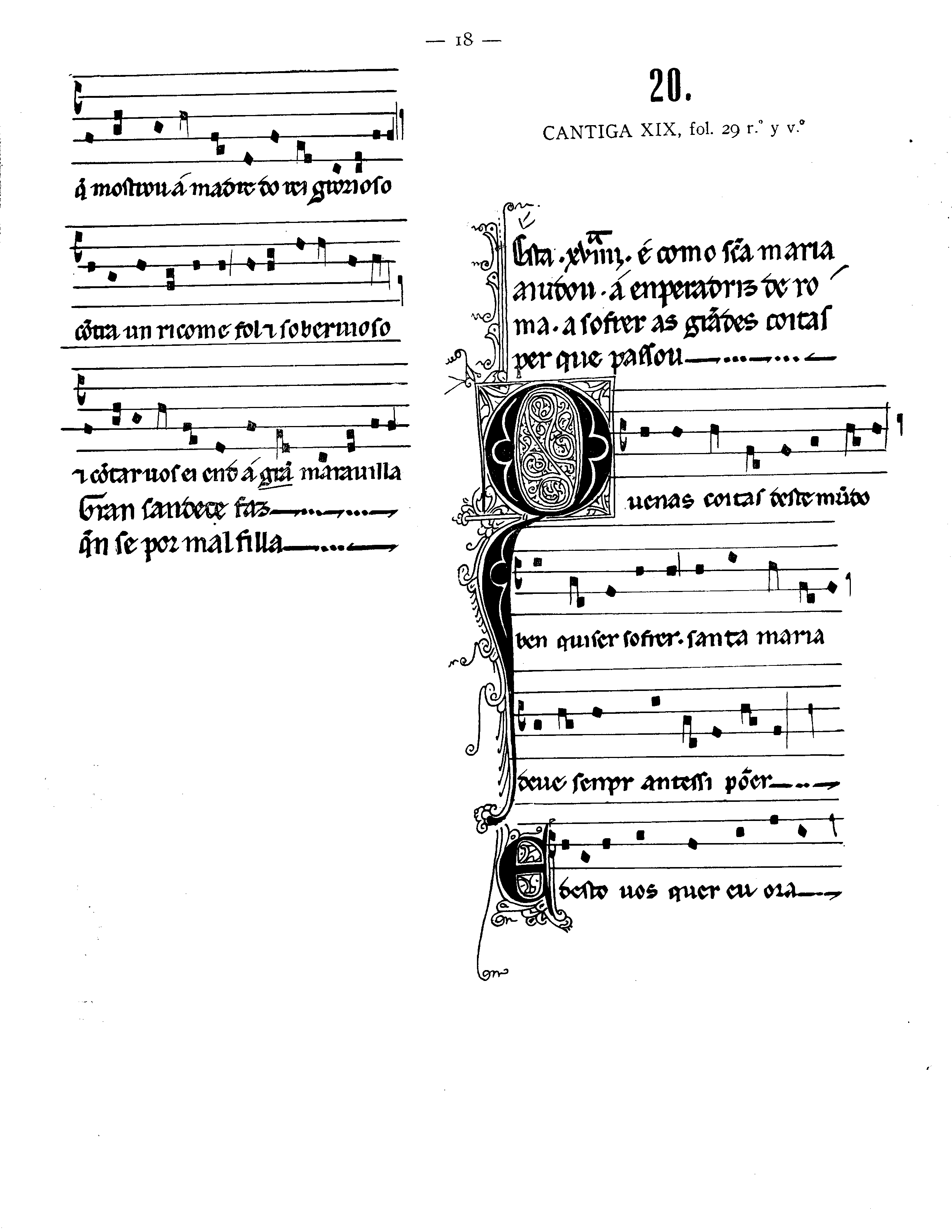
- Eſta ·xviiii· é como ſṫa maria aiudou · á emperadriz de roma · a ſofrer as grãdes coitaſ per que paſſou.
- This 19th is how Holy Mary helped the empress of Rome suffer the great pains she underwent.
- Eſta ·xviiii· é como ſṫa maria aiudou · á emperadriz de roma · a ſofrer as grãdes coitaſ per que paſſou.
- 13th century, attributed to Alfonso X of Castile, Cantigas de Santa Maria, To codex, cantiga 5 (facsimile):
Descendants
Portuguese
Alternative forms
- d' (archaic, except for fixed terms)
Etymology
From Old Portuguese de (“of”), from Latin dē (“of”).
Pronunciation
- (Portugal) IPA(key): /dɨ/
- (Brazil) IPA(key): /d͡ʒi/, [d͡ʒi], [d͡ʒɪ], [d͡ʑi], [d͡ʑɪ], /d/
- (South Brazil) IPA(key): /de/
- (Nordestino) IPA(key): /di/
- (Caipira) IPA(key): /di/
- Homophone: dê (only when stressed)
Preposition
de
- of (in relation to)
- 2005, Lya Wyler (translator), J. K. Rowling (English author), Harry Potter e o Enigma do Príncipe (Harry Potter and the Half-Blood Prince), Rocco, page 138:
- O protesto de Hermione foi abafado por uma risadinha alta.
- Hermione's objection was interrupted by a loud little laugh.
- O protesto de Hermione foi abafado por uma risadinha alta.
- os amigos dele
- his friends
- (literally, “the friends of his”)
- of (forms compounds; often untranslated)
- fones de ouvido
- headphones
- (literally, “phones of ear”)
- acampamento de verão
- summer camp
- of; about (on the subject of)
- Do que estavam falando?
- What were they talking about?
- of; -'s (belonging to)
- a casa de alguém
- someone's house
- -'s (made by)
- Você provou o bolo da minha mãe?
- have you tried my mother’s cake?
- of (being a part of)
- capa do livro
- cover of the book
- of (introduces the month a given day is part of)
- Primeiro de janeiro.
- First of January.
- of (introduces the object of an agent noun)
- Hitler foi um exterminador de judeus.
- Hitler was an exterminator of Jews.
- of (introduces the name of a place following its hypernym)
- A vila de Iorque.
- The village of York.
- 2005, Lya Wyler (translator), J. K. Rowling (English author), Harry Potter e o Enigma do Príncipe (Harry Potter and the Half-Blood Prince), Rocco, page 138:
- of; -en (made or consisting of)
- De que é feito?
- What is this made of?
- (literally, “Of what is made this?”)
- -long (having the duration of)
- um filme de duas horas
- a two hour-long movie
- of (indicates the composition of a given collective or quantitative noun)
- Milhares de pessoas vieram.
- Thousands of people came.
- of (characterised by; having the given quality)
- O templo não é mais um local de paz.
- The temple is no longer a place of peace.
- of (introduces the noun that applies a given adjective or past participle)
- Um balde cheio de água.
- A bucket full of water.
- from (born in or coming out of)
- De onde você é?
- Where are you from?
- by means of; by
- Eu sempre vou trabalhar de ônibus.
- I always go to work by bus.
- as (in the role of)
- Na festa, ele estava de bruxo.
- At the party, he was dressed as a wizard.
- in (wearing)
- Homens de Preto
- Men in Black
Usage notes
Used in the following contractions:
- da (de + a)
- dacolá (de + acolá)
- dalgures (de + algures)
- dali (de + ali)
- dalém (de + além)
- dantes (de + antes)
- daquela (de + aquela)
- daquelas (de + aquelas)
- daquele (de + aquele)
- daqueles (de + aqueles)
- daqui (de + aqui)
- daquilo (de + aquilo)
- daquém (de + aquém)
- das (de + as)
- daí (de + aí)
- dela (de + ela)
- delas (de + elas)
- dele (de + ele)
- deles (de + eles)
- dentre (de + entre)
- dessa (de + essa)
- dessas (de + essas)
- desse (de + esse)
- desses (de + esses)
- desta (de + esta)
- destas (de + estas)
- deste (de + este)
Quotations
For quotations of use of this term, see Citations:de.
Romanian
Etymology
Pronunciation
- IPA(key): /de/
- Rhymes: -e
Preposition
de (+accusative)
- from
- Casa mea nu este departe de aici. ― My house is not far from here.
- of
- o ceașcă de ceai ― a cup of tea
- un profesor de matematică ― a professor of mathematics
- by
- o carte scrisă de Marin Preda. ― a book written by Marin Preda
Romansch
Alternative forms
Etymology
Noun
de m (plural des)
Scottish Gaelic
Alternative forms
Pronunciation
- IPA(key): [d̊ʲe]
Preposition
de
Derived terms
- bhàrr (“down from, from off”)
- The following prepositional pronouns:
| Person | Number | Prepositional pronoun | Prepositional pronoun (emphatic) |
|---|---|---|---|
| Singular | 1st | dhiom | dhiomsa |
| 2nd | dhiot | dhiotsa | |
| 3rd m | dheth | dhethsan | |
| 3rd f | dhith | dhithse | |
| Plural | 1st | dhinn | dhinne |
| 2nd | dhibh | dhibhse | |
| 3rd | dhiubh | dhiubhsan |
Serbo-Croatian
Etymology
From Proto-Slavic *kъdě, *kъde, from Proto-Indo-European *kʷu-dʰe.
Adverb
de (Cyrillic spelling де)
Pronoun
de (Cyrillic spelling де)
Synonyms
Seychellois Creole
Etymology
Numeral
de
Spanish
Pronunciation
- (after a pause, 'l', 'm', 'n' and 'ñ') IPA(key): /de/, [d̪e̞]
- (elsewhere) IPA(key): /de/, [ð̞e̞]
Audio (Latin America) (file) Audio (Spain) (file) - Homophone: dé
- IPA(key): /de/, [d̪e]
- Rhymes: -e
Etymology 1
Noun
de f (plural des)
Etymology 2

Preposition
de
- of; ’s; used after the thing owned and before the owner
- Constitución española de 1812
- Spanish constitution of 1812
- la cola del perro
- the dog’s tail
- from
- Soy de España.
- I’m from Spain.
- of, from (indicating cause)
- Él murió de hambre.
- He died of hunger.
- used to construct compound nouns (with attributive nouns)
- campamento de verano
- summer camp
Usage notes
As illustrated in the example above, de combines with el to form del.
Derived terms
Related terms
Further reading
- “de” in Diccionario de la lengua española, Vigésima tercera edición, Real Academia Española, 2014.
Sranan Tongo
Verb
de
- To be.
Swedish
Alternative forms
Etymology
From Old Norse þeir, from Proto-Germanic *þai (with noun ending -r).
Pronunciation
Pronoun
de (third-person plural nominative, dative and accusative dem, genitive deras, reflexive sig)
- they
- (colloquial, text messaging) Eye dialect spelling of det.
Declension
*Not universally accepted.
Article
de
- the, a definite article used in the beginning of noun phrases containing attributive adjectives and nouns in the plural. This article is used together with the definite suffix of the noun to indicate the definiteness of the noun phrase.
- de gröna bilarna ― the green cars
Usage notes
The same type of noun phrases with singular nouns instead use den (common gender) or det (neuter) for this function. Some definite noun phrase with attributive adjectives may skip these preceding articles. This is the case especially for many lexicalized noun phrases and also for many noun phrases working as proper names of organisations, geographical places, TV shows, events and similar.
- Brittiska öarna
- The British Isles
While the personal pronoun de has an object form and a genitive form, the definite article de is unaffected by the syntactic role of the noun phrase.
Tarantino
Preposition
de
Tok Pisin
Etymology
Noun
de
- day
- 1989, Buk Baibel long Tok Pisin, Bible Society of Papua New Guinea, Genesis 1:5 (translation here):
- Tulait em i kolim “De”, na tudak em i kolim “Nait”. Nait i go pinis na moning i kamapage. Em i de namba wan.
- 1989, Buk Baibel long Tok Pisin, Bible Society of Papua New Guinea, Genesis 1:5 (translation here):
Related terms
See also
Turkish
Adverb
de
- as well, too, also
- Özer de sorunun yanıtını biliyor ― Özer also knows the answer of the question
- Berker de bizimle geliyor ― Berker is coming with us as well
- Utku de dondurma yemeyi sever ― Utku likes eating ice cream, too.
Usage notes
- It's used when the previous word's last vowel is "e", "i", "ö" or "ü". Otherwise (if the word's last vowel is "a", "ı", "o" or "u"); it becomes "da"
Synonyms
Noun
de
Verb
de
- (imperative) say
See also
- (Latin script letter names) harf; a, be, ce, çe, de, e, fe, ge, yumuşak ge, he, ı, i, je, ke, le, me, ne, o, ö, pe, re, se, şe, te, u, ü, ve, ye, ze
Volapük
Preposition
de
Welsh
Pronunciation
- IPA(key): /deː/
Etymology 1
Contraction of older deau (“right; south”), from Proto-Celtic *dexsos (“right”). Cognate with Cornish dyhow, Breton dehou, Irish deas.
The sense "south" comes from the fact that the south is on the right-hand side of a person facing east.[1]
Adjective
de (feminine singular de, plural de)
Derived terms
- Môr y De (“the South Sea”)
- Pegwn y De (“the South Pole”)
Noun
de m, f (uncountable)
Usage notes
- The noun has masculine gender when used with the sense of "south" and feminine gender when used with the sense "right".
Mutation
| Welsh mutation | |||
|---|---|---|---|
| radical | soft | nasal | aspirate |
| de | dde | ne | unchanged |
| Note: Some of these forms may be hypothetical. Not every possible mutated form of every word actually occurs. | |||
Derived terms
- de-ddwyrain (“south-east”)
- de-orllewin (“south-west”)
Etymology 2
Mutated form of te (“tea”).
Noun
de
- Soft mutation of te.
Mutation
| Welsh mutation | |||
|---|---|---|---|
| radical | soft | nasal | aspirate |
| te | de | nhe | the |
| Note: Some of these forms may be hypothetical. Not every possible mutated form of every word actually occurs. | |||
References
- ↑ Evans, D. Silvan (1893) Dictionary of the Welsh Language, page 1388
West Frisian
Etymology
Article
de c
- the (definite article preceding nouns of common gender and all plurals)
Related terms
See also
Xhosa
Etymology
From Proto-Nguni *-de, from Proto-Bantu *-dàì.
Adjective
-de
Inflection
This adjective needs an inflection-table template.
Zande
Noun
de
Zhuang
Pronunciation
- (Standard Zhuang) IPA(key): /te˨˦/
- Tone numbers: de1
- Hyphenation: de
Pronoun
See also
| Standard Zhuang personal pronouns | |||
|---|---|---|---|
| Person | Singular | Plural | |
| 1st | exclusive | gou | dou |
| inclusive | raeuz | ||
| 2nd | mwngz | sou | |
| 3rd | de | gyoengqde | |
Zulu
Etymology 1
Verb
-de?
- (auxiliary) to always [+participial]
Inflection
This verb needs an inflection-table template.
Etymology 2
From Proto-Nguni *-de, from Proto-Bantu *-dàì.
Adjective
-de?
Inflection
| Adjective concord, tone class L | ||
|---|---|---|
| Modifier | Copulative | |
| 1st singular | engimude | ngimude |
| 2nd singular | omude | umude |
| 1st plural | esibade | sibade |
| 2nd plural | enibade | nibade |
| Class 1 | omude | mude |
| Class 2 | abade | bade |
| Class 3 | omude | mude |
| Class 4 | emide | mide |
| Class 5 | elide | lide |
| Class 6 | amade | made |
| Class 7 | eside | side |
| Class 8 | ezinde | zinde |
| Class 9 | ende | inde |
| Class 10 | ezinde | zinde |
| Class 11 | olude | lude |
| Class 14 | obude | bude |
| Class 15 | okude | kude |
| Class 17 | okude | kude |
Derived terms
References
- C. M. Doke; B. W. Vilakazi (1972), “-dé”, in Zulu-English Dictionary, →ISBN: “-dé”
- C. M. Doke; B. W. Vilakazi (1972), “-de”, in Zulu-English Dictionary, →ISBN: “-de”
ǃKung
Noun
de