er
English
Etymology
Mimetic (sound of hesitation)
Pronunciation
- IPA(key): /ɜː/
- Used in non-rhotic dialects. Compare uh.
Audio (US) (file)
Interjection
er
- Said when hesitating in speech.
Verb
er (third-person singular simple present ers, present participle erring, simple past and past participle erred)
- (informal) To utter the word "er" when hesitating in speech, found almost exclusively in the phrase um and er.
- He ummed and erred his way through the presentation.
See also
Anagrams
Afrikaans
Noun
er (plural erre or ers, diminutive erretjie)
Alemannic German
Pronoun
er m
Declension
Breton
Contraction
er
- e (preposition "in") + ur (indefinite article "a(n)")
- e (preposition "in") + ar (definite article "the")
Cornish
Pronunciation
- IPA(key): [eːɹ]
Etymology 1
From Proto-Celtic *eriros (“eagle”) (compare Breton erer, Welsh eryr, Old Irish irar), from Proto-Indo-European *h₃érō (“large bird”).
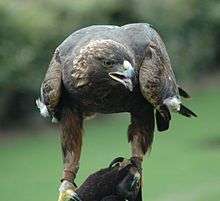
Noun
Etymology 2
Noun
er m (plural erys)
Etymology 3
See etymology on the main entry.
Noun
er
- Soft mutation of ger.
Crimean Tatar
Adjective
er
Czech
Pronunciation
- IPA(key): [ˈɛr]
Noun
er n
Further reading
- er in Příruční slovník jazyka českého, 1935–1957
- er in Slovník spisovného jazyka českého, 1960–1971, 1989
Danish
Pronunciation
- IPA(key): /ɛr/, [æɐ̯], but often elided in spontaneous speech.
Verb
er
- present tense of være
Dutch
Pronunciation
- IPA(key): /ɛr/, /ər/, /dər/
Etymology 1
Weak form of der, the unstressed form of daar ("there")
Adverb
er
- there (unspecific to distance)
- (with a preposition) him, her, it, them.
- Ik heb ermee gewerkt.
- I have worked with it/them.
- Je kunt er de bergen boven zien.
- You can see the mountains above it/them.
- Ik heb ermee gewerkt.
Usage notes
Etymology 2
From Old Dutch iro, genitive of the personal pronoun (3rd person plural).
Adverb
er
- (partitive pronoun) of them, of those (often not translated in English)
- Mijn broer heeft drie kinderen en ik heb er twee.
- My brother has three children and I have two. (literally: two of those)
- Ik zie er geen meer.
- I don't see any more (of them).
- Mijn broer heeft drie kinderen en ik heb er twee.
Synonyms
Derived terms
See Category:Dutch pronominal adverbs
Related terms
See also
Anagrams
East Damar
Noun
er
References
- Greenhill, S.J., Blust. R, & Gray, R.D. (2008). The Austronesian Basic Vocabulary Database: From Bioinformatics to Lexomics. Evolutionary Bioinformatics, 4:271-283.
Faroese
Pronunciation
- IPA(key): [er]
Verb
er
Conjugation
German
Etymology
From Old High German er, from Proto-Germanic *iz. Displaced the northern Old High German forms with h-, e.g. hē, her (see he).
Pronunciation
- (standard) IPA(key): /ʔeːɐ̯/, /ʔɛʁ/
pronunciation 1 (file) pronunciation 2 (file) - Rhymes: -eːɐ̯
- Homophone: Ehr
- (colloquially in unstressed position) IPA(key): /ɐ/
Pronoun
er
- (personal) he.
(file) Wo ist Klaus? Wo ist er?- Where is Klaus? Where is he?
- Clemens Brentano, Geschichte vom braven Kasperl und dem schönen Annerl (edited). In: 1835, F. W. Gubitz (editor), Jahrbuch des Nützlichen und Unterhaltenden für 1835, p. 171:
- Da fuhr die Alte überraſcht auf und ſprach: Lieber Herr, gehe er doch nach Haus und bete er fein und lege er ſich ſchlafen.
- (personal) it (when the grammatical gender of the object/article/thing/animal etc., being referred to, is masculine (der)).
(file) Dies ist mein Hund. Er heißt Waldi.- This is my dog. His name is Waldi.
(file) Dort steht ein Baum. Er ist über hundert Jahre alt.- There stands a tree. It is more than 100 years old.
Inflection
| nominative | accusative | genitive | dative | possessive | ||
|---|---|---|---|---|---|---|
| 1st person singular | ich | mich | meiner († mein) | mir | mein | |
| 2nd person singular (familiar)1 | du | dich | deiner († dein) | dir | dein | |
| 3rd person singular | m | er | ihn | seiner († sein) | ihm | sein |
| f | sie | ihrer | ihr | |||
| n | es | seiner († sein) | ihm | sein | ||
| 1st person plural | wir | uns | unser | uns | unser | |
| 2nd person plural (familiar)1 | ihr | euch | euer | euch | euer | |
| 3rd person plural | sie | ihrer | ihnen | ihr | ||
| polite address | naturally: 2nd person sg. or pl.; grammatically: 3rd person pl. |
Sie | Ihrer | Ihnen | Ihr | |
1Often capitalized, especially in letters
In contemporary German, the genitive forms of personal pronouns are restricted to formal style and are infrequent even then. They may be used
- for the genitive object still found in a handful of verbs: Ich erbarmte mich seiner. – "I had mercy on him". (Colloquially one would either use the dative case, or a prepositional object, or replace the verb with another.)
- after the preposition statt ("instead of, in place of"): Ich kam statt seiner in die Mannschaft. – I joined the team in his place. (This sounds antiquated, for which reason an seiner Statt or an seiner Stelle is preferable.)
Further reading
- er in Duden online
Hunsrik
Alternative forms
- ëyer (Portuguese based orthography)
Etymology
From Old High German er, from Proto-Germanic *iz. Displaced the northern Old High German forms with h-, e.g. hē, her (see he).
Pronunciation
- IPA(key): /ˈɛɐ/
Pronoun
er
Inflection
| nominative | accusative | dative | ||||
|---|---|---|---|---|---|---|
| Proclitic | Enclitic | str. | unstr. | str. | unstr. | |
| 1st person singular | ich | -ich | mich | meer | mer | |
| 2nd person singular (informal) |
du | -du, -de | dich | deer | der | |
| 3rd person singular (m) | er, där | -er | ihn | en | ihm | em |
| 3rd person singular (f) | sie, die | -se | sie / ihns | se | eer | re |
| 3rd person singular (n) | es, das | 's | es | ihm | em | |
| 1st person plural | meer | mer | uns | uns | ||
| 2nd person plural | deer | der | eich | eich | ||
| 3rd person plural | sie, die | -se | sie | se | denne | |
Further reading
Icelandic
Verb
er
Pronoun
er
- (relative) which
- (archaic) in relations with a demonstrative pronoun (this, that, these) or personal pronoun (I, we, they), which represents the genitive of a relative pronoun.
Conjunction
er
- (with an "indexical"; ábendingarorð) of a place, of a time
- Judges 2:19
- En er dómarinn andaðist, breyttu þeir að nýju verr en feður þeirra, með því að elta aðra guði til þess að þjóna þeim og falla fram fyrir þeim. Þeir létu eigi af gjörðum sínum né þrjóskubreytni sinni.
- But when the judge died, the people returned to ways even more corrupt than those of their ancestors, following other gods and serving and worshiping them. They refused to give up their evil practices and stubborn ways.
- En er dómarinn andaðist, breyttu þeir að nýju verr en feður þeirra, með því að elta aðra guði til þess að þjóna þeim og falla fram fyrir þeim. Þeir létu eigi af gjörðum sínum né þrjóskubreytni sinni.
- Þar er ég kom.
- There whence I came.
- Þá er myndin var búin.
- When the movie was finished.
- Judges 2:19
Derived terms
- þá er þegar
References
- er in Geir T. Zoëga (1910) A Concise Dictionary of Old Icelandic, Oxford: Clarendon Press
Latin
Etymology 1
From Proto-Italic *hēr, from Proto-Indo-European *ǵʰḗr (“hedgehog”) (whence also Ancient Greek χήρ (khḗr, “hedgehog”)), a root noun from *ǵʰer- (“to be excited, be bristly”), whence also Ancient Greek χοῖρος (khoîros, “young pig”) and Albanian derr (“pig”) from *ǵʰór-yos.[1]
Pronunciation
- (Classical) IPA(key): /eːr/
Noun
ēr m (genitive ēris); third declension
Usage notes
There is some uncertainty as to the exact forms of this word, especially regarding whether the lemma form of this was ēr or ēris, as the forms attested in literature could point to either option. Another form, irim (acc. sing.; found in Plautus, Capt. 184), seems to be a spelling variant.
Inflection
Third declension.
| Case | Singular | Plural |
|---|---|---|
| nominative | ēr | ērēs |
| genitive | ēris | ērum |
| dative | ērī | ēribus |
| accusative | ērem | ērēs |
| ablative | ēre | ēribus |
| vocative | ēr | ērēs |
Related terms
- ēricius (“hedgehog; picket”)
Etymology 2
Pronunciation
- (Classical) IPA(key): /er/, [ɛr]
Noun
er (indeclinable)
- The name of the letter R.
Usage notes
- Multiple Latin names for the letter R, r have been suggested. The most common is er or a syllabic r, although there is some evidence which also supports, as names for the letter, rē, rrr, ər, rə, and even (in the fourth- or fifth-century first Antinoë papyrus, which gives Greek transliterations of the Latin names of the Roman alphabet’s letters) ιρρε (irrhe).
Coordinate terms
References
- ēr in Charlton T. Lewis and Charles Short (1879) A Latin Dictionary, Oxford: Clarendon Press
- ēr in Gaffiot, Félix (1934) Dictionnaire Illustré Latin-Français, Hachette
- Arthur E. Gordon, The Letter Names of the Latin Alphabet (University of California Press, 1973; volume 9 of University of California Publications: Classical Studies), especially pages 30–31, 42–44, and 63
- ↑ De Vaan, Michiel (2008), “ēr”, in Etymological Dictionary of Latin and the other Italic Languages (Leiden Indo-European Etymological Dictionary Series; 7), Leiden, Boston: Brill, page 193
Latvian
Pronunciation
- IPA(key): [ɛɾ]
| (file) |
Noun
er m (invariable)
See also
- Latvian letter names:
Low German
Pronoun
er
- Alternative spelling of ehr
Mambae
Noun
er
References
- Mambai Language Manual: Ainaro Dialect (2001)
Mandarin
Romanization
er
Usage notes
- English transcriptions of Mandarin speech often fail to distinguish between the critical tonal differences employed in the Mandarin language, using words such as this one without the appropriate indication of tone.
Manx
Etymology
Preposition
er
Inflection
| Singular | Plural | ||||||
|---|---|---|---|---|---|---|---|
| Person | 1st | 2nd | 3rd m. | 3rd f. | 1st | 2nd | 3rd |
| Normal | orrym | ort | er | urree | orrin | erriu | orroo |
| Emphatic | orryms | orts | ersyn | urreeish | orrinyn | erriuish | orroosyn |
Pronoun
er
Derived terms
- ersyn (emphatic)
Middle Dutch
Adverb
er
- unstressed form of dāer
Middle English
Etymology 1
Determiner
er
- Alternative form of hire
Pronoun
er
- Alternative form of hire
References
- “hir, (pron.1)” in MED Online, Ann Arbor, Mich.: University of Michigan, 2007, retrieved 10 May 2018.
Etymology 2
Pronoun
er
- Alternative form of hire
References
- “hir(e), pron (2)” in MED Online, Ann Arbor, Mich.: University of Michigan, 2007, retrieved 10 June 2018.
Etymology 3
From Old English ēar.
Noun
er
- Alternative form of eere (“ear of grain”)
Etymology 4
Determiner
er
- Alternative form of here (“their”)
References
- “her(e (pron.)” in MED Online, Ann Arbor, Mich.: University of Michigan, 2007, retrieved 12 June 2018.
Norwegian Bokmål
Pronunciation
- IPA(key): /æːɾ/, /æɾ/
Verb
er
- present tense of være (=to be)
Norwegian Nynorsk
Pronunciation
- IPA(key): /æːr/ (example of pronunciation)
Verb
er
Old Dutch
Etymology
From Proto-Germanic *airiz; see also ær. Cognate with Old Saxon ēr.
Adverb
er (ēr)
- previously, in an earlier period, in a bygone time
- earlier, before a certain time or period
Preposition
er (ēr)
Conjunction
er (ēr)
References
Old Frisian
Pronoun
er
Old High German
Etymology 1
From Proto-Germanic *airiz, whence also Old English ær.
Pronunciation
- IPA(key): /eːr/
Adjective
ēr
Adverb
ēr
Conjunction
ēr
Preposition
ēr (+ dative)
Etymology 2
From Proto-Germanic *aiz, akin to Old English ār, Old Norse eir.
Pronunciation
- IPA(key): /eːr/
Noun
ēr n
Etymology 3
From Proto-Germanic *iz (“he”), akin to Gothic 𐌹𐍃 (is, “he”), Latin is (“he”).
Alternative forms
Pronunciation
- IPA(key): /er/
Pronoun
er
Inflection
| Number | Person | Gender | Nominative | Genitive | Dative | Accusative |
|---|---|---|---|---|---|---|
| Singular | First | ih | mīn | mir | mih | |
| Second | dū | dīn | dir | dih | ||
| Third | Masculine | (h)er | (sīn) | imu, imo | inan, in | |
| Feminine | siu; sī, si | ira, iru | iro | sia | ||
| Neuter | iz | es, is | imu, imo | iz | ||
| Plural | First | wir | unsēr | uns | unsih | |
| Second | ir | iuwēr | iu | iuwih | ||
| Third | Masculine | sie | iro | im, in | sie | |
| Feminine | sio | iro | im, in | sio | ||
| Neuter | siu | iro | im, in | siu | ||
| Polite form | Second | ir | iuwēr | iu | iuwih |
Descendants
References
- Joseph Wright, An Old High German Primer
Old Norse
Etymology
From Old Norse es. The final -s was replaced by -r due to analogy to the plural forms of vera.
Pronoun
er
Conjunction
er
Verb
er
- third-person singular indicative present tense of vera
Descendants
References
- er in Geir T. Zoëga (1910) A Concise Dictionary of Old Icelandic, Oxford: Clarendon Press
Old Saxon
Etymology 1
From Proto-Germanic *airiz, whence also Old English ær.
Pronunciation
- IPA(key): /eɪr/
Adjective
ēr
Declension
| Strong declension | ||||||
|---|---|---|---|---|---|---|
| gender | masculine | neuter | feminine | |||
| case | singular | plural | singular | plural | singular | plural |
| nominative | ēr | ēre | ēr | ēru | ēr | ēre |
| accusative | ērana | ēre | ēra | ēru | ēr | ēre |
| genitive | ēres | ērarō | ēraro | ērarō | ēres | ērarō |
| dative | ērumu | ērum | ēraro | ērum | ērumu | ērum |
| Weak declension | ||||||
| gender | masculine | neuter | feminine | |||
| case | singular | plural | singular | plural | singular | plural |
| nominative | ēro | ēru | ēra | ēru | ēra | ēru |
| accusative | ērun | ērun | ērun | ērun | ēra | ērun |
| genitive | ērun | ēronō | ērun | ēronō | ērun | ēronō |
| dative | ērun | ērum | ērun | ērum | ērun | ērum |
Adverb
ēr
Conjunction
ēr
Preposition
ēr (+ dative)
Etymology 2
From Proto-Germanic *aiz, whence also Old English ār.
Noun
ēr ?
Polish
Pronunciation
- IPA(key): [ɛr]
Noun
er
- genitive plural of era
Scots
Verb
er
- (South Scots) Second-person simple present form of ti be
- (South Scots) Plural simple present form of ti be
- (South Scots) First-person singular simple present form of an obscure form of ti be
- A'm er so!
Usage notes
Used emphatically. See ir.
Swedish
Etymology
Contraction of earlier eder, from Old Norse yðr, from Proto-Germanic *izwiz, dative/accusative of *jūz, from Proto-Indo-European *yū́.
Pronunciation
- IPA(key): /eːr/
Pronoun
er c (neuter possessive only ert, plural era)
- you (plural, object)
- (possessive) your, yours; (speaking to more than one person, about one object)
- (reflexive) reflexive of ni; compare yourselves
- Skulle ni vilja lära er jonglera?
- Would you guys like to learn how to juggle?
- Skulle ni vilja lära er jonglera?
Usage notes
Declension
*Not universally accepted.
Turkish
Etymology 1
From Old Turkic er, from Proto-Turkic *ẹ̄r (“early”), which, according to the controversial Altaic hypothesis, is possibly derived from Proto-Altaic *ḗre (“early”).
Adjective
er
References
- *ḗre in Starostin, Sergei; Dybo, Anna; Mudrak, Oleg (2003) Etymological dictionary of the Altaic languages (Handbuch der Orientalistik; VIII.8), Leiden, New York, Köln: E.J. Brill
Etymology 2
From Old Turkic er, from Proto-Turkic *ēr (“man”), which, according to the controversial Altaic hypothesis, is possibly derived from Proto-Altaic *ā́ri (~ *ḗra) (“man”). Related to noun-forming suffix -er.
Noun
er (definite accusative eri, plural erler)
Declension
| Inflection | ||||||||||||||||||||||||||
|---|---|---|---|---|---|---|---|---|---|---|---|---|---|---|---|---|---|---|---|---|---|---|---|---|---|---|
| Nominative | er | |||||||||||||||||||||||||
| Definite accusative | eri | |||||||||||||||||||||||||
| Singular | Plural | |||||||||||||||||||||||||
| Nominative | er | erler | ||||||||||||||||||||||||
| Definite accusative | eri | erleri | ||||||||||||||||||||||||
| Dative | ere | erlere | ||||||||||||||||||||||||
| Locative | erde | erlerde | ||||||||||||||||||||||||
| Ablative | erden | erlerden | ||||||||||||||||||||||||
| Genitive | erin | erlerin | ||||||||||||||||||||||||
| ||||||||||||||||||||||||||
| ||||||||||||||||||||||||||
Verb
er
- reach (imperative)
References
- *ā́ri in Starostin, Sergei; Dybo, Anna; Mudrak, Oleg (2003) Etymological dictionary of the Altaic languages (Handbuch der Orientalistik; VIII.8), Leiden, New York, Köln: E.J. Brill
West Frisian
Pronoun
er
Usage notes
- (he): Er is used before the object of the sentence or after the verb, if there is one. It is never the first word of a sentence.
- Doe't er in swolch naam -- "When he took a swallow", (literally "When he a swallow took")
Especially in narrative, er is used in the past tense. In other cases, hy is used.