as
Translingual
Symbol
as
- (metrology) Symbol for the attosecond, an SI unit of time equal to 10−18 seconds.
- (metrology) arcsecond
English
Etymology 1
From Middle English as, ase, als, alse, also, alsa, alswa, from Old English eallswā (“just so; as”), thus representing a reduced form of also.
Pronunciation
- (stressed) IPA(key): /æz/
Audio (US) (file) - Rhymes: -æz
- (unstressed) IPA(key): /əz/
Adverb
as (not comparable)
- To such an extent or degree.
- You’re not as tall as I am.
- It's not as well made, but it's twice as expensive.
- 1908, W[illiam] B[lair] M[orton] Ferguson, Zollenstein, New York, N.Y.: D. Appleton & Company, OCLC 29686887 , chapter IV:
- “My Continental prominence is improving,” I commented dryly. ¶ Von Lindowe cut at a furze bush with his silver-mounted rattan. ¶ “Quite so,” he said as dryly, his hand at his mustache. “I may say if your intentions were known your life would not be worth a curse.”
- 1922, Ben Travers, chapter 1, in A Cuckoo in the Nest:
- She was like a Beardsley Salome, he had said. And indeed she had the narrow eyes and the high cheekbone of that creature, and as nearly the sinuosity as is compatible with human symmetry. His wooing had been brief but incisive.
- In the manner or role specified.
- The kidnappers released him as agreed.
- The parties were seen as agreeing on a range of issues.
- He was never seen as the boss, but rather as a friend.
- 2013 July-August, Catherine Clabby, “Focus on Everything”, in American Scientist:
- Not long ago, it was difficult to produce photographs of tiny creatures with every part in focus. […] A photo processing technique called focus stacking has changed that. Developed as a tool to electronically combine the sharpest bits of multiple digital images, focus stacking is a boon to biologists seeking full focus on a micron scale.
- (dated) For example (compare such as).
- 1913, "Aboriginal", in Webster's Unabridged Dictionary:
- First; original; indigenous; primitive; native; as, the aboriginal tribes of America.
- 1913, "Aboriginal", in Webster's Unabridged Dictionary:
Translations
|
|
Conjunction
as
- In the same way that; according to what.
- As you wish, my lord!
- as in . . .
- At the same instant that; when.
- As I came in, she flew.
- At the same time that; while.
- He sleeps as the rain falls.
- Varying through time in the same proportion that.
- As my fear grew, so did my legs become heavy.
- Being that, considering that, because, since.
- As it’s too late, I quit.
- Introducing a basis of comparison, after as, so, or a comparison of equality.
- She's twice as strong as I was two years ago.
- It's not so complicated as I expected.
- (dated) Introducing a comparison with a hypothetical state (+ subjunctive); ‘as though’, ‘as if’. [to 19th century]
- 1526, William Tyndale, trans. Bible, Acts II:
- And sodenly there cam a sounde from heven as it had bene the commynge off a myghty wynde […]
- c. 1616, William Shakespeare, King Henry VI part 2, First Folio 1623, I.1:
- Oft haue I seene the haughty Cardinall, / More like a Souldier then a man o'th' Church, / As stout and proud as he were Lord of all […]
- 1526, William Tyndale, trans. Bible, Acts II:
- Introducing a comparison with a hypothetical state with the verb elided; as if, as though.
- Dryden
- I start as from some dreadful dream.
- 1990, Andrew Fetler, “The third count”, in Triquarterly, number Spring:
- I feel securely fixed on the careering chair, and with the momentum gained I steer myself as on skis to the guard and come to a stop with a happy little flourish.
- 1992, Katherine Weissman, “The Divorce Gang”, in Ploughshares, volume 18, number 4, page 202:
- They think they are romantic, tragic figures, exiled as on Elba. They picture themselves as enlightened barons bringing civilization, opportunity, and kindness to the brown-skinned.
- 2011 January 30, Kyle Wagner, “E-readers lighten a traveler's load But choosing the right unit means weighing features, cost, ease of use”, in Denver Post, page Travel 1:
- Newspapers and magazines would load their graphics, and you could doodle as on the Sony Reader Daily Edition.
- Dryden
- (now England, US, regional) Functioning as a relative conjunction; that. [from 14th c.]
- 1621, Democritus Junior [pseudonym; Robert Burton], The Anatomy of Melancholy, Oxford: Printed by Iohn Lichfield and Iames Short, for Henry Cripps, OCLC 216894069; The Anatomy of Melancholy: […], 2nd corrected and augmented edition, Oxford: Printed by John Lichfield and James Short, for Henry Cripps, 1624, OCLC 54573970, (please specify |partition=1, 2, or 3):, II.5.1.v:
- the temper is to be altered and amended, with such things as fortify and strengthen the heart and brain […].
- 2016, Alan Moore, Jerusalem, Liveright 2016, p. 99:
- “If I had, if I could hold me head up with the better folk, perhaps I'd think again, but I don't reckon as that's very likely now.”
-
- Expressing concession; though.
- Macaulay
- We wish, however, to avail ourselves of the interest, transient as it may be, which this work has excited.
- Macaulay
- (obsolete, rare) Than.
- Fuller
- The king was not more forward to bestow favours on them as they free to deal affronts to others their superiors.
- Fuller
Translations
|
|
|
|
|
|
|
|
|
|
- The translations below need to be checked and inserted above into the appropriate translation tables, removing any numbers. Numbers do not necessarily match those in definitions. See instructions at Wiktionary:Entry layout#Translations.
|
|
Preposition
as
- Introducing a basis of comparison, with an object in the objective case.
- You are not as tall as me.
- They're big as houses.
- 1913, Mrs. [Marie] Belloc Lowndes, chapter I, in The Lodger, London: Methuen, OCLC 7780546; republished in Novels of Mystery: The Lodger; The Story of Ivy; What Really Happened, New York, N.Y.: Longmans, Green and Co., 55 Fifth Avenue, [1933], OCLC 2666860, page 0016:
- A great bargain also had been the excellent Axminster carpet which covered the floor; as, again, the arm-chair in which Bunting now sat forward, staring into the dull, small fire.
- 1922, Ben Travers, chapter 1, in A Cuckoo in the Nest:
- She was like a Beardsley Salome, he had said. And indeed she had the narrow eyes and the high cheekbone of that creature, and as nearly the sinuosity as is compatible with human symmetry.
- In the role of.
- What is your opinion as a parent?
- 2000, Tom Pendergast, Sara Pendergast, St. James encyclopedia of popular culture, volume 2, page 223:
- Directed by Howard Hawks, Gentlemen Prefer Blondes starred Marilyn Monroe as Lorelei and Jane Russell as Dorothy.
Usage notes
- The object in older English may appear, and it may be prescribed as appearing, in the nominative case, similar to than, eg. You are not as tall as I, which is presumably resultant from a shortening of the adverbial use.
Translations
|
|


Etymology 2
Borrowed from Latin as. Doublet of ace.
Pronunciation
- IPA(key): /ˈæs/
- Homophone: ass
Noun
- (unit of weight) A libra.
- Any of several coins of Rome, coined in bronze or later copper; or the equivalent value.
Translations
Further reading

Etymology 3
Pronunciation
- IPA(key): /ˈeɪz/
Noun
as
- plural of a
Usage notes
- There is some difference of opinion regarding the use of apostrophes in the pluralization of references to letters as symbols. New Fowler's Modern English Usage, after noting that the usage has changed, states on page 602 that "after letters an apostrophe is obligatory." The 15th edition of The Chicago Manual of Style states in paragraph 7.16, "To avoid confusion, lowercase letters ... form the plural with an apostrophe and an s". The Oxford Style Manual on page 116 advocates the use of common sense.
Etymology 4
Shortening of as hell or as fuck.
Pronunciation
- IPA(key): /ˈæz/ (never unstressed)
Contraction
as
Anagrams
Achumawi
Pronunciation
- IPA(key): /(ʔ)ʌs/
Noun
as
References
- Bruce E. Nevin, Aspects of Pit River phonology (1998) (Ph.D. dissertation, University of Pennsylvania, Department of Linguistics)
Aragonese
Etymology
Article
as pl
- the
- As mesachas de Zaragoza ― The girls from Saragossa
Usage notes
The form las, either pronounced as las or as ras, can be found after words ending with -a.
Catalan
Pronunciation
Etymology 1
From Latin as (“basic Roman unit of money”).
Noun
as m (plural asos)
- (games) An ace. (the side of a die with a single pip)
- (card games) An ace. (a card with a single pip, usually of highest rank in a suit)
- (figuratively, sports) An ace. (an expert)
- (historical, metrology) An as or a libra. (Roman unit of weight)
- (historical, numismatics) An as (Roman unit of money).
Derived terms
- as de guia (“bowline knot”)
- sempre un sis o un as (“a handicap or a problem”)
Etymology 2
From Old Norse áss, singular of æsir (“the Norse gods”).
Noun
as m (plural asos)
- (mythology) One of the Æsir.
Etymology 3
Contraction
as
Synonyms
- al (“contraction of a and el”)
Etymology 4
Noun
as
- plural of a
Cimbrian
Conjunction
as
References
- “as” in Umberto Martello Martalar, Alfonso Bellotto, Dizionario della lingua Cimbra dei Setti Communi vicentini, 1st edition, 1974.
Danish
Etymology
Noun
as c (singular definite asen, plural indefinite aser)
- one of the Æsir
Inflection
Noun
as n (singular definite asset, plural indefinite asser)
- A-flat (A♭)
Inflection
Verb
as
- imperative of ase
Dutch
Pronunciation
- IPA(key): /ɑs/
- Rhymes: -ɑs
audio (file)
Etymology 1
From Middle Dutch asche, from Old Dutch *aska, from Proto-Germanic *askǭ.
Cognate with Low German Asch, German Asche, English ash, West Frisian jiske, Danish aske, Swedish aska.
Noun
as f (plural assen, diminutive asje n)
Alternative forms
Etymology 2
From Middle Dutch asse, from Old Dutch *assa, from Proto-Germanic *ahsō.
Noun
Etymology 3
Conjunction
as
Preposition
as
Fala
Etymology
From Old Portuguese as, from Latin illās.
Article
as f pl (singular a, masculine o, masculine plural os)
- feminine plural of o
- 2000, Domingo Frades Gaspar, Vamus a falal: Notas pâ coñocel y platical en nosa fala, Editora regional da Extremadura, Theme I, Chapter 2: Númerus?:
- As lenguas, idiomas, dialectus o falas tenin un-as funciós mui claras desde o principiu dos siglu i si hai contabilizaus en o mundu un-as 8.000 lenguas, ca un-a con sua importancia numérica relativa, a nossa fala é un tesoiru mais entre elas.
- The tongues, languages or regional variants have some very clear functions since the beginning of the centuries and some 8,000 languages have been accounted for in the world, each with its relative numerical importance, our Fala is another treasure among them.
- As lenguas, idiomas, dialectus o falas tenin un-as funciós mui claras desde o principiu dos siglu i si hai contabilizaus en o mundu un-as 8.000 lenguas, ca un-a con sua importancia numérica relativa, a nossa fala é un tesoiru mais entre elas.
-
Finnish
Noun
as
Declension
| Inflection of as (Kotus type 5/risti, no gradation) | |||
|---|---|---|---|
| nominative | as | asit | |
| genitive | asin | asien | |
| partitive | asia | aseja | |
| illative | asiin | aseihin | |
| singular | plural | ||
| nominative | as | asit | |
| accusative | nom. | as | asit |
| gen. | asin | ||
| genitive | asin | asien | |
| partitive | asia | aseja | |
| inessive | asissa | aseissa | |
| elative | asista | aseista | |
| illative | asiin | aseihin | |
| adessive | asilla | aseilla | |
| ablative | asilta | aseilta | |
| allative | asille | aseille | |
| essive | asina | aseina | |
| translative | asiksi | aseiksi | |
| instructive | — | asein | |
| abessive | asitta | aseitta | |
| comitative | — | aseineen | |
Anagrams
French
Etymology 1
Pronunciation
- IPA(key): /ɑs/
Audio (file) - Rhymes: -as
Noun
as m (plural as)
Descendants
- German: Ass
See also
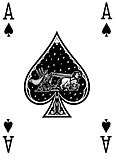
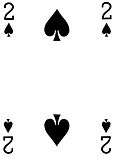
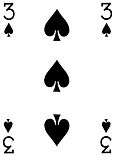
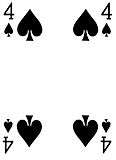
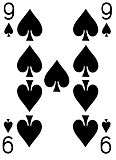
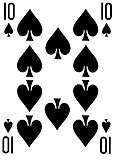
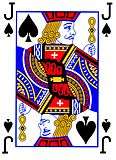
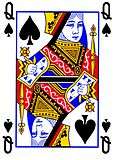
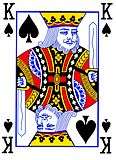
| Playing cards in French · cartes à jouer (layout · text) | ||||||
|---|---|---|---|---|---|---|
 |
 |
 |
 |
 |
 |
 |
| as | deux | trois | quatre | cinq | six | sept |
 |
 |
 |
 |
 |
 |
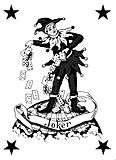 |
| huit | neuf | dix | valet | dame | roi | joker |
Etymology 2
From the verb avoir.
Pronunciation
- IPA(key): /ɑ/
Verb
as
- second-person singular present indicative of avoir
- Tu as un chien.
- You have a dog.
Anagrams
Further reading
- “as” in le Trésor de la langue française informatisé (The Digitized Treasury of the French Language).
Friulian
Etymology
Noun
as m
Galician
Etymology 1
From Old Portuguese as, from Latin illās, accusative feminine plural of ille (“that”).
Article
as f pl (feminine singular a, masculine singular o, masculine plural os)
- (definite) the
Usage notes
The definite article o (in all its forms) regularly forms contractions when it follows the prepositions a (“to”), con (“with”), de (“of, from”), and en (“in”). For example, con as ("with the") contracts to coas, and en as ("in the") contracts to nas.
Derived terms
Etymology 2
See etymology on the main entry.
Pronoun
as
- accusative of elas
Icelandic
Pronunciation
- IPA(key): /aːs/
- Rhymes: -aːs
Noun
as n
Irish
Etymology 1
From Old Irish ass, a (“out of”) (compare Scottish Gaelic à), ultimately from Proto-Indo-European *h₁eǵʰs (compare Latin ex).
Pronunciation
Preposition
as (plus dative, triggers no mutation)
- out of
- Tóg leabhar aníos as an mála.
- Take a book out of the bag.
- Tá Cathal ag déanamh bríste as an éadach.
- Cathal is making trousers out of the cloth.
- Bíonn Máire á dhéanamh as fearg.
- Máire does it out of anger
- from (a place)
- Beidh Pádraig ag teacht as Meiriceá amárach.
- Pádraig will be coming from America tomorrow.
- Is as an nGearmáin í.
- She is from Germany.
- Bhí torann as an seomra leapa.
- There was a noise from the bedroom.
- Bhí cor as na toim.
- There was a movement from the bushes.
- off
- Tá boladh as an madra sin.
- That dog smells (lit. There is a smell off that dog).
Inflection
Derived terms
|
|
|
|
Etymology 2
Pronunciation
Pronoun
as (emphatic as-san)
- third-person masculine singular of as (from, off, out of)
- Ní fhuair tú freagra as.
- You didn’t get an answer from him.
Derived terms
- as féin (“alone”)
Adverb
as
- off (in or into a state of non-operation or non-existence: of a machine, light, etc.)
- Cas as an raidió.
- Turn off the radio.
- Chuir mé an solas as.
- I switched the light off.
- out (in or into a state of non-operation or non-existence: of a fire, etc.)
- Tá an tine as.
- The fire is out.
Derived terms
|
|
Etymology 3
Noun
as m (genitive singular asa, nominative plural asa)
Declension
Etymology 4
Noun
as m (genitive singular asa)
Declension
Third declension
|
Bare forms (no plural of this noun)
|
Forms with the definite article:
|
Mutation
| Irish mutation | |||
|---|---|---|---|
| Radical | Eclipsis | with h-prothesis | with t-prothesis |
| as | n-as | has | t-as |
| Note: Some of these forms may be hypothetical. Not every possible mutated form of every word actually occurs. | |||
Further reading
- "as" in Foclóir Gaeilge-Béarla, An Gúm, 1977, by Niall Ó Dónaill.
- “7 a (‘out of’)” in Dictionary of the Irish Language, Royal Irish Academy, 1913–76.
- “as (‘milk’)” in Dictionary of the Irish Language, Royal Irish Academy, 1913–76.
- “as (‘shoe’)” in Dictionary of the Irish Language, Royal Irish Academy, 1913–76.
- Finck, F. N. (1899), Die araner mundart, Marburg: Elwert’sche Verlagsbuchhandlung, vol. I, p. 195.
- M. L. Sjoestedt-Jonval (1938), Description d’un parler irlandais de Kerry, Paris: Librairie Ancienne Honoré Champion, p. 95.
- Entries containing “as” in New English-Irish Dictionary by Foras na Gaeilge.
Latin
Alternative forms
- 𐆚 (symbol)
Etymology
From Old Latin *ass, probably from Etruscan [Term?]. Libra and nummus were also loanwords.
Pronunciation
- (Classical) IPA(key): /as/
Noun
as m (genitive assis); third declension
- An as; a Roman coin originally made of bronze and weighing a pound, but later made of copper and weighing half an ounce.
Usage notes
It is especially significant as being the coin of least value in the Classical age; as such it was often used in poetry as representative of the idea of worthlessness - one example being in Vivamus atque amemus, where Catullus mentions "valuing opinions of old men at a single as". 2 and a half asses equalled a single sesterce.
Inflection
Third declension i-stem.
| Case | Singular | Plural |
|---|---|---|
| nominative | as | assēs |
| genitive | assis | assium |
| dative | assī | assibus |
| accusative | assem | assēs |
| ablative | asse | assibus |
| vocative | as | assēs |
Derived terms
Descendants
References
- as in Charlton T. Lewis and Charles Short (1879) A Latin Dictionary, Oxford: Clarendon Press
- as in Charlton T. Lewis (1891) An Elementary Latin Dictionary, New York: Harper & Brothers
- as in Charles du Fresne du Cange’s Glossarium Mediæ et Infimæ Latinitatis (augmented edition, 1883–1887)
- as in Gaffiot, Félix (1934) Dictionnaire Illustré Latin-Français, Hachette
- Carl Meissner; Henry William Auden (1894) Latin Phrase-Book, London: Macmillan and Co.
- to write a history: historiam (-as) scribere
- an historian: rerum auctor (as authority)
- sole heir; heir to three-quarters of the estate: heres ex asse, ex dodrante
- to write a history: historiam (-as) scribere
- as in Harry Thurston Peck, editor (1898) Harper's Dictionary of Classical Antiquities, New York: Harper & Brothers
- as in William Smith et al., editor (1890) A Dictionary of Greek and Roman Antiquities, London: William Wayte. G. E. Marindin
Manx
Etymology
From Old Irish ocus (“and", originally "proximity”), from Proto-Celtic *onkus-tus, from *onkus (“near”).
Conjunction
as
References
- “2 ocus” in Dictionary of the Irish Language, Royal Irish Academy, 1913–76.
Movima
Verb
as
- to sit
External links
- http://webdoc.ubn.ru.nl/mono/h/haude_k/gramofmo.pdf
- http://www.ioling.org/booklets/iol-2007-indiv-prob.en.pdf
Navajo
Alternative forms
Interjection
as
- oh: expressing surprise
Norman
Etymology 1
Noun
as m (plural as)
- (Jersey, card games) ace
Etymology 2
Verb
as
Old French
Etymology 1
Noun
as m (oblique plural as, nominative singular as, nominative plural as)
Descendants
- French: as
Etymology 2
Contraction
as
- Alternative form of als ("to the")
Etymology 3
See etymology on the main entry.
Verb
as
- second-person singular present indicative of avoir
Old Irish
Verb
as
- third-person singular present indicative relative of is
Pronoun
as
- third-person singular masculine of a
Alternative forms
Old Prussian
Pronoun
as (plural mes)
- I, the first-person singular pronoun
Old Saxon
Etymology
From Proto-Germanic *ansuz (“god, deity”).
Noun
ās m (declension unknown)
Pennsylvania German
Etymology
Conjunction
as
Pronoun
as
Polish
Pronunciation
- IPA(key): /as/
Audio (file)
Noun
as m anim
Declension
Noun
as m pers
Declension
Further reading
- as in Polish dictionaries at PWN
Portuguese
Etymology
From Old Portuguese as, from Latin illās (with an initial l having disappeared; compare Spanish las).
Pronunciation
Article
as f pl
- Feminine plural of article o.
- 2000, Lya Wyler (translator), J. K. Rowling (English author), Harry Potter e o Cálice de Fogo (Harry Potter and the Goblet of Fire), Rocco, page 99:
- Todos olharam para trás ao alcançarem as árvores.
- Everyone looked behind when they reached the trees.
- Todos olharam para trás ao alcançarem as árvores.
- 2007, Lya Wyler (translator), J. K. Rowling (English author), Harry Potter e as Relíquias da Morte (Harry Potter and the Deathly Hallows), Rocco, page 211:
- Mandaram lacrar todas as saídas e não deixar ninguém...
- They ordered me to seal all the exits and not to let anyone...
- Mandaram lacrar todas as saídas e não deixar ninguém...
- 2000, Lya Wyler (translator), J. K. Rowling (English author), Harry Potter e o Cálice de Fogo (Harry Potter and the Goblet of Fire), Rocco, page 99:
Quotations
For quotations of use of this term, see Citations:o.
See also
| Portuguese articles (edit) | ||||
|---|---|---|---|---|
| Singular | Plural | |||
| Masculine | Feminine | Masculine | Feminine | |
| Definite articles (the) |
o | a | os | as |
| Indefinite articles (a, an; some) |
um | uma | uns | umas |
Pronoun
as f pl
- (third person personal) them (as a direct object; the corresponding indirect object is lhes; the form used after prepositions is elas).
- Encontrei-as na rua. ― I met them in the street.
Usage notes
- As becomes -las after verb forms ending in -r, -s, or -z, the pronouns nos and vos, and the adverb eis; the ending letter causing the change disappears.
- Becomes -nas after a nasal diphthong: -ão, -am [ɐ̃w̃], -õe [õj̃], -em, -êm [ẽj̃].
- Detêm-nas como prisioneiros. ― They detain them as prisoners.
- In Brazil it is being abandoned in favor of the nominative form elas.
- Eu as vi. → Eu vi elas. = "I saw them.
Quotations
For quotations of use of this term, see Citations:as.
Synonyms
See also
| Portuguese personal pronouns (edit) | |||||||||||||
|---|---|---|---|---|---|---|---|---|---|---|---|---|---|
| Number | Person | Nominative (subject) |
Accusative (direct object) |
Dative (indirect object) |
Prepositional | Prepositional with com |
Non-declining | ||||||
| m | f | m | f | m and f | m | f | m | f | m | f | |||
| Singular | First | eu | me | mim | comigo | ||||||||
| Second | tu | te | ti | contigo | você | ||||||||
| o senhor | a senhora | ||||||||||||
| Third | ele | ela | o (lo, no) |
a (la, na) |
lhe | ele | ela | com ele | com ela | o mesmo | a mesma | ||
| se (reflexive) | si (reflexive) | consigo (reflexive) | |||||||||||
| Plural | First | nós | nos | nós | connosco (Portugal) conosco (Brazil) |
a gente | |||||||
| Second | vós | vos | vós | convosco | vocês | ||||||||
| os senhores | as senhoras | ||||||||||||
| Third | eles | elas | os (los, nos) |
as (las, nas) |
lhes | eles | elas | com eles | com elas | os mesmos | as mesmas | ||
| se (reflexive) | si (reflexive) | consigo (reflexive) | |||||||||||
| Indefinite | se (reflexive) | si (reflexive) | consigo (reflexive) | ||||||||||
Noun
as m
- plural of a
Saterland Frisian
Etymology
From Old Frisian as, ase, asa, als, alse, alsa, equivalent to al + so. More at as.
Adverb
as
- as
Conjunction
as
- as
Scottish Gaelic
Particle
as
- Creates the superlative when preceding the comparative form of an adjective or an adverb.
- glic (“wise”) → as glice (“wisest”)
- mòr (“big”) → as motha (“biggest”)
Usage notes
- Only used in the present and future tenses. In the past tense and the conditional mood, a bu and a b' are used.
- Lenites initial f if followed by a vowel:
- fuar → as fhuaire
Related terms
Serbo-Croatian
Etymology
Pronunciation
- IPA(key): /âs/
Noun
ȁs m (Cyrillic spelling а̏с)
- (card games, sports) ace
Declension
Slovene
Pronunciation
- IPA(key): /ˈáːs/
- Tonal orthography: ȃs
Noun
ás m anim (genitive ása, nominative plural ási)
- (card games) An ace; in a game of cards.
- An ace; somebody very proficient at an activity.
Declension
Spanish
Etymology
Pronunciation
Noun
as m (plural ases)
- (card games) An ace; in a game of cards.
- An ace; somebody very proficient at an activity.
- An as (a Roman coin).
Further reading
- “as” in Diccionario de la lengua española, Vigésima tercera edición, Real Academia Española, 2014.
Swedish
Etymology 1
Unknown
Noun
as n
- Carrion, carcass (of an animal killed by a predator).
- (slang) Derogatory and offensive term describing or addressing a person whose behaviour is considered as inconsiderate towards others.
- Dra åt helvete ditt jävla as! ― Go to hell you bloody arse!
Declension
| Declension of as | ||||
|---|---|---|---|---|
| Singular | Plural | |||
| Indefinite | Definite | Indefinite | Definite | |
| Nominative | as | aset | as | asen |
| Genitive | as | asets | as | asens |
Derived terms
- asätare
Etymology 2
Noun
as c
- One of the Æsir, a Norse God.
Declension
| Declension of as | ||||
|---|---|---|---|---|
| Singular | Plural | |||
| Indefinite | Definite | Indefinite | Definite | |
| Nominative | as | asen | asar | asarna |
| Genitive | as | asens | asars | asarnas |
Synonyms
- asagud
Tok Pisin
Etymology
Noun
as
Derived terms
Turkish
Etymology 1
From Proto-Turkic *argun, *āŕ. Cognate with Old Turkic [Term?].
Noun
as (definite accusative ası, plural aslar)
Synonyms
- kakım
- ermin
Etymology 2
Noun
as (definite accusative ası, plural aslar)
Etymology 3
Verb
as
- imperative of asmak
Volapük
Preposition
Wagi
Noun
as
Further reading
- J. Spencer, S. van Cott, B. MacKenzie, G. Muñoz, A Sociolinguistic Survey of the Wagi [fad] Language
West Frisian
Pronunciation
- IPA(key): /ɔs/
Conjunction
as
- if, provided that
- as, like
Noun
as
Preposition
as
- as (used to form an equating phrase)
- Grut as in hûs. ― Big as a house.
- than
- Grutter as in hûs. ― Bigger than a house.
Wolof
Article
as
Usage notes
Precedes the noun.