sin
Translingual
Symbol
sin
- (mathematics) A symbol of the trigonometric function sine.
English
Etymology 1
From Middle English sinne, synne, sunne, zen, from Old English sinn, senn, synn (“injury, mischief, enmity, feud; sin, guilt, crime”), from Proto-Germanic *sunjō (“truth, excuse”) and *sundī, *sundijō (“sin”), from Proto-Indo-European *h₁sent-, *h₁sont- ("being, true", implying a verdict of "truly guilty" against an accusation or charge), from Proto-Indo-European *h₁es- (“to be”); compare Old English sōþ ("true, very, sooth"; see sooth).
Alternative forms
- synne (obsolete)
Pronunciation
- enPR: sĭn, IPA(key): /sɪn/
Audio (US) (file) - Rhymes: -ɪn
Noun
sin (plural sins)
- (theology) A violation of God's will or religious law.
- As a Christian, I think this is a sin against God.
- A misdeed.
- 1963, Margery Allingham, chapter 20, in The China Governess:
- The story struck the depressingly familiar note with which true stories ring in the tried ears of experienced policemen. […] The second note, the high alarum, not so familiar and always important since it indicates the paramount sin in Man's private calendar, took most of them by surprise although they had been well prepared.
-
- A sin offering; a sacrifice for sin.
- Bible, 2 Corinthians v. 21
- He hath made him to be sin for us, who knew no sin.
- Bible, 2 Corinthians v. 21
- An embodiment of sin; a very wicked person.
- William Shakespeare
- Thy ambition, / Thou scarlet sin, robbed this bewailing land / Of noble Buckingham.
- William Shakespeare
Synonyms
Derived terms
Translations
|
|
|
|
- The translations below need to be checked and inserted above into the appropriate translation tables, removing any numbers. Numbers do not necessarily match those in definitions. See instructions at Wiktionary:Entry layout#Translations.
|
|
Verb
sin (third-person singular simple present sins, present participle sinning, simple past and past participle sinned)
- (intransitive, theology) To commit a sin.
Derived terms
Translations
|
|
Etymology 2
Modification of shin.
Alternative forms
- seen, sīn
Noun
sin (plural sins)
Etymology 3
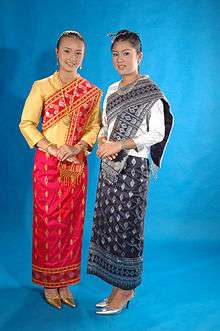
Borrowed from Lao ສິ້ນ (sin) or Thai ซิ่น (sîn).
Alternative forms
- sinh, pha sin, phaa sin
Noun
sin (plural sins)
- A traditional tube skirt worn by Lao and Thai women, particularly northern Thai and northeastern Thai women.
- 1992, Lucretia Stewart, Tiger balm: travels in Laos, Vietnam & Cambodia, page 25:
- These dancers with their graceful upright carriage, their dreamy distant expressions and their party sins (the women were wearing sins made of brightly-coloured silk woven in squares and broad stripes and usually worn by men) were infinitely more appealing than the younger dancers and the electronic band but, as Darachit was fond of saying and without apparent regret, 'Les traditions ne sont plus respectees."
- 2008, Robert Cooper, CultureShock! Laos: A Survival Guide to Customs and Etiquette, →ISBN:
- After the change in regime of 1975, every woman seen in public was wearing a sin, as this was part of a dresscode favoured by the new socialist government.
- 2009, Arne Kislenko, Culture and Customs of Laos, →ISBN, page 128:
- Communism made things even worse by eliminating the export market for locally made textiles and, in some cases, prohibiting the production of silk and the manufacture of clothes. Although traditional sins were allowed, colorful ones were considered bourgeois and banned.
-
Anagrams
Aromanian
Alternative forms
Etymology
Noun
sin n (plural sinj)
See also
Asturian
Preposition
sin
- Alternative form of ensin
Breton
Etymology
Noun
sin m
Cebuano
Etymology
From Spanish zinc, from German Zink, related to Zinke (“point, prong”), from Middle High German zinke, from Old High German zinko (“prong, tine”), allied to zint (“a jag, point”), from Proto-Germanic *tindaz (“prong, pinnacle”), from Proto-Indo-European *(e)dont- (“tooth, projection”).
Noun
sin
- zinc
- galvanized iron sheet
Cornish
Noun
sin m (plural sînys)
Danish
Pronunciation
- Rhymes: -in
Pronoun
sin c (neuter sit, plural sine)
- (reflexive possessive) third-person sg pronoun, meaning his/her/its (own)
- Han læste sin bog - He read his (own) book
- Compare: Han læste hans bog - He read his (somebody else's) book
- Han læste sin bog - He read his (own) book
See also
| Number | Person | Inflection | Nominative | Accusative | Possessive | Reflexive | Reflexive possessive |
|---|---|---|---|---|---|---|---|
| Singular | First | common | jeg | mig | min | ||
| neuter | mit | ||||||
| plural | mine | ||||||
| Second | common | du | dig | din | |||
| neuter | dit | ||||||
| plural | dine | ||||||
| formal | De | Dem | Deres | ||||
| Third | masculine | han | ham | hans | sig | sin | |
| feminine | hun | hende | hendes | ||||
| common | den | den | dens | ||||
| neuter | det | det | dets | sit | |||
| plural | sine | ||||||
| Plural | First | — | vi | os | vores | ||
| common | vor | ||||||
| neuter | vort | ||||||
| plural | vore | ||||||
| Second | – | I | jer | jeres | |||
| formal | De | Dem | Deres | ||||
| Third | – | de | dem | deres | sig | ||
Esperanto
Pronoun
sin
- accusative of si
Fon
Noun
sin
References
- Claire Lefebvre, Anne-Marie Brousseau, A Grammar of Fongbe (2002, →ISBN
Gun
Noun
sin
References
- Aspect and Modality in Kwa Languages (2006, →ISBN
Hausa
Noun
sin f
- Letter of the Arabic alphabet: س
Icelandic
Pronunciation
- IPA(key): /sɪːn/
Audio (file) - Rhymes: -ɪːn
Noun
sin f (genitive singular sinar, nominative plural sinar)
Declension
Irish
Alternative forms
Etymology
Pronunciation
- IPA(key): /ʃɪnʲ/
Determiner
sin
- (used with the definite article) that
- an buachaill sin ― that boy
Pronoun
sin
- that
- Sin é mo dheartháir.
- That is my brother.
Derived terms
Mutation
| Irish mutation | ||
|---|---|---|
| Radical | Lenition | Eclipsis |
| sin | shin after an, tsin |
not applicable |
| Note: Some of these forms may be hypothetical. Not every possible mutated form of every word actually occurs. | ||
Ladino
Etymology
Pronunciation
- IPA(key): /sin/
Preposition
sin
Antonyms
Latin
Etymology
Pronunciation
- (Classical) IPA(key): /siːn/
Conjunction
sīn
Livonian
Pronoun
sin
- singular genitive form of sinā
Menien
Noun
sin
References
- Martius, Beiträge zur Ethnographie und Sprachenkunde Brasiliens, page 155
Middle Dutch
Etymology
From Old Dutch sin, from Proto-Germanic *sinnaz.
Noun
sin m, f
Inflection
This noun needs an inflection-table template.
Descendants
Further reading
- “sin, sinne (I)”, in Vroegmiddelnederlands Woordenboek, 2000
- “sin (I)”, in Middelnederlandsch Woordenboek, 1929
Middle Low German
Pronunciation
- (originally) IPA(key): /siːn/
Etymology 1
From Old Saxon sīn, from Proto-Germanic *sīnaz.
Alternative forms
- sîner (for the genitive of the personal pronoun)
Pronoun
sîn
- (personal pronoun, third person, singular, masculine, genitive) of his
- lohant ret her Zeno hen na Verona to dem vader sin.
- John rode Sir Zeno to Verona, to the father of his.
- lohant ret her Zeno hen na Verona to dem vader sin.
- (personal pronoun, third person, singular, neuter, genitive) of it
- (possessive, third person, singular, masculine) his
- (possessive, third person, neuter, masculine) its
Declension
Personal pronoun:
| nominative | accusative | dative | genitive | ||
|---|---|---|---|---|---|
| 1st person singular | ik (ek) | mî (mê, mik, mek) | mîn (mîner) | ||
| 2nd person singular | dû | dî (dê, dik, dek) | dîn (dîner) | ||
| 3rd person singular | |||||
| m | hê (hî, hie) | ēne, en (ȫne, ȫn) | ēme, em (ȫme, en) | sîn (sîner) | |
| n | it (et) | ||||
| f | sê (sî, sie, sü̂) | ēre, ēr (ērer, ȫrer) | |||
| 1st person plural | wî (wê, wie) | uns (ûs, ös, ü̂sik) | unser (ûser) | ||
| 2nd person plural | gî (jê, î) | jû (jûwe, û, jük, gik) | jûwer (ûwer) | ||
| 3rd person plural | sê (sî, sie) | em, öm, jüm (en) | ēre, ēr (ērer, ȫrer) | ||
|
For an explanation of the forms in brackets see here. | |||||
Possessive pronoun:
| nominative | accusative | dative | genitive | |
|---|---|---|---|---|
| Strong declension | ||||
| Masculine | sîn | sînen | sînem(e) (sînennote) | sînes |
| Neuter | sîn | |||
| Feminine | sîne | sîner(e) | ||
| Plural | sîne | sînen | sîner(e) | |
| Weak declension | ||||
| Masculine | sîne | sînen | sînen | |
| Neuter | sîne | |||
| Feminine | sînen | |||
| Plural | sînen | |||
| The longer forms become rarer in the course of the period. | ||||
Etymology 2
Alternative forms
Verb
sîn
- to be
Usage notes
- Sin/wesen is a verb with two infinitives and mostly identical conjugation, similar to Dutch zijn/wezen. Some forms, such as the imperative (sit/west), may differ depending on the infinitive preferred, but in general which one was used was a matter of personal preference. (This is also true for modern Low German.)
Miskito
Adverb
sin
Navajo
Etymology
From Proto-Athabaskan *xʸən (“shaman's power, medicine, song”). Related to -YĮĮD (“to be holy”), from Proto-Athabaskan *ɣʸən (“to act as a shaman, to be endowed with supernatural powers”).
Compare Ahtna sen (“spiritual power, medecine”), Koyukon sən (“shaman's spirit”), Gwich'in shan (“shamanism, magic”), Tlingit shí, shī, shi(n) (“sing, song”), Eyak tsį, Dena'ina shen, Galice šan (“song”), Lipan shį̀.
Pronunciation
- IPA(key): [sɪ̀n]
Noun
sin (possessed form biyiin)
Inflection
| singular | duoplural | plural | |
|---|---|---|---|
| 1st person | shiyiin | nihiyiin | danihiyiin |
| 2nd person | niyiin | nihiyiin | danihiyiin |
| 3rd person | biyiin | ||
| 4th person (3o) | yiyiin | ||
| 4th person (3a) | hayiin | ||
| Indefinite (3i) | ayiin | ||
Northern Sami
Pronoun
sin
- accusative and genitive of sii
Norwegian Bokmål
Etymology
Determiner
References
- “sin” in The Bokmål Dictionary.
Norwegian Nynorsk
Etymology
Pronunciation
Determiner
References
- “sin” in The Nynorsk Dictionary.
Old Dutch
Etymology
From Proto-Germanic *sīnaz.
Determiner
sīn m, n
Descendants
Old English
Etymology
From Proto-Germanic *sīnaz (“his, her, its, their”, genitive reflexive), from Proto-Indo-European *seynos (“his”), genitive of *só (“that”). Cognate with Old Frisian sīn (“his, its”), Old Saxon sīn (“his”) (Middle Low German sin), Dutch zijn, Old High German sīn (“his”) (German sein), Old Norse sínn (“one's own”), Old English sē (“that, that one, he”). More at the.
Pronunciation
- IPA(key): /siːn/
Pronoun
sīn
- (rare, chiefly dialectal, reflexive possessive pronoun) His; her; its; their.
- him Hrōþgār ġewāt tō hofe sīnum — For him Hrothgar went to his courtyard
- þæt wīf tredeð mid sīnum fōtom — The woman walked with her feet
- þec Israhēla heriað, herran sīnne — Israel plunders thee, their lords
Usage notes
Declension
| Singular | Masculine | Feminine | Neuter |
|---|---|---|---|
| Nominative | sīn | sīn | sīn |
| Accusative | sīnne | sīne | sīn |
| Genitive | sīnes | sīnre | sīnes |
| Dative | sīnum | sīnre | sīnum |
| Instrumental | sīne | sīnre | sīne |
| Plural | Masculine | Feminine | Neuter |
| Nominative | sīne | sīna, -e | sīn |
| Accusative | sīne | sīna, -e | sīn |
| Genitive | sīnra | sīnra | sīnra |
| Dative | sīnum | sīnum | sīnum |
| Instrumental | sīnum | sīnum | sīnum |
Old Irish
Etymology
From Proto-Celtic *sindos (compare Welsh hyn), from Proto-Indo-European *sḗm (“one”) or *só (“that”); strong doublet of in (“the”).
Determiner
sin
- that (used after the noun, which is preceded by the definite article)
- a ndéde sin – "that pair (of things)"
Synonyms
Descendants
Pronoun
sin
- that (as a direct object, used together with a clitic pronoun)
- c. 800, Würzburg Glosses on the Pauline Epistles, published in Thesaurus Palaeohibernicus (reprinted 1987, Dublin Institute for Advanced Studies), edited and with translations by Whitley Stokes and John Strachan, vol. I, pp. 499–712, Wb. 14d26
- Is i persin Crist da·gníu-sa sin.
- It is in the person of Christ that I do that.
- Is i persin Crist da·gníu-sa sin.
- c. 800, Würzburg Glosses on the Pauline Epistles, published in Thesaurus Palaeohibernicus (reprinted 1987, Dublin Institute for Advanced Studies), edited and with translations by Whitley Stokes and John Strachan, vol. I, pp. 499–712, Wb. 14d26
Old Norse
Alternative forms
Etymology
From Proto-Germanic *senawō.
Noun
sin f (genitive sinar)
References
- sin in Geir T. Zoëga (1910) A Concise Dictionary of Old Icelandic, Oxford: Clarendon Press
Old Saxon
Etymology 1
From Proto-Germanic *sīnaz.
Determiner
sīn m, n
- (dialectal, reflexive possessive pronoun) his, its
- that thar sīn ist: that sculun iuuua seolon uuesen(Heliand, verse 3832)
- Those are his lies: that they shall be your souls
Declension
| Strong declension | ||||||
|---|---|---|---|---|---|---|
| gender | masculine | neuter | feminine | |||
| case | singular | plural | singular | plural | singular | plural |
| nominative | sīn | sīne | sīn | sīnu | sīn | sīne |
| accusative | sīnana | sīne | sīn | sīnu | sīna | sīne |
| genitive | sīnes | sīnarō | sīnes | sīnarō | sīnaro | sīnarō |
| dative | sīnumu | sīnum | sīnumu | sīnum | sīnaro | sīnum |
| Weak declension | ||||||
| gender | masculine | neuter | feminine | |||
| case | singular | plural | singular | plural | singular | plural |
| nominative | sīno | sīnu | sīna | sīnu | sīna | sīnu |
| accusative | sīnun | sīnun | sīna | sīnun | sīnun | sīnun |
| genitive | sīnun | sīnonō | sīnun | sīnonō | sīnun | sīnonō |
| dative | sīnun | sīnum | sīnun | sīnum | sīnun | sīnum |
Descendants
- Low German: sien
See also
| Personal pronouns | |||||
| Singular | 1. | 2. | 3. m | 3. f | 3. n |
| Nominative | ik | thū | hē | siu | it |
| Accusative | mī, me, mik | thī, thik | ina | sia | |
| Dative | mī | thī | imu | iru | it |
| Genitive | mīn | thīn | is | ira | is |
| Dual | 1. | 2. | - | - | - |
| Nominative | wit | git | - | - | - |
| Accusative | unk | ink | - | - | - |
| Dative | |||||
| Genitive | unkero | - | - | - | |
| Plural | 1. | 2. | 3. m | 3. f | 3. n |
| Nominative | wī, we | gī, ge | sia | sia | siu |
| Accusative | ūs, unsik | eu, iu, iuu | |||
| Dative | ūs | im | |||
| Genitive | ūser | euwar, iuwer, iuwar, iuwero, iuwera | iro | ||
Etymology 2
From Proto-Indo-European *h₁es- (“to be, exist”) (with some parts from Proto-Germanic *wesaną (“to be”)). Cognate with Old Dutch sīn (“to be”), Old English sēon (“to be”), Old High German sīn. More at sooth.
Verb
sīn (irregular)
Conjugation
| infinitive | sīn | |
|---|---|---|
| indicative | present | past |
| 1st person singular | *em, *im | was |
| 2nd person singular | *art | *wāri |
| 3rd person singular | ist, is | was |
| plural | sind, sindun, *arun | wārun |
| subjunctive | present | past |
| 1st person singular | sī | wāri |
| 2nd person singular | sīs | wāris |
| 3rd person singular | sī | wāri |
| plural | sīn | wārin |
| imperative | present | |
| singular | wes, wis | |
| plural | wesad, wesat, wesath | |
| participle | present | past |
| wesandi | giwesan | |
Descendants
Picard
Pronoun
sin m
Scottish Gaelic
Etymology
Pronunciation
- IPA(key): [ʃɪn]
Pronoun
sin
- that
- Dè tha sin? - What is that?
Derived terms
Determiner
sin
- (used with the definite article) that
- an gille sin — that boy
Derived terms
- air a shon sin - nevertheless
- an dèidh sin - afterwards; nevertheless
- cho math ri sin - furthermore
- iad sin - those
Serbo-Croatian
Etymology 1
From Proto-Slavic *synъ, from Proto-Indo-European *suHnús.
Pronunciation
- IPA(key): /sîːn/
Noun
sȋn m (Cyrillic spelling си̑н)
Declension
Etymology 2
Pronunciation
- IPA(key): /sîn/
Noun
sȉn m (Cyrillic spelling си̏н)
- sin (letter of various Semitic abjads)
Declension
Slovene
Etymology
From Proto-Slavic *synъ, from Proto-Indo-European *suHnús.
Noun
sín m anim (genitive sína or sinú, nominative plural síni or sinôvi)
Declension
| singular | dual | plural | |
|---|---|---|---|
| nominative | sin | sinova | sinovi |
| accusative | sin / sinu | sinova | sinove |
| genitive | sina | sinov | sinov |
| dative | sinu | sinovoma | sinovom |
| locative | sinu | sinovih | sinovih |
| instrumental | sinom | sinovoma | sinovi |
Spanish
Etymology
Pronunciation
- IPA(key): /sin/, [sĩn]
Preposition
sin
Antonyms
Related terms
Swedish
Etymology 1
Nominalisation of sina (“run dry”).
Noun
sin ?
- Dryness, the state of having run dry.
Usage notes
Most commonly used when referring to either milk or funds.
Etymology 2
From Old Swedish sīn, from Old Norse sínn, from Proto-Germanic *sīnaz. Cognate with Danish sin, Gothic 𐍃𐌴𐌹𐌽𐍃 (seins), German sein, Dutch zijn.
Pronunciation
- IPA(key): /siːn/
Pronoun
sin c (neuter sitt, plural sina)
- his (own), her (own), its (own), their (own). (Reflexive possessive third person pronoun).
- Han hämtade sin post för tio minuter sedan
- He picked up his (own) mail ten minutes ago
- Compare: Han hämtade hans post för tio minuter sedan
- He picked up his (somebody else’s) mail ten minutes ago.
- Hon samlar sina dikter i en låda
- She collects her poems in a box
- Hunden tycker inte om sitt halsband
- The dog doesn’t like its collar
- De tog sina papper och lämnade mötet
- They gathered their papers and left the meeting
- Han hämtade sin post för tio minuter sedan
Usage notes
Declension
*Not universally accepted.
Tatar
Pronoun
sin
Turkish
Noun
sin (definite accusative sini, plural sinler)
- grave, burial place
Inflection
| Inflection | ||
|---|---|---|
| Nominative | sin | |
| Definite accusative | sini | |
| Singular | Plural | |
| Nominative | sin | sinler |
| Definite accusative | sini | sinleri |
| Dative | sine | sinlere |
| Locative | sinde | sinlerde |
| Ablative | sinden | sinlerden |
| Genitive | sinin | sinlerin |
Vietnamese
Noun
sin
West Frisian
Pronunciation
- IPA(key): /sɪn/
Noun
sin c
- sentence (syntactic unit containing a subject and a predicate)
- sense (means of experiencing the external world)
- meaning, sense, significance
Noun
sin n