te
English
Alternative forms
- (North America) ti
Etymology
Altered from si in the 19th century to prevent having two notes of the musical scale starting with the same letter.
Pronunciation
Noun
te (uncountable)
Anagrams
Afrikaans
Etymology
Pronunciation
- IPA(key): /tə/
Adverb
te
- indicating excess: too
Preposition
te
Aiwoo
Verb
te
- to see
References
- Greenhill, S.J., Blust. R, & Gray, R.D. (2008). The Austronesian Basic Vocabulary Database: From Bioinformatics to Lexomics. Evolutionary Bioinformatics, 4:271-283.
Akan
Alternative forms
- (Fante) tse
Pronunciation
- Tone: L[1]
Verb
te
- to understand, perceive
- to hear
References
- ↑ Kotey, Paul A. (1998). Twi-English/English-Twi Dictionary. New York: Hippocrene Books. →ISBN
- Christaller, Johann Gottlieb (1881). A Dictionary of the Asante and Fante Language Called Tshi (Chwee, Tw̌i). Basel.
Albanian
Etymology
From Proto-Albanian *te-k(u), from Proto-Indo-European *to- (“it”). Governs the nominative determinative, due to its relatively recent use as a preposition and its origin as a shortened form of Albanian *te-k(u).
Preposition
te (+nominative)
- at
- Unë jam te pijetorja.
- I'm at the bar.
- to
- (with a human referent) at (someone's) place
- Jemi te unë.
- We're at my place.
Synonyms
Asturian
Etymology
Pronoun
te
Basque
Noun
te
Catalan
Etymology 1
Pronunciation
Noun
te f (plural tes)
Etymology 2
From Latin tē (accusative of tū), from Proto-Indo-European *twé, *te, accusative of *túh₂ (“you”).
Pronunciation
Pronoun
te (enclitic, contracted 't, proclitic et, contracted proclitic t')
Declension
Related terms
Etymology 3
Originally from Min Nan 茶 (tê).
Pronunciation
Noun
te m (plural tes)
- The tea plant; (Camellia sinensis)
- tea; the product made from the leaves of the tea plant
- tea; a light afternoon meal at which tea is commonly served
Classical Nahuatl
Pronoun
te
- Alternative spelling of teh
Cornish
Alternative forms
- (Standard Cornish, Standard Written Form) ty
Pronoun
te
Noun
te
Dalmatian
Etymology
Pronoun
te
Related terms
See also
Danish
Alternative forms
- the (unofficial since 1872, but still common)
Pronunciation
- IPA(key): /teː/, [tˢeːˀ]
Etymology 1
From Dutch thee, from Min Nan 茶 (tê, “tea”).
Noun
te c (singular definite teen, plural indefinite teer)
Inflection
Etymology 2
From Old Norse tjá; cognates include Icelandic tjá and Faroese tíggja.
Verb
te (imperative te, infinitive at te, present tense ter, past tense teede, perfect tense har teet)
Deg Xinag
Pronunciation
- IPA(key): /tʰe/
Noun
te
References
- S. Hargus, Vowel quality and duration in Deg Xinag
Dutch
Etymology
From Old Dutch te, ti, from Proto-Germanic *ta.
Pronunciation
- IPA(key): /tə/
audio (file)
Adverb
te
- too (indicating excess)
- Te veel is nooit goed
- too much is never good
- te gek!
- far out!
Preposition
te
Article
te
- (archaic) in idiom; a form of the definite article de
- Te drommel
- by Jove.
Usage notes
This preposition used to govern the dative case. It also fused with the dative forms of the definite article:
Combinations with the nominative form of the article, like *te het or *te de have never become part of the language. The collapse of the inflection system and the related demise of the distinction between masculine and feminine gender (for most speakers) has pushed this preposition into partial disuse. It does however occur in a fair number of idiomatic expressions, often with fossilized case endings, e.g.:
- te elfder ure. ― at the eleventh hour.
- te eigen bate ― for one's own profit.
(Elfder, ure and bate are dative forms of elfde, uur and baat resp.)
Estonian
Etymology
From Proto-Finnic *tek.
Pronoun
te (short form of teie)
- you (plural and polite form)
Ewe
Noun
te
Preposition
te
Verb
te
Faroese
Pronunciation
Etymology 1
Noun
te n (genitive singular tes, plural te)
Declension
| Declension of te | ||||
|---|---|---|---|---|
| n4 | singular | plural | ||
| indefinite | definite | indefinite | definite | |
| nominative | te | teið | te | teini |
| accusative | te | teið | te | teini |
| dative | te, tei | tenum | teum | teunum |
| genitive | tes | tesins | tea | teanna |
See also
Etymology 2
Originally from Min Nan 茶 (tê), from Middle Chinese, from Old Chinese, ultimately from Proto-Sino-Tibetan *s-la (“leaf, tea”).
Noun
te n (genitive singular tes, uncountable)
Declension
| Declension of te (singular only) | ||
|---|---|---|
| n4s | singular | |
| indefinite | definite | |
| nominative | te | teið |
| accusative | te | teið |
| dative | te, tei | tenum |
| genitive | tes | tesins |
Derived terms
|
|
|
Anagrams
Finnish
Etymology
From Proto-Finnic *tek, from Proto-Uralic *te.
Pronunciation
- IPA(key): /ˈte/
- Hyphenation: te
- Rhymes: -e
Pronoun
te (stem tei-)
- (personal) you (second-person plural; when addressing many persons or when addressing politely or formally one person)
Usage notes
- Depending on the context, the pronoun can sometimes be omitted in written language if the text remains fluent – the pronoun is in spoken language practically always used (compare the usage of sinä, "you" (sg.)).
- When addressing politely or formally one person in a written form, it is recommendable to capitalize the pronoun Te.
- When addressing one person, the active past participle must be singular in negative past indicative, in present perfect of all moods both affirmative and negative and past perfect indicative — because there is one person addressed:
- (negative past indicative)
- (affirmative present perfect indicative)
- (negative present perfect indicative)
- (affirmative present perfect conditional)
- (negative present perfect conditional)
- (affirmative present perfect potential)
- (negative present perfect potential)
- (affirmative past perfect indicative)
- (negative past perfect indicative; note ollut twice)
Declension
- Irregular. The comitative and instructive forms don't exist; the abessive is hardly used.
- In addition to the standard set of cases, te and other personal pronouns have a specific accusative form, teidät.
Declension of te
|
Synonyms
Derived terms
- teititellä (verb)
See also
Anagrams
French
Etymology
From Middle French te, from Old French te, from Latin tē, (accusative of tū), from Proto-Indo-European *twé, *te, accusative of *túh₂ (“you”).
Pronunciation
- IPA(key): /tə/
- Rhymes: -ə
Pronoun
te
- (direct object) You.
- Il te cite souvent. ― He often quotes you.
- (indirect object) You.
- Il te donne le livre. ― He gives you the book.
- (reflexive) yourself
- Tu te souviens d'elle. ― You remember her. (Literally: You remind yourself of her.)
Related terms
| Number | Person | Gender | Nominative (subject) |
Reflexive | Accusative (direct complement) |
Dative (indirect complement) |
Locative (at) |
Genitive (of) |
Disjunctive (tonic) |
|---|---|---|---|---|---|---|---|---|---|
| Singular | First | — | je, j’ | me, m’ | — | — | moi | ||
| Second | — | tu | te, t’ | — | — | toi | |||
| Third | Masculine | il | se, s’ | le, l’ | lui | y | en | lui, soi | |
| Feminine | elle | la, l’ | elle, soi | ||||||
| — | on | — | — | — | — | soi | |||
| Plural | First | — | nous | nous | — | — | nous | ||
| Second | — | vous | vous | — | — | vous | |||
| Third | Masculine | ils | se, s’ | les | leur | y | en | eux, soi | |
| Feminine | elles | elles, soi | |||||||
Further reading
- “te” in le Trésor de la langue française informatisé (The Digitized Treasury of the French Language).
Anagrams
Galician
Etymology 1
Noun
te f (plural tes)
Etymology 2
See etymology on the main entry.
Pronoun
te
- inflection of ti:
- accusative
- reflexive
Haitian Creole
Etymology
Adverb
te
- Indicates the past or pluperfect tense.
Hungarian
Etymology
From the same Proto-Uralic root *tinä as e.g. Finnish sinä, Mari Eastern Mari тый (təj) and Komi Komi-Zyrian тэ (te).
Pronunciation
- IPA(key): [ˈtɛ]
Audio (file)
Pronoun
te
- (personal) you (second-person singular, nominative, informal form)
Declension
Derived terms
See also
Icelandic
Pronunciation
- IPA(key): /tʰɛː/
- Rhymes: -ɛː
Noun
te n (genitive singular tes, no plural)
Declension
Derived terms
|
|
|
Ido
Pronunciation
- IPA(key): /te/, /tɛ/
Noun
te (plural te-i)
See also
- (Latin script letter names) litero; a, be, ce, che, de, e, fe, ge, he, i, je, ke, le, me, ne, o, pe, que, re, se, she, te, u, ve, we, xe, ye, ze
Irish
Etymology
From Old Irish té (“hot”), from Proto-Celtic *teɸents, from the present participle of Proto-Indo-European *tep- (“to be warm”) (compare Latin tepēns).
Pronunciation
- IPA(key): /tʲɛ/
Adjective
te (genitive singular masculine te, genitive singular feminine te, plural teo, comparative teo or teocha)
- hot, warm
- serving to keep warm
- pungent
- ardent, hot-tempered; vehement, hotfoot
- affectionate
- (of circumstances) comfortable
Declension
| Singular | Plural (m/f) | |||
|---|---|---|---|---|
| Positive | Masculine | Feminine | (strong noun) | (weak noun) |
| Nominative | te | the | teo; theo² | |
| Vocative | the | teo | ||
| Genitive | te | teo | te | |
| Dative | te; the¹ |
the | teo; theo² | |
| Comparative | níos teo | |||
| Superlative | is teo | |||
¹ When the preceding noun is lenited and governed by the definite article.
² When the preceding noun ends in a slender consonant.
- Alternative comparative form: teocha (Cois Fharraige)
Related terms
Mutation
| Irish mutation | ||
|---|---|---|
| Radical | Lenition | Eclipsis |
| te | the | dte |
| Note: Some of these forms may be hypothetical. Not every possible mutated form of every word actually occurs. | ||
Further reading
- "te" in Foclóir Gaeilge-Béarla, An Gúm, 1977, by Niall Ó Dónaill.
- “té, te” in Dictionary of the Irish Language, Royal Irish Academy, 1913–76.
Italian
Etymology
Pronunciation
- Rhymes: -e
Pronoun
te
- (disjunctive, emphatic) you
See also
| Number | Person | Gender | Nominative | Reflexive | Accusative | Dative | Locative | Genitive | Disjunctive |
|---|---|---|---|---|---|---|---|---|---|
| Singular | first | — | io | mi, m' | — | me | |||
| second | — | tu | ti, t' | te | |||||
| third | m | lui | si,2 s' | lo, l' | gli | ci, c', vi, v' (formal) |
ne, n' | lui, sé | |
| f 1 | lei, Lei | la, l', La | le,3 Le | lei, Lei, sé | |||||
| Plural | first | — | noi | ci, c' | — | noi | |||
| second | — | voi | vi, v' | voi | |||||
| third | m | loro, Loro | si, s' | li | gli, loro (formal), Loro |
ci, c', vi, v' (formal) |
ne, n' | loro, Loro, sé | |
| f 1 | le | ||||||||
| 1 | The feminine gender forms are also used as formal terms of address, often capitalised as Lei, Loro etc. to distinguish them. | ||||||||
| 2 | Also used as indefinite pronoun meaning “one”, and to form the passive. | ||||||||
| 3 | In informal speech sometimes replaced with gli (nonstandard). | ||||||||
Japanese
Romanization
te
Kalasha
Etymology
From Sanskrit तद् (tád), from Proto-Indo-European *tód.
Pronoun
te
See also
Coordinate terms
Kikuyu
Etymology
Hinde (1904) records kute as an equivalent of English throw in “Jogowini dialect” of Kikuyu.[1]
Pronunciation
- IPA(key): /tɛ/
Verb
te (infinitive gũte)
- to throw away
- tũteaga - we (usually) throw away
References
- ↑ Hinde, Hildegarde (1904). Vocabularies of the Kamba and Kikuyu languages of East Africa, pp. 60&ndash61;. Cambridge: Cambridge University Press.
- Armstrong, Lilias E. (1940). The Phonetic and Tonal Structure of Kikuyu, p. 363. Rep. 1967. (Also in 2018 by Routledge).
Ladin
Preposition
te
Derived terms
Latin
Pronunciation
- (Classical) IPA(key): /teː/
Audio (Classical) (file)
Etymology 1
Noun
tē (indeclinable)
Coordinate terms
References
- te in Charlton T. Lewis and Charles Short (1879) A Latin Dictionary, Oxford: Clarendon Press
- te in Charlton T. Lewis (1891) An Elementary Latin Dictionary, New York: Harper & Brothers
- te in Gaffiot, Félix (1934) Dictionnaire Illustré Latin-Français, Hachette
- Carl Meissner; Henry William Auden (1894) Latin Phrase-Book, London: Macmillan and Co.
- (ambiguous) I have not seen you for five years: quinque anni sunt or sextus annus est, cum te non vidi
- (ambiguous) everything depends on you: in te omnia sunt
- (ambiguous) the decision of the question rests with you: penes te arbitrium huius rei est
- (ambiguous) I blame this in you; I censure you for this: hoc in te reprehendo (not ob eam rem)
- (ambiguous) convince yourself of this; rest assured on this point: sic volo te tibi persuadere
- (ambiguous) the matter speaks for itself: res ipsa (pro me apud te) loquitur
- (ambiguous) be brave: fortem te praebe
- (ambiguous) your health: bene tibi or te!
- (ambiguous) a word with you: paucis te volo
- (ambiguous) a word with you: tribus verbis te volo
- (ambiguous) I bid you good-bye, take my leave: te valere iubeo
- (ambiguous) good luck to you: macte virtute (esto or te esse iubeo)
- (ambiguous) I have not seen you for five years: quinque anni sunt or sextus annus est, cum te non vidi
- Arthur E. Gordon, The Letter Names of the Latin Alphabet (University of California Press, 1973; volume 9 of University of California Publications: Classical Studies), part III: “Summary of the Ancient Evidence”, page 32: "Clearly there is no question or doubt about the names of the vowels A, E, I, O, U. They are simply long A, long E, etc. (ā, ē, ī, ō, ū). Nor is there any uncertainty with respect to the six mutes B, C, D, G, P, T. Their names are bē, cē, dē, gē, pē, tē (each with a long E). Or about H, K, and Q: they are hā, kā, kū—each, again, with a long vowel sound."
Etymology 2
From Proto-Indo-European *twé, *te, accusative of *túh₂ (“you”).
Pronoun
tē
Descendants
Latvian
Adverb
te
Conjunction
te
Lithuanian
Etymology
Cognate with Latvian te. The interjection is identical to Ancient Greek τῆ (tê, “here!, take this!”), which Beekes derives from Proto-Indo-European *teh₁, the instrumental neuter singular form of *tód.[1] Compare Gothic 𐌱𐌹𐌸𐌴 (biþē, “while”), 𐌳𐌿𐌸𐌴 (duþē, “therefore”), Tocharian A ca-, Tocharian B ce (“demonstrative pronoun”) < *tē[2], and possibly Old Armenian թէ (tʿē, “that”).
Pronunciation
IPA(key): /tʲɛ/
Particle
te
Interjection
tè
- (with object cases) here you go, take this (when giving something to someone)
Derived terms
See te-.
References
- ↑ Beekes, Robert S. P. (2010) Etymological Dictionary of Greek (Leiden Indo-European Etymological Dictionary Series; 10), with the assistance of Lucien van Beek, Leiden, Boston: Brill
- ↑ Albert J. van Windekens (1979) Le tokharien confronté avec les autres langues indoeuropéennes. Vol. I. La phonétique et le vocabulaire. Louvain, page 249
Lower Sorbian
Pronunciation
- IPA(key): [tɛ]
Determiner
te
Mandarin
Romanization
te (Zhuyin ˙ㄊㄜ)
te
- Nonstandard spelling of tè.
Usage notes
- English transcriptions of Mandarin speech often fail to distinguish between the critical tonal differences employed in the Mandarin language, using words such as this one without the appropriate indication of tone.
Maori
Article
te sg (plural ngā)
Determiner
te sg (plural ngā)
- Referring to a whole class of things or people designated by the noun that follows.
- Kī tonu te wharenui i te tamariki.
- The meeting house was full of children.
- Mr, mister, sir (capitalised)
- Kei Te Wharehuia, tēnei te mihi atu mō tō āwhina mai.
- Wharehuia sir, thank you most sincerely for your help.
- Used in front of another verb following a stative.
- Kua oti i a au tāku pukapuka te tuhi.
- I have finished writing my book.
- Used in front of another verb following taea.
- Ka taea e ia tēnei waiata te whakamāori.
- She will be able to interpret this song.
- Used before the names for the days of the week.
- Ā te Rātapu mātou haere ai ki Poihākena.
- We go to Sydney on Saturday.
- Sometimes used before numbers with a following noun.
- I tāwāhi a Pita mō te rima tau.
- Peter was overseas for five years.
- Used before ordinal numbers including those using tua-.
- I piki a Tāne-nui-a-rangi ki te tuangahuru mā rua o ngā rangi.
- Tāne-nui-a-rangi climbed to the twelfth realm.
Meriam
Noun
te
Middle Dutch
Etymology
From Old Dutch te, from Proto-Germanic *ta.
Pronunciation
- IPA(key): /tə/
Preposition
te
- at, in (a place)
- to, towards
- at, during (a time)
- for (the purpose of)
- in accordance with
- with, from (a means, such as language)
- (with gerund) to, for
Alternative forms
- toe (eastern)
Descendants
Adverb
te
- very, particularly
- too, to an excessive degree
Alternative forms
- toe (eastern)
Descendants
- Dutch: te
Further reading
- “te (I)”, in Vroegmiddelnederlands Woordenboek, 2000
- “te (II)”, in Vroegmiddelnederlands Woordenboek, 2000
- “te (I)”, in Middelnederlandsch Woordenboek, 1929
- “te (II)”, in Middelnederlandsch Woordenboek, 1929
Middle English
Pronoun
te
- Alternative form of þe.
References
- “the, (pron.2)” in MED Online, Ann Arbor, Mich.: University of Michigan, 2007, retrieved 5 May 2018.
Middle French
Alternative forms
- t' (before a vowel)
Etymology
From Old French te.
Pronoun
te
- you, second-person singular object pronoun
- to you, second-person singular indirect object pronoun
Synonyms
Descendants
- French: te
Mozarabic
Etymology
Pronoun
te
Neapolitan
Etymology
Pronunciation
- IPA(key): /te/
- Rhymes: -e
Pronoun
te
- you (singular familiar, accusative or dative or reflexive or prepositional)
Coordinate terms
| Number | Person | Nominative | Accusative | Dative | Reflexive | Possessive | Prepositional |
|---|---|---|---|---|---|---|---|
| singular | first-person | io (i') | me | mìo, mìa, mieje, meje | me, méne | ||
| second-person, familiar | tu | te | tùjo, tòja, tùoje, tòje | te, téne | |||
| second-person, formal | vuje | ve | vuósto, vósta, vuóste, vóste | vuje | |||
| third-person, masculine | ìsso | 'o, 'u (lo, lu) | 'i, 'e (li, le) | se | sùjo, sòja, sùoje, sòje | ìsso | |
| third-person, feminine | éssa | 'a (la) | 'e (le) | éssa | |||
| plural | first-person | nuje | ce | nuósto, nòsta, nuóste, nòste | nuje | ||
| second-person, plural | vuje | ve | vuósto, vòsta, vuóste, vòste | vuje | |||
| third-person, masculine | ìsse | 'i, 'e (li, le) | llòro | se | llòro (invariable) | llòro | |
| third-person, feminine | llòro | 'e (le) | |||||
Norwegian Bokmål
Pronunciation
- IPA(key): /teː/
- Rhymes: -eː
Etymology 1
Noun
te m (definite singular teen)
Derived terms
Etymology 2
Verb
te (imperative te, present tense ter, passive tes, simple past tedde, past participle tedd, present participle teende)
- (reflexive) to behave
References
- “te” in The Bokmål Dictionary.
Norwegian Nynorsk
Pronunciation
- IPA(key): /teː/
- Rhymes: -eː
Etymology 1
Noun
te m (definite singular teen)
Derived terms
Etymology 2
Verb
te (present tense ter, past tense tedde, past participle tedd or tett, passive infinitive teast, present participle teande, imperative te)
- (reflexive) to behave
References
- “te” in The Nynorsk Dictionary.
Novial
Pronoun
te
- that (which may be either male or female)
Related terms
Old English
Etymology
From Proto-Germanic *ta (“to”).
Pronunciation
- IPA(key): /te/
Preposition
te
- to
- Heom te cwæþ (He said to him).
- Mt. Kmbl. Rush. 26, 21.
- Áléfed te habbanne.
- Swt. 445, 30: 50.
Related terms
Old French
Etymology
Pronoun
te
- you (second-person singular direct object pronoun)
- to you (second-person singular indirect object pronoun)
- yourself (second-person singular direct object reflexive pronoun)
- to yourself (second-person singular indirect object reflexive pronoun)
Polish
Pronunciation
- IPA(key): /tɛ/
Audio (file) - Homophone: tę
Pronoun
te
Portuguese
Etymology
From Old Portuguese te, from Latin tē (accusative of tū), from Proto-Indo-European *twé, *te, accusative of *túh₂ (“you”).
Pronunciation
Pronoun
te
Quotations
For quotations of use of this term, see Citations:te.
Synonyms
- (yourself): se (formal)
See also
| Portuguese personal pronouns (edit) | |||||||||||||
|---|---|---|---|---|---|---|---|---|---|---|---|---|---|
| Number | Person | Nominative (subject) |
Accusative (direct object) |
Dative (indirect object) |
Prepositional | Prepositional with com |
Non-declining | ||||||
| m | f | m | f | m and f | m | f | m | f | m | f | |||
| Singular | First | eu | me | mim | comigo | ||||||||
| Second | tu | te | ti | contigo | você | ||||||||
| o senhor | a senhora | ||||||||||||
| Third | ele | ela | o (lo, no) |
a (la, na) |
lhe | ele | ela | com ele | com ela | o mesmo | a mesma | ||
| se (reflexive) | si (reflexive) | consigo (reflexive) | |||||||||||
| Plural | First | nós | nos | nós | connosco (Portugal) conosco (Brazil) |
a gente | |||||||
| Second | vós | vos | vós | convosco | vocês | ||||||||
| os senhores | as senhoras | ||||||||||||
| Third | eles | elas | os (los, nos) |
as (las, nas) |
lhes | eles | elas | com eles | com elas | os mesmos | as mesmas | ||
| se (reflexive) | si (reflexive) | consigo (reflexive) | |||||||||||
| Indefinite | se (reflexive) | si (reflexive) | consigo (reflexive) | ||||||||||
Rapa Nui
Article
te (pl te mau)
- the (the definite article)
Romani
Conjunction
te
Romanian
Etymology
From Latin tē (accusative of tū), from Proto-Indo-European *twé, *te, accusative of *túh₂ (“you”).
Pronunciation
- Rhymes: -e
Pronoun
te (unstressed accusative and reflexive form of tu)
Derived terms
Related terms
See also
Romansch
Alternative forms
Noun
te m
Serbo-Croatian
Pronoun
te (Cyrillic spelling те)
- of you (clitic genitive singular of tȋ (“you”))
- you (clitic accusative singular of tȋ (“you”))
- nominative plural of taj (feminine); those (= one)
- Tko su te žene? ― Who are those women?
Declension
Conjunction
te (Cyrillic spelling те)
- and (following a cause; lit. and thereby, and thus)
- Poskliznuo sam se te pao.
- I slipped and fell.
- and, and then (before the last thing in order of mention or occurrence)
- U posljednjih godinu dana bio sam u Beogradu, Zagrebu, Sarajevu te Podgorici.
- In the past year, I have been to Belgrade, Zagreb, Sarajevo and Podgorica.
- Obukao sam se, izašao iz kuće, zaključao vrata te otišao na posao.
- I got dressed up, got out of the house, locked the door and then went to work.
- (Croatia) now (chiefly used in stock phrases)
- Problemi gdje god pogledaš! Te tu, te tamo!
- Problems, wherever you look! Now here, now there!
Spanish
Pronunciation
- IPA(key): /te/, [t̪e]
- Audio:
(file)
- Audio:
- Homophone: té
- Rhymes: -e
Etymology 1
Noun
te f (plural tes)
Etymology 2
From Latin tē (accusative of tū), from Proto-Indo-European *twé, *te, accusative of *túh₂ (“you”).
Pronoun
te
See also
| nominative | dative | accusative | disjunctive | ||||
|---|---|---|---|---|---|---|---|
| first person | singular | yo | me | mí1 | |||
| plural | masc. | nosotros | nos | nosotros | |||
| fem. | nosotras | nosotras | |||||
| second person | singular | tuteo | tú | te | ti1 | ||
| voseo | vos | vos | |||||
| formal2 | usted | le | lo/la3 | usted | |||
| plural | familiar4 | masc. | vosotros | os | vosotros | ||
| fem. | vosotras | vosotras | |||||
| formal/general2 | ustedes | les | los/las3 | ustedes | |||
| third person | singular | masc. | él | le | lo | él | |
| fem. | ella | la | ella | ||||
| neut. | ello5 | lo/la3 | ello | ||||
| plural | masc. | ellos | les | los | ellos | ||
| fem. | ellas | las | ellas | ||||
| sing. & pl. | reflexive | — | se | sí1 | |||
- Like other masculine Spanish words, masculine Spanish pronouns can be used when the gender of the subject is unknown or when the subject is plural and of mixed gender.
- If le or les precedes lo, la, los, or las in a clause, it is replaced with se (e.g., "Se lo dije" instead of "Le lo dije")
Further reading
- “te” in Diccionario de la lengua española, Vigésima tercera edición, Real Academia Española, 2014.
Swedish
Alternative forms
Pronunciation
Noun
te n
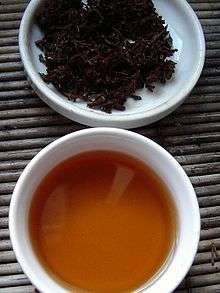
- tea (the tree, its dried leaves and the drink made from them)
Declension
| Declension of te | ||||
|---|---|---|---|---|
| Singular | Plural | |||
| Indefinite | Definite | Indefinite | Definite | |
| Nominative | te | teet | teer | teerna |
| Genitive | tes | teets | teers | teernas |
Derived terms
|
Verb
te
- to appear
- Och gräshopporna tedde sig såsom hästar, rustade till strid.
- And the shapes of the locusts [were] like unto horses prepared unto battle (Revelations 9:7)
Conjugation
Related terms
References
- te in Svenska Akademiens Ordlista över svenska språket (13th ed., online)
- te in Svenska Akademiens ordbok online.
Tahitian
Article
te (plural sometimes te mau)
- the (singular) (definite article)
- the (plural) (definite article)
- (conversationally) a, an (indefinite article)
References
- Yves Lemaître, Lexique du tahitien contemporain (Current Tahitian lexicon), 1995.
- “te” in Dictionnaire en ligne Tahitien/Français (Online Tahitian–French Dictionary), by the Tahitian Academy.
Tongan
Article
te
- the (the definite article)
Turkish
Noun
te (definite accusative, plural teler)
See also
- (Latin-script letter names) harf; a, be, ce, çe, de, e, fe, ge, yumuşak ge, he, ı, i, je, ke, le, me, ne, o, ö, pe, re, se, şe, te, u, ü, ve, ye, ze
Turkmen
Noun
te (definite accusative ?, plural ?)
Tuvaluan
Article
te
- the (the definite article)
Veps
Etymology
From Proto-Finnic *tee.
Noun
te
Inflection
| Inflection of te | |||
|---|---|---|---|
| nominative sing. | te | ||
| genitive sing. | ten | ||
| partitive sing. | ted | ||
| partitive plur. | teid | ||
| singular | plural | ||
| nominative | te | ted | |
| accusative | ten | ted | |
| genitive | ten | teiden | |
| partitive | ted | teid | |
| essive-instructive | ten | tein | |
| translative | teks | teikš | |
| inessive | tes | teiš | |
| elative | tespäi | teišpäi | |
| illative | ? | teihe | |
| adessive | tel | teil | |
| ablative | telpäi | teilpäi | |
| allative | tele | teile | |
| abessive | teta | teita | |
| comitative | tenke | teidenke | |
| prolative | tedme | teidme | |
| approximative I | tenno | teidenno | |
| approximative II | tennoks | teidennoks | |
| egressive | tennopäi | teidennopäi | |
| terminative I | ? | teihesai | |
| terminative II | telesai | teilesai | |
| terminative III | tessai | — | |
| additive I | ? | teihepäi | |
| additive II | telepäi | teilepäi | |
Derived terms
|
|
|
References
- Zajceva, N. G.; Mullonen, M. I. (2007), “дорога, трасса”, in Uz’ venä-vepsläine vajehnik / Novyj russko-vepsskij slovarʹ [New Russian–Veps Dictionary], Petrozavodsk: Periodika
Volapük
Adverb
te
Welsh
Etymology
Borrowed from Min Nan 茶 (tê), probably via French thé or English tea.
Pronunciation
- IPA(key): /teː/
Noun
te m (uncountable)
Mutation
| Welsh mutation | |||
|---|---|---|---|
| radical | soft | nasal | aspirate |
| te | de | nhe | the |
| Note: Some of these forms may be hypothetical. Not every possible mutated form of every word actually occurs. | |||
Westrobothnian
Interjection
te
- quiet
- te, fa lonaǃ
- quiet, listenǃ
- te, fa lonaǃ