地
| ||||||||
Translingual
| Stroke order | |||
|---|---|---|---|
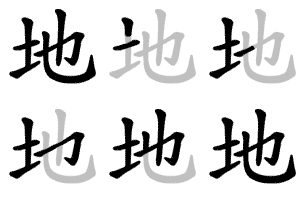 | |||
| Stroke order | |||
|---|---|---|---|
 | |||
Han character
地 (radical 32, 土+3, 6 strokes, cangjie input 土心木 (GPD), four-corner 44112, composition ⿰土也)
References
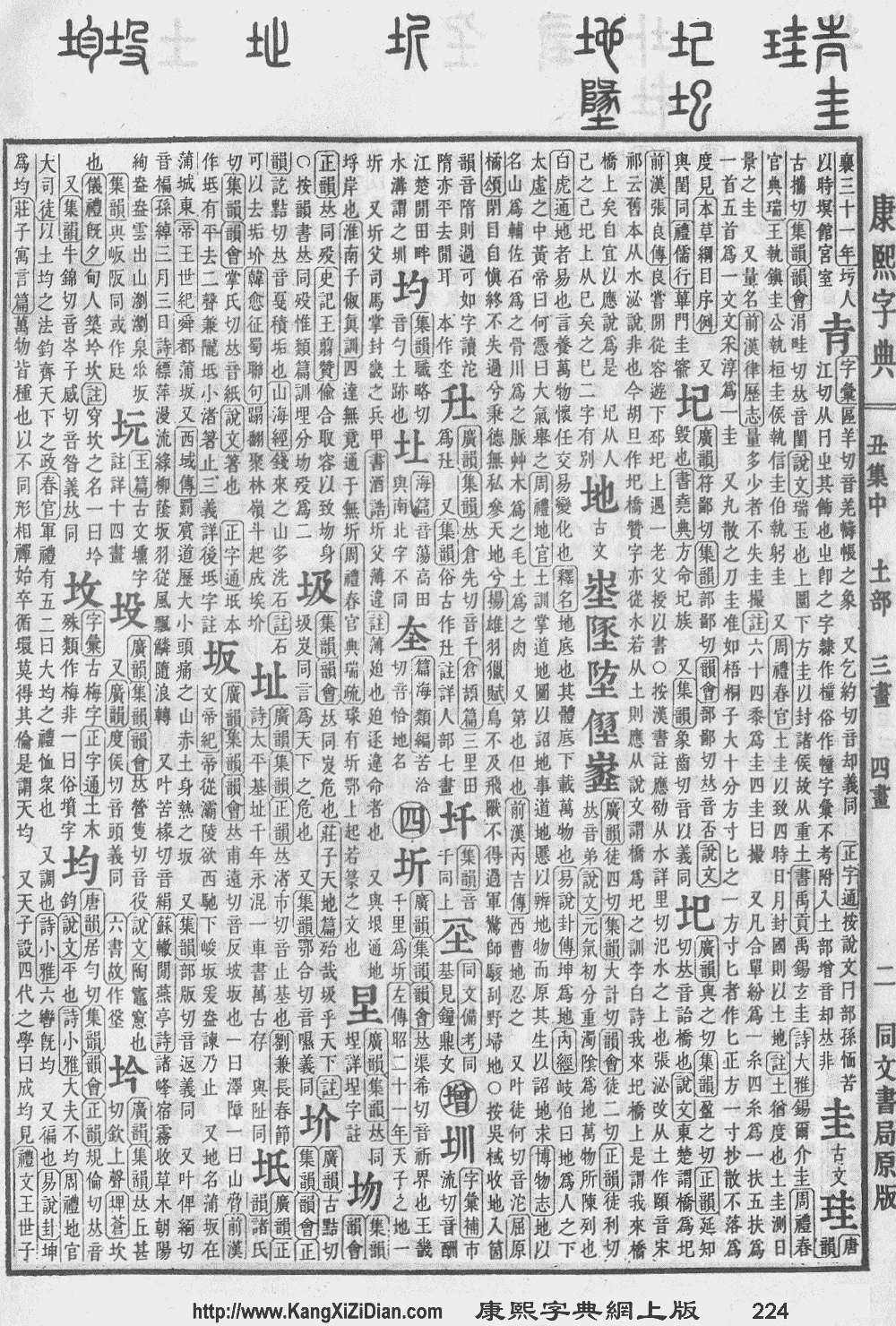
- KangXi: page 224, character 6
- Dai Kanwa Jiten: character 4890
- Dae Jaweon: page 456, character 8
- Hanyu Da Zidian: volume 1, page 420, character 12
- Unihan data for U+5730
Chinese
| simp. and trad. |
地 | |
|---|---|---|
Glyph origin
| Historical forms of the character 地 | |||||
|---|---|---|---|---|---|
| Western Zhou | Warring States | Shuowen Jiezi (compiled in Han) | Liushutong (compiled in Ming) | ||
| Bronze inscriptions | Bronze inscriptions | Chu Slip and silk script | Shizhoupian script | Small seal script | Transcribed ancient scripts |
 |
 |
 |
 |
 |
 |
| Characters in the same phonetic series (也) (Zhengzhang, 2003) | |
|---|---|
| Old Chinese | |
| 他 | *l̥ʰaːl |
| 拖 | *l̥ʰaːl, *l̥ʰaːls |
| 駞 | *l'aːl |
| 池 | *l'aːl, *l'al |
| 灺 | *ljalʔ |
| 鍦 | *ɦljaːl, *hljal, *hljals |
| 虵 | *ɦljal, *laːlʔ, *lal |
| 也 | *laːlʔ |
| 忚 | *hleːl |
| 髢 | *l'eːls |
| 杝 | *l̥ʰalʔ, *l'alʔ, *lal |
| 肔 | *l̥ʰalʔ, *lalʔ |
| 馳 | *l'al |
| 阤 | *l'alʔ, *hljalʔ |
| 施 | *hljal, *hljals |
| 絁 | *hljal |
| 葹 | *hljal |
| 弛 | *hljalʔ |
| 箷 | *lal |
| 衪 | *lel, *lalʔ |
| 暆 | *lel |
| 迆 | *lal, *lalʔ |
| 酏 | *lal, *lalʔ |
| 匜 | *lal, *lalʔ |
| 迤 | *lalʔ |
| 扡 | *lalʔ |
| 崺 | *lalʔ |
| 貤 | *lals, *ɦljels, *lels |
| 地 | *l'els |
Phono-semantic compound (形聲, OC *l'els) : semantic 土 (“earth”) + phonetic 也 (OC *laːlʔ).
Etymology 1
Pronunciation
Definitions
地
Compounds
Derived terms from 地
|
|
|
Etymology 2
Pronunciation
Definitions
地
Usage notes
- The use of this particle is always optional after polysyllabic adverbs.
- On the contrary, monosyllabic adverbs are compulsorily used with or without 地.
- (where *很地漂亮 is unacceptable)
- (where *倏不見 is unacceptable in Modern Standard Chinese)
Compounds
Etymology 3
Pronunciation
Definitions
地
- (Cantonese) Placed after a reduplicated adjective or stative verb to lessen its intensity.
Usage notes
- This suffix is accompanied by a tone change in the reduplicated word, where the second occurrence is changed to the second tone (unless its original tone is the first or second tone), as seen in the examples above.
Compounds
Derived terms from 地
|
Etymology 4
| For pronunciation and definitions of 地 – see 哋 (“Cantonese plurality marker”). (This character, 地, is a variant form of 哋.) |
Japanese
Kanji
地
Readings
Compounds
Terms derived from 地
Etymology 1
| Kanji in this term |
|---|
| 地 |
| じ Grade: 2 |
| on’yomi |
From Middle Chinese 地 (dijH). The goon reading, so likely the initial borrowing. Compare modern Mandarin dì.
Pronunciation
Noun
地 (hiragana じ, rōmaji ji, historical hiragana ぢ)
- earth, dirt
- fabric, cloth
- 1906, Natsume Sōseki, Botchan:
- いくらか薄い地には相違なくっても暑いには極ってる。
- Ikura ka usui ji ni wa sōi nakutte mo atsui ni wa kimatteru.
- However thin the cloth, flannel is flannel and must have been pretty warm at that time of the year.
- いくらか薄い地には相違なくっても暑いには極ってる。
- 1906, Natsume Sōseki, Botchan:
- (game of Go) territory
Etymology 2
| Kanji in this term |
|---|
| 地 |
| ち Grade: 2 |
| on’yomi |
From Middle Chinese 地 (dijH). The kan'on reading, so likely a later borrowing. The devoicing of the initial consonant might indicate a dialectal source. Compare modern Hakka thi, Min Nan tī.
Pronunciation
Noun
Suffix
Etymology 3
| Kanji in this term |
|---|
| 地 |
| つち Grade: 2 |
| kun’yomi |
From Old Japanese.[2][1]
Pronunciation
Alternative forms
- 土 (more common for this reading)
Noun
References
Korean
Hanja
Compounds
Vietnamese
Han character
地
(địa, rịa)
- This term needs a translation to English. Please help out and add a translation, then remove the text
{{rfdef}}.
This article is issued from
Wiktionary.
The text is licensed under Creative Commons - Attribution - Sharealike.
Additional terms may apply for the media files.