im
Translingual
Alternative forms
- (roman numeral): IM, CMXCIX, cmxcix
Symbol
im
- (informal) A Roman numeral representing nine hundred ninety-nine (999).
See also
- Previous: iim (nine hundred and ninety-eight, 998)
- Next: m (one thousand, 1000)
Albanian
Adjective
im m (feminine ime, m plural e mi, f plural e mia)
Declension
There are also alternative forms which can be used before the noun (which will be in the indefinite state, while the forms used after the noun require the noun to be definite). These forms are restricted to personal relationships like family members, for example:
- im vëlla (“my brother”), ime motër (“my sister”)
These forms are limited to singulars.
See also
Degenan
Noun
im
Further reading
- John Carter, Katie Carter, John Grummitt, Bonnie MacKenzie, Janell Masters, A Sociolinguistic Survey of the Mur Village Vernaculars (2012)
Dupaningan Agta
Conjunction
im
German
Etymology
Contraction.
Pronunciation
- IPA(key): /ɪm/
audio (file)
Contraction
im
Usage notes
- The contraction im is obligatory when the definite article has no deixis whatsoever. In this case it is ungrammatical to use in dem as separate words:
- Wir sitzen im Garten. ― We're sitting in the garden.
- Er arbeitet im technischen Bereich. ― He works in the technical field.
- On the other hand, im is usually not applicable when the definite article has an indicative function. This includes contexts in which English would use a demonstrative pronoun (“this” or “that”) but also some others. Particularly, in dem is used before a defining relative clause.
- In dem Haus haben wir mal gewohnt. ― We used to live in that house [over there].
- Mein Großvater starb in dem Haus, wo ich geboren wurde. ― My grandfather died in the house where I was born.
Declension
The preposition in can be used with both accusative and dative objects, but it only contracts with dem as im and with das as ins. Thus, the combination of in with the definite article has the following forms:
| masculine | neuter | feminine | plural | |
|---|---|---|---|---|
| accusative | in den | ins | in die | in die |
| dative | im | im | in der | in den |
Gothic
Romanization
im
- Romanization of 𐌹𐌼
Irish
Etymology 1
From Old Irish imb, from Proto-Celtic *emban- (compare Welsh ymenyn), from Proto-Indo-European *h₃engʷen- (compare Latin unguen (“grease”), Old High German ancho (“butter”)).
Pronunciation
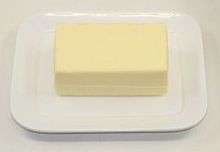
Noun
im m (genitive singular ime, nominative plural imeanna)
- butter
- 1906, E. C. Quiggin, “Áindrías an Ime”, in A Dialect of Donegal: Being the Speech of Meenawannia in the Parish of Glenties, page 197:
- Seachtmhain roimhe Shamhain chuaidh an Seónstanach siar ⁊ seacht ngearráin ⁊ péire cliabh air ghach gearrán fá choinne a chuid ime.
- A week before Samhain, Johnstone went back with seven geldings and a pair of panniers on each gelding for his butter.
- Seachtmhain roimhe Shamhain chuaidh an Seónstanach siar ⁊ seacht ngearráin ⁊ péire cliabh air ghach gearrán fá choinne a chuid ime.
-
Declension
Derived terms
- saill ime (“butterfat”)
- uachtar ime (“buttercream”)
Etymology 2
Alternative forms
Pronunciation
- IPA(key): /ɪmˠ/
Contraction
im (triggers lenition)
Related terms
| Basic form | Contracted with | Copular forms | ||||||||
|---|---|---|---|---|---|---|---|---|---|---|
| an (“the sg”) | na (“the pl”) | mo (“my”) | do (“your”) | a (“his, her, their; which (present)”) | ár (“our”) | ar (“which (past)”) | (before consonant) | (present/future before vowel) | (past/conditional before vowel) | |
| de (“from”) | den | de na desna* | de mo dem* | de do ded*, det* | dá | dár | dar | darb | darbh | |
| do (“to, for”) | don | do na dosna* | do mo dom* | do do dod*, dot* | dá | dár | dar | darb | darbh | |
| faoi (“under, about”) | faoin | faoi na | faoi mo | faoi do | faoina | faoinár | faoinar | faoinarb | faoinarbh | |
| i (“in”) | sa, san | sna | i mo im* | i do id*, it* | ina | inár | inar | inarb | inarbh | |
| le (“with”) | leis an | leis na | le mo lem* | le do led*, let* | lena | lenár | lenar | lenarb | lenarbh | |
| ó (“from, since”) | ón | ó na ósna* | ó mo óm* | ó do ód*, ót* | óna | ónár | ónar | ónarb | ónarbh | |
| trí (“through”) | tríd an | trí na | trí mo | trí do | trína | trínár | trínar | trínarb | trínarbh | |
| *Dialectal. | ||||||||||
Etymology 3
Preposition
im (plus dative, triggers lenition, does not mutate b, m, or p)
- Alternative form of um
Mutation
| Irish mutation | |||
|---|---|---|---|
| Radical | Eclipsis | with h-prothesis | with t-prothesis |
| im | n-im | him | t-im |
| Note: Some of these forms may be hypothetical. Not every possible mutated form of every word actually occurs. | |||
Further reading
- "im" in Foclóir Gaeilge-Béarla, An Gúm, 1977, by Niall Ó Dónaill.
- “imb, imm” in Dictionary of the Irish Language, Royal Irish Academy, 1913–76.
- “im” in Foclóir Gaeḋilge agus Béarla, Irish Texts Society, 1st ed., 1904, by Patrick S. Dinneen, page 394.
- Entries containing “im” in English-Irish Dictionary, An Gúm, 1959, by Tomás de Bhaldraithe.
- Entries containing “im” in New English-Irish Dictionary by Foras na Gaeilge.
Jamaican Creole
Etymology
Alternative forms
Pronoun
im
Livonian
Alternative forms
- i'm
Etymology
From Proto-Finnic *imeh.
Noun
im
Middle English
Pronoun
im
- Alternative form of him
References
- “him, (pron.)” in MED Online, Ann Arbor, Mich.: University of Michigan, 2007, retrieved 6 May 2018.
Nalca
Noun
im
Derived terms
- Imik Neyung
Nigerian Pidgin
Etymology
Pronoun
im
Old Saxon
Alternative forms
Etymology
From Proto-Germanic *hiz.
Pronoun
im ((h)im)
Declension
| Personal pronouns | |||||
| Singular | 1. | 2. | 3. m | 3. f | 3. n |
| Nominative | ik | thū | hē | siu | it |
| Accusative | mī, me, mik | thī, thik | ina | sia | |
| Dative | mī | thī | imu | iru | it |
| Genitive | mīn | thīn | is | ira | is |
| Dual | 1. | 2. | - | - | - |
| Nominative | wit | git | - | - | - |
| Accusative | unk | ink | - | - | - |
| Dative | |||||
| Genitive | unkero | - | - | - | |
| Plural | 1. | 2. | 3. m | 3. f | 3. n |
| Nominative | wī, we | gī, ge | sia | sia | siu |
| Accusative | ūs, unsik | eu, iu, iuu | |||
| Dative | ūs | im | |||
| Genitive | ūser | euwar, iuwer, iuwar, iuwero, iuwera | iro | ||
Polish
Pronunciation
- IPA(key): /im/
Pronoun
im
Conjunction
im
- Introduces a parallel, conditional or comparative statement, placed before the thing being compared to; the (more), the (bigger)
- im więcej..., tym mniej...
- the more ..., the less ...
- Im większy głód, tym lepiej smakuje.
- The bigger the hunger, the better [the food] tastes.
- im więcej..., tym mniej...
Romanian
Etymology
Noun
im n (plural imuri)
Synonyms
Related terms
Scots
Pronoun
im
- (South Scots, personal) him
Verb
im
- (South Scots) First person singular simple present form of ti be
See also
Serbo-Croatian
Pronunciation
- IPA(key): /im/
Pronoun
im (Cyrillic spelling им)
- to them (clitic dative plural of ȏn (“he”))
- to them (clitic dative plural of òno (“it”))
- to them (clitic dative plural of òna (“she”))
Declension
| Singular | Plural | |||||
|---|---|---|---|---|---|---|
| Masculine | Feminine | Neuter | Masculine | Feminine | Neuter | |
| nominative | ȏn | òna | òno | òni | òne | òna |
| genitive | njȅga, ga | njȇ, je | njȅga, ga | njȋh, ih | njȋh, ih | njȋh, ih |
| dative | njȅmu, mu | njȏj, joj | njȅmu, mu | njȉma, im | njȉma, im | njȉma, im |
| accusative | njȅga, ga, nj | njȗ, ju, je, nju | njȅga, ga, nj | njȋh, ih | njȋh, ih | njȋh, ih |
| vocative | — | — | — | — | — | — |
| locative | njȅm, njȅmu | njȏj | njȅm, njȅmu | njȉma | njȉma | njȉma |
| instrumental | njȋm, njíme | njȏm, njóme | njȋm, njíme | njȉma | njȉma | njȉma |
Vietnamese
Pronunciation
- (Hà Nội) IPA(key): [ʔim˧˧]
- (Huế) IPA(key): [ʔim˧˧]
- (Hồ Chí Minh City) IPA(key): [ʔim˧˧]
Adjective
im
Verb
im
- to be quiet, to not talk anymore
Welsh
Alternative forms
Pronunciation
- IPA(key): /ɪm/
Pronoun
im