o
 | ||||||||
| ||||||||
Translingual
Letter
o (upper case O)
- The fifteenth letter of the basic modern Latin alphabet.
Pronunciation
- IPA(key): /o/
IPA (file)
Symbol
o
Gallery
- Letter styles
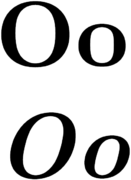 Capital and lowercase versions of O, in normal and italic type
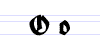 Uppercase and lowercase O in Fraktur
See also
- (Latin script): Aa Bb Cc Dd Ee Ff Gg Hh Ii Jj Kk Ll Mm Nn Oo Pp Qq Rr Sſs Tt Uu Vv Ww Xx Yy Zz
- (Variations of letter O): Óó Òò Ŏŏ Ôô Ốố Ồồ Ỗỗ Ổổ Ǒǒ Öö Ȫȫ Őő Õõ Ṍṍ Ṏṏ Ȭȭ Ȯȯ Ȱȱ Øø Ǿǿ Ǫǫ Ǭǭ Ōō Ṓṓ Ō̂ō̂ Ṑṑ Ỏỏ Ȍȍ Ȏȏ Ơơ Ớớ Ờờ Ỡỡ Ởở Ợợ Ọọ Ộộ Ɵɵ ⱺ ᴏ Oo Ꜵꜵ Œœ Ꝏꝏ Ꝍꝍ Ȣȣ
Other representations of O:

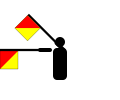
English
Etymology 1
Pronunciation
Letter
o (lower case, upper case O, plural o's)
See also
Number
o (lower case, upper case O)
Noun
o (plural oes)
- The name of the Latin-script letter O/o.
- A zero (used in reading out numbers).
- It is currently two-o-five in the afternoon (2:05 PM).
- The first permanent English settlement in America was in Jamestown in sixteen-o-seven (1607).
Alternative forms
Derived terms
Translations
See also
Etymology 2
Interjection
o
- (archaic, always capitalized in modern usage) The English vocative particle, used before a pronoun or the name of a person or persons to mark direct address.
- 2007 (1640), The Bay Psalm Book, Cosimo Classics, p.37, 41 & 46:
- I lift my soule to thee o Lord
- mee,o Iehovah, heare
- In thee, o Lord, I put my trust
- 2007 (1640), The Bay Psalm Book, Cosimo Classics, p.37, 41 & 46:
- Alternative form of oh
Translations
Noun
o
Adjective
o
Etymology 3
Alternative spelling of o'
Preposition
o
- Alternative form of of
Further reading

Aragonese
Etymology
Article
o m (definite singular)
- the
- O río Ebro ― The Ebro River
Usage notes
- Becomes l' before many words beginning with a vowel.
- The form lo, either pronounced as lo or ro, can be found after words ending with an -o.
- Eastern dialects use the form el.
Asturian
Etymology
Conjunction
o
Azerbaijani
Etymology
| Other scripts | |
|---|---|
| Cyrillic | о |
| Roman | o |
| Perso-Arabic | او |
Cognate with Old Turkic [Term?].
Pronunciation
- (phoneme) IPA(key): /ɔ/
Letter
o lower case (upper case O)
See also
Pronoun
o
Declension
| singular | plural | ||||||
|---|---|---|---|---|---|---|---|
| 1st person | 2nd person | 3rd person | 1st person | 2nd person | 3rd person | ||
| nominative | mən | sən | o | biz | siz | onlar | |
| accusative | məni | səni | onu | bizi | sizi | onları | |
| dative | mənə | sənə | ona | bizə | sizə | onlara | |
| locative | məndə | səndə | onda | bizdə | sizdə | onlarda | |
| ablative | məndən | səndən | ondan | bizdən | sizdən | onlardan | |
| genitive | mənim | sənin | onun | bizim | sizin | onların | |
Borôro
Pronunciation
- IPA(key): /ˈɔ/
Noun
o
Catalan
Etymology 1
Noun
o f (plural os)
Etymology 2
Conjunction
o
Crimean Tatar
Pronoun
o (personal)
Pronoun
o (demonstrative)
Synonyms
- (in the northern dialect) anav
Czech
Etymology
From Proto-Slavic *o(b), from Proto-Indo-European *h₃ebʰi.
Pronunciation
- IPA(key): /o/
audio (file)
Preposition
o
Usage notes
The meaning about is followed by locative case, while the second meaning, for, is followed by accusative case.
Danish
Particle
o
- (elevated or humorous) Vocative particle.
- 1867, Sigurd MÜLLER, Digte, page 132
- O, du dødsens Sol / O, forbandede Sol, / Som har seet, hvad jeg saae!
- O sun of death / O accursed sun / Who has seen what I saw!
- O, du dødsens Sol / O, forbandede Sol, / Som har seet, hvad jeg saae!
- Henrik Pontoppidan, Det forjættede land: Med forord af Kristian Bang Foss, Gyldendal A/S (→ISBN)
- ... løftede i ekstase blikket mod stjernehimlen og bad: „O, min Fader i det høje, ... du ... du alene forstøder mig ikke!
- ... ecstatically lifted his gaze towards the starry sky and prayed: "O my Father in the high, ... you ... you alone will not repudiate me!
- ... løftede i ekstase blikket mod stjernehimlen og bad: „O, min Fader i det høje, ... du ... du alene forstøder mig ikke!
- 1926, Tilskueren
- Min Elskede, o min Elskede. Sabine. Men Du maa bort.
- My beloved, o my beloved. Sabine. But you must leave.
- Min Elskede, o min Elskede. Sabine. Men Du maa bort.
- 1854, Henrik Wergelands Samlede Skrifter, page 341
- Giulio: […] O forhadte Venedig, aldrig meer jeg dig vil se!
- Giulio: […] O loathsome Venice, I never want see you again!
- Giulio: […] O forhadte Venedig, aldrig meer jeg dig vil se!
- 1867, Sigurd MÜLLER, Digte, page 132
Dutch
Pronunciation
- Rhymes: -oː
- IPA(key): /oː/
Audio (file)
Interjection
o
Letter
o (lower case, upper case O)
- The fifteenth letter of the Dutch alphabet.
See also
Esperanto
Pronunciation
Audio (file)
Letter
o (lower case, upper case O)
See also
Noun
o (accusative singular o-on, plural o-oj, accusative plural o-ojn)
See also
- (Latin-script letter names) litero; a, bo, co, ĉo, do, e, fo, go, ĝo, ho, ĥo, i, jo, ĵo, ko, lo, mo, no, o, po, ro, so, ŝo, to, u, ŭo, vo, zo
Extremaduran
Conjunction
o
Fala
Etymology 1
From Old Portuguese o, from Latin illo (“he”).
Article
o m (plural os, feminine a, feminine plural as)
- masculine singular definite article (the)
- 2000, Domingo Frades Gaspar, Vamus a falal: Notas pâ coñocel y platical en nosa fala, Editora regional da Extremadura, Chapter 1: Lengua Española:
- O términu de Valverdi, mais grandi, limita con Portugal, precisamenti con dois distintius Departamentos, que eran Beira Alta con capital en Guarda, a Beira Baixa con capital en Castelo Branco.
- The Valverde locality, the biggest, borders Portugal, more precisely with two distinct departments, which were Beira Alta with Guarda as its capital, and Beira Baixa with Castelo Branco as its capital.
- O términu de Valverdi, mais grandi, limita con Portugal, precisamenti con dois distintius Departamentos, que eran Beira Alta con capital en Guarda, a Beira Baixa con capital en Castelo Branco.
-
Etymology 2
From Old Portuguese ou, from Latin aut (“or”).
Conjunction
o
- or
- 2000, Domingo Frades Gaspar, Vamus a falal: Notas pâ coñocel y platical en nosa fala, Editora regional da Extremadura, Theme 6:
- Poin encontralsi, a o millol, hasta “oito” o mais.
- There can be found, at best, up to “eight” or more.
- Poin encontralsi, a o millol, hasta “oito” o mais.
-
Faroese
Pronunciation
Letter
o (upper case O)
See also
- (Latin-script letters) bókstavur; A a, Á á, B b, D d, Ð ð, E e, F f, G g, H h, I i, Í í, J j, K k, L l, M m, N n, O o, Ó ó, P p, R r, S s, T t, U u, Ú ú, V v, Y y, Ý ý, Æ æ, Ø ø
French
Pronunciation
- IPA(key): /o/
- Rhymes: -o
Noun
o m (plural os)
Abbreviation
o
Derived terms
- (computing): ko, Mo, Go, To, Po, Eo, Zo, Yo
- (computing): o/s, ko/s, Mo/s, Go/s, To/s, Po/s, Eo/s, Zo/s, Yo/s
Fula
Etymology 1
Letter
o (lower case, upper case O)
Usage notes
See also
Etymology 2
Suffix
o (plural ɓe)
- Noun class indicator for nouns (singular) having to do with people, and for loan words
Usage notes
Pronoun
o
Usage notes
Alternative forms
Related terms
Derived terms
- makko (possessive pronoun)
Article
o
- (definite) the (when it follows the noun)
- Debbo o ― the woman
Usage notes
Determiner
o
- (used in indicating someone)
- O debbo ― this/that woman
Usage notes
Galician
Pronunciation
- IPA(key): /o̝/
Audio (file)
Etymology 1
From Old Portuguese o, from Latin illum, from ille.
Article
o m sg (feminine singular a, masculine plural os, feminine plural as)
- (definite) the
Usage notes
The definite article o (in all its forms) regularly forms contractions when it follows the prepositions a (“to”), con (“with”), de (“of, from”), and en (“in”). For example, con o (“with the”) contracts to co, and en o (“in the”) contracts to no.
Derived terms
Etymology 2
See etymology on the main entry.
Pronoun
o
- accusative of el
Usage notes
The Galician pronouns, being atones, are usually appended to the verb; though sandhi, o could acquire the form -no (for example, when appended to a verb form ended in a falling diphthong or in a nasal consonant, the nasal in -no having an antihiatic epenthetic origin) or -lo (when appended to a verb form ended in a -s or -r, the l having its origin in the assimilation of the -s or -r with the l present in the pronoun before the 12th century).
German
Interjection
o
- O
- 1843, Gallus Schwab, Gebetbuch für katholische Christen, Bamberg, p.45:
- Sei gegrüßet, o Du mein Jesu! Mit tieftster Demuth bete ich Dich an und verehre Dich!
- 1843, Gallus Schwab, Gebetbuch für katholische Christen, Bamberg, p.45:
Gothic
Romanization
ō
- Romanization of 𐍉
Guaraní
Etymology
Clipping of óga.
Noun
o
Hawaiian
Conjunction
o
Preposition
o
Usage notes
- Used for possessions that are inherited, out of personal control, and for things that can be got into (houses, clothes, cars), while a is used for acquired possessions.
Ido
Pronunciation
- (context pronunciation, letter name) IPA(key): /o/
Letter
o (upper case O)
See also
Conjunction
o
- Apocopic form of od
Related terms
Italian
Etymology 1
From Latin ō (the name of the letter O).
Pronunciation
- IPA(key): /ɔ/
- Rhymes: -ɔ
- Stress: ò
- Hyphenation: o
- Homophone: ho
Noun
o f (invariable)
See also
Etymology 2
Verb
o
- Misspelling of ho.
Etymology 3
Alternative forms
- od (used optionally before words beginning with a vowel)
Pronunciation
- IPA(key): /o/
- Rhymes: -o
- Stress: ó
- Hyphenation: o
Conjunction
o
References
- ↑ Angelo Prati, "Vocabolario Etimologico Italiano", Torino, 1951
Japanese
Romanization
o
- Rōmaji transcription of お
- Rōmaji transcription of オ
- Rōmaji transcription of を
- Rōmaji transcription of ヲ
Ladin
Etymology
Conjunction
o
Latin
Alternative forms
Etymology 1
Letter
o
- A letter of the Latin alphabet.
Etymology 2
Pronunciation
- (Classical) IPA(key): /oː/
Noun
ō (indeclinable)
- The name of the letter O.
Coordinate terms
References
- o in Charlton T. Lewis and Charles Short (1879) A Latin Dictionary, Oxford: Clarendon Press
- o in Charlton T. Lewis (1891) An Elementary Latin Dictionary, New York: Harper & Brothers
- o in Charles du Fresne du Cange’s Glossarium Mediæ et Infimæ Latinitatis (augmented edition, 1883–1887)
- o in Gaffiot, Félix (1934) Dictionnaire Illustré Latin-Français, Hachette
- Carl Meissner; Henry William Auden (1894) Latin Phrase-Book, London: Macmillan and Co.
- monstrous: o facinus indignum! (Ter. Andr. 1. 1. 118)
- to take the military oath: sacramentum (o) dicere (vid. sect. XI. 2, note sacramentum...)
- monstrous: o facinus indignum! (Ter. Andr. 1. 1. 118)
- o in Harry Thurston Peck, editor (1898) Harper's Dictionary of Classical Antiquities, New York: Harper & Brothers
- Arthur E. Gordon, The Letter Names of the Latin Alphabet (University of California Press, 1973; volume 9 of University of California Publications: Classical Studies), part III: “Summary of the Ancient Evidence”, page 32: "Clearly there is no question or doubt about the names of the vowels A, E, I, O, U. They are simply long A, long E, etc. (ā, ē, ī, ō, ū). Nor is there any uncertainty with respect to the six mutes B, C, D, G, P, T. Their names are bē, cē, dē, gē, pē, tē (each with a long E). Or about H, K, and Q: they are hā, kā, kū—each, again, with a long vowel sound."
Etymology 3
Pronunciation
- (Classical) IPA(key): /oː/
Interjection
ō
- o! (vocative particle)
- 63 BCE, Cicero, Catiline Orations Oratio in Catilinam Prima in Senatu Habita.II
- O tempora, o mores! Senatus haec intellegit, consul videt; hic tamen vivit. Vivit?
- Shame on the age and on its principles! The senate is aware of these things; the consul sees them; and yet this man lives. Lives!
- O tempora, o mores! Senatus haec intellegit, consul videt; hic tamen vivit. Vivit?
- 4th century, St Jerome, Vulgate, Judges 3:19
- et reversus de Galgalis ubi erant idola dixit ad regem verbum secretum habeo ad te o rex et ille imperavit silentium egressisque omnibus qui circa eum erant (Then returning from Galgal, where the idols were, he said to the king: I have a secret message to thee, O king. And he commanded silence: and all being gone out that were about him,)
- oh!
Latvian
Etymology
Proposed in 1908 as part of the new Latvian spelling by the scientific commission headed by K. Mīlenbahs, which was accepted and began to be taught in schools in 1909. Prior to that, Latvian had been written in German Fraktur, and sporadically in Cyrillic.
Pronunciation
Letter

o (lower case, upper case O)
Usage notes
In native Latvian words (and in some older borrowings), o represents the sound of IPA [uə̯] (e.g., otrs [uə̯tɾs]). In more recent borrowings, it represents the original sound of the word, i.e. [o] or [oː] (e.g., opera [oːpeɾa]).
See also
Pronunciation
- IPA(key): [o]
Noun
o m (invariable)
See also
- Latvian letter names:
Ligurian
| Ligurian Definite Articles | ||
|---|---|---|
| singular | plural | |
| masculine | o | i |
| feminine | a | e |
Etymology
From earlier ro ← lo, from Latin illum, form of ille (“that”).
Pronunciation
- IPA(key): /u/
Article
o m sg (plural i)
Lithuanian
Etymology
From Proto-Balto-Slavic *ō; compare Proto-Slavic *a (“and, but”). From Proto-Indo-European *h₁od; compare Sanskrit आत् (āt, “afterwards, then, so”), Avestan 𐬁𐬀𐬝 (āat̰, “afterward, then”), perhaps the ablative singular of *h₁e- (“demonstrative pronoun”).
Pronunciation
IPA(key): /oː/
Conjunction
õ
Livonian
Pronunciation
- (phoneme) IPA(key): /o/
Letter
o (upper case O)
See also
- (Latin-script letters) kēratēḑ; A a, Ā ā, Ä ä, Ǟ ǟ, B b, D d, Ḑ ḑ, E e, Ē ē, F f, G g, H h, I i, Ī ī, J j, K k, L l, Ļ ļ, M m, N n, Ņ ņ, O o, Ō ō, Ȯ ȯ, Ȱ ȱ, Õ õ, Ȭ ȭ, P p, R r, Ŗ ŗ, S s, Š š, T t, Ț ț, U u, Ū ū, V v, Z z, Ž ž
Malay
Letter
o
See also
- (Latin-script letters) A a, B b, C c, D d, E e, F f, G g, H h, I i, J j, K k, L l, M m, N n, O o, P p, Q q, R r, S s, T t, U u, V v, W w, X x, Y y, Z z
Mandarin
Romanization
o
- Nonstandard spelling of ō.
- Nonstandard spelling of ó.
- Nonstandard spelling of ǒ.
- Nonstandard spelling of ò.
Usage notes
- English transcriptions of Mandarin speech often fail to distinguish between the critical tonal differences employed in the Mandarin language, using words such as this one without the appropriate indication of tone.
Maori
Particle
o
- of
- 2006, Joanne Barker, Sovereignty Matters, page 208:
- In 1979 a gathering of elders at the Waananga kaumatua affirmed te reo Maori “Ko te reo te mauri o te mana Maori” the language is the life principle of Maori mana.
- 2006, Joanne Barker, Sovereignty Matters, page 208:
Usage notes
Used instead of a when the possessor has no control over the relationship (inalienable possession).
Middle English
Article
o
- Alternative form of oo
See also
- (Latin-script letters) A a, B b, C c, D d, E e, F f, G g, H h, I i, J j, K k, L l, M m, N n, O o, P p, Q q, R r, S s, T t, U u, V v, W w, X x, Y y, Z z
Middle Low German
Etymology
From Proto-Germanic *awjō. Cognate with Old Norse ey (Swedish ö, Norwegian øy).
Pronunciation
- Stem vowel: ȫ²
- (originally) IPA(key): /œːj/
Noun
ö
Navajo
Letter
o
- The twenty-second letter of the Navajo alphabet:
- o = /o˨/
- ǫ = /õ˨/
- ó = /o˥/
- ǫ́ = /õ˥/
- oo = /oː˨˨/
- ǫǫ = /õː˨˨/
- óo = /oː˥˨/
- ǫ́ǫ = /õː˥˨/
- oó = /oː˨˥/
- ǫǫ́ = /õː˨˥/
- óó = /oː˥˥/
- ǫ́ǫ́ = /õː˥˥/
Neapolitan
Etymology
Pronunciation
- IPA(key): /oː/
Particle
o
Norwegian
Pronunciation
- (letter name): IPA(key): /uː/
- (phoneme): IPA(key): /uː/, /ʊ/, /ɔ/
Letter
o
- The 15th letter of the Norwegian alphabet.
Old Portuguese
Etymology
From earlier lo, la, from Latin illum, illam (the initial l having disappeared; compare Spanish lo and la).
Pronunciation
- (article): IPA(key): /o/
Article
o
- the (masculine singular definite article)
- 13th Century - Cantiga de Santa Maria no. 23
- Esta é como Santa Maria acrecentou o vinho no tonel, por amor da bõa dona de Bretanha.
- This is how Holy Mary added the wine to the barrel, out of love for the good lady of Britain;
- Esta é como Santa Maria acrecentou o vinho no tonel, por amor da bõa dona de Bretanha.
- 13th Century - Cantiga de Santa Maria no. 48
- Esta é como Santa Maria tolheu a agua da fonte ao cavaleiro.
- This is how Holy Mary restricted the water of the fountain from the knight.
- Esta é como Santa Maria tolheu a agua da fonte ao cavaleiro.
- 13th Century - Cantiga de Santa Maria no. 23
Usage notes
- O becomes -no and a becomes -na after nasal sounds:
- Non queria o meu coraçon nen-nos meus olhos.
- She wanted neither (the) my heart nor (the) my eyes.
- Ambas eran-nas melhores que (h)omen pode cousir.
- Both were the best that (a) man can contemplate.
- Non queria o meu coraçon nen-nos meus olhos.
- O becomes -lo and a becomes -la after other consonants, and the preceding consonant is elided:
- E vós faredes depoi-lo melhor!
- And later ye shall do the best.
- Sobre toda-las bondades que ela (h)avia era que muito fiava en Santa Maria;
- Above all the virtues she possessed was how much she trusted Holy Mary.
- E vós faredes depoi-lo melhor!
- O becomes el- in front of the noun rei:
- Deu ora el-rei seus dinheiros a Belpelho.
- The king, then, gave his money to Belpelho.
- Se fosse seu o tesouro que el-rei de França ten.
- Were it his the treasure that the king of France has.
- Deu ora el-rei seus dinheiros a Belpelho.
Descendants
Polish
Etymology
From Proto-Slavic *o(b), from Proto-Indo-European *h₃ebʰi
Pronunciation
- IPA(key): /ɔ/
Audio (file)
Preposition
o
- (+ locative) about (concerning)
- Opowiedz mi o twojej pracy.
- Tell me about your job.
- Ta książka jest o potędze miłości.
- This book is about the power of love.
- (+ locative) at (telling the time)
- Spotkajmy się o piątej po południu.
- Let's meet at five PM.
- (+ locative, used in descriptions) with
- Była piękną kobietą o długich jasnych włosach.
- She was a beautiful woman with long fair hair.
- chłopiec o zielonych oczach
- a boy with green eyes; a green-eyed boy
- (+ accusative) on, against
- Nie opierajcie się o te drzwi.
- Don't lean on this door.
- Dziewczynka uderzyła głową o stół.
- The little girl hit her head on the table.
- (+ accusative) for
- Weronika poprosiła mnie wczoraj o pomoc.
- Veronica asked me for help yesterday.
- Walczyliśmy dzielnie o naszą wolność.
- We were bravely fighting for our freedom.
- (+ accusative) by (a difference)
- Spóźniła się o piętnaście minut.
- She was fifteen minutes late.
- Czuję się o wiele lepiej.
- I feel much better.
- Obniż podkład o dwa półtony.
- Lower the instrumental by two semitones.
Further reading
- o in Polish dictionaries at PWN
Portuguese
Pronunciation
- (letter): IPA(key): /ˈɔ/
- (article, pronoun): IPA(key): /u/, /ʊ/
Etymology 1
Letter
o (lower case, upper case O)
See also
Etymology 2
From Old Portuguese o (compare Galician o), from Vulgar Latin lo, *illu, from Latin illum, from ille (with an initial l having disappeared; compare Spanish lo).
Article
o m (feminine a, masculine plural os, feminine plural as)
- the (masculine singular definite article)
- 2003, Lya Wyler (translator), J. K. Rowling (English author), Harry Potter e a Ordem da Fênix (Harry Potter and the Order of the Phoenix), Rocco, page 75:
- Não o perdoou por abandonar o serviço em vez de seguir você.
- She didn't forgive him for abandoning his service instead of following you.
- Não o perdoou por abandonar o serviço em vez de seguir você.
- 2005, Lya Wyler (translator), J. K. Rowling (English author), Harry Potter e o Enigma do Príncipe (Harry Potter and the Half-Blood Prince), Rocco, page 135:
- Não vi o tempo passar.
- I didn't notice the time passing.
- Não vi o tempo passar.
- 2005, Lya Wyler (translator), J. K. Rowling (English author), Harry Potter e o Enigma do Príncipe (Harry Potter and the Half-Blood Prince), Rocco, page 361:
- [...] disse o professor com um sorrisinho [...]
- [...] the teacher said with a little smile [...]
- [...] disse o professor com um sorrisinho [...]
- 2003, Lya Wyler (translator), J. K. Rowling (English author), Harry Potter e a Ordem da Fênix (Harry Potter and the Order of the Phoenix), Rocco, page 75:
Usage notes
Usage of the definite article in Portuguese has some differences from that of English, such as:
- it can be used with abstract mass nouns:
- O amor é melhor que a guerra.
- Love is better than war.
- it can be optionally used with adjectival possessive pronouns, and mandatorily with substantival possessive pronouns:
- (O) meu livro é melhor que o seu.
- My book is better than yours.
- it can be used with personal names:
- O João foi até a cidade.
- John went to the city.
- it can be used without a possessive pronoun when referring to a relative:
- O pai está viajando.
- (My) dad is travelling.
- Ele não gosta da tia.
- He doesn’t like his aunt.
- more often than in English, it used with a singular to indicate a generic example of, or the noun in general:
- O carvalho é uma árvore grande.
- The oak is a big tree.
Quotations
For quotations of use of this term, see Citations:o.
See also
| Portuguese articles (edit) | ||||
|---|---|---|---|---|
| Singular | Plural | |||
| Masculine | Feminine | Masculine | Feminine | |
| Definite articles (the) |
o | a | os | as |
| Indefinite articles (a, an; some) |
um | uma | uns | umas |
Pronoun
o m (personal)
- him, it (as a direct object; as an indirect object, see lhe; after prepositions, see ele).
- 2003, Lya Wyler (translator), J. K. Rowling (English author), Harry Potter e a Ordem da Fênix (Harry Potter and the Order of the Phoenix), Rocco, page 75:
- Não o perdoou por abandonar o serviço em vez de seguir você.
- She didn't forgive him for abandoning his service instead of following you.
- Não o perdoou por abandonar o serviço em vez de seguir você.
- 2007, Lya Wyler (translator), J. K. Rowling (English author), Harry Potter e as Relíquias da Morte (Harry Potter and the Deathly Hallows), Rocco, page 287:
- Por que, então, ela o conduzira àquele lugar?
- Why, then, did she lead him to that place?
- Por que, então, ela o conduzira àquele lugar?
- 2003, Lya Wyler (translator), J. K. Rowling (English author), Harry Potter e a Ordem da Fênix (Harry Potter and the Order of the Phoenix), Rocco, page 75:
Quotations
For quotations of use of this term, see Citations:o.
Usage notes
- Becomes -lo after verb forms ending in -r, -s, or -z, the pronouns nos and vos, and the adverb eis; the ending letter causing the change disappears.
- Becomes -no after a nasal sound:
- Detêm-no como prisioneiro. ― They detain him/it as a prisoner.
- Põe-no aqui. ― Put him/it here.
- In the colloquial speech of some parts of Brazil, it is being abandoned in favor of the nominative form ele.
- Eu o vi. → Eu vi ele. ― I saw him/it.
See also
| Portuguese personal pronouns (edit) | |||||||||||||
|---|---|---|---|---|---|---|---|---|---|---|---|---|---|
| Number | Person | Nominative (subject) |
Accusative (direct object) |
Dative (indirect object) |
Prepositional | Prepositional with com |
Non-declining | ||||||
| m | f | m | f | m and f | m | f | m | f | m | f | |||
| Singular | First | eu | me | mim | comigo | ||||||||
| Second | tu | te | ti | contigo | você | ||||||||
| o senhor | a senhora | ||||||||||||
| Third | ele | ela | o (lo, no) |
a (la, na) |
lhe | ele | ela | com ele | com ela | o mesmo | a mesma | ||
| se (reflexive) | si (reflexive) | consigo (reflexive) | |||||||||||
| Plural | First | nós | nos | nós | connosco (Portugal) conosco (Brazil) |
a gente | |||||||
| Second | vós | vos | vós | convosco | vocês | ||||||||
| os senhores | as senhoras | ||||||||||||
| Third | eles | elas | os (los, nos) |
as (las, nas) |
lhes | eles | elas | com eles | com elas | os mesmos | as mesmas | ||
| se (reflexive) | si (reflexive) | consigo (reflexive) | |||||||||||
| Indefinite | se (reflexive) | si (reflexive) | consigo (reflexive) | ||||||||||
Rapa Nui
Pronunciation
- IPA(key): /o/
Etymology 1
From Proto-Polynesian *o.
Particle
o
- possessive particle marking an inalienable possession; of
- 2008, Sharon Chester, A wildlife guide to Chile, page 15:
- Polynesians are thought to have arrived at Easter Island around AD 800. They called the island Rapa Nui, or more familiarly Te Pito o Te Henua, the Navel of the World.
- 2008, Sharon Chester, A wildlife guide to Chile, page 15:
Usage notes
Inserted before the relevant pronoun. Only for possessions like hands or parents that do not have the ability to no longer be yours; otherwise, use a.
Etymology 2
Conjunction
o
Usage notes
Generally used in favor of complex native grammatical structures used to achieve the same ends.
Romanian
Pronunciation
- IPA(key): [o]
Etymology 1
Letter
o (lowercase, capital O)
- The eighteenth letter of the Romanian alphabet representing the phoneme /o/. Preceded by n and followed by p.
Usage notes
See O.
Etymology 2
From Latin ūna, feminine of ūnus.
Article
o
- feminine singular nominative form of un: a/an (indefinite article)
- feminine singular accusative form of un: a/an (indefinite article)
Related terms
See also
| indefinite article forms | singular | plural | |
|---|---|---|---|
| m, n | f | ||
| nom/acc | un | o | niște |
| gen/dat | unui | unei | unor |
Etymology 3
Interjection
o!
- oh!
Etymology 4
From a root *eaua, from Latin illam, accusative feminine singular of ille.
Pronoun
o f (unstressed accusative form of ea)
- (direct object) her
- O cunoști?
- Do you know her?
- O cunoști pe Iulia?
- Do you know Iulia?
Related terms
Etymology 5
Verb
(el/ea) o (modal auxiliary, third-person singular form of vrea, used with infinitives to form presumptive tenses)
- (he/she) might
Samoan
Preposition
o
Scots
Preposition
o
Scottish Gaelic
Alternative forms
Preposition
o
Derived terms
- The following prepositional pronouns:
| Person | Number | Prepositional pronoun | Prepositional pronoun (emphatic) |
|---|---|---|---|
| Singular | 1st | uam | uamsa |
| 2nd | uat | uatsa | |
| 3rd m | uaithe | uaithesan | |
| 3rd f | uaipe | uaipese | |
| Plural | 1st | uainn | uainne |
| 2nd | uaibh | uaibhse | |
| 3rd | uapa | uapasan |
Serbo-Croatian
Etymology 1
Pronunciation
- (phoneme) IPA(key): /o/
Letter
o (Cyrillic spelling о)
Alternative forms
- O (uppercase)
Etymology 2
From Proto-Slavic *o(b), from Proto-Indo-European *h₃ebʰi. See o-, ob-.
Pronunciation
- IPA(key): /o/
Preposition
o (Cyrillic spelling о)
- (+ accusative case) on, against
- ob(j)esiti nešto o kuku ― to hang something on a hook
- udariti glavom o zid ― to hit one's head against the wall
- ogr(ij)ešiti se o zakon ― to violate a law
- (+ locative case) about, concerning, of, on
- brinuti se o nekome ― to take care of somebody
- v(ij)est o katastrofi ― news about the catastrophe
- R(ij)eč je o..., radi se o... ― It's about..., this refers to...
- Napisao sam esej o ranom srednjem vijeku. ― I wrote an essay on the Early Middle Ages.
Synonyms
- (Croatia) ob
Skolt Sami
Pronunciation
- (phoneme) IPA(key): /o/
Letter
o (upper case O)
See also
- (Latin-script letters) bukva; A a, Â â, B b, C c, Č č, Ʒ ʒ, Ǯ ǯ, D d, Đ đ, E e, F f, G g, Ǧ ǧ, Ǥ ǥ, H h, I i, J j, K k, Ǩ ǩ, L l, M m, N n, Ŋ ŋ, O o, Õ õ, P p, R r, S s, Š š, T t, U u, V v, Z z, Ž ž, Å å, Ä ä, ʹ
Slovene
Etymology
From Proto-Slavic *o(b), from Proto-Indo-European *h₃ebʰi.
Pronunciation
- IPA(key): /ɔ/
Preposition
o
- (with locative) about, concerning
Somba-Siawari
Noun
o
References
- Kaija Olkkonen, Soini Olkkonen, Somba-Siawari (Burum Mindik)—English dictionary (2007)
Spanish
Pronunciation
- IPA(key): /o/
Audio (Spain) (file)
Etymology 1
Letter
o (lower case, upper case O)
Noun
o f (plural oes)
- Name of the letter O.
See also
Etymology 2
Alternative forms
Conjunction
o
- or
- ¿Quieres un café o algo?
- Do you want a coffee or something?
o … o
Antonyms
Further reading
- “o” in Diccionario de la lengua española, Vigésima tercera edición, Real Academia Española, 2014.
Swedish
Pronunciation
- Letter name
- IPA(key): /uː/
- Phoneme
- IPA(key): /uː/, /ʊ/, /oː/, /ɔ/
Letter
o (lower case, upper case O)
Interjection
o
- O (particle)
- Så låt nu, o konung, härom utfärda ett förbud och sätta upp en skrivelse
- Now, O king, establish the decree, and sign the writing (Daniel 6:8)
Noun
o n
- the letter o
- the Greek letter omega, being the last letter of the Greek alphabet
- Jag är A och O, den förste och den siste, begynnelsen och änden.
- I am Alpha and Omega, the beginning and the end, the first and the last. (Revelations 22:13)
- Jag är A och O, den förste och den siste, begynnelsen och änden.
Declension
| Declension of o | ||||
|---|---|---|---|---|
| Singular | Plural | |||
| Indefinite | Definite | Indefinite | Definite | |
| Nominative | o | ot | on | ona |
| Genitive | os | ots | ons | onas |
Tagalog
Etymology
Pronunciation
- IPA(key): /ɔː/
Conjunction
o
- or
- Sasama ka ba o dito ka lang?
- Are you coming along or will you just be here?
Tok Pisin
Etymology
Conjunction
o
Turkish
Etymology
Merger of Old Anatolian Turkish ol and an (“she, he, it, that”), from Old Turkic 𐰆𐰞 (ol) and [script needed] (an), respectively; both from Proto-Turkic.
Pronoun
o
See also
Pronoun
o (demonstrative)
See also
Letter
o (lower case, upper case O)
See also
Noun
o
See also
- (Latin-script letter names) harf; a, be, ce, çe, de, e, fe, ge, yumuşak ge, he, ı, i, je, ke, le, me, ne, o, ö, pe, re, se, şe, te, u, ü, ve, ye, ze
Turkmen
Pronunciation
- (phoneme) IPA(key): /o/, /oː/
Letter
o (upper case O)
See also
- (Latin-script letters) harp; A a, B b, Ç ç, D d, E e, Ä ä, F f, G g, H h, I i, J j, Ž ž, K k, L l, M m, N n, Ň ň, O o, Ö ö, P p, R r, S s, Ş ş, T t, U u, Ü ü, W w, Y y, Ý ý, Z z
Vietnamese
Pronunciation
- (Hà Nội) IPA(key): [ʔɔ˧˧]
- (Huế) IPA(key): [ʔɔ˧˧]
- (Hồ Chí Minh City) IPA(key): [ʔɔ˧˧]
Etymology 1
From Proto-Vietic *ʔɔː
Noun
o
Synonyms
Related terms
Etymology 2
Borrowed from Portuguese ó.
Noun
o
Related terms
Volapük
Pronunciation
- IPA(key): /o/
Particle
o
- vocative case particle
- O flens löfik!
- Dear friends
Welsh
Pronunciation
- IPA(key): /oː/
Etymology 1
Pronoun
o
Usage notes
O is used predominantly in the north of Wales, while e is used in the south. Fe and fo are variants of e and o respectively.
Etymology 2
From Proto-Brythonic *o, from Proto-Celtic *ɸo, from Proto-Indo-European *h₂pó.
Preposition
o
Inflection
Zazaki
Pronoun
o
See also
Zulu
Letter
o (lower case, upper case O)