ci
Translingual
Alternative forms
- (roman numeral): CI, LLI, llli
Number
ci
- A Roman numeral representing one hundred and one (101).
See also
- Previous: c (one hundred, 100)
- Next: cii (one hundred and two, 102)
English
Etymology
From the pinyin romanization of the Mandarin Chinese 詞 ("cí")
Noun
ci (uncountable)
- One of the Classical Chinese poetry forms
Anagrams
Aka (Central Africa)
Noun
ci
Further reading
Balinese
Pronoun
ci
- you ((basa madia))
Alternative forms
- cai (basa madia)
Synonyms
- ragane (basa kasar)
- i ratu / iratu (basa alus)
Dalmatian
Etymology
From Latin quem. Compare Portuguese quem, Romanian cine, Spanish quien, Romansch che, Sardinian chíne.
Pronunciation
- IPA(key): /t͡ʃi/
Pronoun
ci
Dhimal
Noun
ci (transliteration needed)
External sources
- John T. King, A Grammar of Dhimal
Esperanto
Etymology
From Italian or French tu, Russian ты (ty), etc., plus the i of personal pronouns.
Pronunciation
- IPA(key): /t͡si/
Pronoun
ci (accusative cin, possessive cia)
- thou, you (second-person singular pronoun)
- 1907, Vallienne, Henri, Kastelo de Prelongo, ch. 6:
- Cia sintenado estos vere fiera, li moke murmuretis en ŝian orelon, kiam ci estos vekinta la tutan loĝantaron.
- Thine attitude shall be truly proud, he mockingly whispered into her ear, when thou shalt have awakened the whole population.
- Cia sintenado estos vere fiera, li moke murmuretis en ŝian orelon, kiam ci estos vekinta la tutan loĝantaron.
-
Usage notes
This word has never been in common usage; Zamenhof advised against using 'ci' as early as the Dua Libro de l' Lingvo Internacia, published in 1888. Some authors have used 'ci' to portray archaic language, for translations, and for stylistic effects. This usage is criticized by other writers.
- Ludwig L. Zamenhof, Dua Libro de l' Lingvo Internacia; Ludwig L. Zamenhof, Lingvaj Respondoj; Bertilo Wennergren, Plena Manlibro de Esperanta Gramatiko (PMEG); Bernard Golden, La Gazeto #11, June 15, 1987; Zlatko Tisjlar, Frekvencmorfemaro de Parolata Esperanto.
French
Etymology
Contraction of ici (or ceci) or from Old French ci, from Latin ecce hīc.
Pronunciation
Adverb
ci
- here
- this
- cet homme-ci ― this man
- Ces choses-ci ― these things
- Je préfère ce gâteau-ci à celui-là. ― I prefer this cake to that one.
Derived terms
See also
Further reading
- “ci” in le Trésor de la langue française informatisé (The Digitized Treasury of the French Language).
Ido
Pronunciation
- IPA(key): /tsi/
Determiner
ci
- Alternative form of ici
Pronoun
ci
- Alternative form of ici
Interlingua
Pronunciation
- IPA(key): /tsi/
Adverb
ci
- here (at this place)
Italian
Pronunciation
- IPA(key): /t͡ʃi/
- Rhymes: -i
- Hyphenation: ci
Etymology 1
From Latin cē (the name of the letter C).
Noun
ci f (invariable)
See also
Etymology 2
From hīce or *hicce, from Latin hīc (“here”). Compare French y which also serves as a locative.
Pronoun
ci
- us
- Loro ci conoscono ― They know us
- (reflexive) ourselves; each other
- Ci arrabbiamo ― We (ourselves) get angry
- Ci amiamo ― We love each other
- to us
- Lui ci ha detto questo ― He said this to us
- Replaces the indefinite personal pronoun si (“one”) before reflexive si (“oneself”); one
- Ci si lava. ― One washes oneself.
- Ci si annoia quando non c'è niente da fare.
- One gets bored when there is nothing to do.
Usage notes
Becomes ce when followed by a third person direct object clitic (lo, la, li, le, or ne).
See also
| Number | Person | Gender | Nominative | Reflexive | Accusative | Dative | Locative | Genitive | Disjunctive |
|---|---|---|---|---|---|---|---|---|---|
| Singular | first | — | io | mi, m' | — | me | |||
| second | — | tu | ti, t' | te | |||||
| third | m | lui | si,2 s' | lo, l' | gli | ci, c', vi, v' (formal) |
ne, n' | lui, sé | |
| f 1 | lei, Lei | la, l', La | le,3 Le | lei, Lei, sé | |||||
| Plural | first | — | noi | ci, c' | — | noi | |||
| second | — | voi | vi, v' | voi | |||||
| third | m | loro, Loro | si, s' | li | gli, loro (formal), Loro |
ci, c', vi, v' (formal) |
ne, n' | loro, Loro, sé | |
| f 1 | le | ||||||||
| 1 | The feminine gender forms are also used as formal terms of address, often capitalised as Lei, Loro etc. to distinguish them. | ||||||||
| 2 | Also used as indefinite pronoun meaning “one”, and to form the passive. | ||||||||
| 3 | In informal speech sometimes replaced with gli (nonstandard). | ||||||||
Pronoun
ci
- to there, here, there
- Synonym: vi (formal)
- Ci sono andato ― I have been there
- Ci siamo ― We're here
- Ci sono molte cose ― There are many things
- C'è un problema ― There is a problem
- Forms part of many verbs:
- volerci ― to require/take
- abituarci ― to get used to it
- riuscirci ― to be able to do it
- entrarci ― to do with something
- contarci ― to count on it
- pensarci ― to think about it
- starci ― to agree / to be up for something
- farcela ― to manage to do something
- crederci ― to believe it
See also
Kanuri
Noun
ci
Latin
Verb
cī
- second-person singular present active imperative of ciō
Malay

Etymology
From Sundanese ᮎᮤ (ci).
Pronunciation
- IPA(key): /t͡ʃi/
- Rhymes: -t͡ʃi, -i
Noun
ci
- river (large stream which drains a landmass)
Synonyms
Mandarin
Romanization
ci
- Nonstandard spelling of cī.
- Nonstandard spelling of cí.
- Nonstandard spelling of cǐ.
- Nonstandard spelling of cì.
Usage notes
- English transcriptions of Mandarin speech often fail to distinguish between the critical tonal differences employed in the Mandarin language, using words such as this one without the appropriate indication of tone.
Noone
Verb
ci
Synonyms
References
- R. Blench, Beboid Comparative
Old French
Etymology
Adverb
ci
- here (in this place)
- circa 1250, Marie de France, Guigemar
- Va t'en de ci ! Lai me aveir pes.
- Go, leave this place! Let me have peace.
- Va t'en de ci ! Lai me aveir pes.
- circa 1250, Marie de France, Guigemar
Descendants
Old Irish
Pronoun
ci
- Alternative spelling of cía
Polish
Pronunciation
- IPA(key): /t͡ɕi/
Audio (file)
Pronoun
ci
- short dative singular of ty.
- Daję ci łzy, które spadły z moich oczu.
- I'm giving you the tears that fell from my eyes.
Related terms
- tobie (stressed form)
Pronoun
ci
- personal masculine plural of ten
- ci mężczyźni
- these men
Romanian
Etymology
From ce.
Pronunciation
- IPA(key): /t͡ʃi/
Conjunction
ci
- (adversative) but; so that; on the contrary, opposite
- Nici eu, ci el. ― Not I, but he.
See also
Sicilian
Alternative forms
- cci
Pronunciation
Etymology 1
From Latin hīc via Vulgar Latin *hīcce. Compare Italian ci.
Adverb
ci
Etymology 2
Pronoun
ci
- dative form of iddu (“he”); to him
- dative form of idda (“she”); to her
- dative form of iddi (“they”); to them
Usage notes
- Unlike in Italian, the Sicilian pronoun ci is not used for the first-person plural ('us'). The Sicilian equivalent is ni.
Inflection
| 3rd person | m | f | pl |
|---|---|---|---|
| nominative | iddu | idda | iddi |
| prepositional | iddu | idda | iddi |
| accusative | lu | la | li |
| dative | ci | ci | ci |
| reflexive | si | si | si |
Tarantino
Pronoun
ci (relative)
Venetian
Etymology
Pronoun
ci (interrogative)
- who?
Usage notes
- Redoubled for reinforcement.
- Ci èlo ci?
- Who on earth is he?
- Ci èlo ci?
Walloon
Etymology
Determiner
ci
Pronoun
ci
Welsh
Etymology
From Proto-Brythonic *ki, from Proto-Celtic *kū, from Proto-Indo-European *ḱwṓ.
Pronunciation
- IPA(key): /kiː/
Noun
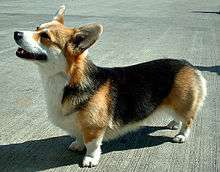
ci m (plural cŵn)
Derived terms
- cïaidd
- corgi
Mutation
| Welsh mutation | |||
|---|---|---|---|
| radical | soft | nasal | aspirate |
| ci | gi | nghi | chi |
| Note: Some of these forms may be hypothetical. Not every possible mutated form of every word actually occurs. | |||
White Hmong
Pronunciation
- IPA(key): /ci˧/
Verb
ci