ten
English
| 100 | ||
| ← 9 | 10 | 11 → |
|---|---|---|
| 1 | ||
| Cardinal: ten Ordinal: tenth Multiplier: tenfold | ||
Etymology
From Middle English ten, tene, from Old English tīen, from Proto-Germanic *tehun, from Proto-Indo-European *déḱm̥t. Cognate with Scots ten, tene (“ten”), West Frisian tsien (“ten”), Saterland Frisian tjoon (“ten”), North Frisian tiin (“ten”), Dutch tien (“ten”), German zehn (“ten”), Norwegian ti (“ten”), Swedish tio (“ten”).
Non-Germanic cognates include Albanian dhjetë, Old Armenian տասն (tasn), Lithuanian dešimt, Old Church Slavonic десѧть (desętĭ), Old Breton dec, Old Irish deich, Ancient Greek δέκα (déka), Sanskrit दश (dásá), Old Persian *𐎭𐎰 (daθa), Latin decem, Tocharian A śäk.
See also teen.
Pronunciation
- (Received Pronunciation, General American) enPR: tĕn IPA(key): /tɛn/, [tʰɛn]
- IPA(key): /tɪn/ (pin–pen merger)
Audio (US-Inland North) (file) Audio (US) (file) Audio (file) - Rhymes: -ɛn, Rhymes: -ɪn (pin–pen merger)
Numeral
ten
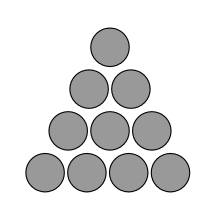
- (cardinal) The number occurring after nine and before eleven, represented in Arabic numerals (base ten) as 10, in binary (base two) as 1010, in hexadecimal (base sixteen) as A, and in Roman numerals as X.
Related terms
Translations
|
|

Noun
ten (countable and uncountable, plural tens)
- (uncountable) The number following nine.
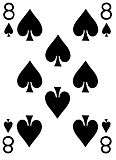
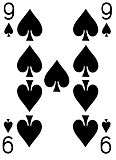
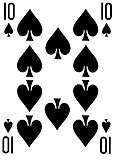
- (countable, card games) A card in a given suit with a value of ten.
- (countable) A denomination of currency with a value of ten units.
- (countable, US, slang) A perfect specimen, (particularly) a physically attractive person.
- (countable, US, slang) A high level of intensity
Synonyms
- Roman numerals: X
- (currency): tenner
Coordinate terms
Derived terms
Related terms
Translations
|
|
See also
- (prefix): deca-, deka-
- (adjective): decadal, decenary
- (a set of 10 items): decimate, decimal; decaplet, decuplet (of babies, musical notes, or baryons)
- (containing 10 items): decenary
- (related to base-10 numeration): See decimal
- (period of 10 months): decimestrial
- (period of 10 years): See decade and decennium
- (related to a 10-year period): See decadal and decennial
- (10-year anniversary): See decennial
- (rule by 10 people): See decemvirate
- (commander of 10 soldiers): See decener
- (chief of 10 men in early English law): See tithingman
- (payment or collection of a 10% tax): See tithe
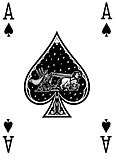
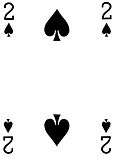
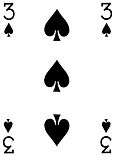
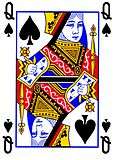
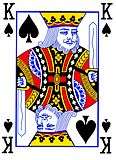
| Playing cards in English · playing cards (layout · text) | ||||||
|---|---|---|---|---|---|---|
 |
 |
 |
 |
 |
 |
 |
| ace | deuce, two | three | four | five | six | seven |
 |
 |
 |
 |
 |
 |
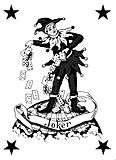 |
| eight | nine | ten | jack, knave | queen | king | joker |
Anagrams
Cornish
Noun
ten
Czech
Etymology
From Proto-Slavic *tъ, from Proto-Indo-European *só
Pronunciation
- IPA(key): [ˈtɛn]
Audio (file)
Pronoun
ten m (demonstrative nominative singular masculine animate)
Declension
| singular | ||||
|---|---|---|---|---|
| masculine animate | masculine inanimate | feminine | neuter | |
| nominative | ten | ten | ta | to |
| genitive | toho | toho | té | toho |
| dative | tomu | tomu | té | tomu |
| accusative | toho | ten | tu | to |
| locative | tom | tom | té | tom |
| instrumental | tím | tím | tou | tím |
| plural | ||||
| masculine animate | masculine inanimate | feminine | neuter | |
| nominative | ti | ty | ty | ta |
| genitive | těch | těch | těch | těch |
| dative | těm | těm | těm | těm |
| accusative | ty | ty | ty | ta |
| locative | těch | těch | těch | těch |
| instrumental | těmi | těmi | těmi | těmi |
Derived terms
Further reading
- ten in Příruční slovník jazyka českého, 1935–1957
- ten in Slovník spisovného jazyka českého, 1960–1971, 1989
Dutch
Etymology
Pronunciation
- IPA(key): /tɛn/
Audio (file)
Contraction
ten
- to the, at the (followed by a masculine or neuter word)
- ten goede of ten kwade ― for better or for worse
- ten dele ― partly
- ten tijde van ― during the time of
Usage notes
- ten is part of many fossilized idiomatic expressions. Being derived in part from te, it is followed by the (similarly fossilized) dative case.
- ten is commonly used in Dutch family names such as Corrie ten Boom, Bernhard ten Brink, Marti ten Kate, and Simeon ten Holt.
Derived terms
Related terms
Anagrams
Galician
Verb
ten
Japanese
Romanization
- Romanization of 天
ten
Lithuanian
Adverb
ten
Lower Sorbian
Pronunciation
- IPA(key): [tɛn]
Determiner
ten (feminine ta, neuter to, dual tej, plural te)
Declension
| Masculine singular | Feminine singular | Neuter singular | Dual | Plural | |
|---|---|---|---|---|---|
| Nominative | ten | ta | to | tej | te |
| Genitive | togo | teje | togo | teju | tych |
| Dative | tomu | tej | tomu | tyma | tym |
| Accusative | ten togo (animate) |
tu | to | tej teju (animate) |
te tych (optional animate form) |
| Instrumental | tym | teju | tym | tyma | tymi |
| Locative | tom | tej | tom | tyma | tych |
Middle Dutch
Contraction
ten
Middle English
Etymology 1
From Old English tīen, in turn from Proto-Germanic *tehun.
Alternative forms
Pronunciation
Numeral
| 10 | Previous: | nyne |
|---|---|---|
| Next: | elleven |
ten
Descendants
Etymology 2
From Old Norse tennr, nominative indefinite plural of tǫnn (“tooth”).
Noun
ten
- plural of tothe
Old English
Alternative forms
Numeral
tēn
References
- A. L. Mayhew, M. A. Synopsis of Old English Phonology, 123
Pipil
Etymology
From Proto-Nahuan *teːn-. Compare Classical Nahuatl tēntli (“lips”).
Pronunciation
Noun
-tēn (plural -tejtēn)
- mouth
- Muchi tikishtukak tik muten kwak tishulutzin katka
- You used to put everything in your mouth when you were a little baby
- edge, brim
- Shiktema ishta ma ne at ajsi ne iten ne tzutzukul
- Fill it up until the water reaches the edge of the jug
- opening
- Inat ka ini tepet kishtia pukti tik iten
- They say this volcano expels smoke form its “opening” (its crater)
Derived terms
- -tēnpan (“edge”)
- -tēnshīpal (“lip”)
- -tēntzun (“moustache” or “beard”)
- tēnkal (“door”, “doorway”)
- tēntzin (“window”)
- tēntzakka (“lid” or “door”)
- -tēnnāmiki (“to kiss”)
- tēnpēlua (“to open one's mouth”)
Relational
-tēn
- on the edge, outside
- Tejchishket ka iten ne shaput
- They waited outside the cave
Polish
Etymology
From Proto-Slavic *tъ, from Proto-Indo-European *só
Pronunciation
- IPA(key): /tɛn/
audio (file)
Pronoun
ten m
- (demonstrative) this (nearby)
Declension
Note: In the accusative singular, the form tego is used for masculine personal and animate nouns, while ten is used for masculine inanimate nouns.
Further reading
- ten in Polish dictionaries at PWN
Slovak
Etymology
From Proto-Slavic *tъ, from Proto-Indo-European *só
Pronunciation
- IPA(key): /tɛn/
Pronoun
ten m
- (demonstrative) this (nearby)
Further reading
- ten in Slovak dictionaries at korpus.sk
Spanish
Pronunciation
- IPA(key): /ten/, [t̪ẽn]
- Rhymes: -en
Verb
ten
Swedish
Noun
ten c
Declension
| Declension of ten | ||||
|---|---|---|---|---|
| Singular | Plural | |||
| Indefinite | Definite | Indefinite | Definite | |
| Nominative | ten | tenen | tenar | tenarna |
| Genitive | tens | tenens | tenars | tenarnas |
See also
Tiang
Noun
ten
Further reading
- Malcolm Ross, Proto Oceanic and the Austronesian Languages of Western Melanesia, Pacific Linguistics, series C-98 (1988)
Tok Pisin
Etymology
Numeral
ten
Usage notes
Used when counting; see also tenpela.
Turkish
Etymology
Noun
ten (definite accusative teni, plural tenler)
Declension
| Inflection | ||||||||||||||||||||||||||
|---|---|---|---|---|---|---|---|---|---|---|---|---|---|---|---|---|---|---|---|---|---|---|---|---|---|---|
| Nominative | ten | |||||||||||||||||||||||||
| Definite accusative | teni | |||||||||||||||||||||||||
| Singular | Plural | |||||||||||||||||||||||||
| Nominative | ten | tenler | ||||||||||||||||||||||||
| Definite accusative | teni | tenleri | ||||||||||||||||||||||||
| Dative | tene | tenlere | ||||||||||||||||||||||||
| Locative | tende | tenlerde | ||||||||||||||||||||||||
| Ablative | tenden | tenlerden | ||||||||||||||||||||||||
| Genitive | tenin | tenlerin | ||||||||||||||||||||||||
| ||||||||||||||||||||||||||
References
- “ten”, in Türkiye'de halk ağzından derleme sözlüğü [Compilation Dictionary of Popular Speech in Turkey] (in Turkish), Ankara: Türk Dil Kurumu, 1963–1982