點
| ||||||||
Translingual
| Japanese | 点 |
|---|---|
| Simplified | 点 |
| Traditional | 點 |
Han character
點 (radical 203 黑+5, 17 strokes, cangjie input 田火卜口 (WFYR), four-corner 61360, composition ⿰黑占)
References
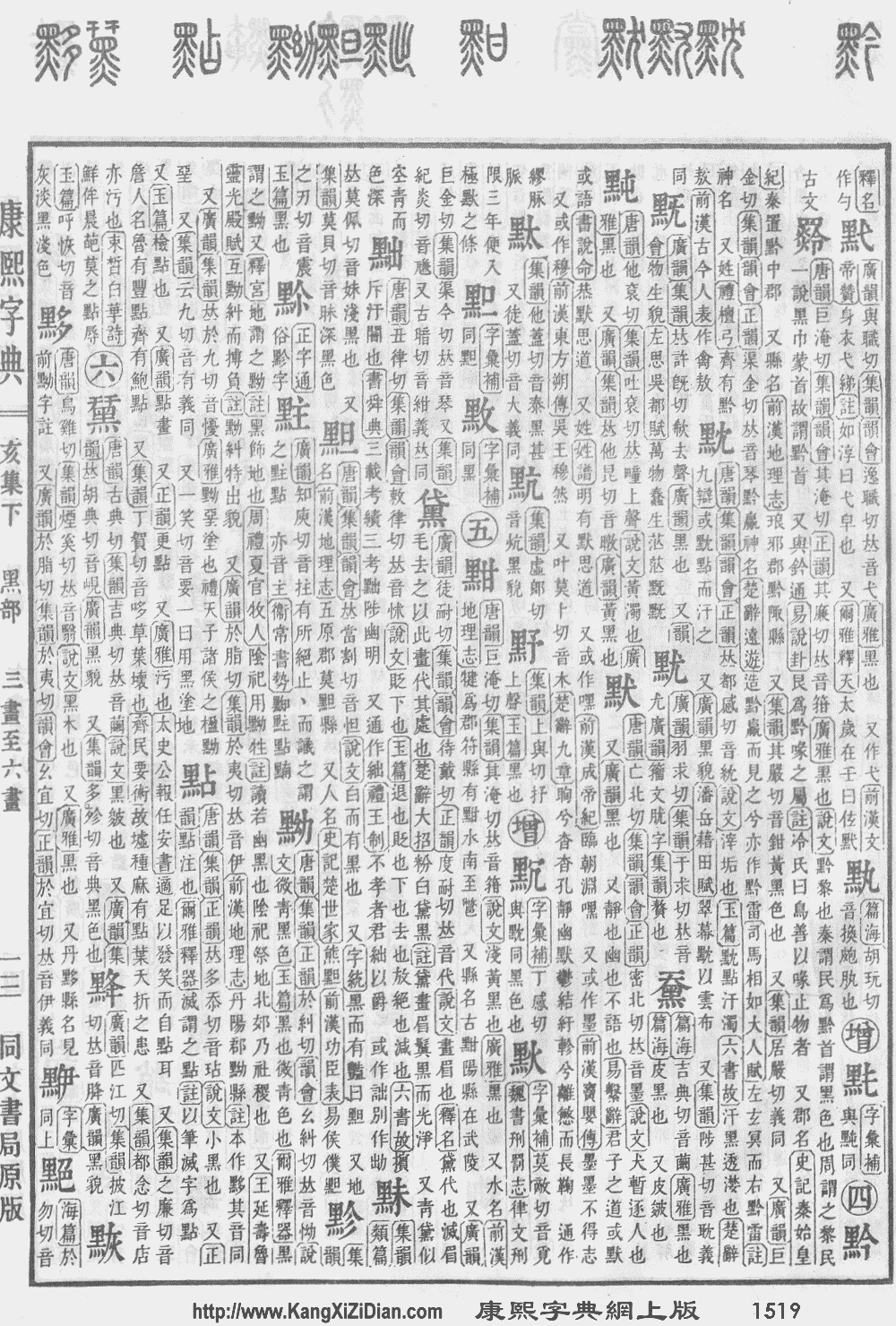
- KangXi: page 1519, character 28
- Dai Kanwa Jiten: character 48083
- Dae Jaweon: page 2053, character 16
- Hanyu Da Zidian: volume 7, page 4745, character 11
- Unihan data for U+9EDE
Chinese
| trad. | 點 | |
|---|---|---|
| simp. | 点 | |
| alt. forms | 㸃 | |
Glyph origin
| Historical forms of the character 點 |
|---|
| Shuowen Jiezi (compiled in Han) |
| Small seal script |
 |
| Characters in the same phonetic series (占) (Zhengzhang, 2003) | |
|---|---|
| Old Chinese | |
| 頕 | *taːm |
| 煔 | *ɦlaːm, *hljems, *hl'eːms |
| 炶 | *ɦlaːm |
| 詀 | *rteːm, *rdeːms, *teːm, *tʰjeb |
| 站 | *rteːms |
| 檆 | *sreːm |
| 黏 | *nem |
| 粘 | *nem |
| 枮 | *slem, *ʔl'ɯm |
| 霑 | *tem |
| 沾 | *tem, *teːms, *tʰeːm |
| 覘 | *tems, *tʰem |
| 鉆 | *tʰem, *ɡrem, *tʰeːb |
| 占 | *ʔljem, *tjems |
| 颭 | *tjemʔ |
| 佔 | *tjems, *teːm |
| 苫 | *hljem, *hljems |
| 痁 | *hljem, *teːms |
| 蛅 | *njem |
| 阽 | *lem |
| 敁 | *teːm |
| 掂 | *tiːm |
| 點 | *teːmʔ |
| 玷 | *teːmʔ, *teːms |
| 店 | *tiːms |
| 坫 | *tiːms, *tim |
| 黇 | *tʰeːm |
| 扂 | *deːmʔ |
| 拈 | *neːm |
| 鮎 | *neːm |
| 砧 | *ʔl'ɯm |
| 笘 | *teːb |
| 跕 | *teːb, *tʰeːb |
| 貼 | *tʰeːb |
| 帖 | *tʰeːb |
| 怗 | *tʰeːb |
| 呫 | *tʰeːb |
Phono-semantic compound (形聲, OC *teːmʔ) : semantic 黑 (“black”) + phonetic 占 (OC *ʔljem, *tjems) – black dots.
Pronunciation
Etymology 1
Definitions
點
- dot; spot; speck
- place; point; spot
- point; aspect
- o'clock
- ⇒ 點鐘
- time
- (mathematics) point
- (mathematics) decimal point
- drop
- (Chinese calligraphy) a dot stroke (㇔)
- to nominate; to mention (one's name)
- to count
- 點鈔 / 点钞 ― diǎnchāo ― to count banknotes
- to choose; to select; to order (food)
- Synonyms: 叫 (jiào)
- to nod
- to point
- to tap; to touch
- to click
- ⇒ 點擊
- to light; to ignite
- a little; a bit; some
Usage notes
點 is often used for "o'clock", following the numbered hour: e.g. "three o'clock" is 三點. 點鐘 would be used in the expression "1 o'clock" or "2 o'clock", in order to avoid confusion between 一點 (meaning: "a bit") and 一點 (meaning: "1 o'clock"). When spoken out, 一點 (meaning: "1 o'clock") is usually pronounced yī diǎn, without the tone sandhi, while 一點 (meaning: "a bit") follows the sandhi rule.
When followed by the minutes, 點 is used instead of 點鐘 as in 十二點三十分. In formal expression (but not in everyday speech), 時 is used to denote hours, eg. 十二時三十分.
Coordinate terms
Compounds
|
|
|
Etymology 2
Fusion of 底物 (MC teiX mɨut̚), literally “what thing” (Guo, 2003).
Often related to 怎 (zěn) due to similar syllable structure.
Definitions
點
(Cantonese)
- how
- 全部要加慘到極,陀累全家,靠份糧點夠食,卒之查到豉油都冇滴 [Cantonese, trad.]
- From: 許冠傑, 加價熱潮
- cyun4 bou6 jiu3 gaa1 caam2 dou3 gik6, to4 leoi4 cyun4 gaa1, kaau3 fan6 loeng4 dim2 gau3 sik6, zeot1 zi1 caa4 dou3-2 si6 jau4 dou1 mou5 dik1 [Jyutping]
- All of the prices have to going up; it's extremely miserable. I'm burdening my whole family. How is there enough to live off my salary? Finally, I found out there isn't even a drop of soy sauce.
全部要加惨到极,陀累全家,靠份粮点够食,卒之查到豉油都冇滴 [Cantonese, simp.]
Synonyms
Compounds
See also
Japanese
| 点 | |
| 點 |
Kanji
(uncommon “Hyōgai” kanji, kyūjitai kanji, shinjitai form 点)
- This term needs a translation to English. Please help out and add a translation, then remove the text
{{rfdef}}.
Readings
- Goon: てん (ten)←てん (ten, historical)←てむ (temu, ancient)
- Kan’on: てん (ten)←てん (ten, historical)←てむ (temu, ancient)
- Kun: さす (sasu, 點す); たてる (tateru, 點てる); つく (tsuku, 點く); つける (tsukeru, 點ける); とぼす (tobosu, 點す); ともす (tomosu, 點す); ぼち (bochi, 點)
Korean
Hanja
點 • (jeom) (hangeul 점, McCune–Reischauer chŏm, Yale cem)
- This term needs a translation to English. Please help out and add a translation, then remove the text
{{rfdef}}.
Vietnamese
Han character
點 (điểm, chấm, chúm, đém, đếm, đóm, đêm)
- This term needs a translation to English. Please help out and add a translation, then remove the text
{{rfdef}}.