有
| ||||||||
 | ||||||||
Translingual
| Stroke order | |||
|---|---|---|---|
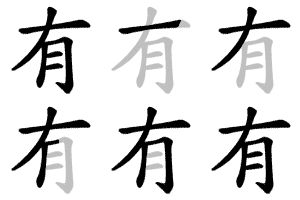 | |||
| Japanese stroke order | |||
|---|---|---|---|
 | |||
Han character
有 (radical 74, 月+2, 6 strokes, cangjie input 大月 (KB), four-corner 40227, composition ⿱𠂇月)
Usage notes
Despite the technically-correct radical being ⺼ (“meat”) as described in this entry’s glyph origin section, 有 is associated with the radical 月 (“moon”) in dictionaries for historical reasons and is likewise written as if it contained the 月 radical, i.e. it has 二 instead of 冫 inside of 冂.
References
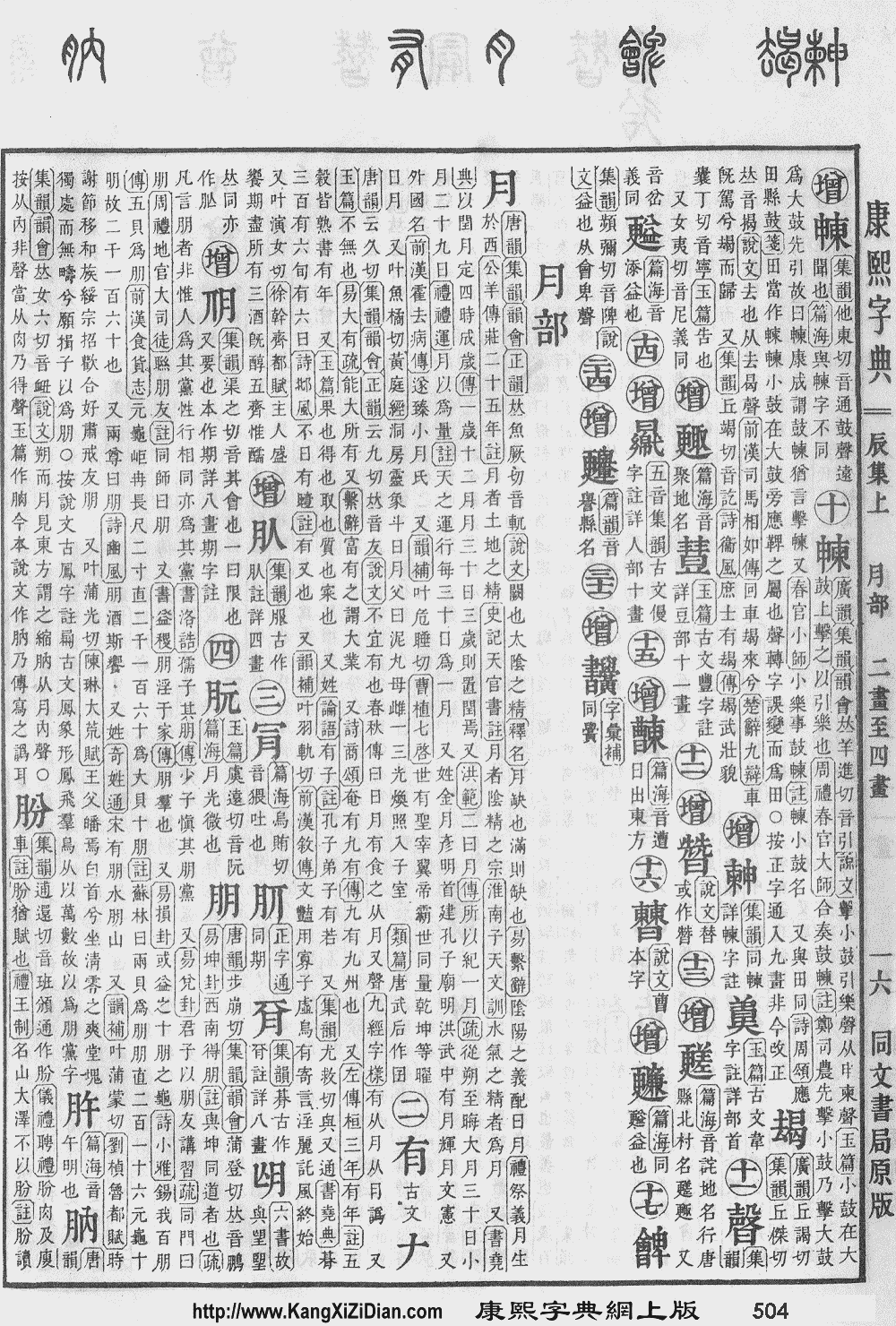
- KangXi: page 504, character 20
- Dai Kanwa Jiten: character 14332
- Dae Jaweon: page 880, character 2
- Hanyu Da Zidian: volume 3, page 2041, character 5
- Unihan data for U+6709
Chinese
| simp. and trad. |
有 | |
|---|---|---|
Glyph origin
| Historical forms of the character 有 | ||||
|---|---|---|---|---|
| Shang | Western Zhou | Warring States | Shuowen Jiezi (compiled in Han) | Liushutong (compiled in Ming) |
| Oracle bone script | Bronze inscriptions | Chu Slip and silk script | Small seal script | Transcribed ancient scripts |
 |
 |
 |
 |
 |
| Characters in the same phonetic series (又) (Zhengzhang, 2003) | |
|---|---|
| Old Chinese | |
| 絠 | *kɯːʔ |
| 醢 | *qʰɯːʔ |
| 珛 | *qʰʷɯs |
| 栯 | *ɢʷɯʔ, *qʷɯ |
| 有 | *ɢʷɯʔ |
| 友 | *ɢʷɯʔ |
| 右 | *ɢʷɯʔ, *ɢʷɯs |
| 宥 | *ɢʷɯs |
| 囿 | *ɢʷɯs, *ɡʷɯ |
| 侑 | *ɢʷɯs |
| 酭 | *ɢʷɯs |
| 姷 | *ɢʷɯs |
| 又 | *ɢʷɯs |
| 佑 | *ɢʷɯs |
| 祐 | *ɢʷɯs |
| 賄 | *qʰʷɯːʔ |
| 蛕 | *qʰʷɯːʔ, *ɡʷɯː |
| 烠 | *ɡʷɯː |
| 倄 | *ɢraːw, *ɢʷɯːʔ |
| 鮪 | *ɢʷɯʔ |
| 洧 | *ɢʷɯʔ |
| 痏 | *ɢʷɯʔ |
| 郁 | *qʷɯ |
| 戫 | *qʷɯ |
| 哊 | *ɡʷɯ |
Ideogrammic compound (會意) and phono-semantic compound (形聲, OC *ɢʷɯʔ) : phonetic 又 (OC *ɢʷɯs, “hand”) + semantic ⺼ (“meat”) – a hand holding meat, hence “in possession of”. The hand shape has been significantly abstracted; compare 右 (OC *ɢʷɯʔ, *ɢʷɯs).
Alternatively, the graph was perhaps originally intended for the word 醢 (OC *qʰɯːʔ, “minced pickled meat”), which also has the 又 (OC *ɢʷɯs) element as phonetic.
Shuowen Jiezi and other ancient sources have erroneously analyzed the character as a phono-semantic compound (形聲, OC *ɢʷɯʔ) : phonetic 又 (OC *ɢʷɯs) + semantic 月 (“moon”). Shuowen Jiezi defines 有 as "不宜有也" ("[to have something that] not should be had"), citing the Spring and Autumn Annals (春秋傳): "日月有食之" ("There are solar and lunar eclipses"). As eclipses were not auspicious to the Chinese, they were "something that should not be happening". The 月 component alludes to the inauspicious lunar eclipse.
Etymology
Possibly Sino-Tibetan. Compare Tibetan ཡོད (yod, “to be; to have”). Related to:
Pronunciation 1
Definitions
有
- to have; to possess (when a subject is present)
- there is; to exist (when a subject is absent)
- (euphemistic) to be pregnant with a child
- abundant; affluent
- many; much; (of time) long; (of age) old
- some (indefinite pronoun)
- (literary or dialectal) Placed before a verb to emphasize that the action has been done.
- A surname.
- A meaningless prefix.
- 有夏 ― yǒuxià ― China
Usage notes
Compounds
|
|
|
Pronunciation 2
Definitions
有
- † Alternative form of 又 (yòu, “again”).
- † Alternative form of 又 (yòu, “and; with a remainder of (when dividing an integer by ten)”).
- 吾十有五而志於學,三十而立。 [Classical Chinese, trad.]
- From: The Analects of Confucius, circa 475 – 221 BCE, translated based on James Legge's version
- Wú shí yòu wǔ ér zhì yú xué, sānshí ér lì. [Pinyin]
- When I was 10 and 5 years (15 years old), I devoted myself to study. At the age of 30, I established myself (got a job and started a family).
吾十有五而志于学,三十而立。 [Classical Chinese, simp.]
Japanese
| Japanese stroke order | |||
|---|---|---|---|
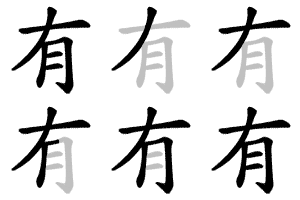 | |||
Kanji
- exist
- get to exist; appear
- keep; maintain
- existence; belonging
- someone did certain thing
- possess
- have
- happen
- occur
- approximately
Readings
Compounds
- 有余 (yūyo)
- 有明 (ariake)
- 有意 (yūi)
- 有為 (yūi)
- 有卦 (uke)
- 有職 (yūshoku)
- 有識 (yūshiki)
- 有象無象 (uzōmuzō)
- 有益 (yūeki)
- 有縁 (yūen)
- 有休 (yūkyū)
- 有窮 (yūkyū)
- 有功 (yūkō)
Derived terms
- 有る (aru)
Proper noun
- A female given name
Korean
Hanja
- This term needs a translation to English. Please help out and add a translation, then remove the text
{{rfdef}}.
Vietnamese
Han character
- This term needs a translation to English. Please help out and add a translation, then remove the text
{{rfdef}}.