想
| ||||||||
Translingual
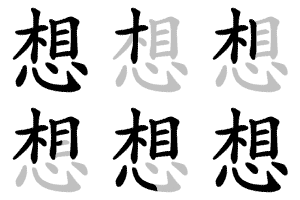
| Stroke order | |||
|---|---|---|---|
 | |||
Han character
想 (radical 61, 心+9, 13 strokes, cangjie input 木山心 (DUP), four-corner 46330, composition ⿱相心)
References
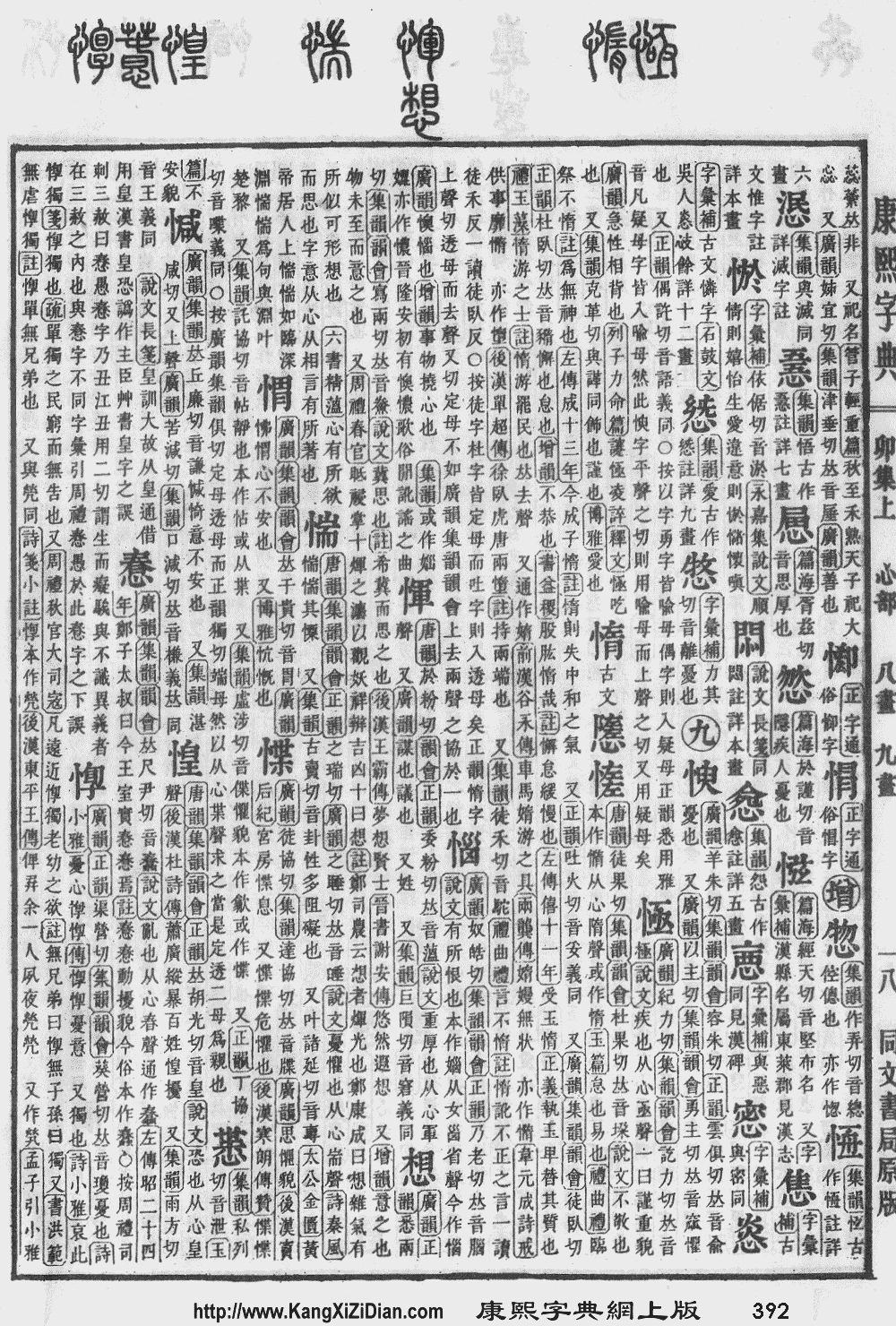
- KangXi: page 392, character 26
- Dai Kanwa Jiten: character 10858
- Dae Jaweon: page 728, character 10
- Hanyu Da Zidian: volume 4, page 2320, character 11
- Unihan data for U+60F3
Chinese
| simp. and trad. |
想 | |
|---|---|---|
Glyph origin
| Characters in the same phonetic series (相) (Zhengzhang, 2003) | |
|---|---|
| Old Chinese | |
| 相 | *slaŋ, *slaŋs |
| 廂 | *slaŋ |
| 湘 | *slaŋ |
| 緗 | *slaŋ |
| 箱 | *slaŋ |
| 葙 | *slaŋ |
| 想 | *slaŋʔ |
| 霜 | *sraŋ |
| 孀 | *sraŋ |
| 鸘 | *sraŋ |
| 驦 | *sraŋ |
Phono-semantic compound (形聲, OC *slaŋʔ) : phonetic 相 (OC *slaŋ, *slaŋs) + semantic 心 (“heart, mind”) – to think, to consider.
Etymology
From 相 (OC *slaŋ, *slaŋs, “to observe; appearance”) (“appearance > to visualise > to think”).
Pronunciation
Definitions
想
Compounds
Derived terms from 想
|
|
|
Japanese
Kanji
想
Readings
- Goon: そう (sō, Jōyō)←さう (sau, historical)
- Kan’on: しょう (shō)←しやう (syau, historical)
- Kan’yōon: そ (so, Jōyō, uncommon)
- Kun: おもい (omoi, 想い)←おもひ (omofi, historical); おもう (omou, 想う)←おもふ (omofu, historical)
Korean
Hanja
想 • (sang) (hangeul 상)
- This term needs a translation to English. Please help out and add a translation, then remove the text
{{rfdef}}.
Vietnamese
Han character
想 (tưởng)
- This term needs a translation to English. Please help out and add a translation, then remove the text
{{rfdef}}.
This article is issued from
Wiktionary.
The text is licensed under Creative Commons - Attribution - Sharealike.
Additional terms may apply for the media files.