和
| ||||||||
Translingual
| Stroke order | |||
|---|---|---|---|
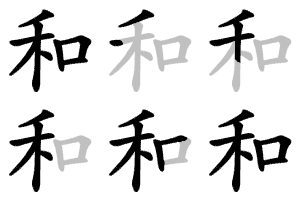 | |||
Han character
和 (radical 30, 口+5, 8 strokes, cangjie input 竹木口 (HDR), four-corner 26900, composition ⿰禾口)
Descendants
References
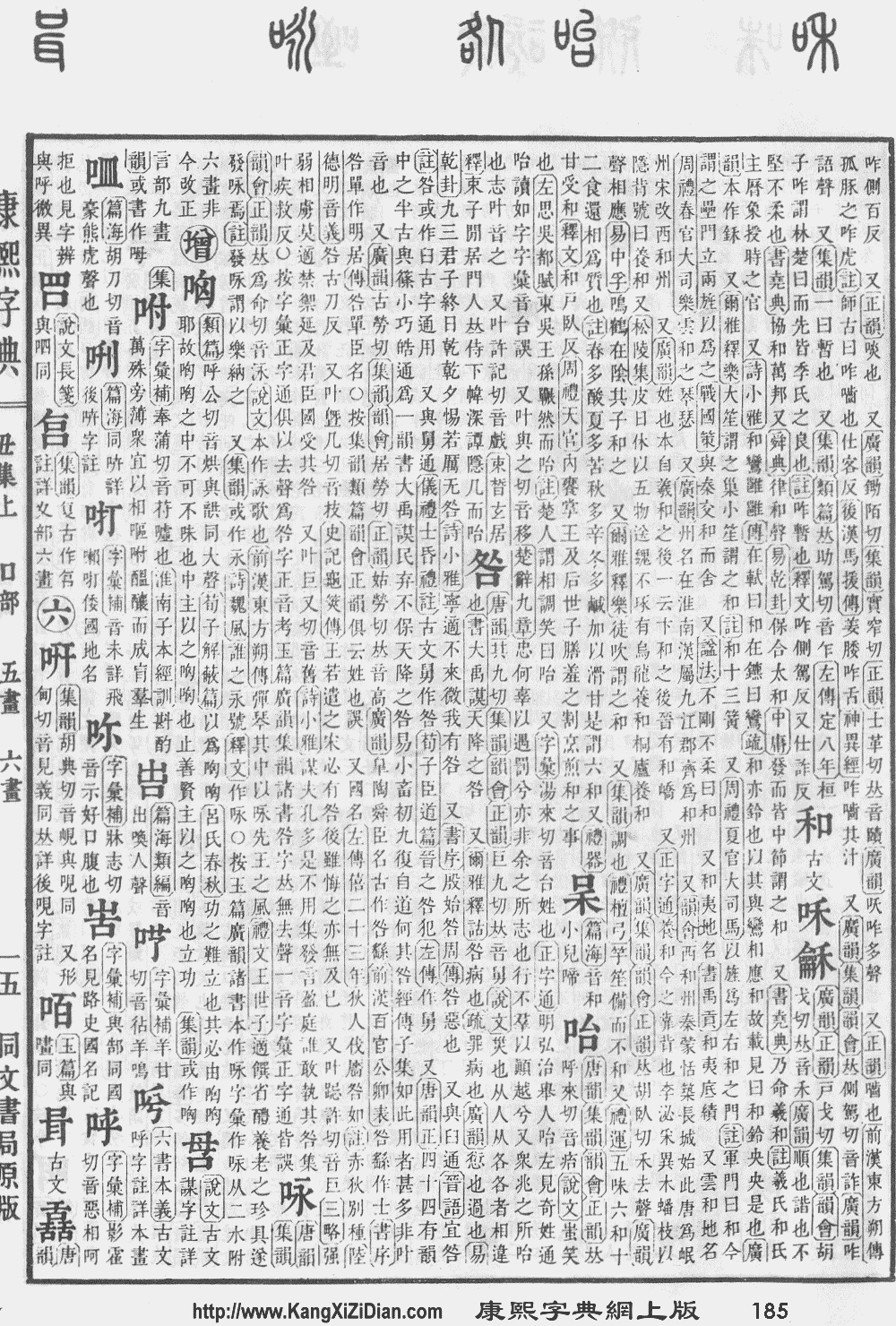
- KangXi: page 185, character 1
- Dai Kanwa Jiten: character 3490
- Dae Jaweon: page 404, character 3
- Hanyu Da Zidian: volume 1, page 602, character 1
- Unihan data for U+548C
Chinese
| simp. and trad. |
和 | |
|---|---|---|
| alt. forms | 咊 龢 | |
Glyph origin
| Historical forms of the character 和 | ||
|---|---|---|
| Western Zhou | Warring States | Shuowen Jiezi (compiled in Han) |
| Bronze inscriptions | Chu Slip and silk script | Small seal script |
 |
 |
 |
| Characters in the same phonetic series (禾) (Zhengzhang, 2003) | |
|---|---|
| Old Chinese | |
| 科 | *kʰoːl, *kʰoːls |
| 萪 | *kʰoːl |
| 蝌 | *kʰoːl |
| 犐 | *kʰoːl |
| 禾 | *ɡoːl |
| 和 | *ɡoːl, *ɡoːls |
| 咊 | *ɡoːl |
| 盉 | *ɡoːl, *ɡoːls |
| 龢 | *ɡoːl |
| 鉌 | *ɡoːl |
| 俰 | *ɡoːls |
Phono-semantic compound (形聲, OC *ɡoːl, *ɡoːls) : phonetic 禾 (OC *ɡoːl) + semantic 口 (“mouth”) – harmony.
Pronunciation 1
Definitions
和
Compounds
|
|
|
Pronunciation 2
Definitions
和
Synonyms
| Dialectal synonyms of 和 (“and”) [map] | ||
|---|---|---|
| Variety | Location | Words |
| Classical Chinese | 與、及 | |
| Formal (Written Standard Chinese) | 和 | |
| Mandarin | Beijing | 和、跟 |
| Taiwan | 和、跟 | |
| Jinan | 和、跟、給 | |
| Xi'an | 跟、連 | |
| Wuhan | 跟 | |
| Chengdu | 跟、給 | |
| Yangzhou | 跟、交 | |
| Hefei | 跟 | |
| Cantonese | Guangzhou | 同、同埋 |
| Hong Kong | 同、同埋 | |
| Taishan | 同埋 | |
| Yangjiang | 鄧、同 | |
| Gan | Nanchang | 跟、同 |
| Hakka | Meixian | 同 |
| Miaoli (N. Sixian) | 摎 | |
| Liudui (S. Sixian) | 同 | |
| Hsinchu (Hailu) | 摎 | |
| Dongshi (Dabu) | 同 | |
| Zhuolan (Raoping) | 摎 | |
| Yunlin (Zhao'an) | 和 | |
| Jin | Taiyuan | 和、跟 |
| Min Bei | Jian'ou | 邀 |
| Min Dong | Fuzhou | 共 |
| Min Nan | Xiamen | 佮 |
| Quanzhou | 佮 | |
| Zhangzhou | 佮 | |
| Taipei | 佮 | |
| Penang | 佮 | |
| Chaozhou | 佮、共 | |
| Wu | Shanghai | 搭 |
| Suzhou | 搭 | |
| Wenzhou | 搭、伉 | |
| Xiang | Changsha | 跟 |
| Shuangfeng | 跟、同 | |
Pronunciation 3
Definitions
和
Compounds
Pronunciation 4
Definitions
和
Compounds
Pronunciation 5
Definitions
和
Compounds
Pronunciation 6
Definitions
和
- † to have a winning hand (at mahjong etc)
Compounds
|
|
|
Pronunciation 7
Definitions
和
- † warm
Compounds
Japanese
Kanji
Readings
- Goon: わ (wa, Jōyō)
- Kan’on: か (ka)←くわ (kwa, historical)
- Tōon: お (o, Jōyō, uncommon)←を (wo, historical)
- Kun: なごむ (nagomu, 和む, Jōyō); なごやか (nagoyaka, 和やか, Jōyō); やわらぐ (yawaragu, 和らぐ, Jōyō)←やはらぐ (yafaragu, historical); やわらげる (yawarageru, 和らげる, Jōyō)←やはらげる (yafarageru, historical)
- Nanori: あい (ai); いず (izu); かつり (katsuri); かず (kazu); たけ (take); ち (chi); とも (tomo); にぎ (nigi); まさ (masa); やす (yasu); よし (yoshi); より (yori); わだこ (wadako)
Compounds
- 和尚 (oshō)
- 柔和 (nyūwa): gentleness, meekness, mildness
- 和韻 (wain)
- 和英 (waei)
- 和歌 (waka)
- 和解 (wakai)
- 和学 (wagaku)
- 和菓子 (wagashi)
- 和漢 (wakan)
- 和姦 (wakan)
- 和漢混交文 (wakan konkō bun)
- 和気 (waki)
- 和気藹 (wakiai)
- 和気藹藹 (wakiaiai)
- 和議 (wagi)
- 和協 (wakyō)
- 和訓 (wakun)
- 和敬 (wakei)
- 和敬静寂 (wakei seijaku)
- 和語 (wago)
- 和寇 (wakō)
- 和合 (wagō)
- 和光同塵 (wakō dōjin)
- 和琴 (wakin)
- 和魂漢才 (wakon kansai)
- 和裁 (wasai)
- 和算 (wasan)
- 和紙 (washi)
- 和字 (waji)
- 和室 (washitsu)
- 和同 (wadō)
- 和習 (washū)
- 和順 (wajun)
- 和書 (washo)
- 和上 (wajō)
- 和食 (washoku)
- 和製 (wasei)
- 和戦 (wasen)
- 和風 (wafū)
- 和服 (wafuku)
- 和文 (wabun)
- 和平 (wahei)
- 和睦 (waboku)
- 和本 (wahon)
- 和名 (wamei)
- 和訳 (wayaku)
- 和洋 (wayō)
- 和洋折衷 (wayō sechū)
- 和様 (wayō)
- 和学 (wagaku)
- 漢和辞典 (kanwa jiten)
- 緩和 (kanwa)
- 講和 (kōwa)
- 昭和 (shōwa)
- 唱和 (shōwa)
- 総和 (sōwa)
- 調和 (chōwa)
- 飽和 (hōwa)
- 大和 (Yamato)
Etymology 1
| Kanji in this term |
|---|
| 和 |
| わ Grade: 3 |
| on’yomi |
From Middle Chinese 和 (hwa, “harmonious”).
The “Japan” sense appears during the reign of Empress Genmei (707–715), as this character 和 was chosen as a homophone with a more favorable meaning to replace the previous character 倭 (wa) then in use as the kanji name for Japan[1] (see the etymology at 大和 (Yamato) for more details). The “Japan” sense was usually read with a kun'yomi of yamato, until some time in the Muromachi period, when the kan'on reading of Wa became more common.[2]
Pronunciation
Noun
See also
Proper noun
- Japan, Japanese, Nippo-
- 和露辞典
- Wa-Ro jiten
- Japanese-Russian dictionary
- 和食
- washoku
- Japanese-style food, Japanese cuisine
- 和室
- washitsu
- a Japanese-style room with tatami flooring and usually sliding doors
- 和露辞典
Usage notes
Often used as a prefix to form compounds, as in the usage examples above.
Etymology 2
| Kanji in this term |
|---|
| 和 |
| やまと Grade: 3 |
| kun’yomi |
Appears during the reign of Empress Genmei (707–715), as this character 和 was chosen as a homophone with a more favorable meaning to replace the previous character 倭 (wa) then in use as the kanji name for Japan[1] (see the etymology at 大和 (Yamato) for more details). The “Japan” sense was usually read with a kun'yomi of Yamato, until some time in the Muromachi period, when the kan'on reading of Wa became more common.[2]
In modern Japanese, the Yamato reading is more commonly spelled 大和.
Pronunciation
Alternative forms
Proper noun
Etymology 3
| Kanji in this term |
|---|
| 和 |
| Grade: 3 |
| Irregular |
Used as ateji in various names.
Proper noun
和 (hiragana のどか, rōmaji Nodoka)
- A male or female given name.
References
Korean
Hanja
和 • (hwa) (hangeul 화, revised hwa, McCune–Reischauer hwa, Yale hwa)
Noun
和 • (hwa) (hangeul 화)
- A free reed mouth organ with 13 bamboo pipes used in ancient times
Compounds
- 평화 (pyeonghwa)(平和) peace
- 조화 (johwa)(調和) harmony, balance
- 화해 (hwahae)(和解) reconciliation
- 화목 (hwamok)(和睦) harmoniousness
- 화합 (hwahap)(和合) harmony, cohesion
- 공화국 (gonghwaguk)(共和國) republic
- 중화인민공화국 (junghwainmin-gonghwaguk)(中華人民共和國) = 중국 (jungguk)(中國) China(People's republic of)
- 중화민국 (junghwamin-guk)(中華民國) = 대만 (daeman)(臺灣) Taiwan(China, republic of)
- 공화주의 (gonghwajuui)(共和主義) republicanism
- 공화당 (gonghwadang)(共和黨) republic party
- 유화 (yuhwa)(柔和) gentle
- 친화 (chinhwa)(親和) friendly
- 화음 (hwa-eum)(和音) chord
- 포화 (pohwa)(飽和) saturation
- 불화 (bulhwa)(不和) disharmony
Vietnamese
Han character
- This term needs a translation to English. Please help out and add a translation, then remove the text
{{rfdef}}.
Readings
References
- Thiều Chửu : Hán Việt Tự Điển Hà Nội 1942
- Trần Văn Chánh: Từ Điển Hán Việt NXB Trẻ, Ho Chi Minh Ville, 1999
- Vũ Văn Kính: Đại Tự Điển Chữ Nôm, NXB Văn Nghệ, Ho Chi Minh Ville, 1999