我
| ||||||||
Translingual
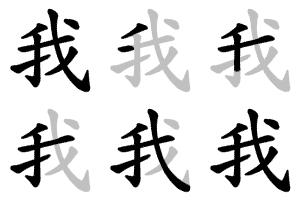
| Stroke order | |||
|---|---|---|---|
 | |||
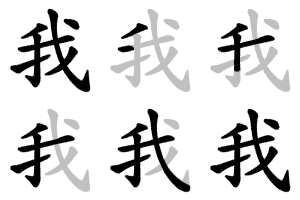
| Taiwanese stroke order | |||
|---|---|---|---|
 | |||
Han character
我 (radical 62, 戈+3, 7 strokes, cangjie input 竹手戈 (HQI), four-corner 23550, composition ⿰𠂌戈)
Derived characters
References
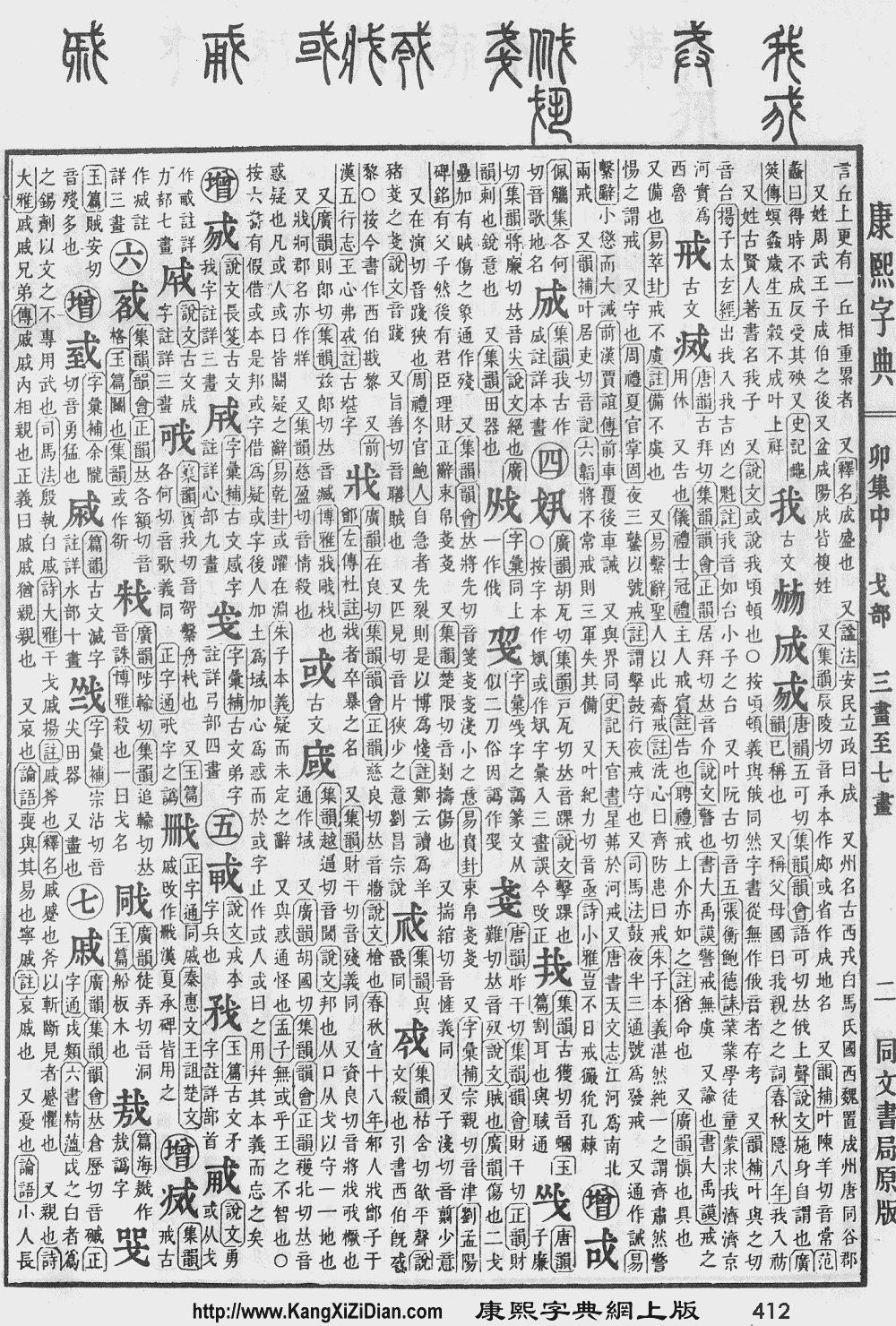
- KangXi: page 412, character 1
- Dai Kanwa Jiten: character 11545
- Hanyu Da Zidian: volume 2, page 1401, character 2
- Unihan data for U+6211
Chinese
| simp. and trad. |
我 | |
|---|---|---|
Glyph origin
| Historical forms of the character 我 | ||||
|---|---|---|---|---|
| Shang | Western Zhou | Warring States | Shuowen Jiezi (compiled in Han) | Liushutong (compiled in Ming) |
| Oracle bone script | Bronze inscriptions | Chu Slip and silk script | Small seal script | Transcribed ancient scripts |
 |
 |
 |
 |
 |
| Characters in the same phonetic series (我) (Zhengzhang, 2003) | |
|---|---|
| Old Chinese | |
| 莪 | *ŋaːl |
| 哦 | *ŋaːl |
| 娥 | *ŋaːl |
| 峨 | *ŋaːl |
| 峩 | *ŋaːl |
| 鵝 | *ŋaːl |
| 俄 | *ŋaːl |
| 蛾 | *ŋaːl, *ŋralʔ |
| 睋 | *ŋaːl |
| 涐 | *ŋaːl |
| 誐 | *ŋaːl |
| 硪 | *ŋaːl, *ŋaːlʔ |
| 我 | *ŋaːlʔ |
| 騀 | *ŋaːlʔ |
| 餓 | *ŋaːls |
| 義 | *ŋrals |
| 儀 | *ŋral |
| 轙 | *ŋral, *ŋralʔ |
| 檥 | *ŋral, *ŋralʔ |
| 蟻 | *ŋralʔ |
| 艤 | *ŋralʔ |
| 礒 | *ŋralʔ |
| 羛 | *ŋralʔ, *hŋral |
| 議 | *ŋrals |
| 犧 | *hŋral |
| 曦 | *hŋral |
| 羲 | *hŋral |
A pictogram (象形) of a rake-like tool or weapon (note oracle bone script form); Guo Moruo considers it to be the original character for 錡 (OC *ɡral, “a kind of axe or chisel”). It was already borrowed for sound to mean "I" since the oracle bone script.
Folk etymology considers it to be an ideograph of a hand 手 holding a weapon 戈 to protect oneself.
Etymology
From Proto-Sino-Tibetan *ŋa-j ~ ka. Cognate with 吾 (OC *ŋaː), Hakka 𠊎 (ngài).
Pronunciation
Definitions
我
- I; me; my
- (literary, formal or dialectal) we; us; our
- 我市 ― wǒshì ― our city
- (Can we verify(+) this sense?) a weapon
- † to stubbornly hold to one's own opinion
- † to kill
- ‡ tilted
- A surname.
Synonyms
| Dialectal synonyms of 我 (“I”) [map] | ||
|---|---|---|
| Variety | Location | Words |
| Classical Chinese | 吾、我、私、余、予、台、朕 | |
| Formal (Written Standard Chinese) | 我 | |
| Mandarin | Beijing | 我 |
| Taiwan | 我 | |
| Jinan | 我、俺 | |
| Xi'an | 我 | |
| Wuhan | 我 | |
| Chengdu | 我 | |
| Yangzhou | 我 | |
| Hefei | 我 | |
| Cantonese | Guangzhou | 我 |
| Hong Kong | 我 | |
| Taishan | 我 | |
| Yangjiang | 我 | |
| Gan | Nanchang | 我 |
| Hakka | Meixian | 𠊎 |
| Miaoli (N. Sixian) | 𠊎 | |
| Liudui (S. Sixian) | 𠊎 | |
| Hsinchu (Hailu) | 𠊎 | |
| Dongshi (Dabu) | 𠊎 | |
| Zhuolan (Raoping) | 𠊎 | |
| Yunlin (Zhao'an) | 𠊎 | |
| Jin | Taiyuan | 我 |
| Min Bei | Jian'ou | 我 |
| Min Dong | Fuzhou | 我、奴 |
| Min Nan | Xiamen | 我、阮 |
| Quanzhou | 我、阮 | |
| Zhangzhou | 我、阮 | |
| Taipei | 我、阮 | |
| Kaohsiung | 我、阮 | |
| Philippines (Manila) | 我 | |
| Chaozhou | 我 | |
| Wu | Shanghai | 我、吾、阿拉 |
| Suzhou | 我、奴 | |
| Wenzhou | 我 | |
| Ningbo | 我、我儂、像我 | |
| Xiang | Changsha | 我 |
| Shuangfeng | 我、卬 | |
Compounds
|
|
See also
| Standard Chinese personal pronouns | |||
|---|---|---|---|
| Person | Singular | Plural | |
| 1st | — | 我 | 我們/我们 (wǒmen) |
| inclusive | 咱們/咱们 (zánmen) | ||
| 2nd | male/indefinite | 你 (nǐ) | 你們/你们 (nǐmen) |
| female | 妳/你 (nǐ) | 妳們/你们 (nǐmen) | |
| deity | 祢 (nǐ) | 祢們/祢们 (nǐmen) | |
| polite | 您 (nín) | 你們/你们 (nǐmen) 您們/您们 (nínmen) | |
| 3rd | male/indefinite | 他 (tā) | 他們/他们 (tāmen) |
| female | 她 (tā) | 她們/她们 (tāmen) | |
| deity | 祂 (tā) | 祂們/祂们 (tāmen) | |
| animal | 牠/它 (tā) | 牠們/它们 (tāmen) | |
| inanimate | 它 (tā) | 它們/它们 (tāmen) | |
Japanese
Kanji
Readings
Compounds
- 我慢 (gaman):
- 我利我利 (garigari):
- 我国 (wagakuni), 我が国 (wagakuni): my country, my homeland
- 我輩 (wagahai), 我が輩 (wagahai): we, us
- 我儘 (wagamama), 我が儘 (wagamama): selfish; selfishness
- 我家 (wagaya), 我が家 (wagaya): my home, my household
- 我我 (wareware): we, us
- 我等 (warera), 我ら (warera): we, us
- 怪我 (kega): injury, hurt
- 他我 (taga): other minds
Etymology 1
| Kanji in this term |
|---|
| 我 |
| わ Grade: 6 |
| kun’yomi |
From Old Japanese.[1] The short form of 我 (ware).
Pronunciation
Alternative forms
Pronoun
- first-person personal pronoun: I, me
- c. late 9th – mid-10th century, Taketori Monogatari
- 「[...]わが丈たち竝ぶまで養ひたてまつりたる我子を、なに人が迎へきこえん。まさに許さんや」と言ひて、[...]
- c. 1001–1014, Genji Monogatari (Kiritsubo)
- かしこき御蔭をば、たのみきこえながら、貶めきずを求め給ふ人はおほく、わがみはかよわく、物はかなきありさまにて、中々なる物思ひをぞし給ふ。
- c. 1001–1014, Genji Monogatari (Utsusemi)
- 女どち、のどやかなる夕闇の、道たどたどしげなるまぎれに、わが車にてゐてたてまつる。
- c. late 9th – mid-10th century, Taketori Monogatari
Usage notes
In modern Japanese, most often encountered in fossilized phrases in combination with the Old Japanese possessive particle が (ga), such as 我が儘 (wagamama, “selfish; selfishness”, literally “just as I like”) or 我が国 (wagakuni, “my country, my homeland; (by extension) Japan”).
Etymology 2
| Kanji in this term |
|---|
| 我 |
| われ Grade: 6 |
| kun’yomi |
From Old Japanese.[1] Appears to be 我 (wa, see above) + れ (re), a nominalizing suffix also seen in terms such as これ (kore, “this”) and 誰 (dare, “who”).
The long form of 我 (wa).
Pronunciation
Alternative forms
Pronoun
- first person personal pronoun: I, me, oneself
- c. 759, Man'yōshū (book 14, poem 3384)
- 可都思加能 麻末能手兒奈乎 麻許登可聞 和礼尓余須等布 麻末乃弖胡奈乎
- c. late 9th – mid-10th century, Taketori Monogatari
- この人々、あるときは竹取を呼び出て「娘を吾にたべ」と、ふし拝み、手をすりのたまへど[...]
- c. late 9th – mid-10th century, Taketori Monogatari
- 「[...]わが丈たち竝ぶまで養ひたてまつりたる我子を、なに人が迎へきこえん。まさに許さんや」と言ひて、「われこそ死なめ」とて[...]
- c. 1001–1014, Genji Monogatari (Utsusemi)
- 紀の守のいもうとも、こなたにあるか。われに、垣間見せさせよ
- 1603–1604, Nippo Jisho
- Vare. ワレ (我) 私. また, おまえ. 本来の正しい言い方ではないが、下賎な者と話したり, 人を軽しめたりする時に用いる.
- c. 759, Man'yōshū (book 14, poem 3384)
- second person personal pronoun; you
- 1603–1604, Nippo Jisho (page 679)
- Vare. ワレ (我) 私. また, おまえ. 本来の正しい言い方ではないが、下賎な者と話したり, 人を軽しめたりする時に用いる.
- 1603–1604, Nippo Jisho (page 679)
Usage notes
In modern Japanese, most often encountered in the plural forms 我等 (warera) and 我我 (wareware, “we, us”).
Etymology 3
| Kanji in this term |
|---|
| 我 |
| わぬ Grade: 6 |
| kun’yomi |
Old Japanese. Ancient eastern dialect. Cognate with 我 (ware).[1]
Obsolete.
Pronunciation
Alternative forms
Pronoun
Etymology 4
| Kanji in this term |
|---|
| 我 |
| わろ Grade: 6 |
| kun’yomi |
/waro2/ invalid IPA characters (2) → /waro/
Old Japanese. Ancient eastern dialect. Likely a compound of 我 (wa, see above) + ろ (ro, Old Japanese suffix indicating affection).
Obsolete.
Pronunciation
Alternative forms
Pronoun
Etymology 5
| Kanji in this term |
|---|
| 我 |
| あ Grade: 6 |
| kun’yomi |
Old Japanese. The short form of 我 (are).
Obsolete. Fell into disuse in roughly the Heian period,[1][2] when it was replaced by wa (see above).
Pronunciation
Alternative forms
Pronoun
- (obsolete) first-person personal pronoun: I, me
- c. 759, Man'yōshū (book 14, poem 3456)
- 宇都世美能 夜蘇許登乃敝波 思気久等母 安良蘇比可祢弖 安乎許登奈須那
- c. 759, Man'yōshū (book 14, poem 3457)
- 宇知日佐須 美夜能和我世波 夜麻登女乃 比射麻久其登尓 安乎和須良須奈
- c. 759, Man'yōshū (book 14, poem 3458)
- 奈勢能古夜 等里乃乎加恥志 奈可太乎礼 安乎祢思奈久与 伊久豆君麻弖尓
- c. 759, Man'yōshū (book 14, poem 3471)
- 思麻良久波 祢都追母安良牟乎 伊米能未尓 母登奈見要都追 安乎祢思奈久流
- c. 1001–1014, Genji Monogatari (Yūgao)
- あが君、生き出で給へ。いと、いみじき目な見せ給ひそ
- c. 759, Man'yōshū (book 14, poem 3456)
Etymology 6
| Kanji in this term |
|---|
| 我 |
| あれ Grade: 6 |
| kun’yomi |
The long form of 我 (a). Compound of 我 (a, see above) + れ (re), a nominalizing suffix also seen in terms such as これ (kore, “this”) and 誰 (dare, “who”).
Obsolete. Fell into disuse in roughly the Heian period,[2] when it was replaced by ware (see above).
Pronunciation
Alternative forms
Pronoun
- (obsolete) first-person personal pronoun: I, me
- c. 759, Man'yōshū (book 5, poem 808)
- 多都乃麻乎 阿礼波毛等米牟 阿遠尓与志 奈良乃美夜古迩 許牟比等乃多仁
- c. 759, Man'yōshū (book 14, poem 3361)
- 安思我良能 乎弖毛許乃母尓 佐須和奈乃 可奈流麻之豆美 許呂安礼比毛等久
- c. 759, Man'yōshū (book 15, poem 3585)
- 和伎母故我 之多尓毛伎余等 於久理多流 許呂母能比毛乎 安礼等可米也母
- c. 759, Man'yōshū (book 17, poem 3932)
- 須麻比等乃 海辺都祢佐良受 夜久之保能 可良吉恋乎母 安礼波須流香物
- c. 759, Man'yōshū (book 18, poem 4058)
- 多知婆奈能 登乎能多知婆奈 夜都代尓母 安礼波和須礼自 許乃多知婆奈乎
- c. 759, Man'yōshū (book 20, poem 4298)
- 霜上尓 安良礼多婆之里 伊夜麻之尓 安礼波麻為許牟 年緒奈我久 古今未詳
- c. 1001–1014, Genji Monogatari (Yume no Ukihashi)
- [...]と、聞こえ動かして、几帳のもとに、おし寄せたてまつりたれば、あれにもあらず、居給へるけはい[...]
- c. 759, Man'yōshū (book 5, poem 808)
Etymology 7
| Kanji in this term |
|---|
| 我 |
| が Grade: 6 |
| on’yomi |
From Middle Chinese 我 (ngaX).
Pronunciation
Noun
Derived terms
- 我が強い (ga ga tsuyoi)
- 我を折る (ga o oru)
- 我を立てる (ga o tateru)
- 我を通す (ga o tōsu)
- 我を張る (ga o haru)
- 我を折る (ga o oru)