四
| ||||||||
Translingual
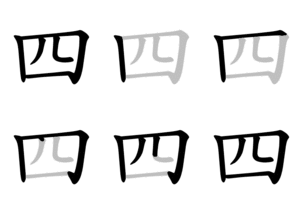
| Stroke order | |||
|---|---|---|---|
 | |||
Han character
四 (radical 31, 囗+2, 5 strokes, cangjie input 田金 (WC), four-corner 60210, composition ⿴囗儿)
References
- KangXi: page 216, character 22
- Dai Kanwa Jiten: character 4682
- Dae Jaweon: page 439, character 21
- Hanyu Da Zidian: volume 1, page 710, character 16
- Unihan data for U+56DB

Chinese
| simp. and trad. |
四 | |
|---|---|---|
| alt. forms | ||
Glyph origin
| Historical forms of the character 四 | |||||||||
|---|---|---|---|---|---|---|---|---|---|
| Shang | Western Zhou | Spring and Autumn | Warring States | Shuowen Jiezi (compiled in Han) | Liushutong (compiled in Ming) | ||||
| Bronze inscriptions | Oracle bone script | Bronze inscriptions | Bronze inscriptions | Bronze inscriptions | Chu Slip and silk script | Qin slip script | Ancient script | Small seal script | Transcribed ancient scripts |
 |
 |
 |
 |
 |
 |
 |
 |
 |
 |
| Characters in the same phonetic series (四) (Zhengzhang, 2003) | |
|---|---|
| Old Chinese | |
| 訵 | *l̥ʰids |
| 四 | *hljids |
| 泗 | *hljids |
| 駟 | *hljids |
| 柶 | *hljids |
| 牭 | *hljids |
| 呬 | *hrids |
The original shell and bone character was 一 written four times, 亖 (compare 二 and 三). The bronzeware style of the character featured a repositioning of those four lines inside 口; this later evolved into the combination used today of 口 (“mouth”) and 八 (“divide”) which meant a dispersal of breath. It could thus be said that four is a borrowed meaning for this character. The original sense is preserved in 呬 (OC *hrids), by adding an extra 口.
Etymology
From Proto-Sino-Tibetan *b-ləj.
As superstition, 四 (MC siɪH) is avoided because it is similar to 死 (MC sˠiɪX, “death”) in sound.
Pronunciation
Definitions
四
Compounds
|
|
|
Descendants
Others:
See also
| Chinese numbers | ||||||||||||||||
|---|---|---|---|---|---|---|---|---|---|---|---|---|---|---|---|---|
| 0 | 1 | 2 | 3 | 4 | 5 | 6 | 7 | 8 | 9 | 10 | 102 | 103 | 104 | 108 | 1012 | |
| Normal (小寫/小写) |
〇 | 一 | 二 | 三 | 四 | 五 | 六 | 七 | 八 | 九 | 十 | 百 | 千 | 萬/万 | 億/亿 | 兆 (Taiwan) 萬億/万亿 (Mainland China) |
| Financial (大寫/大写) |
零 | 壹 | 貳/贰 | 參/叁 | 肆 | 伍 | 陸/陆 | 柒 | 捌 | 玖 | 拾 | 佰 | 仟 | |||
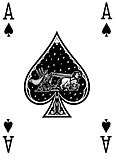
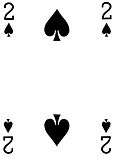
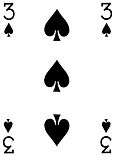
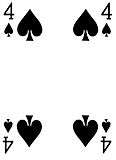
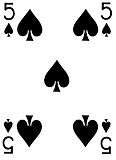
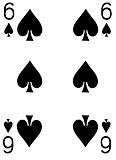
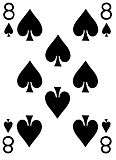
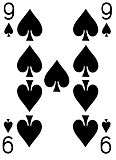
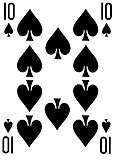
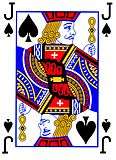
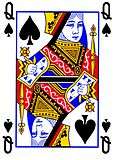
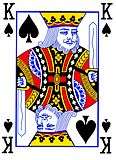
| Playing cards in Chinese · 撲克牌/扑克牌 (pūkèpái) (layout · text) | ||||||
|---|---|---|---|---|---|---|
 |
 |
 |
 |
 |
 |
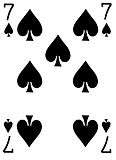 |
| A | 二 | 三 | 四 | 五 | 六 | 七 |
 |
 |
 |
 |
 |
 |
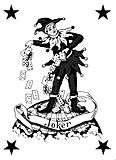 |
| 八 | 九 | 十 | J | Q | K | 小王 (black), 大王 (red) |
Japanese
| < 3 | 4 | 5 > |
|---|---|---|
| Cardinal : 四 | ||
Glyph origin
From 亖 (“four”). The parallel lines have since evolved into an approximation of what a fist looks like when viewed palm side down.
Kanji
Readings
Compounds
Derived terms
- 四捨五入 (shishagonyū): rounding (fractions)
- 四則演算 (shisokuenzan): the four basic arithmetic operations
- 四天王 (shitennō): the Four Heavenly Kings (Buddhism)
- 四面楚歌 (shimensoka): facing hostility, difficulty, or frustration on all sides
Etymology 1
/yo2/ *[jə] > /yo/ [jo].
Pronunciation
Noun
Etymology 2
Native 四 (yo, “four”) + n, influenced by analogy by the final sound in Chinese 三 (san, “three”).
Pronunciation
Noun
Etymology 3
Sino-Japanese reading.
Pronunciation
Noun
References
- The Japan Times (March 17, 2010). You can count on the tales behind number-kanji. Accessed March 23, 2010.
Korean
Hanja
四 • (sa)
Compounds
Mulam
Numeral
四 (ti5)
Vietnamese
Han character
- This term needs a translation to English. Please help out and add a translation, then remove the text
{{rfdef}}.