湯
| ||||||||
Translingual
Han character
湯 (radical 85, 水+9, 12 strokes, cangjie input 水日一竹 (EAMH), four-corner 36127, composition ⿰氵昜)
Derived characters
Descendants
References
- KangXi: page 638, character 16
- Dai Kanwa Jiten: character 17874
- Dae Jaweon: page 1045, character 8
- Hanyu Da Zidian: volume 3, page 1674, character 3
- Unihan data for U+6E6F
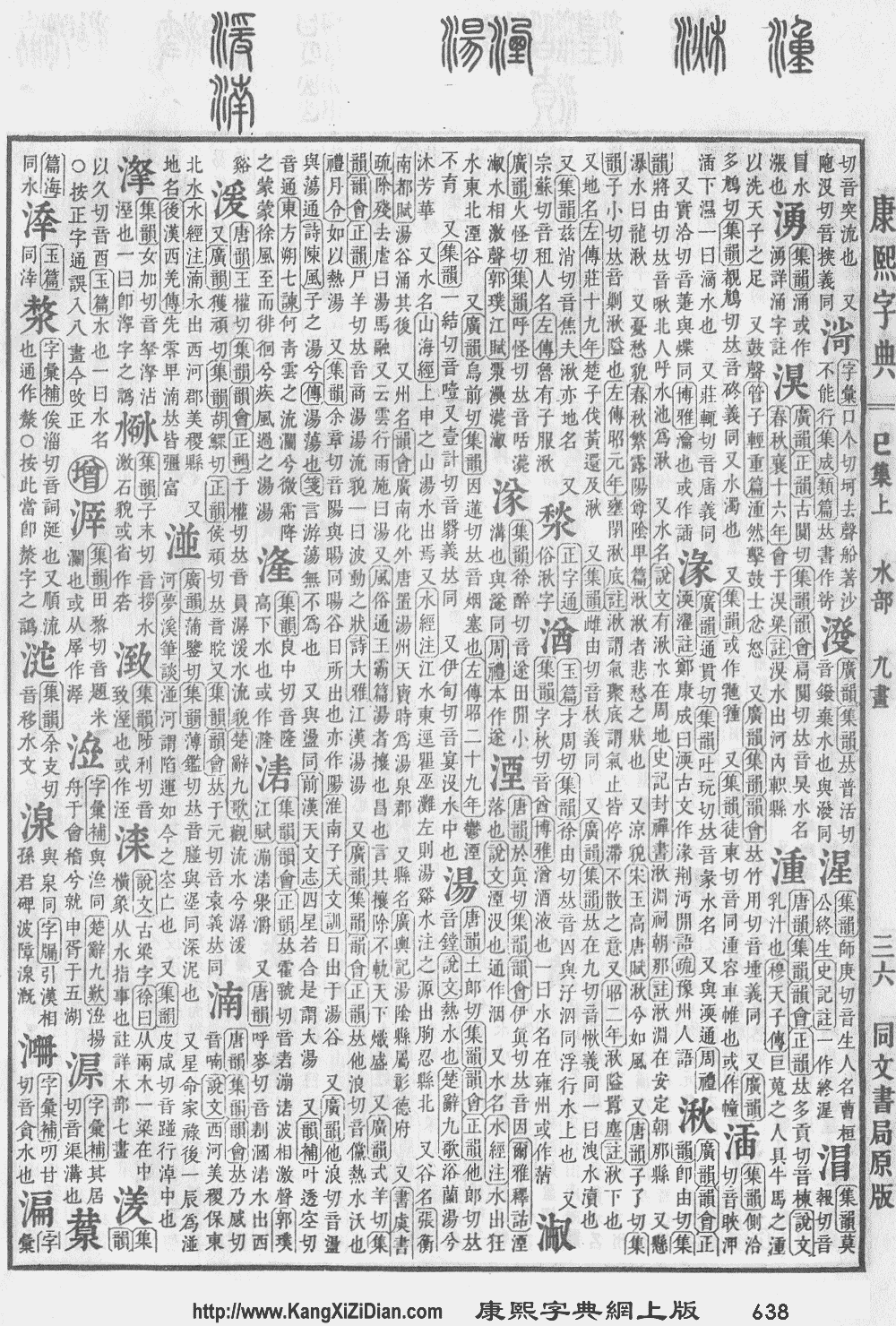
Chinese
| trad. | 湯 | |
|---|---|---|
| simp. | 汤 | |
Glyph origin
| Characters in the same phonetic series (昜) (Zhengzhang, 2003) | |
|---|---|
| Old Chinese | |
| 湯 | *l̥ʰaːŋ, *l̥ʰaːŋs, *hljaŋ |
| 踼 | *l̥ʰaːŋ, *l̥ʰaːŋʔ, *l'aːŋ, *l'aːŋs |
| 蝪 | *l̥ʰaːŋ |
| 薚 | *l̥ʰaːŋ |
| 簜 | *l̥ʰaːŋ, *l'aːŋʔ |
| 盪 | *l̥ʰaːŋ, *l̥ʰaːŋs, *l'aːŋʔ |
| 偒 | *l̥ʰaːŋʔ |
| 蕩 | *l̥ʰaːŋs, *l'aːŋʔ |
| 燙 | *l̥ʰaːŋs |
| 啺 | *l'aːŋ |
| 碭 | *l'aːŋ, *l'aːŋs |
| 婸 | *l'aːŋʔ |
| 愓 | *l'aːŋʔ |
| 璗 | *l'aːŋʔ |
| 崵 | *l'aːŋʔ, *laŋ |
| 逿 | *l'aːŋs |
| 暢 | *l̥ʰaŋs |
| 畼 | *l̥ʰaŋs |
| 腸 | *l'aŋ |
| 場 | *l'aŋ |
| 傷 | *hljaŋ, *hljaŋs |
| 殤 | *hljaŋ |
| 觴 | *hljaŋ |
| 慯 | *hljaŋ, *hljaŋs |
| 禓 | *hljaŋ, *laŋ |
| 塲 | *hljaŋ |
| 陽 | *laŋ |
| 楊 | *laŋ |
| 揚 | *laŋ |
| 瘍 | *laŋ |
| 煬 | *laŋ, *laŋs |
| 鍚 | *laŋ |
| 暘 | *laŋ |
| 颺 | *laŋ, *laŋs |
| 昜 | *laŋ |
| 輰 | *laŋ |
| 敭 | *laŋ |
| 鰑 | *laŋ |
| 諹 | *laŋ, *laŋs |
| 瑒 | *laŋ, *rlaːŋʔ |
| 鸉 | *laŋ |
| 餳 | *ljaːŋ |
Phono-semantic compound (形聲, OC *l̥ʰaːŋ, *l̥ʰaːŋs, *hljaŋ) : semantic 氵 (“water”) + phonetic 昜 (OC *laŋ).
Etymology
From Proto-Sino-Tibetan *r-la(w)ŋ (“steam; hot (liquid)”); compare Tibetan རླངས (rlangs, “steam, vapour; steamy”) (Bodman, 1980; STEDT).
Related to 盪 (OC *l̥ʰaːŋ, *l̥ʰaːŋs, *l'aːŋʔ, “basin for holding hot water for washing; wash basin”), 煬 (OC *laŋ, *laŋs, “to heat; to roast”) (Wang, 1982; Schuessler, 2007).
Pronunciation 1
Definitions
湯
Compounds
|
|
|
Pronunciation 2
Definitions
湯
Pronunciation 3
Definitions
湯
- † Only used in 湯湯/汤汤 (shāngshāng, “torrential”).
Compounds
Pronunciation 4
Definitions
湯
Japanese
Kanji
Readings
- Goon: とう (tō, Jōyō)←たう (tau, historical); しょう (shō)←しやう (syau, historical)
- Kan’on: とう (tō, Jōyō)←たう (tau, historical); しょう (shō)←しやう (syau, historical)
- Tōon: たん (tan)
- On: よう (yō)←やう (yau, historical)
- Kun: ゆ (yu, 湯, Jōyō)
Compounds
- 桜湯 (sakura yu): sakura tea
- 銭湯 (sentō): bathhouse
- 茶の湯 (chanoyu): tea ceremony
- 秘湯 (hitō): secret hot spring
Etymology 1
| Kanji in this term |
|---|
| 湯 |
| ゆ Grade: 3 |
| kun’yomi |
From Old Japanese. Used in the Man'yōshū, completed some time after 759 CE.[1]
Pronunciation
Noun
- warm or hot water
- bathwater
- a hot spring
- a medicinal bath
- a medicinal decoction
- bilgewater
- molten metal used in casting or founding
- urine
Derived terms
Synonyms
Etymology 2
Baby talk.[3] Possibly onomatopoeic of a person blowing on a hot beverage.
Pronunciation
Noun
References
Korean
Hanja
湯 • (tang, sang) (hangeul 탕, 상, revised tang, sang, McCune–Reischauer t'ang, sang, Yale thang, sang)
- This term needs a translation to English. Please help out and add a translation, then remove the text
{{rfdef}}.
Compounds
Vietnamese
Han character
湯 (thang)
- This term needs a translation to English. Please help out and add a translation, then remove the text
{{rfdef}}.