丑
See also: 醜
| ||||||||
Translingual
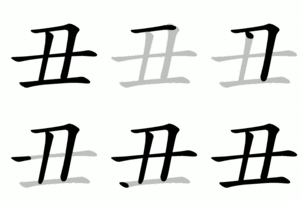
| Stroke order | |||
|---|---|---|---|
 | |||
Han character
丑 (radical 1, 一+3, 4 strokes, cangjie input 弓土 (NG), four-corner 17105)
References
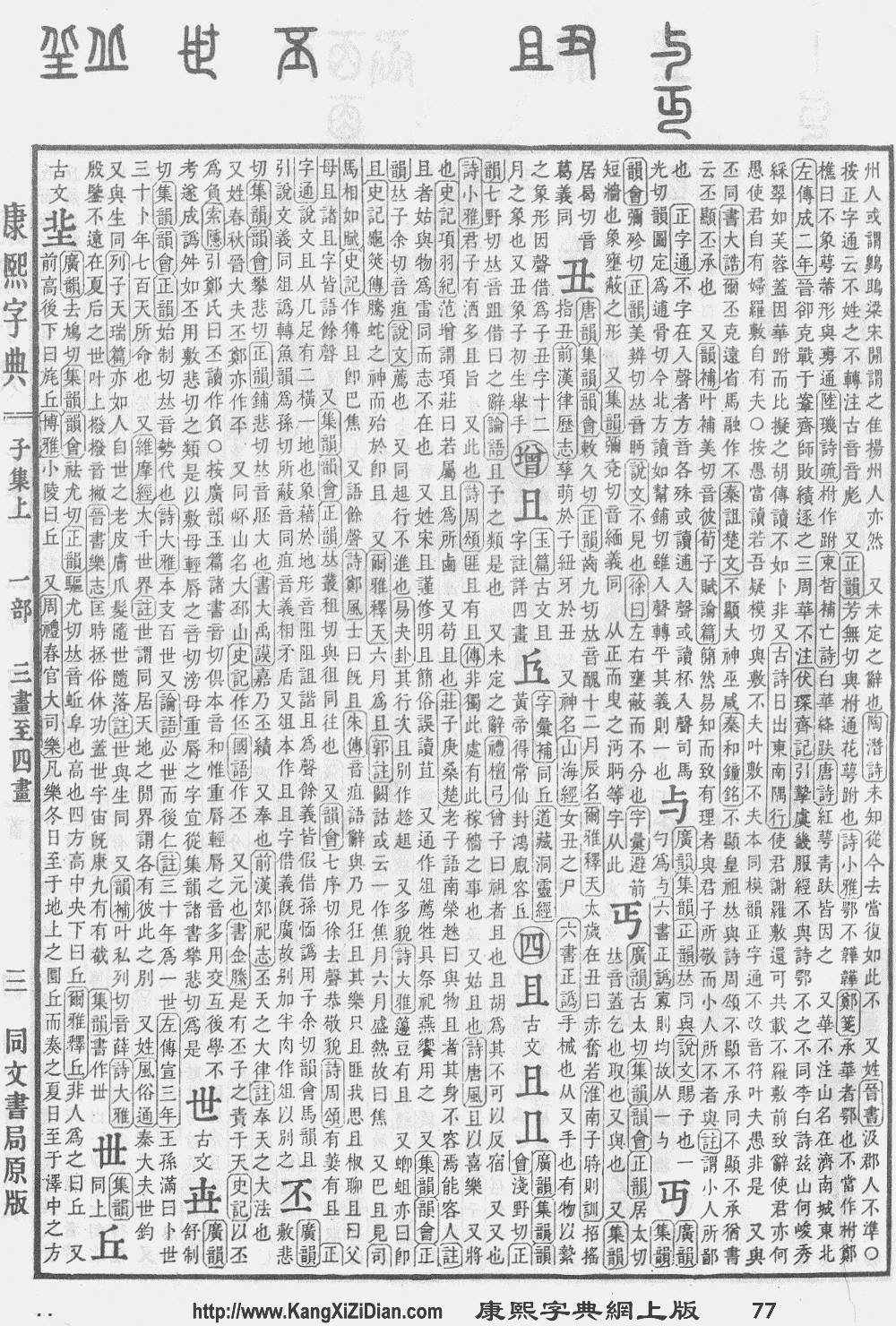
- KangXi: page 77, character 4
- Dai Kanwa Jiten: character 23
- Dae Jaweon: page 154, character 4
- Hanyu Da Zidian: volume 1, page 12, character 7
- Unihan data for U+4E11
Chinese
Glyph origin
| Historical forms of the character 丑 | ||||||||||||||||||||||||||||||||||||||
|---|---|---|---|---|---|---|---|---|---|---|---|---|---|---|---|---|---|---|---|---|---|---|---|---|---|---|---|---|---|---|---|---|---|---|---|---|---|---|
| Shang | Western Zhou | Shuowen Jiezi (compiled in Han) | Liushutong (compiled in Ming) | |||||||||||||||||||||||||||||||||||
| Oracle bone script | Bronze inscriptions | Small seal script | Transcribed ancient scripts | |||||||||||||||||||||||||||||||||||
 |
 |
 |
 | |||||||||||||||||||||||||||||||||||
|||
|
References: Mostly from Richard Sears' Chinese Etymology site (authorisation),
| ||||||||||||||||||||||||||||||||||||||


| Characters in the same phonetic series (丑) (Zhengzhang, 2003) | |
|---|---|
| Old Chinese | |
| 峱 | *nuː |
| 紐 | *nuʔ |
| 扭 | *nuʔ, *tnuʔ |
| 狃 | *nuʔ, *nus |
| 鈕 | *nuʔ |
| 忸 | *nuʔ, *nuɡ |
| 杻 | *nuʔ, *n̥ʰuʔ |
| 莥 | *nuʔ |
| 羞 | *snu |
| 丑 | *n̥ʰuʔ |
| 沑 | *njuʔ, *nuɡ |
| 粈 | *njuʔ |
| 衄 | *nuɡ, *njuɡ |
Etymology 1
| simp. and trad. |
丑 | |
|---|---|---|
| alt. forms | 丒 㗺 | |
Pronunciation
Definitions
丑
- second of twelve earthly branches (十二支)
- ox (牛) of Chinese zodiac
- clown; comedian
Coordinate terms
Compounds
|
Etymology 2
| For pronunciation and definitions of 丑 – see 醜 (“ugly”). (This character, 丑, is the simplified form of 醜.) |
Notes:
|
Japanese
Kanji
丑
(“Jinmeiyō” kanji used for names)
Readings
- Goon: ちゅ (chu)←ちゆ (tyu, historical)
- Kan’on: ちゅう (chū)←ちう (tiu, historical)
- On: しゅ (shu)←しゆ (syu, historical); しゅう (shū)←しう (siu, historical)
- Kun: うし (ushi, 丑)
- Nanori: ひろ (hiro)
Etymology 1
| Kanji in this term |
|---|
| 丑 |
| うし Jinmeiyō |
| kun’yomi |
From 牛 (ushi, “bull; cow; ox”)
Pronunciation
Proper noun
丑 (hiragana うし, rōmaji Ushi)
- the Ox, the second of the twelve Earthly Branches
Etymology 2
| Kanji in this term |
|---|
| 丑 |
| ちゅう Jinmeiyō |
| on’yomi |
From Middle Chinese 丑 (trhjuwX)
Proper noun
丑 (hiragana ちゅう, rōmaji Chū, historical hiragana ちう)
- the Ox, the second of the twelve Earthly Branches
Korean
Hanja
丑 • (chuk, chu)
References
Vietnamese
Han character
- This term needs a translation to English. Please help out and add a translation, then remove the text
{{rfdef}}.
References
This article is issued from
Wiktionary.
The text is licensed under Creative Commons - Attribution - Sharealike.
Additional terms may apply for the media files.