二
| ||||||||
Translingual
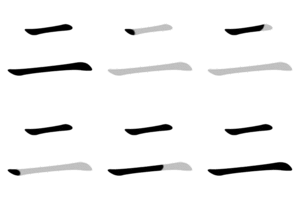
| Stroke order | |||
|---|---|---|---|
 | |||
Han character
二 (radical 7, 二+0, 2 strokes, cangjie input 一一 (MM), four-corner 10100, composition ⿱一一)
- Kangxi radical #7, ⼆.
Derived characters
- Index:Chinese radical/二
References
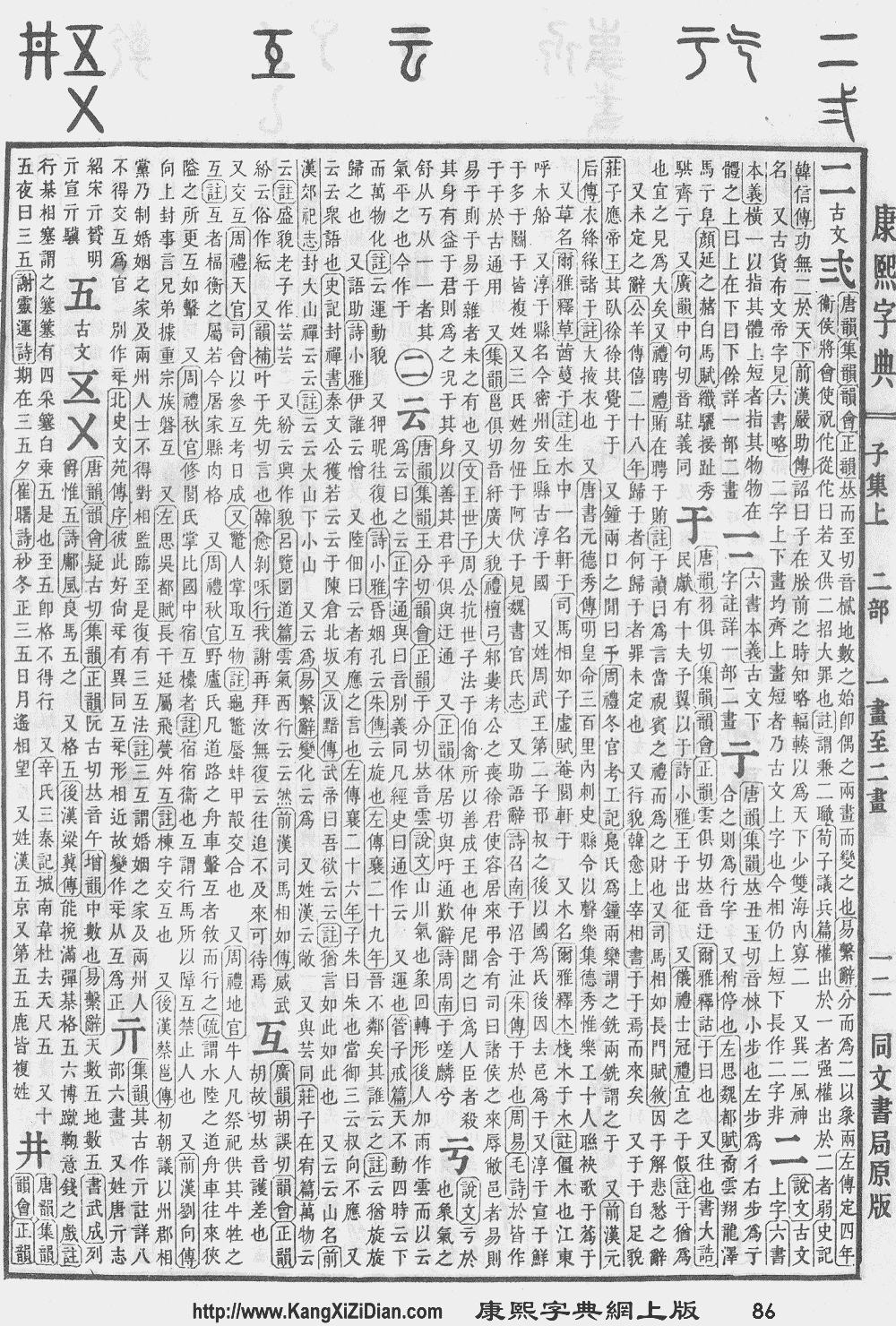
- KangXi: page 86, character 1
- Dai Kanwa Jiten: character 247
- Dae Jaweon: page 175, character 6
- Hanyu Da Zidian: volume 1, page 2, character 1
- Unihan data for U+4E8C
Chinese
| simp. and trad. |
二 | |
|---|---|---|
| alt. forms | 貳/贰 financial 弍 𠄠 | |
Glyph origin
| Historical forms of the character 二 | |||||||||||||||||||||||||||||||||||||||||||||||||||||
|---|---|---|---|---|---|---|---|---|---|---|---|---|---|---|---|---|---|---|---|---|---|---|---|---|---|---|---|---|---|---|---|---|---|---|---|---|---|---|---|---|---|---|---|---|---|---|---|---|---|---|---|---|---|
| Shang | Western Zhou | Spring and Autumn | Warring States | Shuowen Jiezi (compiled in Han) | Liushutong (compiled in Ming) | ||||||||||||||||||||||||||||||||||||||||||||||||
| Oracle bone script | Bronze inscriptions | Bronze inscriptions | Bronze inscriptions | Chu Slip and silk script | Qin slip script | Ancient script | Small seal script | Transcribed ancient scripts | |||||||||||||||||||||||||||||||||||||||||||||
 |
 |
 |
 |
 |
 |
 |
 |
 | |||||||||||||||||||||||||||||||||||||||||||||
||||||||
|
References: Mostly from Richard Sears' Chinese Etymology site (authorisation),
| |||||||||||||||||||||||||||||||||||||||||||||||||||||


| Characters in the same phonetic series (二) (Zhengzhang, 2003) | |
|---|---|
| Old Chinese | |
| 膩 | *nis |
| 二 | *njis |
| 弍 | *njis |
| 貳 | *njis |
| 樲 | *njis |
Ideogram (指事) - two parallel lines. Compare with 一, one line meaning one, 三, three lines meaning three, and 亖, four lines meaning four. Duplication of 一 (“one”).
Etymology
From Proto-Sino-Tibetan *g/s-ni-s.
Pronunciation
Definitions
二
- two
- 子曰:「君子之道,或出或處,或默或語,二人同心,其利斷金。同心之言,其臭如蘭。」 [Classical Chinese, trad.]
- From: I Ching, 3rd – 2nd millennia BCE
- Zǐ yuē: “Jūnzǐ zhī dào, huò chū huò chǔ, huò mò huò yǔ, èr rén tóng xīn, qí lì duàn jīn. Tóng xīn zhī yán, qí xiù rú lán.” [Pinyin]
- The Master said, on this, "The ways of good men (different seem). This in a public office toils; that in his home the time beguiles. One man his lips with silence seals; another all his mind reveals. But when two men are one in heart, not iron bolts keep them apart; the words they in their union use, fragrance like orchid plants diffuse."
子曰:“君子之道,或出或处,或默或语,二人同心,其利断金。同心之言,其臭如兰。” [Classical Chinese, simp.]
- second
- 子墨子曰:國有七患。七患者何?城郭溝池不可守而治宮室,一患也。邊國至境四鄰莫救,二患也。 [Classical Chinese, trad.]
- From: Mozi (book), circa 4th century BCE
- Zǐ Mòzǐ yuē: guó yǒu qī huàn. Qī huàn zhě hé? Chéngguō gōuchí bù kě shǒu ér zhì gōngshì, yī huàn yě. Biānguó zhì jìng sìlín mò jiù, èr huàn yě. [Pinyin]
- Mozi said: There are seven causes of worry to a state and they are: (1) When the outer and the inner city walls are not defensible; (2) When an enemy state is approaching and yet one's neighbours do not come to the rescue.
子墨子曰:国有七患。七患者何?城郭沟池不可守而治宫室,一患也。边国至境四邻莫救,二患也。 [Classical Chinese, simp.]
- † secondary, vice-
- † again, once more
- † two-fold, double
- † fold, times
- † different; other, else
- 二意
- 二心 (èrxīn)
- Short for "twenty, two hundred or two thousand" after hundreds, thousands and ten thousands.
- Short for "twenty cents".
- (Northeast Mandarin, neologism) stupid, dumb; silly, thick, lacking mental agility (often in a cute way)
Usage notes
See 兩#Usage notes.
Synonyms
Compounds
|
|
|
Descendants
- Thai: ยี่ (yîi)
See also
| Chinese numbers | ||||||||||||||||
|---|---|---|---|---|---|---|---|---|---|---|---|---|---|---|---|---|
| 0 | 1 | 2 | 3 | 4 | 5 | 6 | 7 | 8 | 9 | 10 | 102 | 103 | 104 | 108 | 1012 | |
| Normal (小寫/小写) |
〇 | 一 | 二 | 三 | 四 | 五 | 六 | 七 | 八 | 九 | 十 | 百 | 千 | 萬/万 | 億/亿 | 兆 (Taiwan) 萬億/万亿 (Mainland China) |
| Financial (大寫/大写) |
零 | 壹 | 貳/贰 | 參/叁 | 肆 | 伍 | 陸/陆 | 柒 | 捌 | 玖 | 拾 | 佰 | 仟 | |||
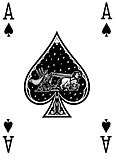
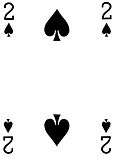
| Playing cards in Chinese · 撲克牌/扑克牌 (pūkèpái) (layout · text) | ||||||
|---|---|---|---|---|---|---|
 |
 |
 |
 |
 |
 |
 |
| A | 二 | 三 | 四 | 五 | 六 | 七 |
 |
 |
 |
 |
 |
 |
 |
| 八 | 九 | 十 | J | Q | K | 小王 (black), 大王 (red) |
Japanese
Kanji
Alternative forms
- 弐 (financial or formal)
Readings
Compounds
Derived terms
Etymology 1
| Kanji in this term |
|---|
| 二 |
| に Grade: 1 |
| on’yomi |
From Middle Chinese 二 (nyijH, “two”).
Pronunciation
Noun
Numeral
| < 1 | 2 | 3 > |
|---|---|---|
| Cardinal : 二 | ||
Etymology 2
| Kanji in this term |
|---|
| 二 |
| ふた Grade: 1 |
| kun’yomi |
Originally /huta/: *[puta] > [ɸuta]. The Ablaut form of 一 (hito2, “one”), which it doubles.
Noun
References
Korean
Hanja
二 • (i)
- This term needs a translation to English. Please help out and add a translation, then remove the text
{{rfdef}}.
Vietnamese
Han character
- This term needs a translation to English. Please help out and add a translation, then remove the text
{{rfdef}}.
References
Zhuang
Numeral
二