出
| ||||||||
Translingual
| Stroke order | |||
|---|---|---|---|
 | |||
| Stroke order | |||
|---|---|---|---|
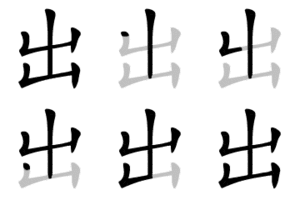 | |||
Han character
出 (radical 17, 凵+3, 5 strokes, cangjie input 山山 (UU), four-corner 22772, composition ⿻丨⿱凵凵)
Derived characters
Related characters
- 岀 (
U+5C80, Unorthodox variant)
References
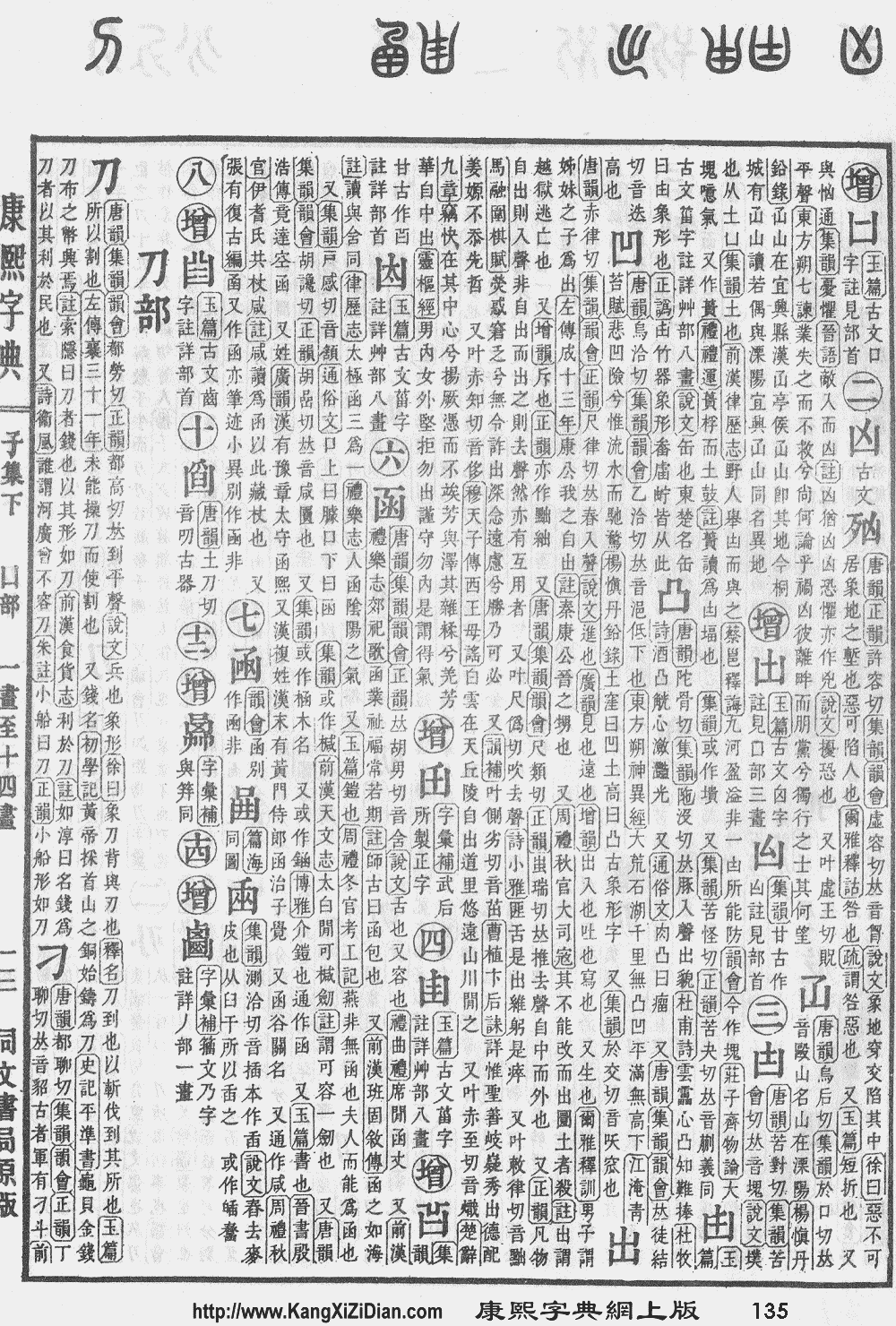
- KangXi: page 135, character 11
- Dai Kanwa Jiten: character 1811
- Dae Jaweon: page 301, character 7
- Hanyu Da Zidian: volume 1, page 307, character 8
- Unihan data for U+51FA
Chinese
| simp. and trad. |
出 | |
|---|---|---|
Glyph origin
| Historical forms of the character 出 | ||||
|---|---|---|---|---|
| Shang | Western Zhou | Warring States | Shuowen Jiezi (compiled in Han) | Liushutong (compiled in Ming) |
| Oracle bone script | Bronze inscriptions | Chu Slip and silk script | Small seal script | Transcribed ancient scripts |
 |
 |
 |
 |
 |
| Characters in the same phonetic series (出) (Zhengzhang, 2003) | |
|---|---|
| Old Chinese | |
| 聉 | *r̥ʰuːlʔ, *ŋrɯd, *ʔr'uːd, *ŋruːd |
| 贅 | *kljods |
| 祟 | *sqʰluds |
| 出 | *kʰljuds, *kʰljud |
| 茁 | *ʔl'ɯd, *skruːd, *skrod, *skrud |
| 欪 | *qʰlɯd, *l̥ʰud |
| 貀 | *ŋr'uːd |
| 袦 | *ŋr'oːd |
| 咄 | *ʔl'oːd, *ʔl'uːd |
| 柮 | *sɡloːd, *ʔl'uːd |
| 拙 | *kljod |
| 炪 | *kljod, *l̥ʰud |
| 掘 | *ɡlod, *ɡlud |
| 鈯 | *l'uːd |
| 啒 | *kluːd, *qʰluːd |
| 淈 | *kluːd, *ɡluːd |
| 窟 | *kʰluːd |
| 泏 | *kʰluːd, *ʔl'ud |
| 堀 | *kʰluːd, *ɡlud |
| 胐 | *kʰluːd |
| 窋 | *ʔl'ud |
| 絀 | *ʔl'ud |
| 黜 | *l̥ʰud |
| 屈 | *klud, *kʰlud |
| 趉 | *klud |
| 鶌 | *klud |
| 詘 | *kʰlud |
| 倔 | *ɡlud |
| 崛 | *ɡlud, *ŋɡlud |
Ideogrammic compound (會意) : 止 (“foot”) + 凵 (“cave”) – to step out of a cave; to exit. Compare 各.
By the Qin dynasty, the character has lost its original shape. Based on the distorted form, Shuowen mistakenly interprets the character as a pictogram (象形) of a plant growing outwards.
Etymology 1
Pronunciation
Definitions
出
- to go out
- Antonyms: 入 (rù)
- to leave; to exit
- to appear
- to show up
- to send out, to put forth
- to offer
- to exceed
- to be in excess
- to produce
- to happen
- to publish
- to vent
- to sell (one's own thing)
- to be released (eg. product, film, announcement)
- Particle placed after verbs to indicate an outward movement.
- Particle placed after verbs to indicate a completed action.
Compounds
|
|
|
Etymology 2
| For pronunciation and definitions of 出 – see 齣 (“act; stanza; time, occasion; trouble; hassle; etc.”). (This character, 出, is the simplified and variant traditional form of 齣.) |
Notes:
|
Japanese
Kanji
Readings
Compounds
- 出湯 (ideyu)
- 出所 (shussho)
- 出演 (shutsuen)
- 出家 (shukke)
- 出火 (shukka)
- 出花 (debana)
- 出荷 (shukka)
- 出芽 (shutsuga)
- 出駕 (shutsuga)
- 出会 (deai)
- 出格子 (degōshi)
- 出殻 (shukkoku)
- 出額 (debitai)
- 出掛 (dekake)
- 出棺 (shukkan)
- 出監 (shukkan)
- 出願 (shutsugan)
- 出渠 (shukkyo)
- 出漁 (shutsuryō)
- 出漁 (shutsugyo)
- 出京 (shukkyō)
- 出郷 (shutsugō)
- 出勤 (shukkin)
- 出金 (shukkin)
- 出群 (shutsugun)
- 出軍 (shutsugun)
- 出稽古 (degeiko)
- 出撃 (shutsugeki)
- 出欠 (shukketsu)
- 出血 (shukketsu)
- 出現 (shutsugen)
- 出庫 (shukko)
- 出御 (shutsugyo)
- 出口 (deguchi)
- 出向 (shukkō)
- 出校 (shukkō)
- 出港 (shukkō)
- 出航 (shukkō)
- 出講 (shukkō)
- 出国 (shutsugoku)
- 出獄 (shutsugoku)
- 出際 (degiwa)
- 出札 (shussatsu)
- 出産 (shussan)
- 出仕 (shutsuji)
- 出師 (shusshi)
- 出資 (shusshi)
- 出歯 (deba)
- 出時 (shutsuji)
- 出自 (shutsuji)
- 出社 (shussha)
- 出汁 (dejiru)
- 出城 (dejiro)
- 出場 (shutsuba)
- 出色 (shusshoku)
- 出身 (shusshin)
- 出刃 (deba)
- 出陣 (shutsujin)
- 出水 (demizu)
- 出世 (shusse)
- 出征 (shussei)
- 出生 (shussei)
- 出精 (shussei)
- 出席 (shusseki)
- 出先 (desaki)
- 出船 (shussen)
- 出前 (shutsuzen)
- 出訴 (shusso)
- 出窓 (demado)
- 出走 (shussō)
- 出足 (deashi)
- 出題 (shutsudai)
- 出鱈目 (detarame)
- 出炭 (shuttan)
- 出端 (shuttan)
- 出潮 (deshio)
- 出超 (shuchō)
- 出陳 (shuchin)
- 出廷 (shuttei)
- 出典 (shutten)
- 出展 (shutten)
- 出店 (shutten)
- 出度 (shutsudo)
- 出土 (shutsudo)
- 出頭 (shuttō)
- 出動 (shukkin)
- 出入 (deiri)
- 出納 (shutsunō)
- 出馬 (shutsuba)
- 出発 (shuppatsu)
- 出帆 (shuppan)
- 出版 (shuppan)
- 出番 (deban)
- 出費 (shuppi)
- 出鼻 (debana)
- 出品 (shuppin)
- 出府 (shuppu)
- 出物 (demono)
- 出兵 (shuppei)
- 出穂 (shussui)
- 出放題 (dehōdai)
- 出方 (dekata)
- 出没 (shutsubotsu)
- 出奔 (shuppon)
- 出木年 (dekidoshi)
- 出目 (deme)
- 出門 (shutsumon)
- 出様 (desama)
- 出来 (deki)
- 出来る (dekiru)
- 出藍 (shutsuran)
- 出立 (shuttatsu)
- 出猟 (shutsuryō)
- 出力 (shutsuryoku)
- 出塁 (shutsurui)
- 出廬 (shutsuro)
- 出捐 (shutsuen)
- 出臍 (debeso)
Etymology 1
| Kanji in this term |
|---|
| 出 |
| で Grade: 1 |
| kun’yomi |
The 連用形 (ren'yōkei, “continuative or stem form”) of verb 出る (deru, “to come out”).
Pronunciation
Noun
Etymology 2
| Kanji in this term |
|---|
| 出 |
| しゅつ Grade: 1 |
| on’yomi |
From Middle Chinese 出 (MC t͡ɕʰiuɪt̚, “to go or come out”).
Pronunciation
Noun
出 (hiragana しゅつ, rōmaji shutsu)
- being from a certain place
- coming out
Etymology 3
| Kanji in this term |
|---|
| 出 |
| ず Grade: 1 |
| kun’yomi |
Contraction of verb 出ず (izu, “to go or come out”, obsolete)
Verb
出 (nidan conjugation, hiragana ず, rōmaji zu, historical hiragana づ)
- (obsolete) to go or come out
Usage notes
The 出る (deru) form is now the standard term for this in modern Japanese.
References
Korean
Hanja
出 (eumhun 날 출 (nal chul))
- This term needs a translation to English. Please help out and add a translation, then remove the text
{{rfdef}}.
Vietnamese
Han character
出 (xuất, xuý)
- This term needs a translation to English. Please help out and add a translation, then remove the text
{{rfdef}}.