点
| ||||||||
Translingual
| Stroke order | |||
|---|---|---|---|
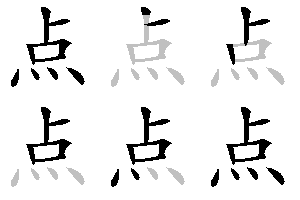 | |||
| Stroke order | |||
|---|---|---|---|
 | |||
| Japanese | 点 |
|---|---|
| Simplified | 点 |
| Traditional | 點 |
Etymology
Simplified from 點 (黑 → 灬). Note that 黑 changed from being on the left to being 灬, underneath. Compare 黙 (from 默), which retains the 里, and 黒, which is the simplification in isolation.
Hanzi
点 (radical 86 火+5, 9 strokes, cangjie input X卜口火 (XYRF) or 卜口火 (YRF), composition ⿱占灬)
Derived characters
- Simplification: 奌
References
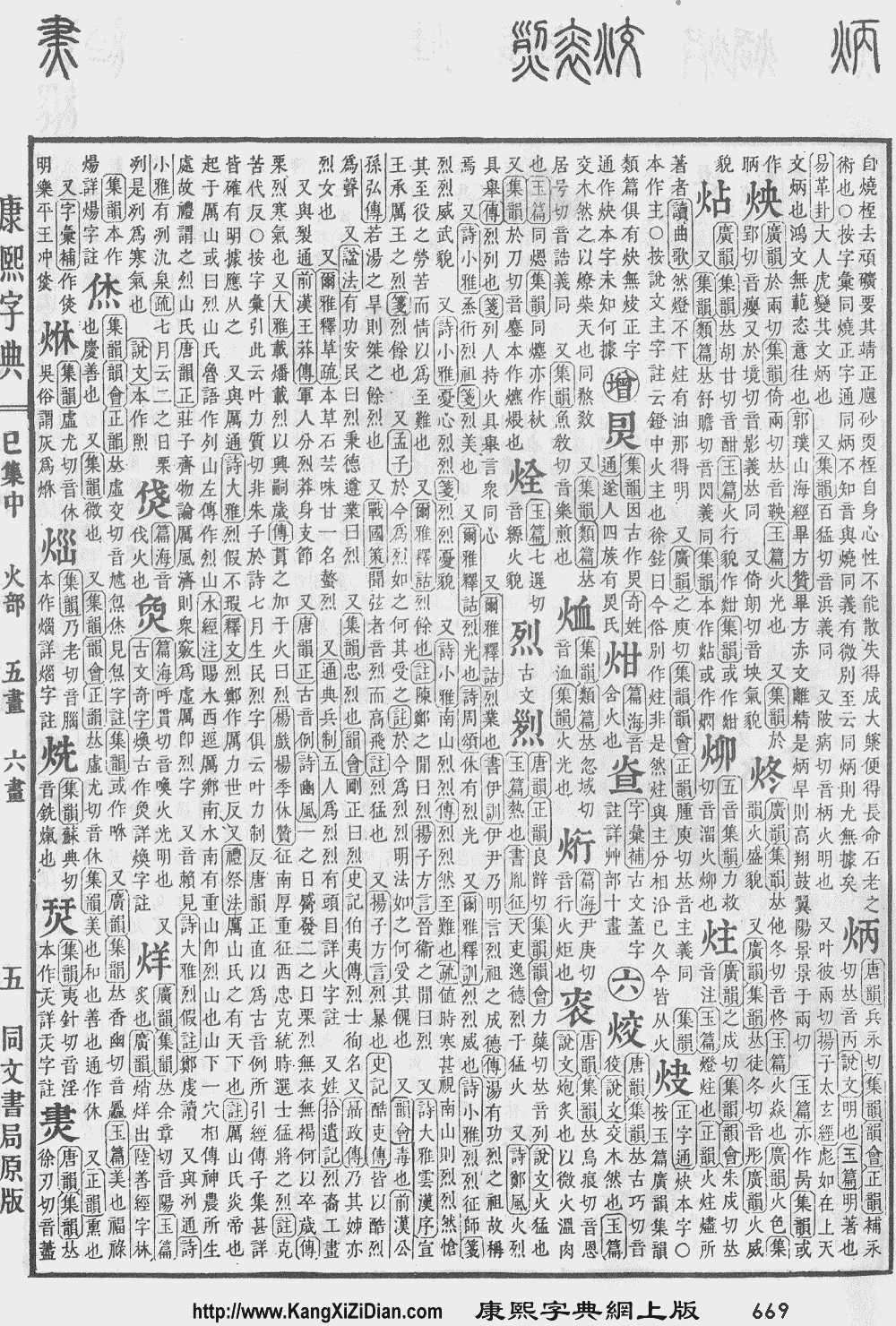
- KangXi: not present, would follow page 669, character 10
- Dai Kanwa Jiten: character 18980
- Dae Jaweon: page 1078, character 15
- Hanyu Da Zidian: volume 3, page 2198, character 7
- Unihan data for U+70B9
Chinese
| For pronunciation and definitions of 点 – see 點 (“dot; spot; speck; place; point; spot; etc.”). (This character, 点, is the simplified form of 點.) |
Notes:
|
Japanese
| 点 | |
| 點 |
Kanji
点
(grade 2 “Kyōiku” kanji, shinjitai kanji, kyūjitai form 點)
Readings
Compounds
Compounds
| Kanji in this term |
|---|
| 点 |
| てん Grade: 2 |
| on’yomi |
Etymology
From Middle Chinese 點 (temX, “point”).
Pronunciation
Counter
- items or goods
Noun
References
Korean
Hanja
点 • (jeom) (hangeul 점, revised jeom, McCune–Reischauer chŏm, Yale cem)
- This term needs a translation to English. Please help out and add a translation, then remove the text
{{rfdef}}.
This article is issued from
Wiktionary.
The text is licensed under Creative Commons - Attribution - Sharealike.
Additional terms may apply for the media files.