嗎
See also: 吗
| ||||||||
Translingual
Han character
嗎 (radical 30 口+10, 13 strokes, cangjie input 口尸手火 (RSQF), four-corner 61027, composition ⿰口馬)
Derived characters
- 𭚜, 𡁉
Related characters
References
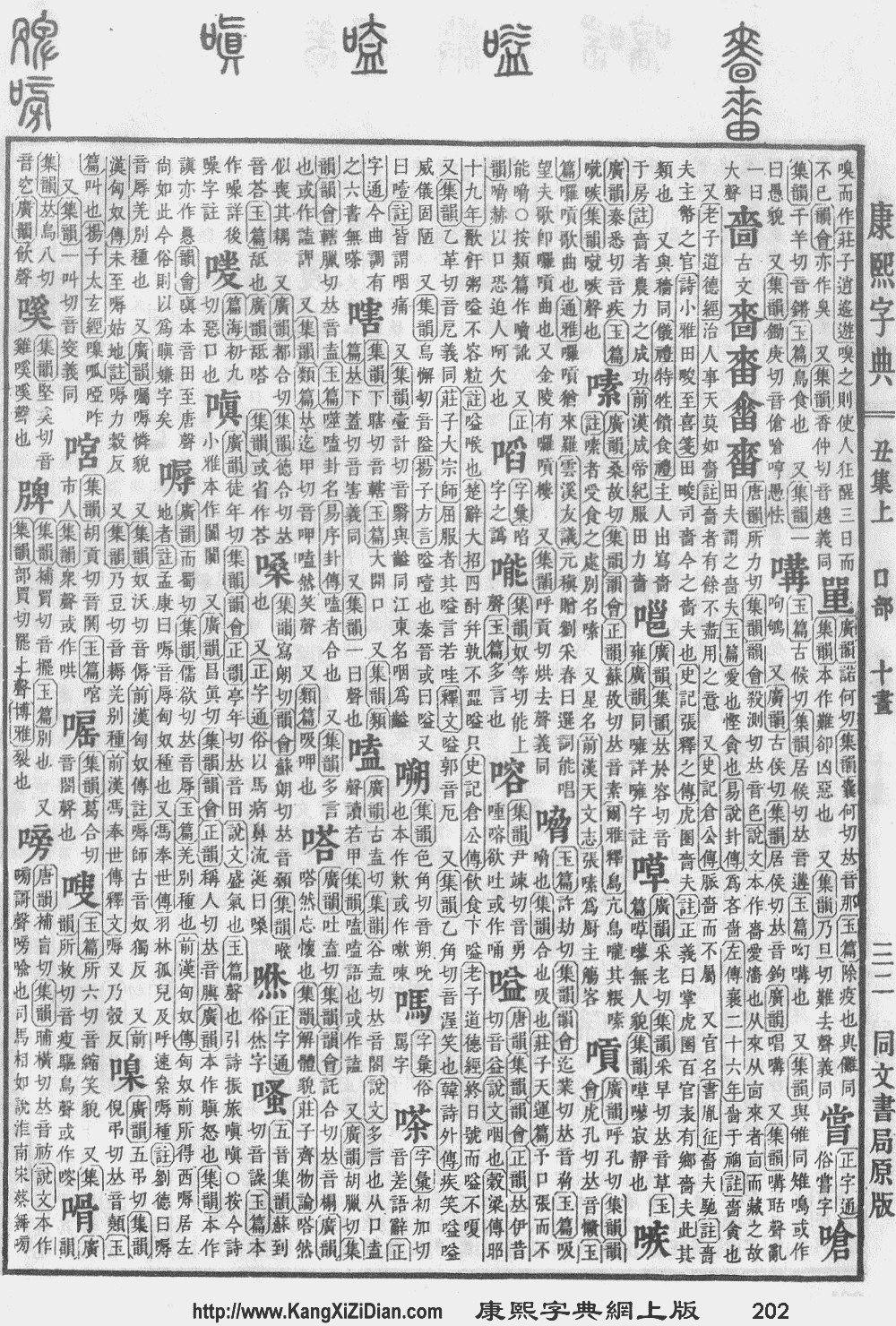
- KangXi: page 202, character 21
- Dai Kanwa Jiten: character 4065
- Dae Jaweon: page 425, character 2
- Hanyu Da Zidian: volume 1, page 664, character 10
- Unihan data for U+55CE
Chinese
| trad. | 嗎 | |
|---|---|---|
| simp. | 吗 | |
Glyph origin
Phono-semantic compound (形聲) : semantic 口 (“mouth; colloquial”) + phonetic 馬.
Etymology 1
From 無 (OC *ma, “not”) (Schuessler, 2007).
Pronunciation
Definitions
嗎
- Final interrogative particle, forming yes/no questions.
Usage notes
The particle 嗎 allows turning an affirmative sentence into an interrogative sentence without modifying the sentence order.
See also
Etymology 2
Pronunciation
Definitions
嗎
- Used as a phonetic character.
Compounds
Etymology 3
Pronunciation
Definitions
嗎
Etymology 4
| For pronunciation and definitions of 嗎 – see 罵 (“to chide; to blame; to curse; to swear”). (This character, 嗎, is recorded in one or more historical dictionaries as a variant form of 罵.) |
Japanese
Kanji
嗎
- This term needs a translation to English. Please help out and add a translation, then remove the text
{{rfdef}}.
Readings
Korean
Hanja
嗎 • (ma) (hangeul 마)
- This term needs a translation to English. Please help out and add a translation, then remove the text
{{rfdef}}.
Vietnamese
Han character
嗎 (mửa, ma, mớ, mạ, mắng, mỉa, mứa, mựa)
- This term needs a translation to English. Please help out and add a translation, then remove the text
{{rfdef}}.
This article is issued from
Wiktionary.
The text is licensed under Creative Commons - Attribution - Sharealike.
Additional terms may apply for the media files.