苫
| ||||||||
Translingual
Han character
苫 (radical 140 艸+5, 11 strokes, cangjie input 廿卜口 (TYR), four-corner 44601, composition ⿱艹占)
References
- KangXi: page 1024, character 5
- Dai Kanwa Jiten: character 30802
- Dae Jaweon: page 1483, character 5
- Hanyu Da Zidian: volume 5, page 3189, character 6
- Unihan data for U+82EB
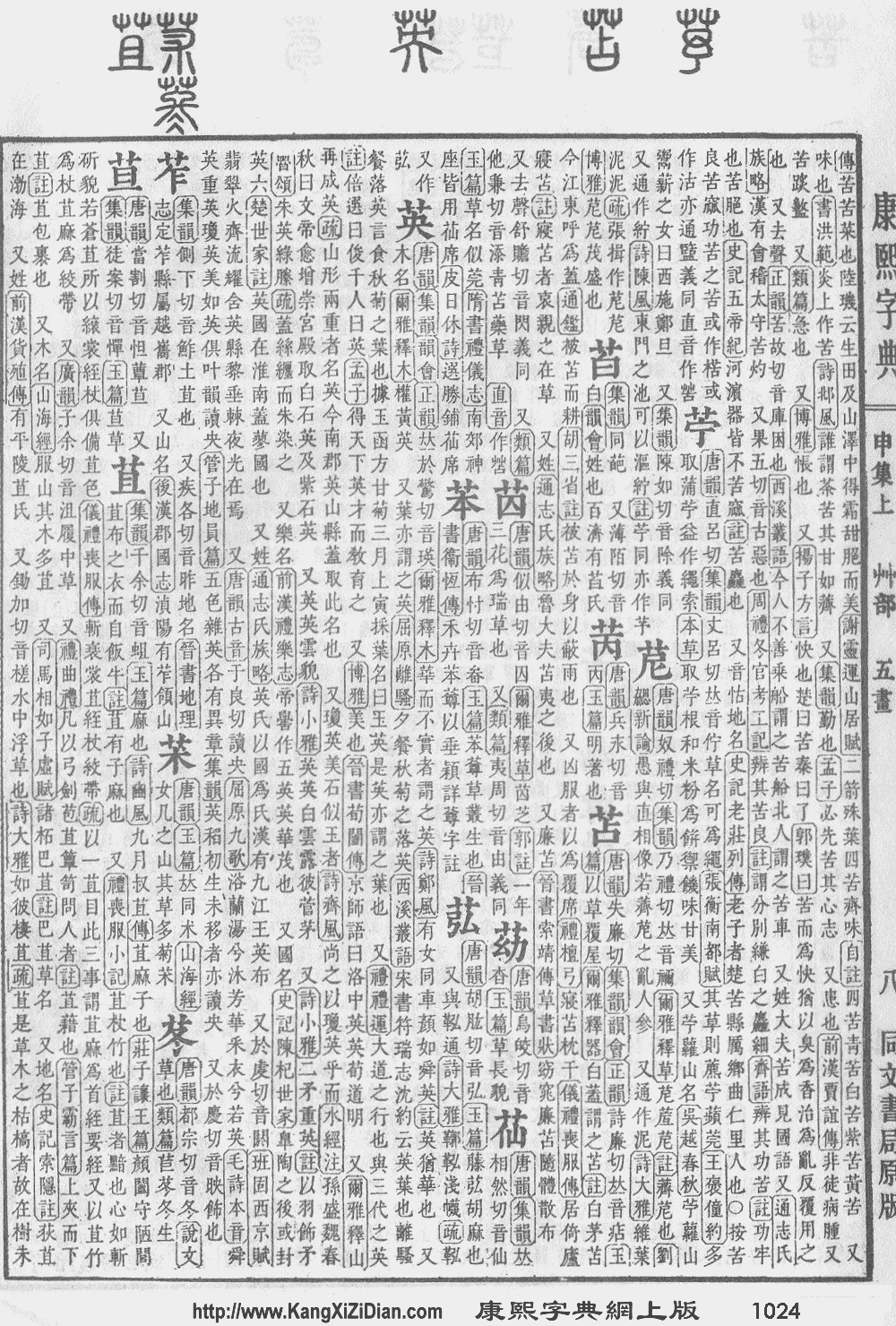
Chinese
| simp. and trad. |
苫 | |
|---|---|---|
Pronunciation 1
Definitions
苫
Pronunciation 2
Definitions
苫
Japanese
Kanji
苫
Readings
- Goon: せん (sen)←せん (sen, historical)←せむ (semu, ancient)
- Kan’on: せん (sen)←せん (sen, historical)←せむ (semu, ancient)
- Kun: とま (toma, 苫)
Etymology
| Kanji in this term |
|---|
| 苫 |
| とま Hyōgaiji |
| kun’yomi |
/to2ma/ → /toma/
From Old Japanese. The kanji is attested in the Nihon Shoki, used to phonetically write /to2/, while toma is attested in the Man'yōshū.
The 未然形 (mizenkei, irrealis form) of 泊まる (tomaru, “to stay”). (Can this(+) etymology be sourced?)
Alternative forms
Pronunciation
Noun
- a woven mat, usually from rush or hay
- c. 950, Gosen Wakashū (book 6, poem 302; also Hyakunin Isshu, poem 1)
Derived terms
Derived terms
- 苫小牧 (Tomakomai)
- 苫庇 (tomabisashi)
- 苫舟 (tomabune)
- 苫葺き (tomabuki)
- 苫屋 (tomaya)
Proper noun
- a surname.
References
- ↑ 2006, 大辞林 (Daijirin), Third Edition (in Japanese), Tōkyō: Sanseidō, →ISBN
- ↑ Andrea Grafetstätter; Sieglinde Hartmann (2011), James Michael Ogier, editor, Islands and Cities in Medieval Myth, Literature, and History: Papers Delivered at the International Medieval Congress, University of Leeds, in 2005, 2006, and 2007 (Volume 14 of Beihefte zur Mediaevistik), illustrated edition, Peter Lang, →ISBN, page 116
Korean
Hanja
苫 • (jeom) (hangeul 점, revised jeom, McCune–Reischauer chŏm, Yale cem)
- This term needs a translation to English. Please help out and add a translation, then remove the text
{{rfdef}}.
This article is issued from
Wiktionary.
The text is licensed under Creative Commons - Attribution - Sharealike.
Additional terms may apply for the media files.