碗
| ||||||||
Translingual
Han character
碗 (radical 112 石+8, 13 strokes, cangjie input 一口十弓山 (MRJNU), four-corner 13612, composition ⿰石宛)
References
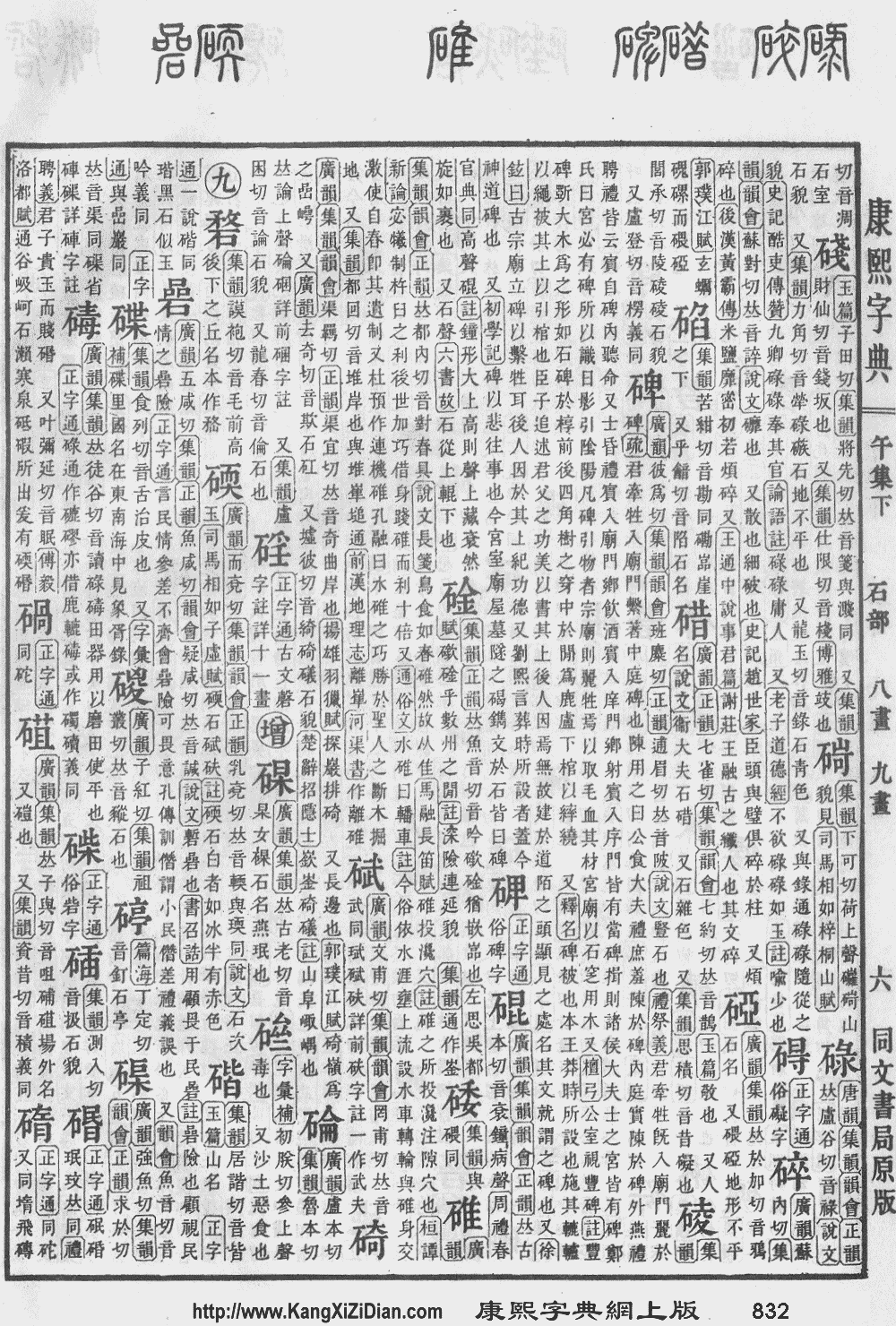
- KangXi: not present, would follow page 832, character 21
- Dai Kanwa Jiten: character 24306
- Dae Jaweon: page 1249, character 8
- Hanyu Da Zidian: volume 4, page 2440, character 10
- Unihan data for U+7897
Chinese
| simp. and trad. |
碗 | |
|---|---|---|
| alt. forms | 盌 㼝 椀 | |
Glyph origin
| Characters in the same phonetic series (夗) (Zhengzhang, 2003) | |
|---|---|
| Old Chinese | |
| 涴 | *qoːls, *qoːn, *qonʔ |
| 埦 | *qoːn |
| 豌 | *qoːn |
| 剜 | *qoːn |
| 眢 | *qoːn, *qon |
| 蜿 | *qoːn, *qon, *qonʔ |
| 帵 | *qoːn |
| 碗 | *qoːnʔ |
| 椀 | *qoːnʔ |
| 盌 | *qoːnʔ |
| 腕 | *qoːns |
| 惋 | *qoːns |
| 捥 | *qoːns |
| 睕 | *qoːns, *qonʔ, *qoːd |
| 琬 | *qoːns, *qonʔ |
| 鴛 | *quːn, *qon |
| 鵷 | *qon |
| 惌 | *qon, *qonʔ |
| 宛 | *qon, *qonʔ |
| 怨 | *qon, *qons |
| 葾 | *qon |
| 夗 | *qonʔ |
| 婉 | *qonʔ |
| 菀 | *qonʔ, *qud |
| 苑 | *qonʔ, *qons |
| 踠 | *qonʔ |
| 畹 | *qonʔ, *qons |
| 倇 | *qonʔ |
| 晼 | *qonʔ |
| 黦 | *qod, *qod, *qud |
| 焥 | *qoːd |
Phono-semantic compound (形聲, OC *qoːnʔ) : semantic 石 (“stone”) + phonetic 宛 (OC *qon, *qonʔ).
Etymology
From 甌 (OC *qoː, “bowl”) + -n (“nominalizing suffix”) (Schuessler, 2007).
Pronunciation
Definitions
碗
Compounds
Japanese
Kanji
碗
(“Jinmeiyō” kanji used for names)
Readings
Compounds
- 茶碗 (chawan)
Korean
Hanja
碗 • (wan) (hangeul 완, revised wan, McCune–Reischauer wan, Yale wan)
- This term needs a translation to English. Please help out and add a translation, then remove the text
{{rfdef}}.
Vietnamese
Han character
碗 (oản, uyển)
- This term needs a translation to English. Please help out and add a translation, then remove the text
{{rfdef}}.
This article is issued from
Wiktionary.
The text is licensed under Creative Commons - Attribution - Sharealike.
Additional terms may apply for the media files.