余
| ||||||||
Translingual
| Japanese | 余 |
|---|---|
| Simplified | 余/馀 |
| Traditional | 余∣餘 |
Han character
余 (radical 9, 人+5, 7 strokes, cangjie input 人一木 (OMD), four-corner 80904, composition ⿱亼朩)
Derived characters
Related characters
- 餘 (Traditional form of 余)
References
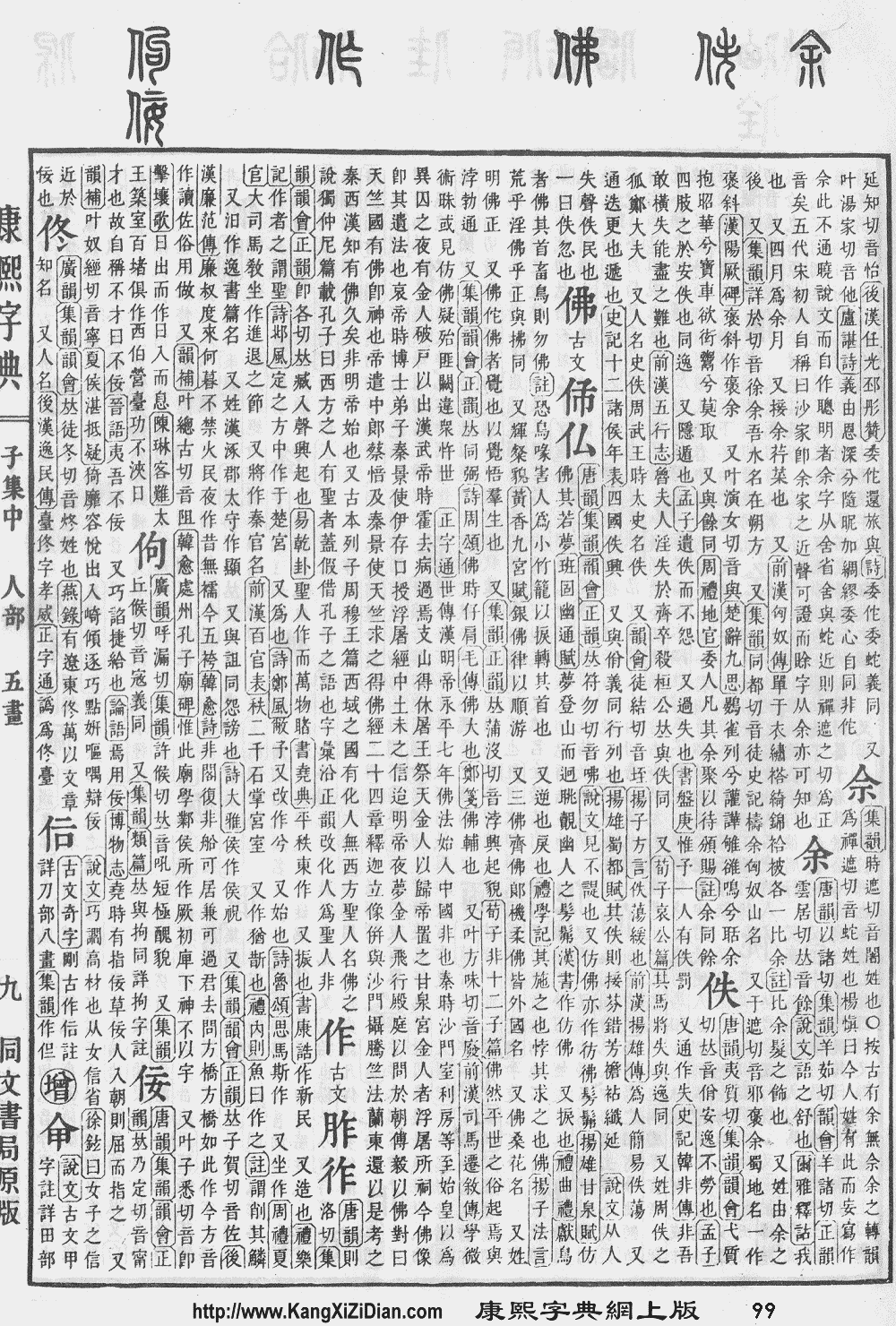
- KangXi: page 99, character 2
- Dai Kanwa Jiten: character 515
- Dae Jaweon: page 208, character 9
- Hanyu Da Zidian: volume 1, page 128, character 4
- Unihan data for U+4F59
Usage notes
- This character is not to be confused with visually similar but unrelated 佘.
- Note that 余 is the simplified form of 餘 in mainland China and Japan. However, 余 and 餘 are unrelated in traditional Chinese.
Chinese
Glyph origin
| Historical forms of the character 余 | ||||||||||||||||||||||||||||||||||||||||||||||||||||||||||||||||||||||||||||||||||||||||||||||||||||||||||||||||||||||||||||||||||||||||||||||||||||||||||||
|---|---|---|---|---|---|---|---|---|---|---|---|---|---|---|---|---|---|---|---|---|---|---|---|---|---|---|---|---|---|---|---|---|---|---|---|---|---|---|---|---|---|---|---|---|---|---|---|---|---|---|---|---|---|---|---|---|---|---|---|---|---|---|---|---|---|---|---|---|---|---|---|---|---|---|---|---|---|---|---|---|---|---|---|---|---|---|---|---|---|---|---|---|---|---|---|---|---|---|---|---|---|---|---|---|---|---|---|---|---|---|---|---|---|---|---|---|---|---|---|---|---|---|---|---|---|---|---|---|---|---|---|---|---|---|---|---|---|---|---|---|---|---|---|---|---|---|---|---|---|---|---|---|---|---|---|---|
| Shang | Western Zhou | Spring and Autumn | Warring States | Shuowen Jiezi (compiled in Han) | Liushutong (compiled in Ming) | |||||||||||||||||||||||||||||||||||||||||||||||||||||||||||||||||||||||||||||||||||||||||||||||||||||||||||||||||||||||||||||||||||||||||||||||||||||||
| Oracle bone script | Bronze inscriptions | Bronze inscriptions | Bronze inscriptions | Chu Slip and silk script | Qin slip script | Small seal script | Transcribed ancient scripts | |||||||||||||||||||||||||||||||||||||||||||||||||||||||||||||||||||||||||||||||||||||||||||||||||||||||||||||||||||||||||||||||||||||||||||||||||||||
 |
 |
 |
 |
 |
 |
 |
 | |||||||||||||||||||||||||||||||||||||||||||||||||||||||||||||||||||||||||||||||||||||||||||||||||||||||||||||||||||||||||||||||||||||||||||||||||||||
|||||||
|
References: Mostly from Richard Sears' Chinese Etymology site (authorisation),
| ||||||||||||||||||||||||||||||||||||||||||||||||||||||||||||||||||||||||||||||||||||||||||||||||||||||||||||||||||||||||||||||||||||||||||||||||||||||||||||


| Characters in the same phonetic series (余) (Zhengzhang, 2003) | |
|---|---|
| Old Chinese | |
| 斜 | *lja, *laː |
| 茶 | *rlaː |
| 荼 | *rlaː, *ɦlja, *l'aː |
| 梌 | *rlaː, *l̥ʰaː, *l'aː |
| 搽 | *rlaː |
| 塗 | *rlaː, *l'aː |
| 佘 | *ɦlja |
| 賒 | *hljaː |
| 畬 | *hljaː, *la |
| 舍 | *hljaːʔ, *hljaːs |
| 捨 | *hljaːʔ |
| 騇 | *hljaːʔ, *hljaːs |
| 涻 | *hljaːs |
| 稌 | *l̥ʰaː, *l̥ʰaːʔ |
| 悇 | *l̥ʰaː, *l̥ʰas, *las |
| 庩 | *l̥ʰaː |
| 捈 | *l̥ʰaː, *l'aː |
| 途 | *l'aː |
| 酴 | *l'aː |
| 駼 | *l'aː |
| 鵌 | *l'aː, *la |
| 涂 | *l'aː, *l'a |
| 嵞 | *l'aː |
| 峹 | *l'aː |
| 筡 | *l'aː, *l̥ʰa |
| 蒤 | *l'aː |
| 徐 | *lja |
| 俆 | *lja |
| 叙 | *ljaʔ |
| 漵 | *ljaʔ |
| 除 | *l'a, *l'as |
| 篨 | *rla |
| 滁 | *rla |
| 蒢 | *rla |
| 蜍 | *ɦlja, *la |
| 鵨 | *hljaː |
| 瑹 | *hlja |
| 余 | *la |
| 餘 | *la |
| 艅 | *la |
| 狳 | *la |
| 雓 | *la |
| 悆 | *las |
Pictogram (象形) – thatched cottage; house. Original form of 舍 (OC *hljaːʔ, *hljaːs, “house”).
Etymology 1
| For pronunciation and definitions of 余 – see 餘 (“to remain; to have left; time after an event; etc.”). (This character, 余, is the simplified form of 餘.) |
Notes:
|
Etymology 2
| simp. and trad. |
余 | |
|---|---|---|
- “I; me”
- Related to 予 (OC *la, “I”), 台 (OC *lɯ, “I”) and 朕 (OC *l'ɯmʔ, “my; I”), forming the *l- series of first-person Old Chinese personal pronouns. This series is commonly used by Shang Dynasty kings to refer to themselves.
- In contrast, Old Chinese also had the *ŋ- series of first-person pronouns, represented by 我 (OC *ŋaːlʔ, “I”) and 吾 (OC *ŋraː, *ŋaː, “I”), which became more widely used over time.
Pronunciation
Definitions
余
Synonyms
| Dialectal synonyms of 我 (“I”) [map] | ||
|---|---|---|
| Variety | Location | Words |
| Classical Chinese | 吾、我、私、余、予、台、朕 | |
| Formal (Written Standard Chinese) | 我 | |
| Mandarin | Beijing | 我 |
| Taiwan | 我 | |
| Jinan | 我、俺 | |
| Xi'an | 我 | |
| Wuhan | 我 | |
| Chengdu | 我 | |
| Yangzhou | 我 | |
| Hefei | 我 | |
| Cantonese | Guangzhou | 我 |
| Hong Kong | 我 | |
| Taishan | 我 | |
| Yangjiang | 我 | |
| Gan | Nanchang | 我 |
| Hakka | Meixian | 𠊎 |
| Miaoli (N. Sixian) | 𠊎 | |
| Liudui (S. Sixian) | 𠊎 | |
| Hsinchu (Hailu) | 𠊎 | |
| Dongshi (Dabu) | 𠊎 | |
| Zhuolan (Raoping) | 𠊎 | |
| Yunlin (Zhao'an) | 𠊎 | |
| Jin | Taiyuan | 我 |
| Min Bei | Jian'ou | 我 |
| Min Dong | Fuzhou | 我、奴 |
| Min Nan | Xiamen | 我、阮 |
| Quanzhou | 我、阮 | |
| Zhangzhou | 我、阮 | |
| Taipei | 我、阮 | |
| Kaohsiung | 我、阮 | |
| Philippines (Manila) | 我 | |
| Chaozhou | 我 | |
| Wu | Shanghai | 我、吾、阿拉 |
| Suzhou | 我、奴 | |
| Wenzhou | 我 | |
| Ningbo | 我、我儂、像我 | |
| Xiang | Changsha | 我 |
| Shuangfeng | 我、卬 | |
Compounds
|
|
|
Etymology 3
| For pronunciation and definitions of 余 – see 佘. (This character, 余, is a variant form of 佘.) |
Etymology 4
Pronunciation
Definitions
余
Etymology 5
Pronunciation
Definitions
余
- Only used in 余吾.
Etymology 6
Pronunciation
Definitions
余
- Only used in 褒余.
Etymology 7
| For pronunciation and definitions of 余 – see 豫 (“big elephant”). (This character, 余, is a variant form of 豫.) |
Japanese
| 余 | |
| 餘 |
Kanji
(grade 5 “Kyōiku” kanji, shinjitai kanji, kyūjitai form 餘)
Readings
Compounds
Etymology
| Kanji in this term |
|---|
| 余 |
| よ Grade: 5 |
| on’yomi |
Suffix
余 (shinjitai kanji, kyūjitai kanji 餘, hiragana よ, rōmaji -yo)
Synonyms
- 以上 (ijō)
Pronoun
- I, me (first-person pronoun)
- Isikawa Takuboku, Romazi Nikki
- Yo wa Sai wo aisiteru; aisiteru kara koso kono Nikki wo yomase taku nai no da.
- I love my Wife; it is precisely because I love her that I do not want her to read this Diary.
- Isikawa Takuboku, Romazi Nikki
Alternative forms
Korean
Hanja
余 • (yeo) (hangeul 여, revised yeo, McCune–Reischauer yŏ)
- This term needs a translation to English. Please help out and add a translation, then remove the text
{{rfdef}}.
Vietnamese
Han character
余 (dư, dờ)
- This term needs a translation to English. Please help out and add a translation, then remove the text
{{rfdef}}.