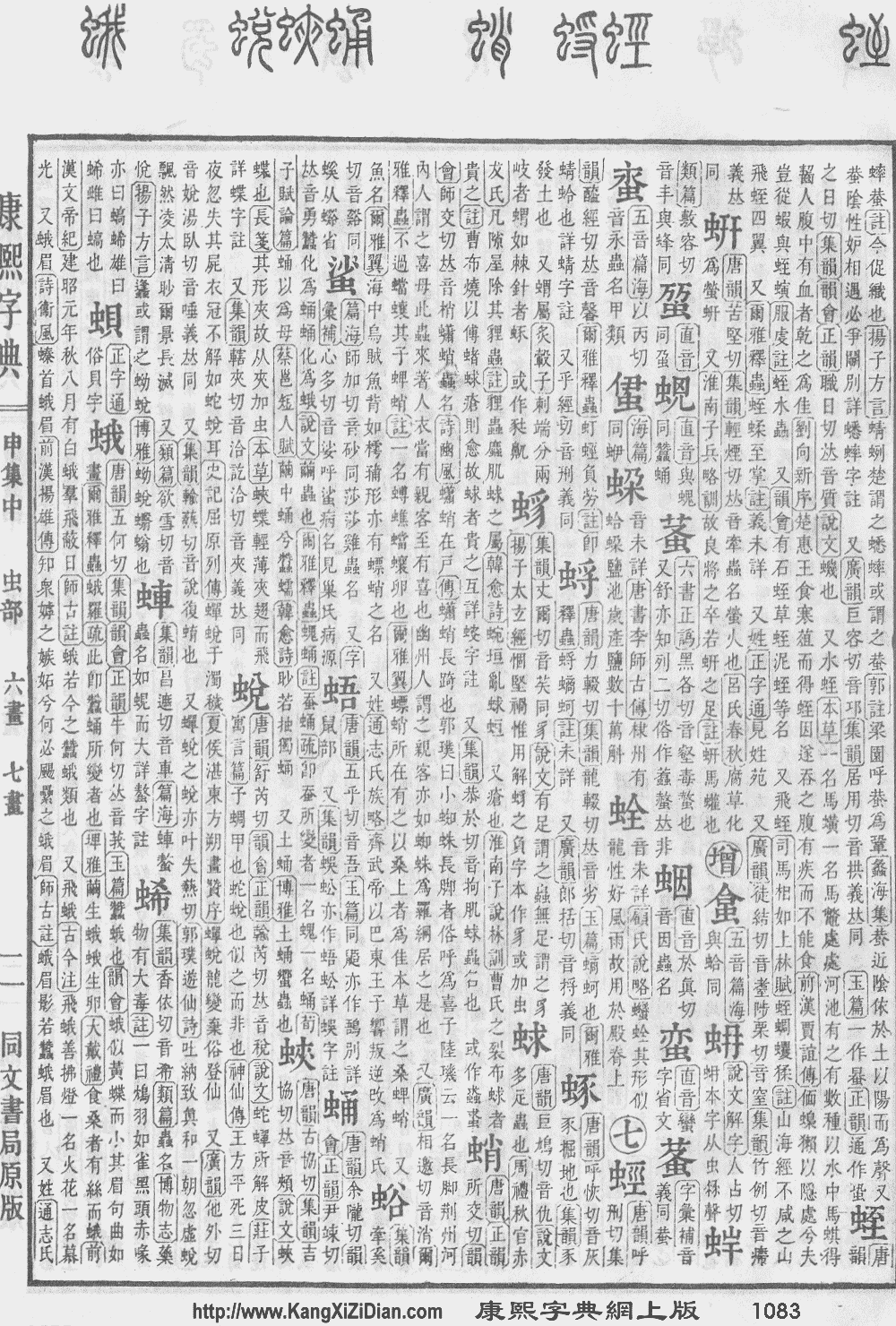
U+86FE, 蛾
CJK UNIFIED IDEOGRAPH-86FE

[U+86FD]
CJK Unified Ideographs
[U+86FF]

Translingual

Han character

(radical 142 +7, 13 strokes, cangjie input 中戈竹手戈 (LIHQI), four-corner 53150, composition)

References

  • KangXi: page 1083, character 31
  • Dai Kanwa Jiten: character 33082
  • Dae Jaweon: page 1551, character 18
  • Hanyu Da Zidian: volume 4, page 2856, character 6
  • Unihan data for U+86FE

Chinese

simp. and trad.

Etymology 1

Pronunciation


Note: ia̍h - 蝶 is used in the Mainland.

Rime
Character
Reading # 1/2
Initial () (31)
Final () (94)
Tone (調) Level (Ø)
Openness (開合) Open
Division () I
Fanqie
Reconstructions
Zhengzhang
Shangfang
/ŋɑ/
Pan
Wuyun
/ŋɑ/
Shao
Rongfen
/ŋɑ/
Edwin
Pulleyblank
/ŋa/
Li
Rong
/ŋɑ/
Wang
Li
/ŋɑ/
Bernard
Karlgren
/ŋɑ/
Expected
Mandarin
Reflex
é
BaxterSagart system 1.1 (2014)
Character
Reading # 1/2
Modern
Beijing
(Pinyin)
é
Middle
Chinese
‹ nga ›
Old
Chinese
/*ŋˤaj/
English silkworm moth [Bombyx]

Notes for Old Chinese notations in the Baxter–Sagart system:

* Parentheses "()" indicate uncertain presence;
* Square brackets "[]" indicate uncertain identity, e.g. *[t] as coda may in fact be *-t or *-p;
* Angle brackets "<>" indicate infix;
* Hyphen "-" indicates morpheme boundary;

* Period "." indicates syllable boundary.
Zhengzhang system (2003)
Character
Reading # 1/2
No. 13036
Phonetic
component
Rime
group
Rime
subdivision
1
Corresponding
MC rime
Old
Chinese
/*ŋaːl/
Notes

Definitions

  1. moth
  2. Short for 蛾眉 (éméi).
  3. A surname.
Compounds
  • 卷葉蛾卷叶蛾
  • 夜蛾 (yè'é)
  • 天蛾
  • 天蠶蛾天蚕蛾
  • 尺蠖蛾
  • 巴蛾
  • 撲燈蛾扑灯蛾
  • 斜紋夜蛾斜纹夜蛾
  • 海蛾魚海蛾鱼
  • 淡掃蛾眉淡扫蛾眉
  • 煙夜蛾烟夜蛾
  • 燈蛾灯蛾
  • 燈蛾撲火灯蛾扑火
  • 畫黛彎蛾画黛弯蛾
  • 皓齒蛾眉皓齿蛾眉
  • 紅粉青蛾红粉青蛾
  • 綠慘雙蛾绿惨双蛾
  • 自然蛾眉
  • 蛾妝蛾妆
  • 蛾子 (ézi)
  • 蛾眉 (éméi)
  • 蛾眉月
  • 蛾眉班
  • 蛾眉皓齒蛾眉皓齿
  • 蛾眉螓首
  • 蛾眉豆
  • 蛾綠蛾绿 (élǜ)
  • 螓首蛾眉
  • 螟蛾 (míng'é)
  • 螢蛾萤蛾
  • 蠶蛾蚕蛾 (cán'é)
  • 衣蛾
  • 雙蛾双蛾
  • 顰蛾眉颦蛾眉
  • 飛蛾飞蛾
  • 飛蛾投火飞蛾投火
  • 飛蛾投焰飞蛾投焰
  • 飛蛾撲火飞蛾扑火
  • 飛蛾赴火飞蛾赴火
  • 飛蛾赴焰飞蛾赴焰
  • 飛蛾赴燭飞蛾赴烛
  • 黛蛾

Etymology 2

For pronunciation and definitions of – see (“ant; foam or sediment in wine; etc.”).
(This character, , is a variant form of .)

Japanese

Kanji

(uncommon “Hyōgai” kanji)

Readings

Etymology

Kanji in this term

Hyōgaiji
on’yomi

From Middle Chinese (nga)

Pronunciation

Noun

(hiragana , katakana , rōmaji ga)

  1. a moth (insect similar to a butterfly)

See also

References

  1. 2006, 大辞林 (Daijirin), Third Edition (in Japanese), Tōkyō: Sanseidō, →ISBN
  2. 1997, 新明解国語辞典 (Shin Meikai Kokugo Jiten), Fifth Edition (in Japanese), Tōkyō: Sanseidō, →ISBN

Korean

Hanja

(a) (hangeul , revised a, McCuneReischauer a, Yale a)

  1. moth

Okinawan

Etymology

Cognate with mainland Japanese (ga).

Kanji

(hiragana がー, romaji gaa)

Noun

(hiragana がー, romaji gaa)

  1. moth

Vietnamese

Han character

(ngài, nga)

  1. This term needs a translation to English. Please help out and add a translation, then remove the text {{rfdef}}.
This article is issued from Wiktionary. The text is licensed under Creative Commons - Attribution - Sharealike. Additional terms may apply for the media files.