王
| ||||||||
Translingual
| Stroke order | |||
|---|---|---|---|
 | |||
| Japanese stroke order | |||
|---|---|---|---|
 | |||
| Stroke order | |||
|---|---|---|---|
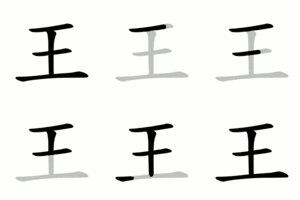 | |||
Han character
王 (radical 96, 玉+0, 4 strokes, cangjie input 一土 (MG), four-corner 10104)
Derived characters
- Index:Chinese radical/王
References
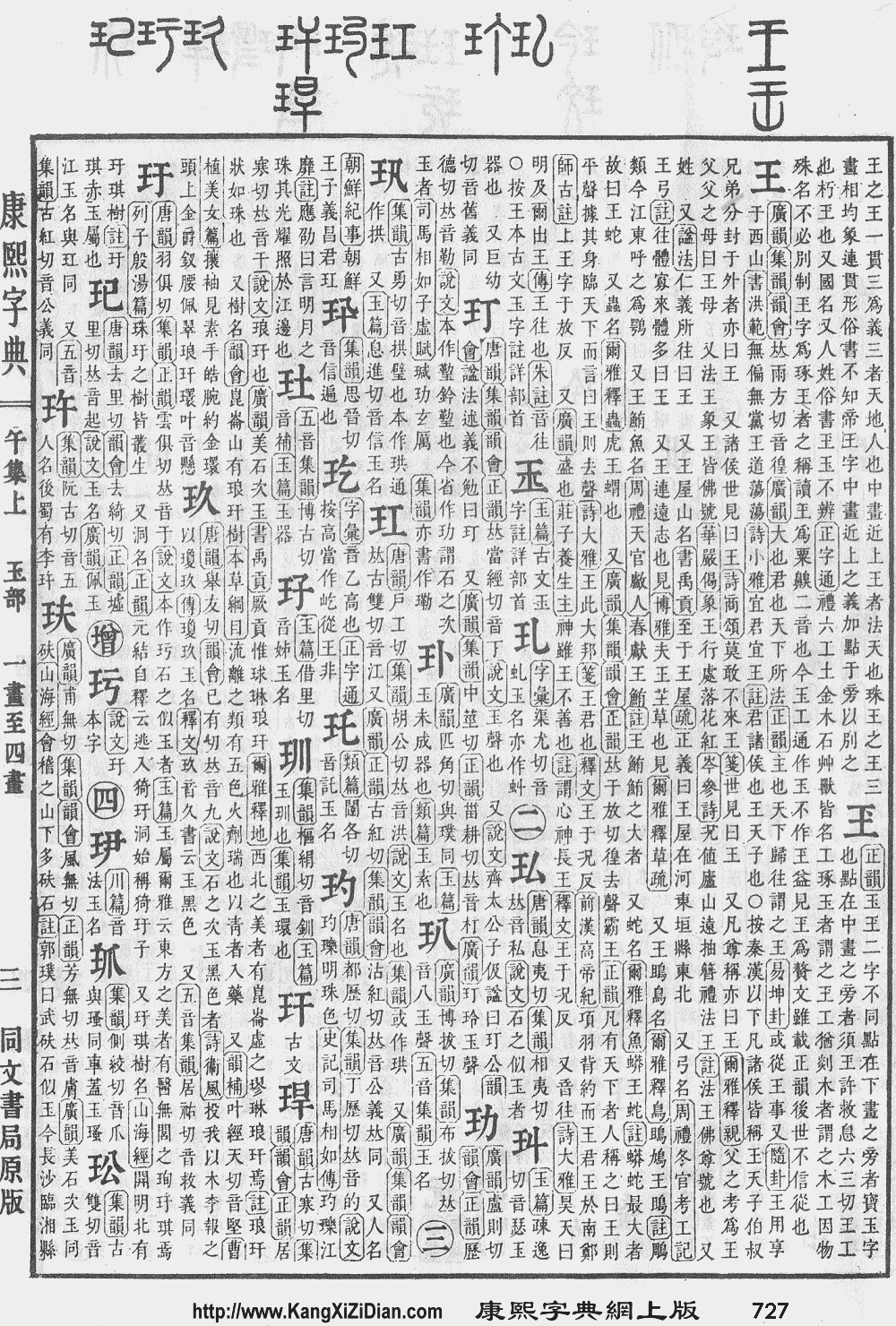
- KangXi: page 727, character 2
- Dai Kanwa Jiten: character 20823
- Dae Jaweon: page 1137, character 1
- Hanyu Da Zidian: volume 2, page 1099, character 10
- Unihan data for U+738B
Chinese
| simp. and trad. |
王 | |
|---|---|---|
| alt. forms | 𠙻 | |
Glyph origin
| Historical forms of the character 王 | |||||||||||||||||||||||||||||||||||||||||||||||||||||||||||||||||||||||||||||||||||||||||||
|---|---|---|---|---|---|---|---|---|---|---|---|---|---|---|---|---|---|---|---|---|---|---|---|---|---|---|---|---|---|---|---|---|---|---|---|---|---|---|---|---|---|---|---|---|---|---|---|---|---|---|---|---|---|---|---|---|---|---|---|---|---|---|---|---|---|---|---|---|---|---|---|---|---|---|---|---|---|---|---|---|---|---|---|---|---|---|---|---|---|---|---|
| Shang | Western Zhou | Spring and Autumn | Warring States | Shuowen Jiezi (compiled in Han) | Liushutong (compiled in Ming) | ||||||||||||||||||||||||||||||||||||||||||||||||||||||||||||||||||||||||||||||||||||||
| Bronze inscriptions | Oracle bone script | Bronze inscriptions | Bronze inscriptions | Bronze inscriptions | Chu Slip and silk script | Qin slip script | Ancient script | Small seal script | Transcribed ancient scripts | ||||||||||||||||||||||||||||||||||||||||||||||||||||||||||||||||||||||||||||||||||
 |
 |
 |
 |
 |
 |
 |
 |
 |
 | ||||||||||||||||||||||||||||||||||||||||||||||||||||||||||||||||||||||||||||||||||
|||||||||
|
References: Mostly from Richard Sears' Chinese Etymology site (authorisation),
| |||||||||||||||||||||||||||||||||||||||||||||||||||||||||||||||||||||||||||||||||||||||||||


| Characters in the same phonetic series (王) (Zhengzhang, 2003) | |
|---|---|
| Old Chinese | |
| 皇 | *ɡʷaːŋ |
| 惶 | *ɡʷaːŋ |
| 遑 | *ɡʷaːŋ |
| 堭 | *ɡʷaːŋ |
| 煌 | *ɡʷaːŋ |
| 餭 | *ɡʷaːŋ |
| 騜 | *ɡʷaːŋ |
| 艎 | *ɡʷaːŋ |
| 隍 | *ɡʷaːŋ |
| 湟 | *ɡʷaːŋ |
| 徨 | *ɡʷaːŋ |
| 篁 | *ɡʷaːŋ |
| 蝗 | *ɡʷaːŋ, *ɡʷraːŋ, *ɡʷraːŋs |
| 凰 | *ɡʷaːŋ |
| 偟 | *ɡʷaːŋ |
| 媓 | *ɡʷaːŋ |
| 韹 | *ɡʷaːŋ, *ɡʷraːŋ |
| 葟 | *ɡʷaːŋ |
| 皝 | *ɡʷaːŋʔ |
| 汪 | *qʷaːŋ, *qʷaːŋs, *qʷaŋʔ |
| 尪 | *qʷaːŋ |
| 迋 | *kʷaŋʔ, *kʰʷaŋ, *ɡʷaŋ, *ɢʷaŋs |
| 逛 | *kʷaŋʔ |
| 誑 | *kʷaŋs, *ɡʷaŋ, *kʷaŋs |
| 匡 | *kʰʷaŋ |
| 筐 | *kʰʷaŋ |
| 框 | *kʰʷaŋ |
| 眶 | *kʰʷaŋ |
| 誆 | *kʰʷaŋ, *ɡʷaŋs |
| 邼 | *kʰʷaŋ |
| 恇 | *kʰʷaŋ |
| 劻 | *kʰʷaŋ |
| 洭 | *kʰʷaŋ |
| 軭 | *kʰʷaŋ, *ɡʷaŋ |
| 狂 | *ɡʷaŋ, *ɡʷaŋs |
| 軖 | *ɡʷaŋ |
| 鵟 | *ɡʷaŋ |
| 俇 | *ɡʷaŋʔ |
| 王 | *ɢʷaŋ, *ɢʷaŋs |
| 蚟 | *ɢʷaŋ |
| 彺 | *ɢʷaŋ |
| 旺 | *ɢʷaŋs |
| 諻 | *qʰʷraːŋ |
| 喤 | *qʰʷraːŋ, *ɡʷraːŋ |
| 瑝 | *ɡʷraːŋ |
| 锽 | |
| 揘 | *ɡʷaŋ |
The traditional interpretation is that the three horizontal strokes represent Heaven, Man and Earth. The vertical stroke is the king, the one who connects them together. Older representation of the character shows a man like 大 or 天 above a horizontal stroke.
The modern interpretation is that the character is a pictogram (象形) of either an axe or a crown, one of two symbols of the king's power. A ceremonial axe was kept near the throne, and was used for performing rituals in ancient China.
Pronunciation 1
Definitions
王
- king; monarch
- champion
- 棋王 ― qíwáng ― chess champion
- 拳王 ― quánwáng ― boxing champion
- † grand; great
- † (of feudal monarchs) to see the emperor
- A surname: Wang; Wong (Hong Kong)
Descendants
Others:
Compounds
|
|
|
Pronunciation 2
Definitions
王
- † to reign; to rule
- † Alternative form of 旺 (wàng, “flourishing; prosperous”).
Compounds
|
|
Japanese
Kanji
Readings
- Goon: おう (ō, Jōyō)←わう (wau, historical)
- Kan’on: おう (ō, Jōyō)←わう (wau, historical)
- Kun: おおきみ (ōkimi, 王)←おほきみ (ofokimi, historical); きみ (kimi, 王)
Etymology
| Kanji in this term |
|---|
| 王 |
| おう Grade: 1 |
| on’yomi |
From Middle Chinese 王 (hjwang, “king”).
Pronunciation
Noun
王 (hiragana おう, rōmaji ō, historical hiragana わう)
- a king
- 1999 March 6, “緑樹の霊王 [Spirit King of Greenery]”, in Starter Box (in Japanese), Konami:
- 青々と生い茂る木に囲まれて暮らす、森を治める若き王。
- Aoao to oishigeru ki ni kakomarete kurasu, mori o osameru wakaki ō.
- The youthful king of the forest, living within thriving evergreen trees.
- 青々と生い茂る木に囲まれて暮らす、森を治める若き王。
- 1999 August 26, “紅葉の女王 [Queen of Autumn Leaves]”, in BOOSTER 4, Konami:
- 鮮やかな紅葉に囲まれて暮らす、緑樹の霊王のお妃。
- Azayaka na kōyō ni kakomarete kurasu, Ryokuju no Reiō no ohi.
- The consort of the Spirit King of Greenery, living within vibrant autumn leaves.
- 鮮やかな紅葉に囲まれて暮らす、緑樹の霊王のお妃。
-
Derived terms
See also
References
Korean
Hanja
Noun
王 • (wang) (hangeul 왕)
Vietnamese
Han character
王 (Vương)
- A surname