私
| ||||||||
Translingual
| Stroke order | |||
|---|---|---|---|
 | |||
Han character
私 (radical 115, 禾+2, 7 strokes, cangjie input 竹木戈 (HDI), four-corner 22930, composition ⿰禾厶)
Derived characters
- 俬, 𭈀, 𦮺, 𥢅/𥢆/𫁅
References
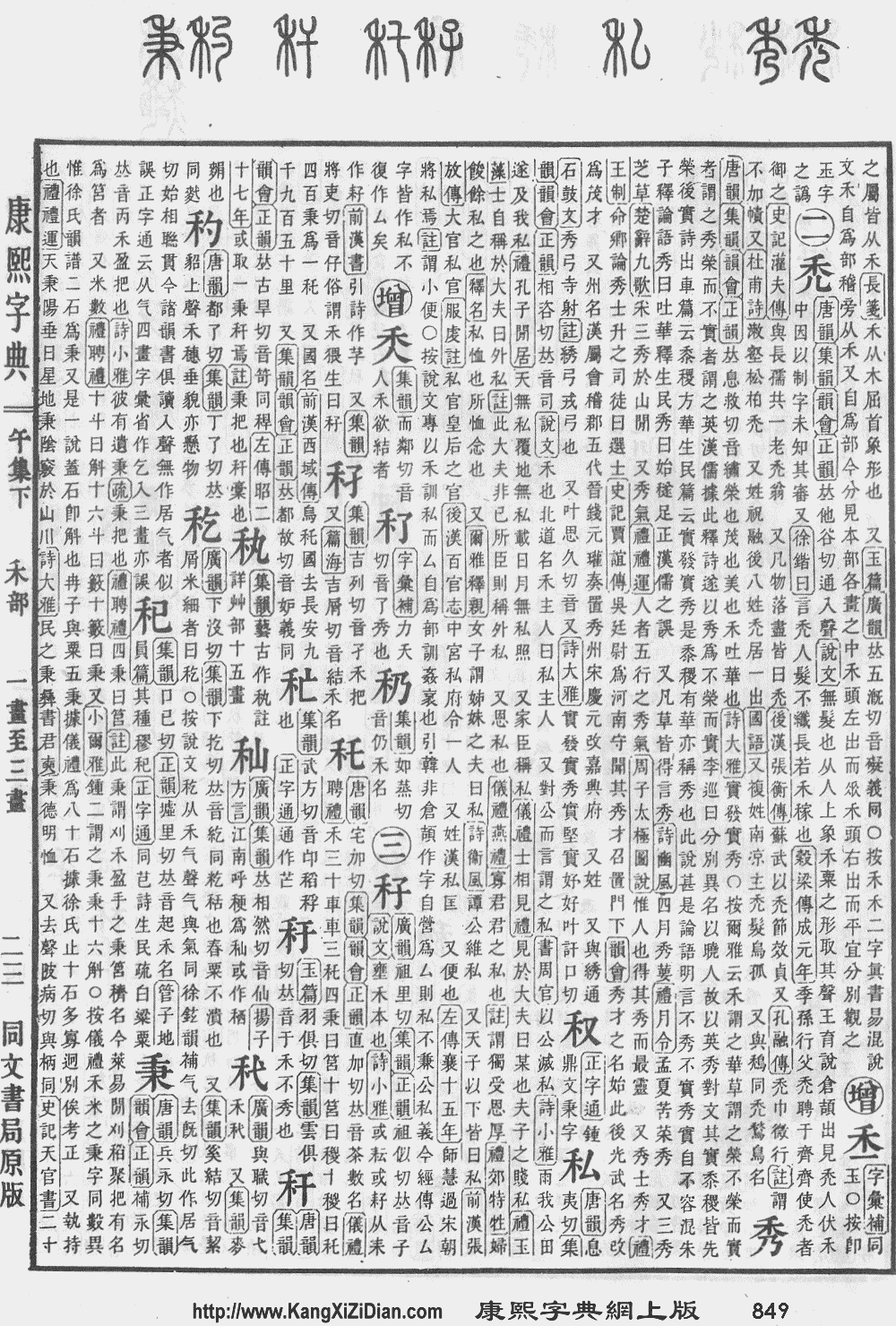
- KangXi: page 849, character 5
- Dai Kanwa Jiten: character 24913
- Dae Jaweon: page 1271, character 2
- Hanyu Da Zidian: volume 4, page 2589, character 6
- Unihan data for U+79C1
Chinese
| simp. and trad. |
私 | |
|---|---|---|
| alt. forms | 厶 | |
Glyph origin
| Characters in the same phonetic series (厶) (Zhengzhang, 2003) | |
|---|---|
| Old Chinese | |
| 私 | *sil |
| 厶 | *sil |
Phono-semantic compound (形聲, OC *sil) : semantic 禾 (“grain”) + phonetic 厶 (OC *sil) – private grain or field.
Displaced the original form 厶.
Pronunciation
Definitions
私
Compounds
|
|
|
Japanese
Kanji
Readings
Compounds
- 私する (watakushi suru): to appropriate, embezzle, use for personal purposes
- 私バス (shibasu): a privately operated bus
- 私愛 (shiai): favoritism, partiality; a secret love for a woman; the woman so loved
- 私安警察 (shian keisatsu): Private police
- 私案 (shian): a private plan or proposal
- 私意 (shii): a personal opinion; a bias; selfishness
- 私稲 (shitō): in the Nara and Heian Periods, rice plants owned by an individual rather than by the state
- 私印 (shiin): a private sigil, signet, stamp, or seal
- 私印偽造 (shiingizō): creating a copy of someone else's sigil to forge their stamp
- 私雨 (watakushi ame): a sudden rain shower falling in just a small area
- 私営 (shiei): private operation, privately operated
- 私営鉄道 (shiei tetsudō): a privately operated railway, private rails
- 私営田 (shieiden): in the Heian Period, fields used for large-scale private farming by powerful clans, rather than public farming by the state
- 私益 (shieki): private or individual profit or gain
- 私謁 (shietsu): an audience with the emperor regarding a private matter; a private rather than public request
- 私怨 (shien): a private grudge, hatred, ill will
- 私恩 (shion): a favor or duty owed to an individual
- 私恩を売る (shion o uru): to use one's own position to get someone else to owe one a favor
- 私家 (shika): one's own home; an individual's home, as opposed to the palace or an office
- 私家集 (shikashū): in the Edo Period and earlier, an individual's collection or anthology of poetry
- 私家版 (shikaban): self-publishing, generally without profit motive and with limited distribution; a private printing or private edition
- 私学 (shigaku): an individual's school of thought; a private school, as opposed to public
- 私学校 (shigakkō): a private school, as opposed to public
- 私学助成 (shigaku josei): government subsidization of private education
- 私感 (shikan): one's personal feeling about something
- 私間法 (shikanhō): alternate for 国際私法 (kokusai shihō): "conflict of laws", or "private international law"
- 私企業 (shikigyō): private enterprise; a privately owned company
- 私記 (shiki): a private record of something
- 私戯 (wataku shitawabure): chatting up a go-between or mediator, as an aside to the main issue being mediated
- 私擬憲法 (shigikenpō): a privately drafted constitution, more specifically the Japanese constitution created during 1880-1887
- 私義務 (shi gimu): a duty or obligation arising from private law
- 私議 (shigi): secret criticism, badmouthing; a personal or private opinion
- 私共 (watakushidomo), 私共 (watashidomo): a humble word (謙譲語 (kenjōgo) for "we", "us"
- 私教類聚 (shikyō ruijū): Japan's oldest collection of moral instructions, written by Kibi Makibi in the 700s
- 私業 (shigyō): work done as an individual; work done for individual profit
- 私曲 (shikyoku): an unjust act committed solely to benefit oneself
- 私金 (shikin): private money; money owned by an individual
- 私銀 (watakushigane), 私金 (watakushigane): personal money, secret savings, a financial nest egg
- 私軍 (watakushi ikusa), 私戦 (watakushi ikusa): a private feud
- 私戦 (watakushi tatakai): a private feud
- 私刑 (shikei): a punishment meted out by vigilante or mob justice
- 私恵 (shikei): a private favor
- 私経済 (shikeizai): a private economy: economic dealings between private individuals or companies
- 私計 (shikei): one's own thoughts and opinions; one's own schemes or plans
- 私隙 (shigeki): private discord
- 私権 (shiken): private or personal rights
- 私見 (shiken): a humble word (謙譲語 (kenjōgo) for one's own personal opinions
- 私語 (shigo): a whisper, whispering, private conversation
- 私語く (sasayaku): to whisper, to rumor
- 私交 (shikō): personal or private friendship or socializing
- 私考 (shikō): one's own personal thoughts
- 私行 (shikō): private actions in one's own life; a secret act; going out for personal reasons; sneaking out
Pronunciation
Pronoun
私 (hiragana わたし, rōmaji watashi)
(alternative reading hiragana わたくし, romaji watakushi) (more formal)
(alternative reading hiragana あたし, katakana アタシ, romaji atashi) (generally only used by women when referring to themselves)
(alternative reading hiragana わし, romaji washi) (dated)
- I, me (first person pronoun)
- 私はイギリス人です。
- Watashi wa igirisu-jin desu.
- I'm English.
- 私は誰ですか。
- Watashi wa dare desu ka.
- Who am I?
- 太宰治, 『走れメロス』
- 「私だ、刑吏! 殺されるのは、私だ。メロスだ。彼を人質にした私は、ここにいる!」と、かすれた声で精一ぱいに叫びながら、ついに磔台に昇り、釣り上げられてゆく友の両足に、齧りついた。
- “Watashi da, keiri! Korosareru no wa, watashi da. Merosu da. Kare o hitojichi ni shita watashi wa, koko ni iru!” to, kasureta koe de seiippai ni sakebinagara, tsui ni haritsukedai ni nobori, tsuriagerareteyuku tomo no ryōashi ni, kajiritsuita.
- "It's me, executioner! The one who shall be killed is me. Melos. The me who held him hostage is here!" Shouting in a hoarse voice with all his strength, he grabbed the legs of his friend who was already hoisted onto the cross.
- 「私だ、刑吏! 殺されるのは、私だ。メロスだ。彼を人質にした私は、ここにいる!」と、かすれた声で精一ぱいに叫びながら、ついに磔台に昇り、釣り上げられてゆく友の両足に、齧りついた。
- 2003 February 27 [Dec 1 2000], Moriyama, Daisuke, “ACT 15 「ニューヨークの魔女」 [ACT 15 “The Witch of New York”]”, in CHRNO CRUSADE [CHRONO CRUSADE], volume 3 (fiction, in Japanese), 7th edition, Tokyo: Kadokawa Shoten, →ISBN, page 4:
- 2016, Ryunosuke Kamiki as Mitsuha Miyamizu, 君の名は。 [your name.] (in Japanese), written by Makoto Shinkai:
- お前さあ、どうやったら通学で道に迷えんだよ?
- Omae sā, dō yattara tsūgaku de michi ni mayoen da yo?
- How did you get lost on your way to school?
- Ā… Etto… Watashi…
- Um… Well… I…
- お前さあ、どうやったら通学で道に迷えんだよ?
- 私はイギリス人です。
Usage notes
わたし (watashi) is the usual polite term for referring to oneself; わたくし (watakushi) is formal, and only used in certain circumstances, such as by TV announcers or public figures such as politicians. Conversely, it is too formal for casual conversation for men, where terms like 俺 (ore) are preferred.
Japanese first-person pronouns by speakers and situations according to Yuko Saegusa, Concerning the First Personal Pronoun of Native Japanese Speakers (2009)
| Speaker | Situation | 1 | 2 | 3 |
|---|---|---|---|---|
| Female | To friends | うち 49% | First name 26% | あたし 15% |
| In the family | First name 33% | あたし 29% | うち 23% | |
| In a class | わたし 86% | あたし 7% | うち 6% | |
| To an unknown visitor | わたし 75% | あたし, first name, うち 8% each | ||
| To the class teacher | わたし 66% | First name 13% | あたし 9% | |
| Male | To friends | おれ 72% | ぼく 19% | First name 4% |
| In the family | おれ 62% | ぼく 23% | うち 6% | |
| In a class | ぼく 85% | おれ 13% | First name, nickname 1% each | |
| To an unknown visitor | ぼく 64% | おれ 26% | First name 4% | |
| To the class teacher | ぼく 67% | おれ 27% | First name 3% | |
| Speaker | Situation | 1 | 2 | 3 |
|---|---|---|---|---|
| Female | To friends | うち 39% | あたし 30% | わたし 22% |
| In the family | あたし 28% | First name 27% | うち 18% | |
| In a class | わたし 89% | あたし 7% | 自分 3% | |
| To an unknown visitor | わたし 81% | あたし 10% | 自分 6% | |
| To the class teacher | わたし 77% | あたし 17% | 自分 7% | |
| Male | To friends | おれ 87% | うち 4% | わたし, 自分 2% each |
| In the family | おれ 88% | ぼく, 自分 5% each | ||
| In a class | わたし 48% | 自分 28% | ぼく 22% | |
| To an unknown visitor | ぼく 36% | 自分 29% | わたし 22% | |
| To the class teacher | 自分 38% | ぼく 29% | わたし 22% | |
See also
References
Korean
Hanja
私 • (sa) (hangeul 사, McCune–Reischauer sa, Yale sa)