們
See also: 们
| ||||||||
Translingual
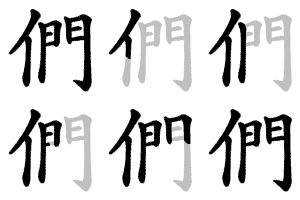
| Stroke order | |||
|---|---|---|---|
 | |||
Han character
們 (radical 9 人+8, 10 strokes, cangjie input 人日弓 (OAN), four-corner 27220, composition ⿰亻門)
References
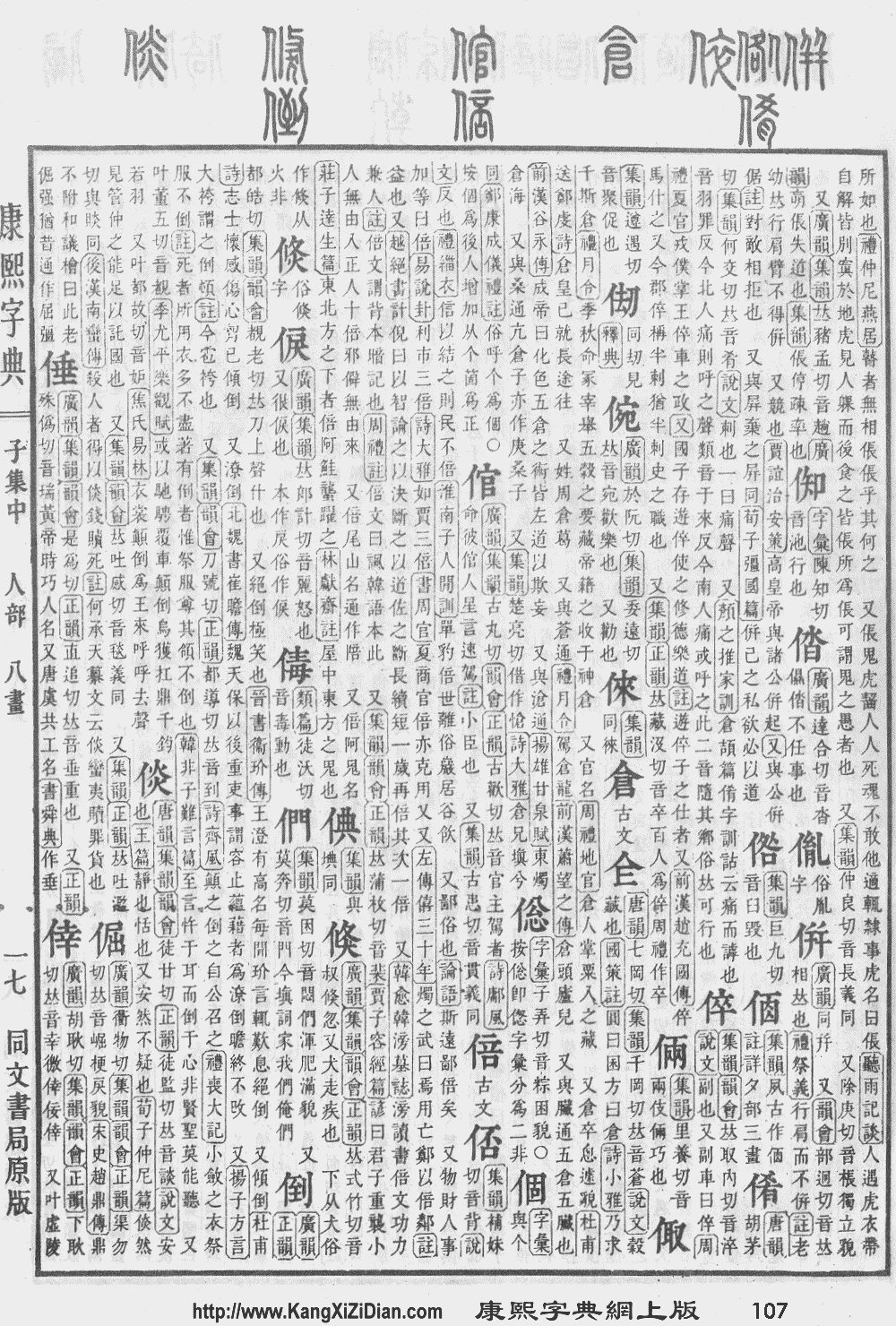
- KangXi: page 107, character 26
- Dai Kanwa Jiten: character 766
- Dae Jaweon: page 229, character 6
- Hanyu Da Zidian: volume 1, page 185, character 2
- Unihan data for U+5011
Chinese
| trad. | 們 | |
|---|---|---|
| simp. | 们 | |
Glyph origin
Phono-semantic compound (形聲) : semantic 亻 (“person”) + phonetic 門 (OC *mɯːn).
Etymology 1
First attested in the Song dynasty (Lü, 1940). Various other glyphs representing *mVn have been attested in Song dynasty texts, including 懣, 滿, 瞞, 門.
It is probably related to 弭 (MC miᴇX) (in 我弭) and 偉 (MC ɦʉiX) (in 兒郎偉) attested in the Tang dynasty (Lü, 1940); it is related to 每, as in 我每, common during the Jin dynasty, Yuan dynasty and early Ming dynasty (Lü, 1985).
Proposed etymologies:
- From the personal pronoun plural marker 輩 (OC *puːls) (Lü, 1985; Feng, 1997; Li, 2013).
- From 門 (MC muən, “door; clan; family”) (Ota, 2003; Yu, 1989; Li and Shi, 2000).
- From 每人 (MC muʌiX ȵiɪn, “everybody”) (Norman, 1988); compare Min Dong 各儂/各侬 (“everybody”), used in 我各儂/我各侬 (“we; us”), 汝各儂/汝各侬 (“you (plural)”), 伊各儂/伊各侬 (“they”).
- From 物 (MC mɨut̚, “thing”) (Jiang, 1995).
Also compare 您.
Pronunciation
Definitions
們
Compounds
Etymology 2
Pronunciation
Definitions
們
- Only used in 們渾/们浑.
Japanese
Kanji
們
- This term needs a translation to English. Please help out and add a translation, then remove the text
{{rfdef}}.
Readings
Korean
Hanja
們 • (mun) (hangeul 문, McCune–Reischauer mun)
- This term needs a translation to English. Please help out and add a translation, then remove the text
{{rfdef}}.
Vietnamese
Han character
- This term needs a translation to English. Please help out and add a translation, then remove the text
{{rfdef}}.
This article is issued from
Wiktionary.
The text is licensed under Creative Commons - Attribution - Sharealike.
Additional terms may apply for the media files.