可
See also: 句
| ||||||||
 | ||||||||
Translingual
| Stroke order | |||
|---|---|---|---|
 | |||
| Stroke order | |||
|---|---|---|---|
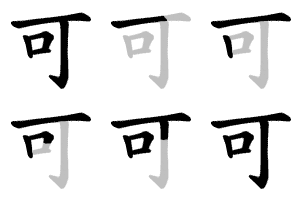 | |||
Han character
可 (radical 30, 口+2, 5 strokes, cangjie input 一弓口 (MNR), four-corner 10620, composition ⿹丁口)
Derived characters
References
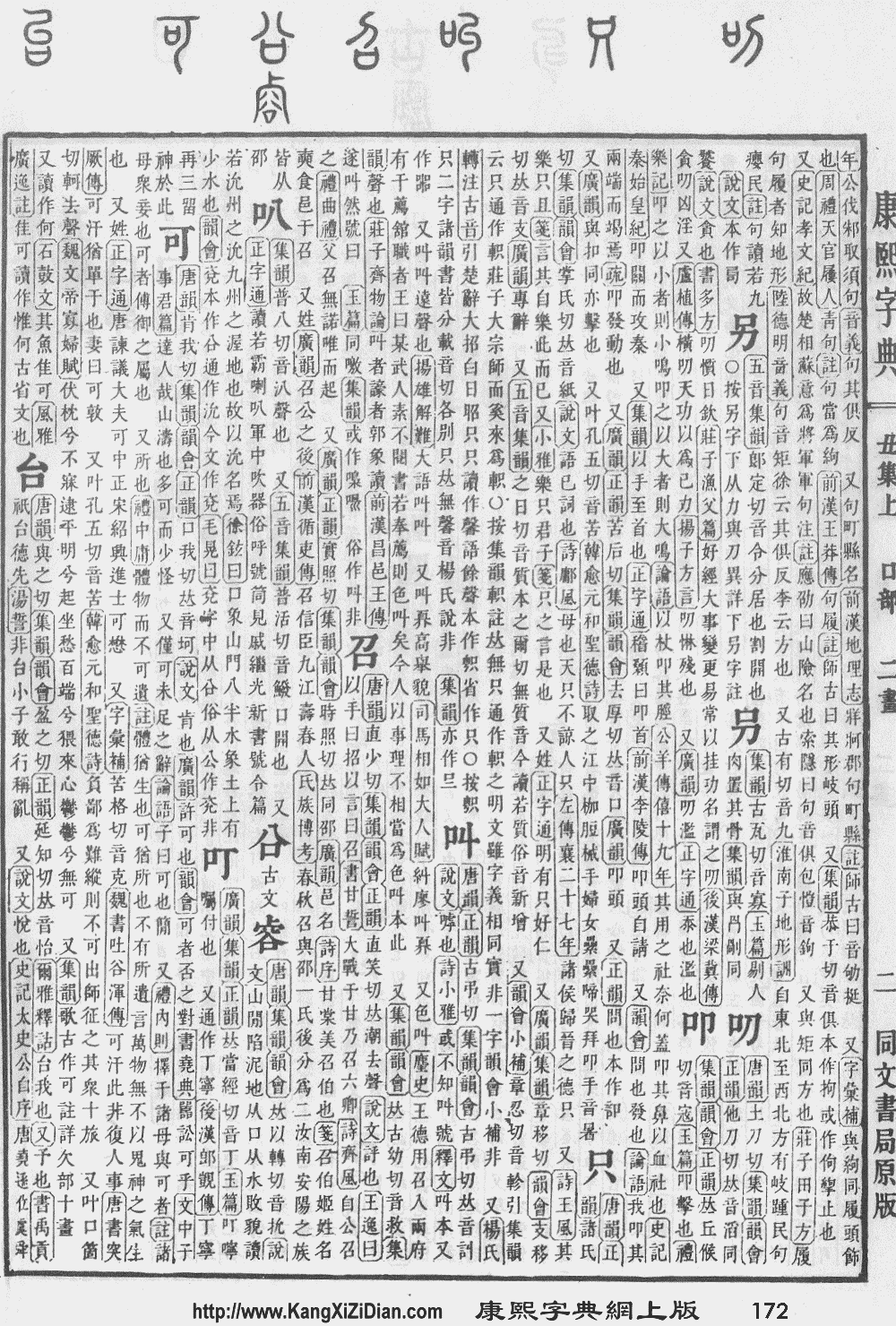
- KangXi: page 172, character 12
- Dai Kanwa Jiten: character 3245
- Dae Jaweon: page 383, character 7
- Hanyu Da Zidian: volume 1, page 567, character 7
- Unihan data for U+53EF
Chinese
| simp. and trad. |
可 | |
|---|---|---|
Glyph origin
| Historical forms of the character 可 | ||||
|---|---|---|---|---|
| Shang | Western Zhou | Warring States | Shuowen Jiezi (compiled in Han) | Liushutong (compiled in Ming) |
| Oracle bone script | Bronze inscriptions | Chu Slip and silk script | Small seal script | Transcribed ancient scripts |
 |
 |
 |
 |
 |
| Characters in the same phonetic series (可) (Zhengzhang, 2003) | |
|---|---|
| Old Chinese | |
| 砢 | *ɡ·raːlʔ |
| 柯 | *kaːl |
| 菏 | *kaːl, *ɡaːl |
| 牁 | *kaːl |
| 滒 | *kaːl |
| 哥 | *kaːl |
| 歌 | *kaːl |
| 謌 | *kaːl |
| 鴚 | *kaːl |
| 哿 | *kaːlʔ |
| 舸 | *kaːlʔ |
| 笴 | *kaːlʔ, *kaːnʔ |
| 軻 | *kʰaːl, *kʰaːlʔ, *kʰaːls |
| 珂 | *kʰaːl |
| 可 | *kʰaːlʔ |
| 岢 | *kʰaːlʔ |
| 坷 | *kʰaːlʔ, *kʰaːls |
| 蚵 | *kʰaːls, *ɡaːl |
| 呵 | *qʰaːl, *qʰaːls |
| 訶 | *qʰaːl |
| 抲 | *qʰaːl |
| 荷 | *qʰaːls, *ɡaːl, *ɡaːlʔ |
| 何 | *ɡaːl, *ɡaːlʔ |
| 河 | *ɡaːl |
| 苛 | *ɡaːl |
| 魺 | *ɡaːl |
| 袔 | *ɡaːls |
| 阿 | *qaːl |
| 妸 | *qaːl, *qaːlʔ |
| 疴 | *qaːl, *kʰraːls |
| 鈳 | *qaːl |
| 娿 | *qaːl, *qaːlʔ |
| 痾 | *qaːl |
| 跒 | *kʰraːlʔ |
| 閜 | *qʰraːlʔ |
Phono-semantic compound (形聲, OC *kʰaːlʔ) : semantic 口 + phonetic 丂 (OC *kʰluːʔ).
Etymology 1
Pronunciation
Definitions
可
- can, may, be able to
- Particle used for emphasis.
- to approve, to permit
- to suit
- 可心 (kěxīn, “satisfying”)
- to be worth doing
- Prefix attached to verbs, expressing possibility and turning them into adjectives. Similar to the English suffix -able.
- Short for 可是 (kěshì, “but”).
Usage notes
When Mandarin speakers wish to imitate the sound of the dialectal pronunciation of 可 in written form, the character 闊/阔 (kuò) is often used to substitute for 可.
Compounds
Derived terms from 可
|
|
|
Etymology 2
Pronunciation
Definitions
可
- Only used in 可汗 (kèhán).
Japanese
Kanji
可
Readings
Compounds
Compounds of 可
Common
Uncommon
Uncommon (continued)
- 可動 (kadō)
- 可読 (kadoku)
- 可逆 (kagyaku)
- 可変 (kahen)
- 可燃 (kanen)
- 可憐 (karen)
- 可算 (kasan)
- 可視 (kashi)
- 可塑 (kaso)
- 可溶 (kayō)
- 加圧性 (kaatsusei)
- 可換環 (kakankan)
- 可換群 (kakangun)
- 可処分 (kashobun)
- 印可 (inka)
- 半可 (hanka)
- 裁可 (saika)
- 成る可く (narubeku)
Archaic/Rare
- 可い (bei)
- 可し (beshi)
- 可からず (bekarazu)
- 可くして (bekushite)
- 可惜 (atara)
- 可成 (kanari)
- 可祝 (kashiku)
- 可撓 (katō)
- 可用 (kayō)
- 允可 (inka)
- 可及的 (kakyūteki)
- 可耕地 (kakōchi)
Noun
See also
- べき (beki)
Suffix
Korean
Etymology 1
Hanja
- This term needs a translation to English. Please help out and add a translation, then remove the text
{{rfdef}}.
Etymology 2
Hanja
可 (eumhun 오랑캐 극 (orangkae geuk))
- This term needs a translation to English. Please help out and add a translation, then remove the text
{{rfdef}}.
Vietnamese
Han character
- This term needs a translation to English. Please help out and add a translation, then remove the text
{{rfdef}}.
This article is issued from
Wiktionary.
The text is licensed under Creative Commons - Attribution - Sharealike.
Additional terms may apply for the media files.