卬
| ||||||||
Translingual
Han character
卬 (radical 26 卩+2, 4 strokes, cangjie input 竹女尸中 (HVSL), four-corner 27720)
- When used as a component in other characters , 卬 can be referred to as 昂字底.
Derived characters
References
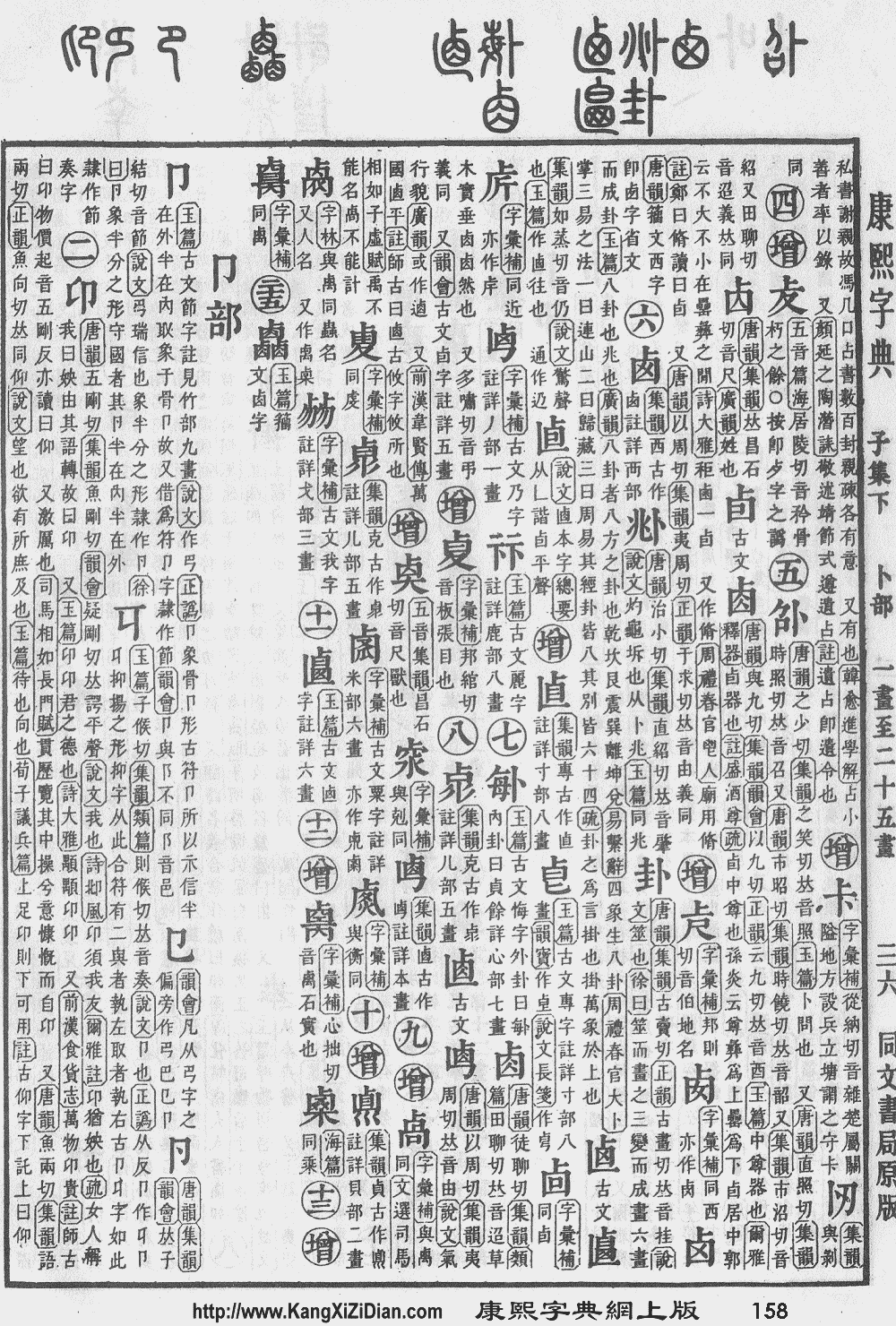
- KangXi: page 158, character 49
- Dai Kanwa Jiten: character 2841
- Dae Jaweon: page 363, character 7
- Hanyu Da Zidian: volume 1, page 310, character 12
- Unihan data for U+536C
Chinese
| simp. and trad. |
卬 | |
|---|---|---|
| alt. forms | 𠨐 卭 | |
Glyph origin
| Historical forms of the character 卬 | ||
|---|---|---|
| Shang | Shuowen Jiezi (compiled in Han) | Liushutong (compiled in Ming) |
| Oracle bone script | Small seal script | Transcribed ancient scripts |
 |
 |
 |
| Characters in the same phonetic series (卬) (Zhengzhang, 2003) | |
|---|---|
| Old Chinese | |
| 卬 | *ŋaːŋ, *ŋaŋʔ |
| 枊 | *ŋaːŋ, *ŋaːŋs |
| 昂 | *ŋaːŋ |
| 仰 | *ŋaŋʔ, *ŋaŋs |
| 迎 | *ŋaŋ, *ŋraŋs |
Ideogrammic compound (會意) : 匕 + 卩: a man standing and a man kneeling; compare 化.
Pronunciation 1
Definitions
卬
Pronunciation 2
Definitions
卬
- Alternative form of 仰.
Compounds
|
|
|
Japanese
Kanji
卬
Readings
- On (unclassified): ごう (gō)←がう (gau, historical); きょう (kyō)←きやう (kyau, historical)
- Kun: のぞむ (nozomu); なす (nasu); たかぶる (takaburu)
Korean
Hanja
卬 • (ang) (hangeul 앙, revised ang, McCune–Reischauer ang)
Vietnamese
Han character
卬 (ngang, ngàng)
- This term needs a translation to English. Please help out and add a translation, then remove the text
{{rfdef}}.
This article is issued from
Wiktionary.
The text is licensed under Creative Commons - Attribution - Sharealike.
Additional terms may apply for the media files.