原
See also: 厡
| ||||||||
Translingual
Han character
原 (radical 27, 厂+8, 10 strokes, cangjie input 一竹日火 (MHAF), four-corner 71296, composition ⿸厂⿱白小)
Derived characters
References
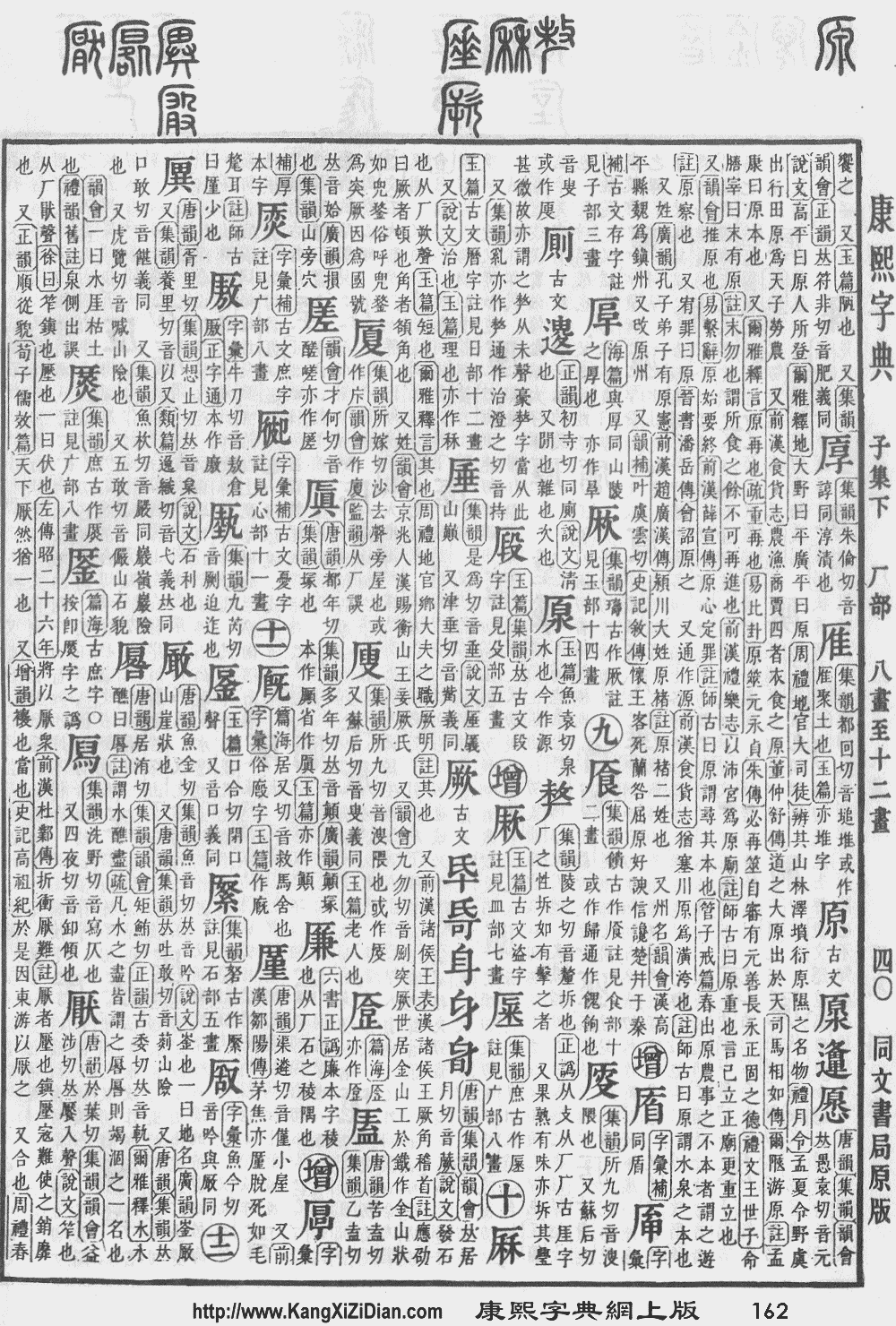
- KangXi: page 162, character 3
- Dai Kanwa Jiten: character 2973
- Dae Jaweon: page 368, character 23
- Hanyu Da Zidian: volume 1, page 74, character 9
- Unihan data for U+539F
Chinese
| simp. and trad. |
原 | |
|---|---|---|
| alt. forms | 厡 邍 “plain” | |
Glyph origin
| Historical forms of the character 原 | ||
|---|---|---|
| Western Zhou | Shuowen Jiezi (compiled in Han) | Liushutong (compiled in Ming) |
| Bronze inscriptions | Small seal script | Transcribed ancient scripts |
 |
 |
 |
| Characters in the same phonetic series (原) (Zhengzhang, 2003) | |
|---|---|
| Old Chinese | |
| 羱 | *ŋʷaːn, *ŋʷan |
| 豲 | *ɦŋʷaːn |
| 謜 | *sŋ̊ʰʷan, *ŋʷan |
| 縓 | *sŋ̊ʰʷan, *sŋ̊ʰʷans |
| 原 | *ŋʷan |
| 源 | *ŋʷan |
| 厵 | *ŋʷan |
| 嫄 | *ŋʷan |
| 騵 | *ŋʷan |
| 榞 | *ŋʷan |
| 獂 | *ŋʷan |
| 蒝 | *ŋʷan |
| 願 | *ŋʷans |
| 傆 | *ŋʷans |
| 愿 | *ŋʷans |
Ideogram (指事) – a spring 泉 bursting from a cliff-side 厂: origin.
Etymology
The sense “source, origin; basic, primary” is perhaps related to 元 (OC *ŋon, “head; principal; first; great”) (Qiu, 1988).
Pronunciation
Definitions
原
- meadow; field; plain; prairie; tundra; wilderness
- source; origin; beginning
- Original form of 源 (yuán, “fountainhead; source”).
- basic; fundamental
- original; primary
- originally; at the beginning
- to originate; to arise
- to trace the source; to probe into
- to forgive; to pardon
- A surname.
Synonyms
- (origin): 元
Compounds
Derived terms from 原
|
|
|
Japanese
Kanji
原
Readings
Compounds
Compounds
- 原料 (genryō)
- 草原 (sōgen), 草原 (kusahara)
- 原語 (gengo)
- 笹原 (sasawara), 笹原 (sasahara)
- 砂原 (sunahara)
- 原稿 (genkō)
- 原理 (genri)
- 原産 (gensan)
- 原素 (genso)
- 原始 (genshi)
- 原油 (gen'yu)
- 原因 (gen'in)
- 原子 (genshi)
- 原作 (gensaku)
- 原則 (gensoku)
- 原子番号 (genshi bangō): atomic number
- 原潜 (gensen)
- 原価計算 (genka keisan)
- 医原性疾患 (igensei shikkan)
- 広原 (kōgen)
- 雪原 (setsugen)
- 原動機 (gendōki)
- 原名 (genmei)
- 医原病 (igenbyō)
- 原爆 (genbaku)
- 原水爆 (gensuibaku)
- 高原 (kōgen)
- 高天原 (takaamahara)
- 医原 (igen)
- 海原 (unabara)
- 原子序数 (genshi josū)
- 原子序 (genshijo)
- 原液 (gen'eki)
- 原義 (gengi)
- 原本 (genpon)
- 原状 (genjō)
- 原文 (genbun)
- 原子核 (genshikaku)
- 原発 (genpatsu)
- 原形質 (genkeishitsu): protoplasm
- 関ヶ原 (Sekigahara)
- 与那原 (yonabaru)
Etymology 1
| Kanji in this term |
|---|
| 原 |
| はら Grade: 2 |
| kun’yomi |
From Old Japanese. Found in the Man'yōshū, finished some time after 759 CE. Compare Korean 벌 (peol, “plain, field”).
Pronunciation
Noun
Usage notes
Specifically refers to a field that is not cultivated.
Proper noun
- A surname.
Etymology 2
| Kanji in this term |
|---|
| 原 |
| げん Grade: 2 |
| on’yomi |
From Middle Chinese 原 (MC ŋʉɐn, “source; origin; beginning”).
Pronunciation
Noun
- the original thing
Prefix
- the original
- 原文、原材料
- genbun, gen-zairyō
- original document, original / raw materials
- 原文、原材料
References
Korean
Hanja
原 • (won) (hangeul 원, revised won, McCune–Reischauer wŏn)
- This term needs a translation to English. Please help out and add a translation, then remove the text
{{rfdef}}.
Vietnamese
Han character
原 (nguyên, nguyễn)
- This term needs a translation to English. Please help out and add a translation, then remove the text
{{rfdef}}.
This article is issued from
Wiktionary.
The text is licensed under Creative Commons - Attribution - Sharealike.
Additional terms may apply for the media files.