昂
| ||||||||
Translingual
Han character
昂 (radical 72 日+4, 8 strokes, cangjie input 日竹女中 (AHVL), four-corner 60127, composition ⿱日卬)
Derived characters
References
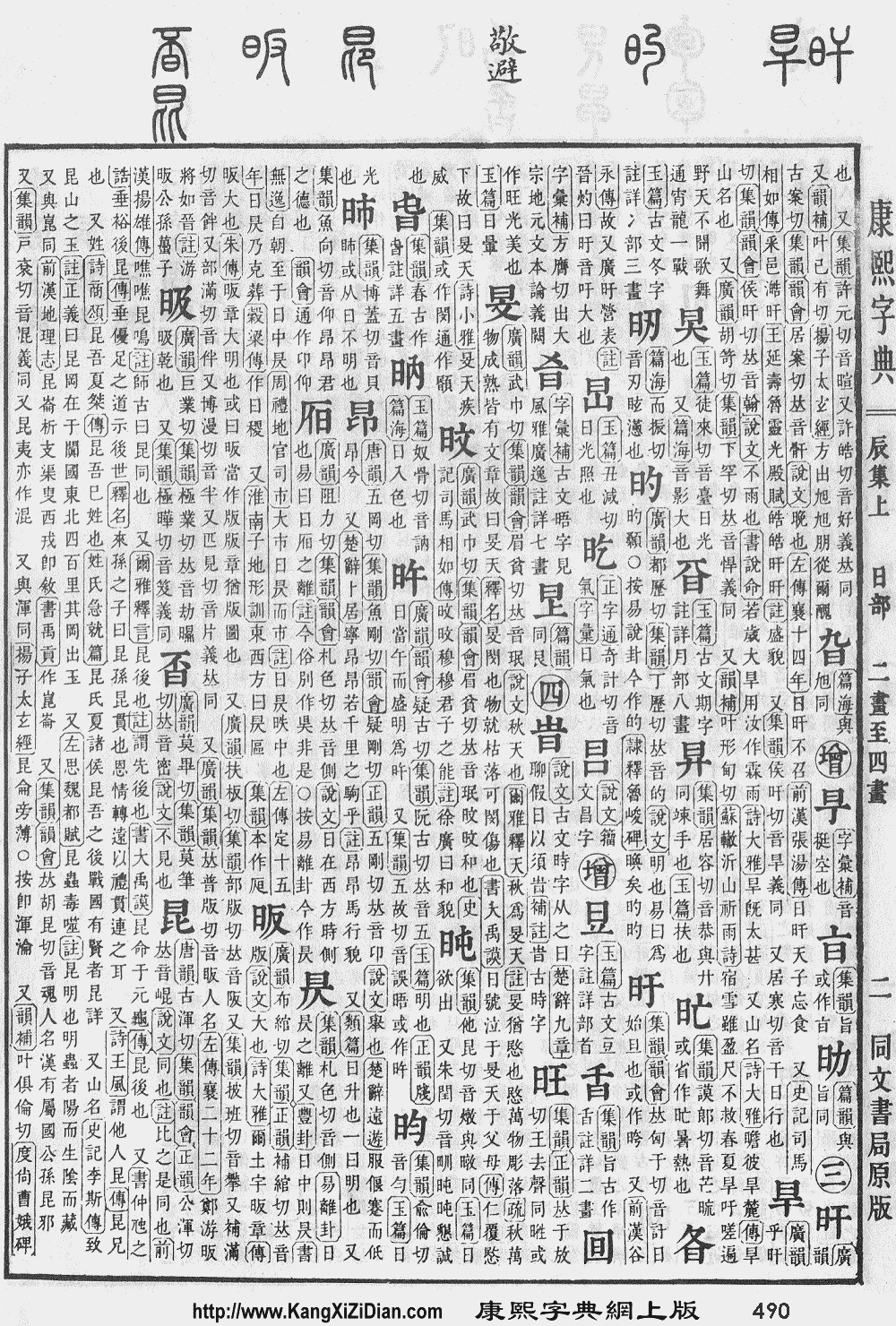
- KangXi: page 490, character 33
- Dai Kanwa Jiten: character 13783
- Dae Jaweon: page 851, character 32
- Hanyu Da Zidian: volume 2, page 1495, character 3
- Unihan data for U+6602
Chinese
| simp. and trad. |
昂 | |
|---|---|---|
| alt. forms | 昻 | |
Glyph origin
| Historical forms of the character 昂 | |
|---|---|
| Shuowen Jiezi (compiled in Han) | Liushutong (compiled in Ming) |
| Small seal script | Transcribed ancient scripts |
 |
 |
| Characters in the same phonetic series (卬) (Zhengzhang, 2003) | |
|---|---|
| Old Chinese | |
| 卬 | *ŋaːŋ, *ŋaŋʔ |
| 枊 | *ŋaːŋ, *ŋaːŋs |
| 昂 | *ŋaːŋ |
| 仰 | *ŋaŋʔ, *ŋaŋs |
| 迎 | *ŋaŋ, *ŋraŋs |
Phono-semantic compound (形聲, OC *ŋaːŋ) : semantic 日 (“sun”) + phonetic 卬 (OC *ŋaːŋ, *ŋaŋʔ, “man standing and man kneeling”).
Pronunciation
Definitions
昂
Compounds
Japanese
Kanji
昂
(“Jinmeiyō” kanji used for names)
Readings
Compounds
- 意気軒昂 (ikikenkō)
- 軒昂 (kenkō)
- 激昂 (gekikō), 激昂 (gekkō)
- 昂進 (kōshin)
- 昂然 (kōzen)
- 昂騰 (kōtō)
- 昂奮 (kōfun)
- 昂揚 (kōyō)
- 心悸昂進 (shinkikōshin)
Korean
Hanja
昂 • (ang) (hangeul 앙, revised ang, McCune–Reischauer ang, Yale ang)
- This term needs a translation to English. Please help out and add a translation, then remove the text
{{rfdef}}.
Vietnamese
Han character
昂 (ngang, ngáng, ngàng, ngãng)
- This term needs a translation to English. Please help out and add a translation, then remove the text
{{rfdef}}.
This article is issued from
Wiktionary.
The text is licensed under Creative Commons - Attribution - Sharealike.
Additional terms may apply for the media files.