日
| ||||||||
Translingual
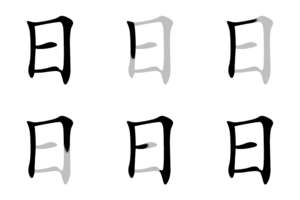
| Stroke order | |||
|---|---|---|---|
 | |||
Han character
日 (radical 72, 日+0, 4 strokes, cangjie input 日 (A), four-corner 60100)
- Kangxi radical #72, ⽇.
Descendants
See also
- Not to be confused with 曰, which is generally wider and shorter
References
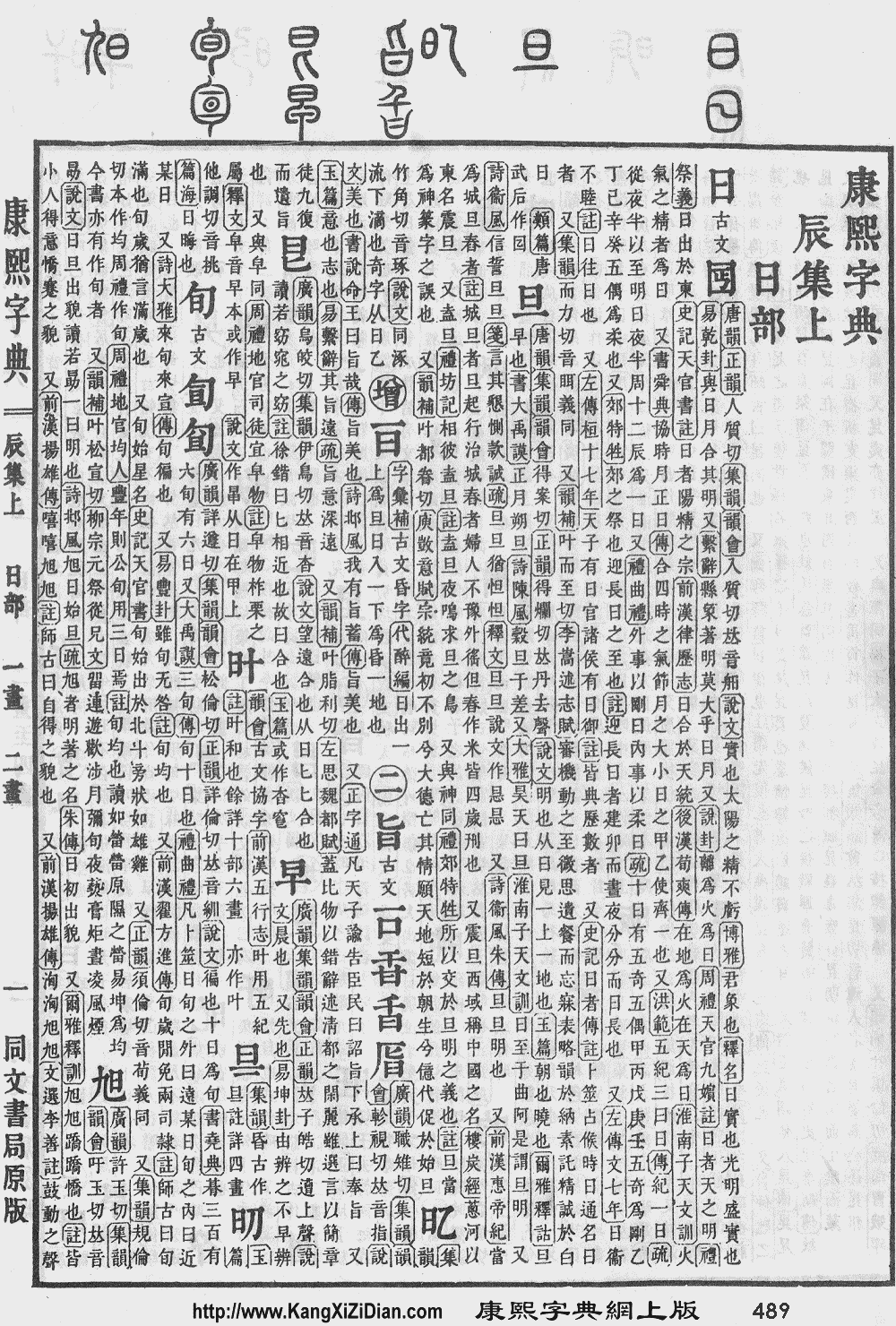
- KangXi: page 489, character 1
- Dai Kanwa Jiten: character 13733
- Dae Jaweon: page 848, character 14
- Hanyu Da Zidian: volume 2, page 1482, character 1
- Unihan data for U+65E5
Chinese
Glyph origin
| Historical forms of the character 日 | ||||
|---|---|---|---|---|
| Shang | Western Zhou | Warring States | Shuowen Jiezi (compiled in Han) | Liushutong (compiled in Ming) |
| Oracle bone script | Bronze inscriptions | Chu Slip and silk script | Small seal script | Transcribed ancient scripts |
 |
 |
 |
 |
 |
| Characters in the same phonetic series (日) (Zhengzhang, 2003) | |
|---|---|
| Old Chinese | |
| 涅 | *niːɡ |
| 捏 | *niːɡ |
| 篞 | *niːɡ |
| 衵 | *niɡ, *njiɡ |
| 日 | *njiɡ |
| 馹 | *njiɡ |
Pictogram (象形) – the Sun. A dot or line was added in the centre to distinguish it from visually similar characters, e.g. 囗 (early form of 丁). Compare earlier forms of the character with the astronomical and astrological symbol for the Sun (☉).
Etymology
| simp. and trad. |
日 | |
|---|---|---|
| alt. forms | ||
- “Sun; day; etc.”
- From Proto-Sino-Tibetan *nəj.
- “to fuck”
- Essentially a substitute character for 入 (MC ȵiɪp̚, “to enter”), that preserves the expected modern pronunciation of 入; see the etymology there for more.
Pronunciation 1
Definitions
日
- (astronomy) Sun
- daytime; time between sunrise and sunset
- day; twenty-four hours
- everyday; daily; day-to-day
- day of the month
- some day; some other time
- former times; previous times; the past
- time; period; age
- Classifier for days.
- Short for 日本 (Rìběn, “Japan; Japanese; Nippo-”):
- (Beijing Mandarin, Jiaoliao Mandarin, Southwestern Mandarin, Central Plains Mandarin, Jianghuai Mandarin, Lanyin Mandarin, dialectal Jin, dialectal Wu, dialectal Xiang, vulgar, often in abuses) to fuck; to have sexual intercourse with
- 朱山也不敢踢我,甚至罵我說,日你媽,我的豆腐你也敢吃。 [MSC, trad.]
- From: 2014, 余显斌, 我真的很牛皮, in 《满族文学》, issue 6
- Zhū Shān yě bùgǎn tī wǒ, shènzhì mà wǒ shuō, rì nǐ mā, wǒ de dòufu nǐ yě gǎn chī. [Pinyin]
- Zhu Shan would no longer dare kick me, or insult me, and say "fuck you, how dare you flirt with my woman!"
朱山也不敢踢我,甚至骂我说,日你妈,我的豆腐你也敢吃。 [MSC, simp.]
- † Alternative form of 二 (èr, “two”).
- † Short for 日斯巴尼亞/日斯巴尼亚 (Rìsībāníyà, “Spain”).
Synonyms
| Dialectal synonyms of 天 (“day (24 hours)”) [map] | ||
|---|---|---|
| Variety | Location | Words |
| Classical Chinese | 日 | |
| Formal (Written Standard Chinese) | 日 | |
| Mandarin | Beijing | 天 |
| Taiwan | 天 | |
| Cantonese | Guangzhou | 日 |
| Hong Kong | 日 | |
| Taishan | 日 | |
| Gan | Nanchang | 日 |
| Hakka | Meixian | 日 |
| Miaoli (N. Sixian) | 日 | |
| Liudui (S. Sixian) | 日 | |
| Hsinchu (Hailu) | 日 | |
| Dongshi (Dabu) | 日 | |
| Zhuolan (Raoping) | 日 | |
| Yunlin (Zhao'an) | 日 | |
| Jin | Taiyuan | 天 |
| Min Dong | Fuzhou | 日 |
| Min Nan | Xiamen | 日 |
| Quanzhou | 日 | |
| Zhangzhou | 日 | |
| Taipei | 工、日 | |
| Kaohsiung | 工、日 | |
| Tainan | 工、日 | |
| Taichung | 日、工 | |
| Hsinchu | 日、工 | |
| Lukang | 工、日 | |
| Sanxia | 工、日 | |
| Yilan | 工、日 | |
| Kinmen | 工 | |
| Magong | 工 | |
| Penang | 日 | |
| Wu | Shanghai | 日、天 |
| Xiang | Changsha | 天 |
Antonyms
- 夜 (yè, “night”)
Compounds
|
|
|
Pronunciation 2
Definitions
日
Japanese
Kanji
Readings
Compounds
- 人日 (じんじつ, jinjitsu): Human Day, celebrated on 7 January
- 日記 (にっき, nikki): diary
- 日給 (にっきゅう, nikkyū): daily wages
- 日系 (にっけい, nikkei): of Japanese descent
- 日月 (じつげつ, jitsugetsu; ひつき, hitsuki): the sun and moon; days and months, time
- 日銀 (にちぎん, nichigin): Bank of Japan
- 日光 (にっこう, nikkō): sunlight
- 日照 (にっしょう, nisshō): sunlight
- 日章旗 (にっしょうき, nisshōki): the Japanese flag
- 日進月歩 (にっしんげっぽ, nisshingeppo): rapid advance
- 日中 (にっちゅう, nicchū): Sino-Japanese
- 日常 (にちじょう, nichijō): daily life
- 日常茶飯事 (にちじょうさはんじ, nichijō sahanji): everyday occurrence
- 日程 (にってい, nittei): daily schedule
- 日々 (ひび, hibi): every day
- 日暮れ (ひぐれ, higure): sunset
- 日没 (にちぼつ, nichibotsu): sunset
- 日本 (にほん, Nihon; にっぽん, Nippon): Japan
- 日夜 (にちや, nichiya): day and night
- 日用 (にちよう, nichiyō): daily use
- 日曜 (にちよう, nichiyō): Sunday
- 日曜日 (にちようび, nichiyōbi): Sunday
- 日輪 (にちりん, nichirin): sun; (puppeteer jargon) fire
- 日帰り (ひがえり, higaeri): day trip
- 日陰 (ひかげ, hikage): shade, shadow, out of the sun
- 日影 (ひかげ, hikage): sunshine; daytime
- 日傘 (ひがさ, higasa): parasol
- 日柄 (ひがら, higara): the astronomical characteristics of a day
- 日時計 (ひどげい, hidogei): sundial
- 日付 (ひづけ, hizuke): a (calendar) date
- 日付変更線 (ひづけへんこうせん, Hizuke Henkō Sen): International Date Line
- 日向 (ひなた, hinata): a sunny area, in the sun
- 日読み (ひよみ, hiyomi): a calendar
- 日和 (ひより, hiyori): weather
- 日和見 (ひよりみ, hiyorimi): opportunism; an opportunist
- 毎日 (まいにち, mainichi): every day
- 先日 (せんじつ, senjitsu): the other day, a few days ago
- 昨日 (きのう, kinō): yesterday
- 明日 (あした, ashita): tomorrow
- 在日 (ざいにち, zainichi): in Japan
- 尽日 (じんじつ, jinjitsu): all day long; the last day of a month or season
Etymology 1
From Old Japanese /hi1/ invalid IPA characters (1). This is distinct from 火 (hi), consistently rendered as /hi2/ invalid IPA characters (2) in Old Japanese. See Jōdai Tokushu Kanazukai for details on Old Japanese readings.
Pronunciation
Noun
Synonyms
- (sun): 太陽 (taiyō)
Derived terms
Etymology 2
Proper noun
日 (hiragana にち, rōmaji Nichi)
- short form for Japan or Japanese, Nippo- (prefix)
- 日露戦争
- Nichi-Ro sensō
- Japanese-Russian war (normally: "Russo-Japanese war")
- 日露戦争
Synonyms
- 和 (wa)
Etymology 3
Apophonic form of /hi/. Obsolete; only used in compounds in modern Japanese.
Pronunciation
- In compounds, this is often realized simply as /u/, [ɯᵝ].
Noun
- (obsolete) day
Derived terms
Etymology 4
From Old Japanese.
Pronunciation
Counter
Suffix
Usage notes
The use of ka for the number of days or day of the month is somewhat irregular in Japanese, and only applies to certain numbers, as listed below from 1 to 31.
- 一日 (いちにち, ichinichi): one day; (ついたち, tsuitachi): first day of the month
- 二日 (ふつか, futsuka): two days, second day of the month
- 三日 (みっか, mikka): three days, third day of the month
- 四日 (よっか, yokka): four days, fourth day of the month
- 五日 (いつか, itsuka): five days, fifth day of the month
- 六日 (むいか, muika): six days, sixth day of the month
- 七日 (なのか, nanoka): seven days, seventh day of the month
- 八日 (ようか, yōka): eight days, eighth day of the month
- 九日 (ここのか, kokonoka): nine days, ninth day of the month
- 十日 (とおか, tōka): ten days, tenth day of the month
- 十一日 (じゅういちにち, jūichi-nichi): eleven days, eleventh day of the month
- 十二日 (じゅうににち, jūni-nichi): twelve days, twelfth day of the month
- 十三日 (じゅうさんにち, jūsan-nichi): thirteen days, thirteenth day of the month
- 十四日 (じゅうよっか, jūyokka): fourteen days, fourteenth day of the month
- 十五日 (じゅうごにち, jūgo-nichi): fifteen days, fifteenth day of the month
- 十六日 (じゅうろくにち, jūroku-nichi): sixteen days, sixteenth day of the month
- 十七日 (じゅうしちにち, jūshichi-nichi): seventeen days, seventeenth day of the month
- 十八日 (じゅうはちにち, jūhachi-nichi): eighteen days, eighteenth day of the month
- 十九日 (じゅうくにち, jūku-nichi): nineteen days, nineteenth day of the month
- 二十日 (はつか, hatsuka): twenty days, twentieth day of the month
- 二十一日 (にじゅういちにち, nijūichi-nichi): twenty-one days, twenty-first day of the month
- 二十二日 (にじゅうににち, nijūni-nichi): twenty-two days, twenty-second day of the month
- 二十三日 (にじゅうさんにち, nijūsan-nichi): twenty-three days, twenty-third day of the month
- 二十四日 (にじゅうよっか, nijūyokka): twenty-four days, twenty-fourth day of the month
- 二十五日 (にじゅうごにち, nijūgo-nichi): twenty-five days, twenty-fifth day of the month
- 二十六日 (にじゅうろくにち, nijūroku-nichi): twenty-six days, twenty-sixth day of the month
- 二十七日 (にじゅうしちにち, nijūshichi-nichi): twenty-seven days, twenty-seventh day of the month
- 二十八日 (にじゅうはちにち, nijūhachi-nichi): twenty-eight days, twenty-eighth day of the month
- 二十九日 (にじゅうくにち, nijūku-nichi): twenty-nine days, twenty-ninth day of the month
- 三十日 (さんじゅうにち, sanjū-nichi): thirty days, thirtieth day of the month
- 三十一日 (さんじゅういちにち, sanjūichi-nichi): thirty-one days, thirty-first day of the month
Etymology 5
Apophonic form of /ka/. Obsolete; only used in certain set phrases in modern Japanese.
Pronunciation
Noun
- (obsolete) days
- Only used in plural contexts. Never used to indicate a single day.
Derived terms
- 日のころごろ (ke no korogoro): these days
- 朝に日に (asa ni ke ni): in the mornings and during the days → morning, noon and night: always
Etymology 6
Suffix
日 (hiragana にち, rōmaji -nichi)
- -th
- 27日
- nijūshichi-nichi
- the 27th
- 27日
Korean
Hanja
- This term needs a translation to English. Please help out and add a translation, then remove the text
{{rfdef}}.
Noun
日 • ()
- (as an abbreviation) Sunday
- (as an abbreviation) Japan
Compounds
Vietnamese
Han character
- This term needs a translation to English. Please help out and add a translation, then remove the text
{{rfdef}}.