曰
| ||||||||
Translingual
| Stroke order | |||
|---|---|---|---|
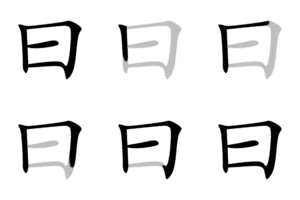 | |||
Han character
曰 (radical 73 曰+0, 4 strokes, cangjie input 日 (A) or X日 (XA), four-corner 60100, composition ⿴囗一)
- Kangxi radical #73, ⽈.
Derived characters
Usage notes
- Not to be confused with 日, which is generally slimmer and taller, and has a middle stroke that often extends to both sides in non-regular script fonts.
References
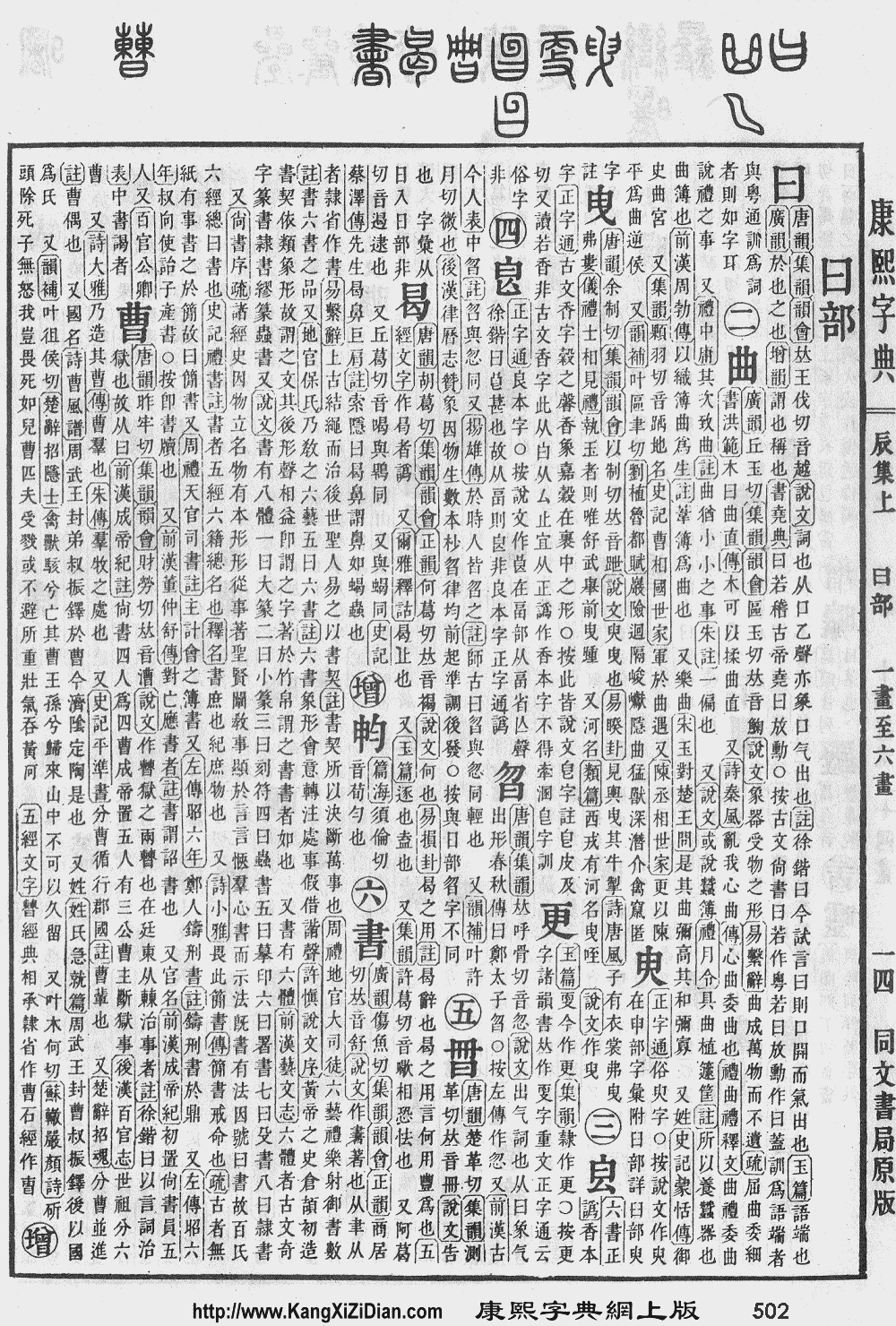
- KangXi: page 502, character 1
- Dai Kanwa Jiten: character 14278
- Dae Jaweon: page 872, character 30
- Hanyu Da Zidian: volume 2, page 1482, character 2
- Unihan data for U+66F0
Chinese
| simp. and trad. |
曰 | |
|---|---|---|
| alt. forms | 粵/粤 syllable filler | |
Glyph origin
| Historical forms of the character 曰 | |||||
|---|---|---|---|---|---|
| Shang | Western Zhou | Warring States | Shuowen Jiezi (compiled in Han) | Liushutong (compiled in Ming) | Libian (compiled in Qing) |
| Oracle bone script | Bronze inscriptions | Chu Slip and silk script | Small seal script | Transcribed ancient scripts | Clerical script |
 |
 |
 |
 |
 |
 |
| Characters in the same phonetic series (曰) (Zhengzhang, 2003) | |
|---|---|
| Old Chinese | |
| 曰 | *ɢʷad |
| 汩 | *kʷɯːd, *ɡʷɯd |
Ideogram (指事) : a mouth (口) with word or breath (一) coming out. Compare 今 and 言, where a small stroke is also used to represent words.
Etymology
Cognate with 話 (OC *ɡroːds) according to Sagart (1999); if so, it is from Proto-Sino-Tibetan *grwas (“to speak; word”).
This etymology is incomplete. You can help Wiktionary by elaborating on the origins of this term.
Pronunciation
Definitions
曰
- † to say; to speak
-
- 翁笑曰:「平昔不相往還,何由遺魂吾家?」 [Classical Chinese, trad.]
- From: 聊齋志異, 第2卷
- Wēng xiào yuē: “Píng xī bù xiàng wǎng hái, hé yóu yí hún wú jiā?” [Pinyin]
- The old man laughed and said, "In normal days we don't have much of a relation, why would you want to call back the dead's soul in my house?"
翁笑曰:“平昔不相往还,何由遗魂吾家?” [Classical Chinese, simp.]
-
- † to be called (the name of)
Compounds
References
Japanese
Kanji
曰
- This term needs a translation to English. Please help out and add a translation, then remove the text
{{rfdef}}.
Readings
- Goon: おち (ochi)←をち (woti, historical); わつ (watsu)←わち (wati, historical)
- Kan’on: えつ (etsu)←ゑつ (wetu, historical)
- Kun: いう (iu, 曰う)←いふ (ifu, historical); いわく (iwaku, 曰く)←いはく (ifaku, historical); のたまわく (notamawaku, 曰く)←のたまはく (notamafaku, historical)
Korean
Hanja
曰 • (wal) (hangeul 왈, revised wal, McCune–Reischauer wal, Yale wal)
- This term needs a translation to English. Please help out and add a translation, then remove the text
{{rfdef}}.
Vietnamese
Han character
- This term needs a translation to English. Please help out and add a translation, then remove the text
{{rfdef}}.
This article is issued from
Wiktionary.
The text is licensed under Creative Commons - Attribution - Sharealike.
Additional terms may apply for the media files.