人
Translingual
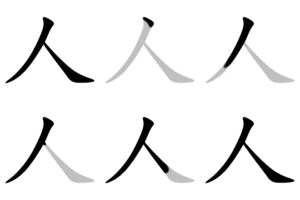
| Stroke order | |||
|---|---|---|---|
 | |||
Alternative forms
- 亻 (when used as a left radical)
Han character
人 (radical 9, 人+0, 2 strokes, cangjie input 人 (O), four-corner 80000)
- Kangxi radical #9, ⼈.
Derived characters
- Index:Chinese radical/人
- 飤
References
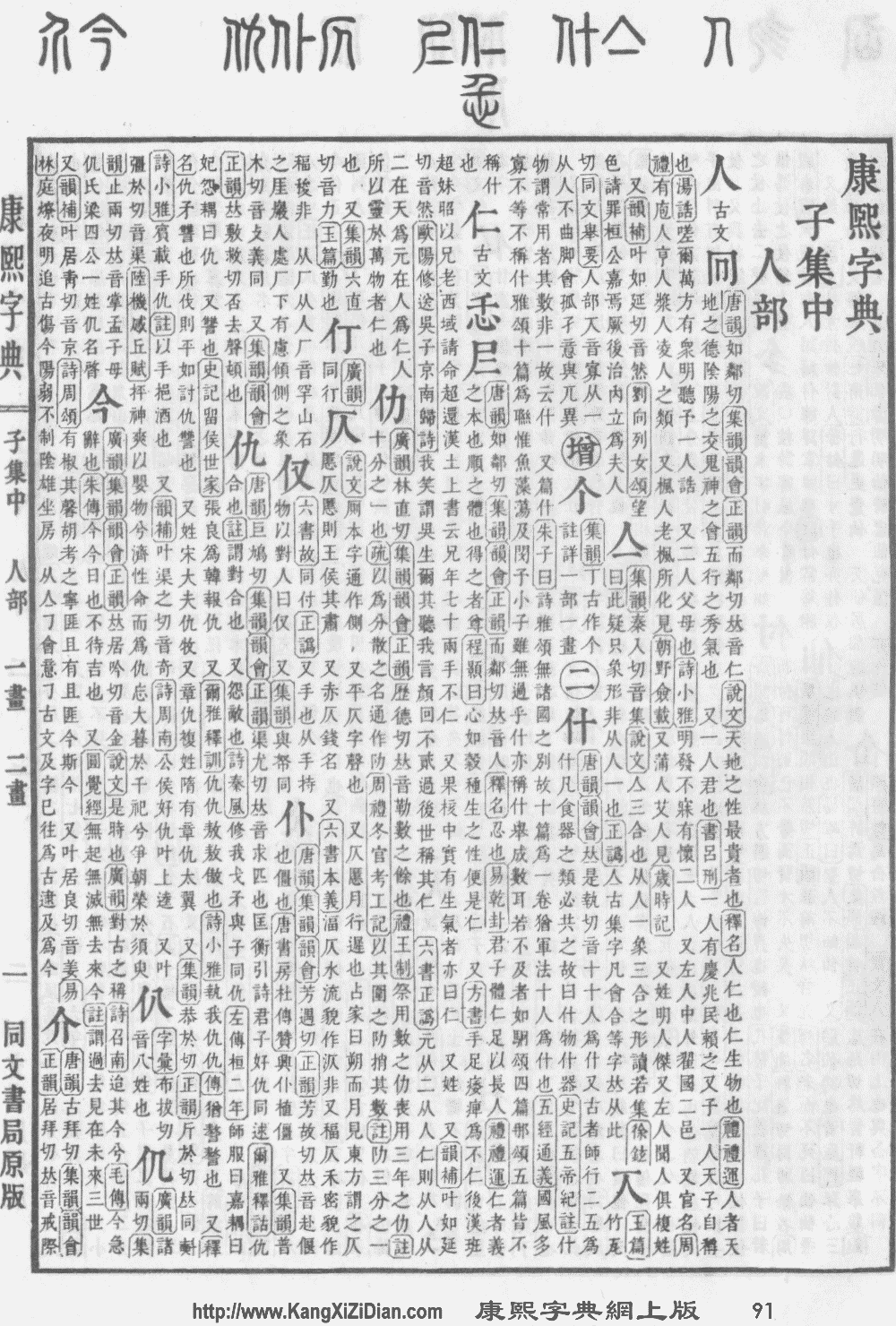
- KangXi: page 91, character 1
- Dai Kanwa Jiten: character 344
- Dae Jaweon: page 190, character 1
- Hanyu Da Zidian: volume 1, page 101, character 10
- Unihan data for U+4EBA
Chinese
| simp. and trad. |
人 | |
|---|---|---|
| alt. forms | ||
Glyph origin
| Historical forms of the character 人 | ||||||||||||||||||||||||||||||||||||||||||||||||||||||||||||||||||||||||||||||||||||||||||||||||||||||||||||||||||||||||||||||||||||||||||||||||||||||||||||||||||||||||||||||||||||||||||||||||||||||||||
|---|---|---|---|---|---|---|---|---|---|---|---|---|---|---|---|---|---|---|---|---|---|---|---|---|---|---|---|---|---|---|---|---|---|---|---|---|---|---|---|---|---|---|---|---|---|---|---|---|---|---|---|---|---|---|---|---|---|---|---|---|---|---|---|---|---|---|---|---|---|---|---|---|---|---|---|---|---|---|---|---|---|---|---|---|---|---|---|---|---|---|---|---|---|---|---|---|---|---|---|---|---|---|---|---|---|---|---|---|---|---|---|---|---|---|---|---|---|---|---|---|---|---|---|---|---|---|---|---|---|---|---|---|---|---|---|---|---|---|---|---|---|---|---|---|---|---|---|---|---|---|---|---|---|---|---|---|---|---|---|---|---|---|---|---|---|---|---|---|---|---|---|---|---|---|---|---|---|---|---|---|---|---|---|---|---|---|---|---|---|---|---|---|---|---|---|---|---|---|---|---|---|---|
| Shang | Western Zhou | Spring and Autumn | Warring States | Shuowen Jiezi (compiled in Han) | Liushutong (compiled in Ming) | |||||||||||||||||||||||||||||||||||||||||||||||||||||||||||||||||||||||||||||||||||||||||||||||||||||||||||||||||||||||||||||||||||||||||||||||||||||||||||||||||||||||||||||||||||||||||||||||||||||
| Bronze inscriptions | Oracle bone script | Bronze inscriptions | Bronze inscriptions | Bronze inscriptions | Chu Slip and silk script | Qin slip script | Odd character | Small seal script | Transcribed ancient scripts | |||||||||||||||||||||||||||||||||||||||||||||||||||||||||||||||||||||||||||||||||||||||||||||||||||||||||||||||||||||||||||||||||||||||||||||||||||||||||||||||||||||||||||||||||||||||||||||||||
 |
 |
 |
 |
 |
 |
 |
 |
 |
 | |||||||||||||||||||||||||||||||||||||||||||||||||||||||||||||||||||||||||||||||||||||||||||||||||||||||||||||||||||||||||||||||||||||||||||||||||||||||||||||||||||||||||||||||||||||||||||||||||
|||||||||
|
References: Mostly from Richard Sears' Chinese Etymology site (authorisation),
| ||||||||||||||||||||||||||||||||||||||||||||||||||||||||||||||||||||||||||||||||||||||||||||||||||||||||||||||||||||||||||||||||||||||||||||||||||||||||||||||||||||||||||||||||||||||||||||||||||||||||||


| Characters in the same phonetic series (人) (Zhengzhang, 2003) | |
|---|---|
| Old Chinese | |
| 千 | *sn̥ʰiːn |
| 仟 | *sn̥ʰiːn |
| 芊 | *sn̥ʰiːn, *sn̥ʰiːns |
| 阡 | *sn̥ʰiːn |
| 汘 | *sn̥ʰiːn |
| 迁 | *sn̥ʰiːn |
| 杄 | *sn̥ʰiːn |
| 人 | *njin |
| 仁 | *njin |
| 朲 | *njin |
| 佞 | *neːŋs |
Pictogram (象形) – side view of a standing man, highlighting the arms and legs. Compare 大.
Etymology 1
Pronunciation
Definitions
人
- man; person; people (Classifier: 個/个; 位)
- human being (Homo sapiens)
- body
- everybody; everyone
- 人手一冊 / 人手一册 ― rénshǒu yīcè ― It's a bestseller. (lit. Everyone has a copy.)
- physical, psychological or moral quality or condition; character; personality
- a person associated with a particular identity or trait; -er
- manpower; worker; employee
- † talent; person of talent
- † other people; others
- † common people; commoner
- † adult; grown-up
- 長大成人 / 长大成人 ― chángdà chéngrén ― to grow up to be an adult
- † reason; cause
- † sexual intercourse
- † company; companion; friend
- † artificial; man-made
- † mortal; bodily; earthly
- † Alternative form of 仁 (rén, “kernel”).
- † Alternative form of 仁 (rén, “charity”).
- † Alternative form of 仁 (rén, “loving; kind”).
- (Taishanese) paternal grandmother
Synonyms
Descendants
Compounds
|
|
|
Etymology 2
| simp. and trad. |
人 | |
|---|---|---|
| alt. forms | 儂/侬 𠆧 | |
The Min native word for “person”; used as a replacement character for 儂/侬. Use of 人 is recommended by Taiwan's Ministry of Education.
Pronunciation 1
Definitions
人
(Min)
- man; person; people; human being; Homo sapiens
- a person associated with a particular identity or trait; -er
- physical, psychological or moral quality or condition
- 伊人袂䆀。 [Min Nan] ― I lâng bē-bái. [Pe̍h-ōe-jī] ― He is kind. (literally, “His personality is not bad.”)
Pronunciation 2
Definitions
人
(Min)
Japanese
Kanji
Readings
Compounds
- 人影 (jin'ei), 人影 (hitokage): the figure or shadow of a person
- 閑人 (himajin), 暇人 (himajin)
- 人人 (hitobito)
- 人為的 (jin'iteki)
- 人格 (jinkaku)
- 人語 (jingo)
- 人後 (jingo)
- 人権 (jinken)
- 人口 (jinkō)
- 人工 (jinkō)
- 人孔 (jinkō): manhole
- 人行 (jinkō)
- 人皇 (jinkō)
- 人材 (jinzai)
- 人事 (jinji)
- 人種 (jinshu)
- 人心 (hitogokoro), 人心 (jinshin)
- 人身 (hitomi), 人身 (jinshin)
- 人生 (jinsei)
- 人選 (jinsen)
- 人体 (jintai)
- 人道 (jindō)
- 人徳 (jintoku)
- 人物 (jinbutsu)
- 人望 (jinbō)
- 人名 (jinmei)
- 人命 (jinmei)
- 人類 (jinrui)
- 人気 (ninki), 人気 (hitoke)
- 人間 (ningen), 人間 (jinkan)
- 人魚 (ningyo)
- 人形 (ningyō): a doll
- 人称 (ninshō), 人稱 (ninshō)
- 人数 (ninzū)
- 人相 (ninsō)
- 人垣 (hitogaki)
- 人柄 (hitogara)
- 人質 (hitojichi)
- 人魂 (hitodama)
- 人手 (hitode)
- 人出 (hitode)
- 人前 (hitomae), 人前 (ninmae)
- 人並 (hitonami)
- 人波 (hitonami)
- 悪人 (akunin)
- 偉人 (ijin)
- 異人 (ijin)
- 歌人 (kajin)
- 家人 (kajin)
- 佳人 (kajin)
- 華人 (kajin)
- 外人 (gaijin)
- 官人 (kanjin), 官人 (kannin), 官人 (tsukasabito)
- 漢人 (kanjin)
- 閑人 (himajin)
- 客人 (kyakujin)
- 求人 (kyūjin)
- 旧人 (kyūjin)
- 狂人 (kyōjin)
- 吾人 (gojin)
- 後人 (kōjin)
- 公人 (kōjin)
- 工人 (kōjin)
- 詩人 (shijin)
- 私人 (shijin)
- 証人 (shōnin)
- 商人 (shōnin)
- 新人 (shinjin)
- 成人 (seijin)
- 聖人 (seijin)
- 星人 (seijin)
- 前人 (zenjin)
- 善人 (zennin)
- 達人 (tatsujin)
- 旅人 (tabibito), 旅人 (tabinin), 旅人 (ryojin)
- 党人 (tōjin)
- 唐人 (tōjin)
- 俳人 (haijin)
- 廃人 (haijin)
- 非人 (hinin)
- 魔人 (majin)
- 無人 (bujin), 無人 (bunin), 無人 (mujin), 無人 (munin)
- 軍人 (gunjin): serviceman, member of the military
- 老人 (rōjin)
- 大人 (otona)
- 代理人 (dairinin)
- 一人 (hitori)
- 二人 (futari)
- 三人 (sannin)
- 隼人 (hayahito), 隼人 (hayato)
Etymology 1
| Kanji in this term |
|---|
| 人 |
| ひと Grade: 1 |
| kun’yomi |
/pi1to2/ invalid IPA characters (12) → */pitə/ → /fito/ → /hito/
From Old Japanese.
Pronunciation
Noun
人 (counter 人, hiragana ひと, katakana ヒト, rōmaji hito)
- person; human
- 2004 June 4, “レオニンの従者 [Leonin Squire]”, in フィフス・ドーン [Fifth Dawn] (in Japanese), Wizards of the Coast:
- 私は王かもしれないが、兵士や人々なくしては、私は何者でもないのだ。
- Watashi wa ō kamo shirenai ga, heishi ya hitobito naku shite wa, watashi wa nanimono demo nai no da.
- I may be king, but without my soldiers and my people, I am nobody.
- 私は王かもしれないが、兵士や人々なくしては、私は何者でもないのだ。
-
- someone else
Derived terms
- 弟 (otōto): younger brother
- 妹 (imōto): younger sister
- 舅 (shūto): father-in-law
- 姑 (shūto): mother-in-law
- 素人 (shirōto): an amateur, a novice
- 玄人 (kurōto): expert, professional
- 真人 (mahito), 真人 (matōdo), 真人 (mōto): a clan in ancient Japan; a noble; someone who is very honest and straightforward
- 首 (obito): a chief or boss; a clan in ancient Japan
- 客人 (marōdo): a visitor, a guest
- 商人 (akyūdo), 商人 (akindo): trader, shopkeeper, merchant
- 仲人 (nakōdo): go-between, matchmaker
- 囚人 (meshūdo): prisoner
- 人の世 (hito no yo): this world, the world of humans (as opposed to the world of the gods)
Synonyms
- 方 (kata) (honorific)
Etymology 2
| Kanji in this term |
|---|
| 人 |
| にん Grade: 1 |
| on’yomi |
From Middle Chinese 人 (nyin, “person”). The goon, so likely the earlier borrowing.
Pronunciation
Counter
Usage notes
The nin reading is used when counting three people or more. When counting one or two people as in 一人 (hitori, “one person”) or 二人 (futari, “two people”), the reading is り (-ri).
Etymology 3
| Kanji in this term |
|---|
| 人 |
| じん Grade: 1 |
| on’yomi |
From Middle Chinese 人 (nyin, “person”). The kan'on, so likely a later borrowing.
Pronunciation
Suffix
References
Korean
Hanja
Noun
人 • (in) (counter 人, hangeul 인)
Compounds
Vietnamese
| Hán tự in this word |
|---|
| 人 |
Han character
人 (nhân, nhơn)
- (Northern Vietnam) Hán tự form of nhân, “human”
- (Southern Vietnam) Hán tự form of nhơn, “human”
Noun
人
- Abbreviation of người. (only in handwriting)
- con 人 = con người