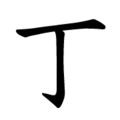
丁
 | ||||||||
Translingual
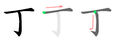
| Stroke order | |||
|---|---|---|---|
 | |||
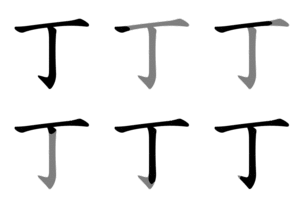
| Stroke order | |||
|---|---|---|---|
 | |||
Han character
丁 (radical 1, 一+1, 2 strokes, cangjie input 一弓 (MN), four-corner 10200, composition ⿱一亅)
References
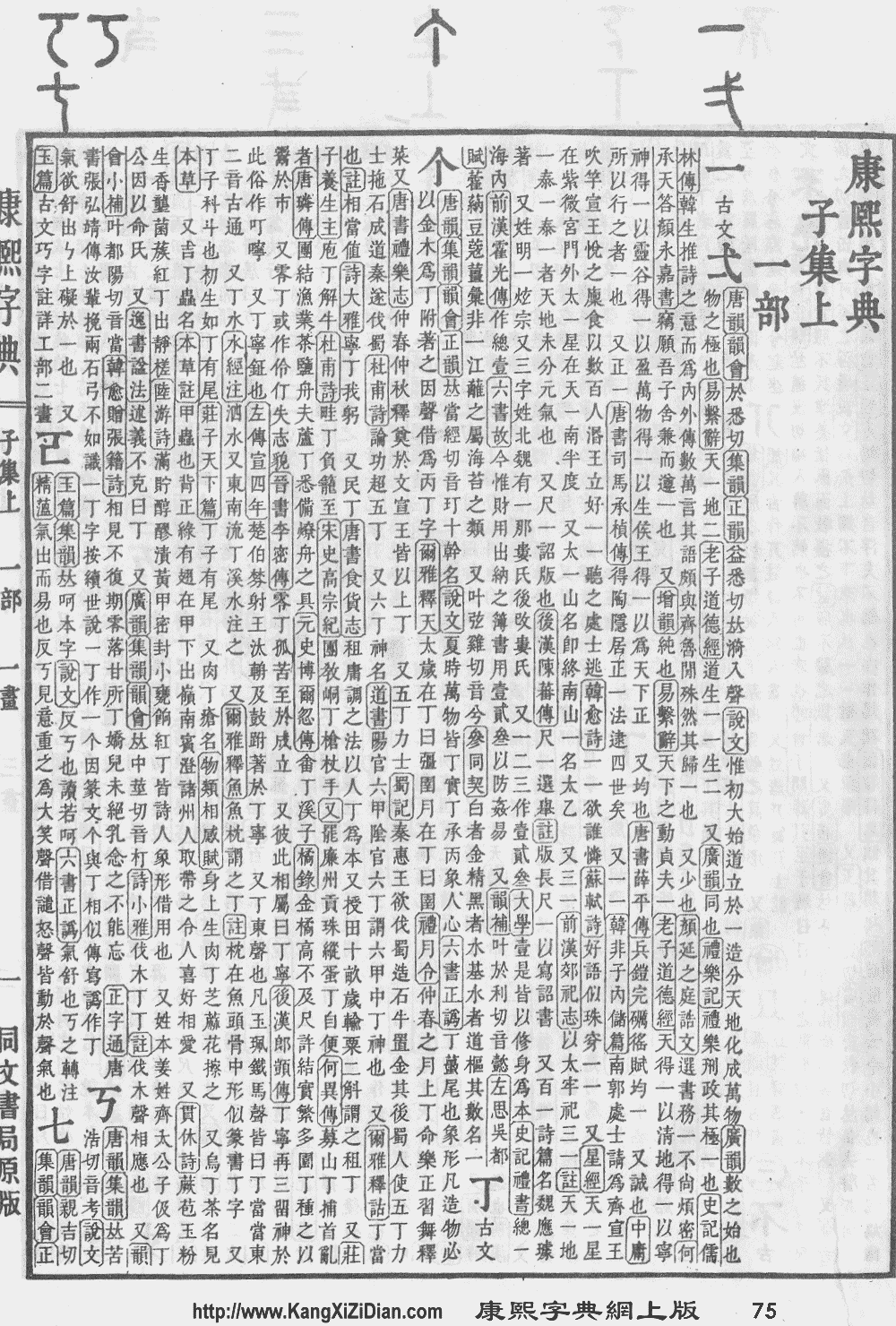
- KangXi: page 75, character 3
- Dai Kanwa Jiten: character 2
- Dae Jaweon: page 135, character 1
- Hanyu Da Zidian: volume 1, page 2, character 5
- Unihan data for U+4E01
Chinese
| simp. and trad. |
丁 | |
|---|---|---|
| alt. forms | 𠆤 | |
Glyph origin
| Historical forms of the character 丁 | |||||||||||||||||||||||||||||||||||||||||||||||||||||||||||||||||||||||||||||||||||||||||||||||||||||||||||||||||||||||||||||||||||||||||||||||||||||||||||||||||||||||||||||||||||||||||||||||||||||
|---|---|---|---|---|---|---|---|---|---|---|---|---|---|---|---|---|---|---|---|---|---|---|---|---|---|---|---|---|---|---|---|---|---|---|---|---|---|---|---|---|---|---|---|---|---|---|---|---|---|---|---|---|---|---|---|---|---|---|---|---|---|---|---|---|---|---|---|---|---|---|---|---|---|---|---|---|---|---|---|---|---|---|---|---|---|---|---|---|---|---|---|---|---|---|---|---|---|---|---|---|---|---|---|---|---|---|---|---|---|---|---|---|---|---|---|---|---|---|---|---|---|---|---|---|---|---|---|---|---|---|---|---|---|---|---|---|---|---|---|---|---|---|---|---|---|---|---|---|---|---|---|---|---|---|---|---|---|---|---|---|---|---|---|---|---|---|---|---|---|---|---|---|---|---|---|---|---|---|---|---|---|---|---|---|---|---|---|---|---|---|---|---|---|---|---|---|---|
| Shang | Western Zhou | Warring States | Shuowen Jiezi (compiled in Han) | Liushutong (compiled in Ming) | |||||||||||||||||||||||||||||||||||||||||||||||||||||||||||||||||||||||||||||||||||||||||||||||||||||||||||||||||||||||||||||||||||||||||||||||||||||||||||||||||||||||||||||||||||||||||||||||||
| Oracle bone script | Bronze inscriptions | Chu Slip and silk script | Small seal script | Transcribed ancient scripts | |||||||||||||||||||||||||||||||||||||||||||||||||||||||||||||||||||||||||||||||||||||||||||||||||||||||||||||||||||||||||||||||||||||||||||||||||||||||||||||||||||||||||||||||||||||||||||||||||
 |
 |
 |
 |
 | |||||||||||||||||||||||||||||||||||||||||||||||||||||||||||||||||||||||||||||||||||||||||||||||||||||||||||||||||||||||||||||||||||||||||||||||||||||||||||||||||||||||||||||||||||||||||||||||||
||||
|
References: Mostly from Richard Sears' Chinese Etymology site (authorisation),
| |||||||||||||||||||||||||||||||||||||||||||||||||||||||||||||||||||||||||||||||||||||||||||||||||||||||||||||||||||||||||||||||||||||||||||||||||||||||||||||||||||||||||||||||||||||||||||||||||||||


| Characters in the same phonetic series (丁) (Zhengzhang, 2003) | |
|---|---|
| Old Chinese | |
| 圢 | *tʰeːnʔ, *tʰeːŋʔ |
| 町 | *tʰeːnʔ, *tʰeːŋ, *tʰeːŋʔ, *deːŋʔ |
| 打 | *rteŋʔ, *teːŋʔ |
| 盯 | *rteŋʔ, *rdeŋ |
| 朾 | *rteːŋ, *rdeːŋ |
| 丁 | *rteːŋ, *teːŋ |
| 玎 | *rteːŋ, *teːŋ |
| 虰 | *rdeːŋ, *tʰeŋ, *teːŋ |
| 揨 | *rdeːŋ |
| 釘 | *teːŋ, *teːŋs |
| 靪 | *teːŋ, *teːŋʔ |
| 仃 | *teːŋ |
| 叮 | *teːŋ |
| 疔 | *teːŋ |
| 頂 | *teːŋʔ |
| 奵 | *teːŋʔ |
| 耵 | *teːŋʔ |
| 酊 | *teːŋʔ |
| 葶 | *teːŋʔ, *deːŋ |
| 矴 | *teːŋs |
| 訂 | *teːŋs, *tʰeːŋ, *deːŋʔ |
| 飣 | *teːŋs |
| 汀 | *tʰeːŋ, *tʰeːŋs |
| 艼 | *tʰeːŋ, *tʰeːŋʔ |
| 庁 | *tʰeːŋ |
| 婷 | *deːŋ |
| 停 | *deːŋ |
| 聤 | *deːŋ |
| 渟 | *deːŋ |
| 楟 | *deːŋ |
| 亭 | *deːŋ |
Pictogram (象形) – a nail. The derivative 釘 is now used to represent this sense.
Etymology 1
Pronunciation
Definitions
丁
- the fourth of the ten heavenly stems
- fourth
- robust, vigorous
- male adult; man
- person; may specifically refer to member of a family
- small cube
- A surname.
Coordinate terms
Compounds
|
|
|
Etymology 2
Pronunciation
Definitions
丁
- Only used in 丁丁 (zhēngzhēng).
Etymology 3
| For pronunciation and definitions of 丁 – see 叮 (“to sting; to bite; to advise; to urge; to repeat what one says to make sure; etc.”). (This character, 丁, is the second-round simplified form of 叮.) |
Notes:
|
Etymology 4
| For pronunciation and definitions of 丁 – see 盯 (“to gaze upon, keep eyes on”). (This character, 丁, is the second-round simplified form of 盯.) |
Notes:
|
Etymology 5
| For pronunciation and definitions of 丁 – see 釘 (“gold slab; nail; etc.”). (This character, 丁, is the second-round simplified form of 釘.) |
Notes:
|
Etymology 6
| For pronunciation and definitions of 丁 – see 靪 (“to cobble, to patch”). (This character, 丁, is the second-round simplified form of 靪.) |
Notes:
|
References
- (Min Nan) “Entry #46”, in 臺灣閩南語常用詞辭典 [Dictionary of Frequently-Used Taiwan Minnan] (in Chinese and Min Nan), Ministry of Education, R.O.C., 2011.
Japanese
Kanji
Readings
- Goon: ちょう (chō, Jōyō)←ちやう (tyau, historical)
- Kan’on: てい (tei, Jōyō)←てい (tei, historical)
- Kun: ひのと (hinoto, 丁)
As in the onomatopoeia 丁丁:
- Goon: ちょう (chō, Jōyō)←ちやう (tyau, historical)
- Kan’on: とう (tō)←たう (tau, historical)
Compounds
Etymology 1
| Kanji in this term |
|---|
| 丁 |
| てい Grade: 3 |
| on’yomi |
From Middle Chinese 丁 (teng)
Pronunciation
Proper noun
丁 (hiragana てい, rōmaji Tei)
- the fourth of the ten Heavenly Stems
Etymology 2
| Kanji in this term |
|---|
| 丁 |
| ひのと Grade: 3 |
| kun’yomi |
火 (Hi, “Fire”, one of the Five Elements) + の (no, attributive marker) + 弟 (oto, “younger brother”)
Pronunciation
Proper noun
丁 (hiragana ひのと, rōmaji Hinoto)
- the fourth of the ten Heavenly Stems
Korean
Hanja
丁 • (jeong)
- This term needs a translation to English. Please help out and add a translation, then remove the text
{{rfdef}}.
References
Vietnamese
Han character
丁
Readings
Compounds
- 丁𡥵 (đứa con), child