下
| ||||||||
Translingual
| Stroke order | |||
|---|---|---|---|
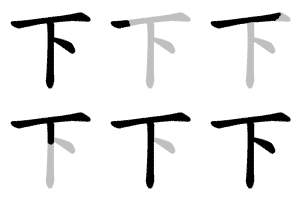 | |||
| Stroke order | |||
|---|---|---|---|
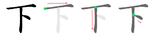 | |||
Han character
下 (radical 1 一+2, 3 strokes, cangjie input 一卜 (MY), four-corner 10230, composition ⿱一卜)
References
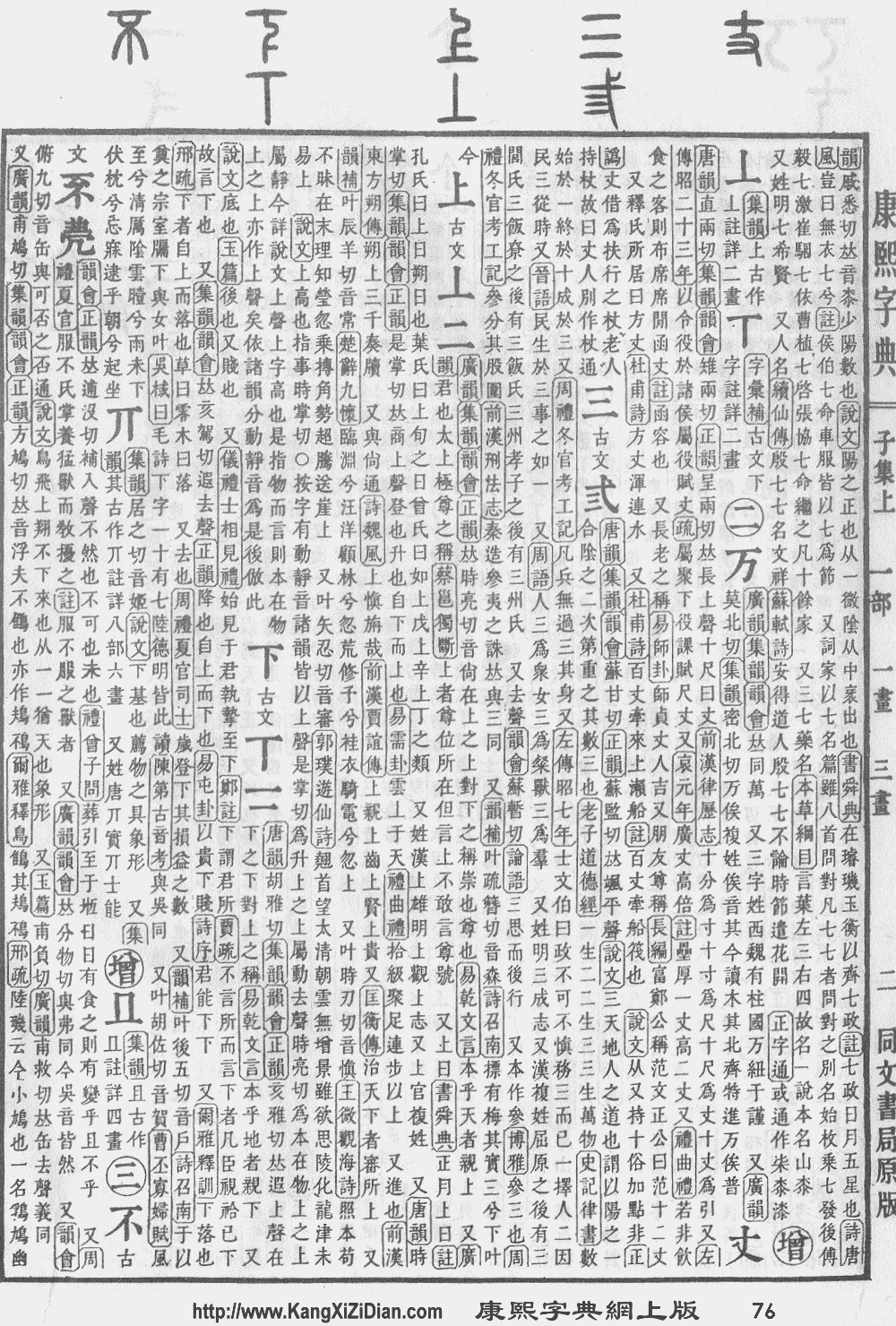
- KangXi: page 76, character 10
- Dai Kanwa Jiten: character 14
- Dae Jaweon: page 147, character 1
- Hanyu Da Zidian: volume 1, page 7, character 1
- Unihan data for U+4E0B
Chinese
| simp. and trad. |
下 | |
|---|---|---|
| alt. forms | 丅 𠄟 | |
Glyph origin
| Historical forms of the character 下 | ||||||||||||||||||||||||||||||||||||||||||||||||||||||
|---|---|---|---|---|---|---|---|---|---|---|---|---|---|---|---|---|---|---|---|---|---|---|---|---|---|---|---|---|---|---|---|---|---|---|---|---|---|---|---|---|---|---|---|---|---|---|---|---|---|---|---|---|---|---|
| Shang | Western Zhou | Spring and Autumn | Warring States | Shuowen Jiezi (compiled in Han) | Liushutong (compiled in Ming) | |||||||||||||||||||||||||||||||||||||||||||||||||
| Oracle bone script | Bronze inscriptions | Bronze inscriptions | Bronze inscriptions | Chu Slip and silk script | Qin slip script | Ancient script | Small seal script | Transcribed ancient scripts | ||||||||||||||||||||||||||||||||||||||||||||||
 |
 |
 |
 |
 |
 |
 |
 |
 | ||||||||||||||||||||||||||||||||||||||||||||||
||||||||
|
References: Mostly from Richard Sears' Chinese Etymology site (authorisation),
| ||||||||||||||||||||||||||||||||||||||||||||||||||||||


| Characters in the same phonetic series (下) (Zhengzhang, 2003) | |
|---|---|
| Old Chinese | |
| 丅 | *ɡraːʔ |
| 下 | *ɡraːʔ, *ɡraːs |
| 芐 | *ɡraːs, *ɡaːʔ |
下 in its shell and bone form is an ideogram (指事) that shows the concept of down by showing one line below another (contrast 上). The shell and bone form evolved into 下, the character used today.
Pronunciation
Definitions
下
- lower part, low position; down
- Antonyms: 上 (shàng)
- under
- 樹下 / 树下 ― shùxià ― under the tree
-
- low
- inferior, poor
- next
- to go down; to get out of
- 走下 ― zǒuxià ― to walk down
- 下床 ― xiàchuáng ― to get out of bed
- to fall down; to rain or snow
- to give; to issue
- to put in
- to begin, to start
- to finish, to complete
- to give birth (as an animal)
- to lay (egg)
- (colloquial) Short for 下載 (“to download”).
- (colloquial) Short for 下線 (“to log out”).
- with, under
- Used after a verb to express height.
- Used after a verb to express space.
- Used after a verb to express the separation of an object.
- Used after a verb to express the end of an action.
- Classifier for the number of actions.
See also
Compounds
|
|
|
Japanese
Kanji
Readings
Compounds
Etymology 1
| Kanji in this term |
|---|
| 下 |
| した Grade: 1 |
| kun’yomi |
Pronunciation
Noun
- the below
Etymology 2
| Kanji in this term |
|---|
| 下 |
| しも Grade: 1 |
| kun’yomi |
Pronunciation
Noun
- lower portion, end
Etymology 3
| Kanji in this term |
|---|
| 下 |
| もと Grade: 1 |
| kun’yomi |
Pronunciation
Noun
- lower portion; base
- under the influence of
Etymology 4
| Kanji in this term |
|---|
| 下 |
| げ Grade: 1 |
| on’yomi |
Pronunciation
Suffix
- under a situation
Noun
References
Korean
Hanja
- This term needs a translation to English. Please help out and add a translation, then remove the text
{{rfdef}}.
References
Okinawan
Etymology
Attested in the 沖縄語典 (Okinawa Goten, “Okinawan Dictionary”) as しちや.[1]
Noun
下 (hiragana しちゃ, romaji shicha)
Derived terms
References
- ↑ 1896: 沖縄語典 (Okinawa Goten, “Okinawan Dictionary”). In Japanese. http://kindai.ndl.go.jp/info:ndljp/pid/992016/46
Vietnamese
Han character
下 (hạ)
下山: to go down a mountain
- To sent:
下令: to command, to sent an order
- Strip off:
下枪: to strip off one's weapon
- To decide:
下藥: to give prescription