位
| ||||||||
Translingual
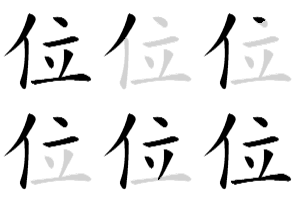
| Stroke order | |||
|---|---|---|---|
 | |||
Han character
位 (radical 9, 人+5, 7 strokes, cangjie input 人卜廿 (OYT), four-corner 20218, composition ⿰亻立)
References
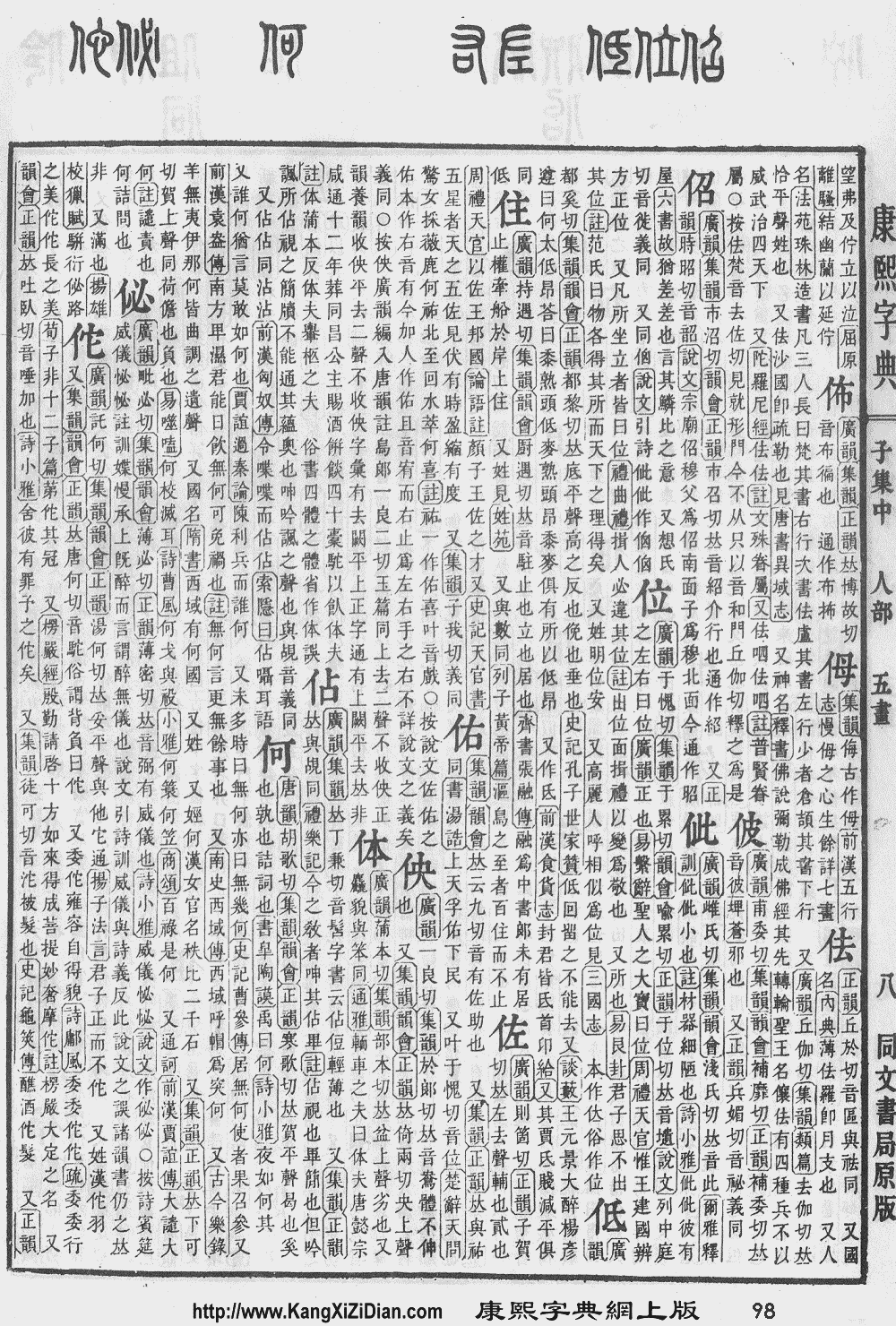
- KangXi: page 98, character 7
- Dai Kanwa Jiten: character 503
- Dae Jaweon: page 206, character 18
- Hanyu Da Zidian: volume 1, page 138, character 3
- Unihan data for U+4F4D
Chinese
| simp. and trad. |
位 | |
|---|---|---|
Glyph origin
| Historical forms of the character 位 | ||||||||||||
|---|---|---|---|---|---|---|---|---|---|---|---|---|
| Shuowen Jiezi (compiled in Han) | ||||||||||||
| Small seal script | ||||||||||||
 | ||||||||||||
|
References: Mostly from Richard Sears' Chinese Etymology site (authorisation),
|


| Characters in the same phonetic series (立) (Zhengzhang, 2003) | |
|---|---|
| Old Chinese | |
| 涖 | *rɯːbs, *rɯbs |
| 莅 | *rɯbs, *rɯbs |
| 蒞 | *rɯbs |
| 位 | *ɢʷrɯbs |
| 拉 | *ruːb |
| 菈 | *ruːb |
| 颯 | *sluːb |
| 立 | *rɯb |
| 粒 | *rɯb |
| 笠 | *ɡ·rɯb |
| 砬 | *rɯb |
| 岦 | *rɯb |
| 苙 | *ɡ·rɯb, *ɡrɯb |
| 鴗 | *rɯb |
| 雴 | *r̥ʰɯb |
| 泣 | *kʰrɯb |
Phono-semantic compound (形聲, OC *ɢʷrɯbs) : semantic 亻 (“man”) + phonetic 立 (OC *rɯb, “stand”). Also ideogrammic compound (會意) .
Etymology
From Proto-Sino-Tibetan *g-r(j)ap (“to stand”). Cognate with 立 (OC *rɯb).
Pronunciation
Definitions
位
Compounds
|
|
|
Japanese
Kanji
Readings
- Goon: い (i, Jōyō)←ゐ (wi, historical)
- Kan’on: い (i, Jōyō)←ゐ (wi, historical)
- Kun: くらい (kurai, 位, Jōyō)←くらゐ (kurawi, historical)
Etymology 1
| Kanji in this term |
|---|
| 位 |
| い Grade: 4 |
| on’yomi |
Pronunciation
Affix
位 (hiragana い, rōmaji i, historical hiragana ゐ)
Derived terms
- 位階 (ikai)
- 位冠 (ikan)
- 位官 (ikan)
- 位記 (iki)
- 位勲 (ikun)
- 位次 (iji)
- 位相 (isō)
- 位置 (ichi)
- 位牌 (ihai)
- 騎乗位 (kijōi, “cowgirl position”)
- 屈曲位 (kukkyokui, “Viennese oyster”)
- 交差位 (kōsai, “a sex position in which both partners' legs are interlocked”)
- 後背位 (kōhaii, “doggy style”)
- 座位 (zai), 坐位 (zai, “seat; posing of sitting; sitting sex position”)
- 伸長位 (shinchōi, “a variation of the missionary position in which a man spreads himself over the woman”)
- 側位 (sokui, “spoons position”)
- 立位 (ritsui, “standing sex position”)
Counter
Etymology 2
| Kanji in this term |
|---|
| 位 |
| くらい Grade: 4 |
| on’yomi |
Compound of 座 (kura, “high place”) + 居 (i, “residence”).[2]
Pronunciation
Noun
位 (hiragana くらい, rōmaji kurai, historical hiragana くらゐ)
Derived terms
- 位する (kurai suru)
- 位倒れ (kuraidaore)
- 位付け (kuraizuke)
- 位取る (kuraidoru)
- 位負 (kuraimake)
Suffix
位 (hiragana くらい, rōmaji -kurai, historical hiragana くらゐ)
References
Korean
Hanja
位 • (wi) (hangeul 위, McCune–Reischauer wi)
- This term needs a translation to English. Please help out and add a translation, then remove the text
{{rfdef}}.
Vietnamese
Han character
- This term needs a translation to English. Please help out and add a translation, then remove the text
{{rfdef}}.
Compounds
- 形位 (“hình vị”)