百
| ||||||||
Translingual
| Stroke order | |||
|---|---|---|---|
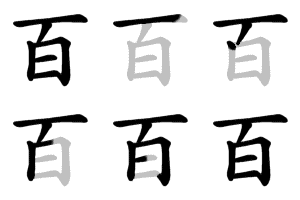 | |||
| Stroke order | |||
|---|---|---|---|
 | |||
Han character
百 (radical 106, 白+1, 6 strokes, cangjie input 一日 (MA), four-corner 10600, composition ⿱一白)
References
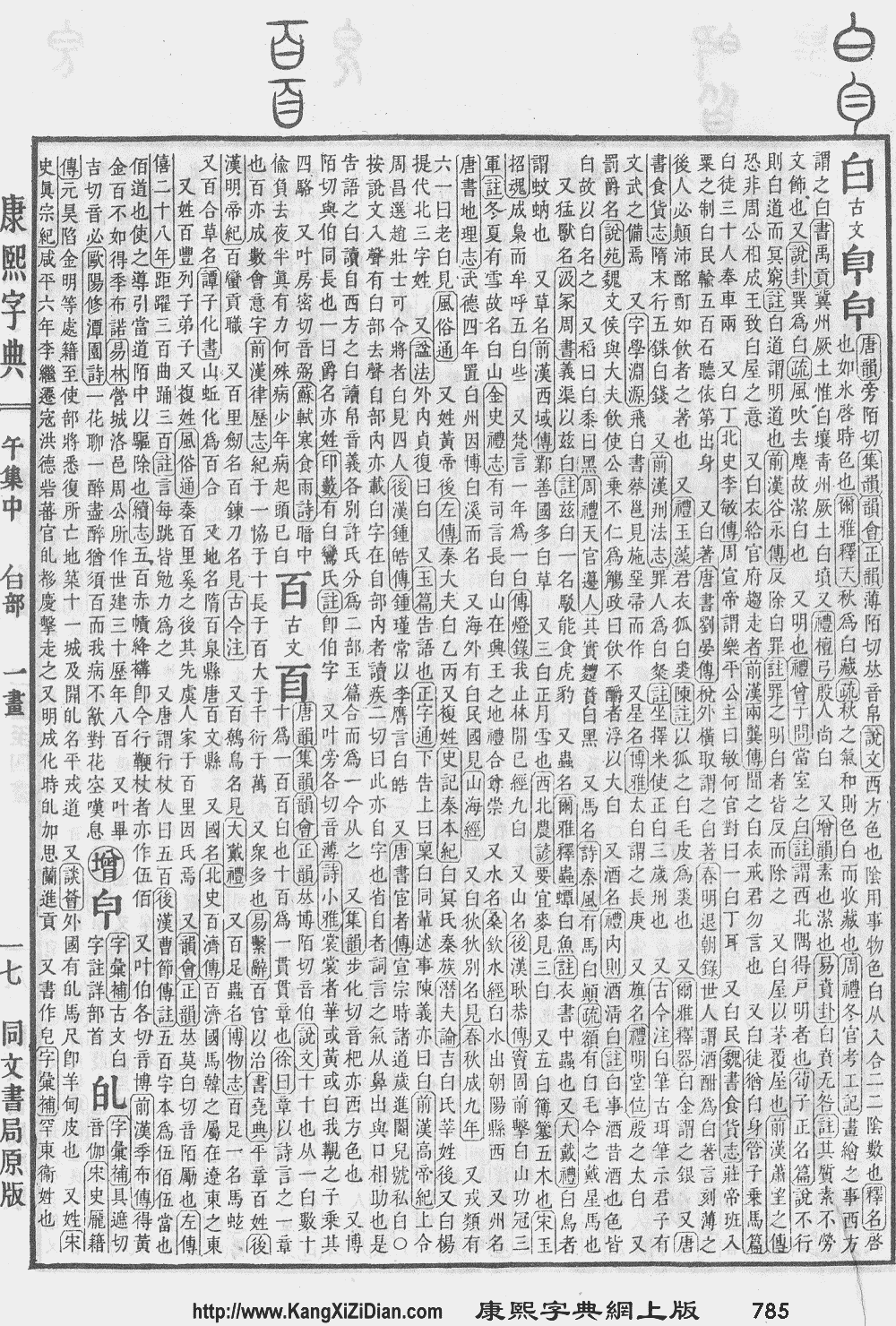
- KangXi: page 785, character 4
- Dai Kanwa Jiten: character 22679
- Dae Jaweon: page 1199, character 1
- Hanyu Da Zidian: volume 4, page 2643, character 1
- Unihan data for U+767E
Chinese
| simp. and trad. |
百 | |
|---|---|---|
| alt. forms | 佰 financial 𦣻 archaic | |
Glyph origin
| Historical forms of the character 百 | |||
|---|---|---|---|
| Shang | Western Zhou | Shuowen Jiezi (compiled in Han) | Liushutong (compiled in Ming) |
| Oracle bone script | Bronze inscriptions | Small seal script | Transcribed ancient scripts |
 |
 |
 |
 |
| Characters in the same phonetic series (白) (Zhengzhang, 2003) | |
|---|---|
| Old Chinese | |
| 怕 | *pʰraːɡs, *pʰraːɡ |
| 帕 | *pʰraːɡs, *mbraːd |
| 粕 | *pʰaːɡ, *pʰraːɡ |
| 胉 | *pʰaːɡ |
| 泊 | *baːɡ |
| 箔 | *baːɡ |
| 魄 | *tʰaːɡ, *pʰraːɡ |
| 皕 | *prɯɡ |
| 伯 | *praːɡ |
| 百 | *praːɡ |
| 迫 | *praːɡ |
| 敀 | *praːɡ, *pʰraːɡ |
| 柏 | *praːɡ |
| 湐 | *praːɡ |
| 拍 | *pʰraːɡ |
| 珀 | *pʰraːɡ |
| 皛 | *pʰraːɡ, *ɡeːwʔ |
| 洦 | *mpʰraːɡ, *mbraːɡ |
| 白 | *braːɡ |
| 帛 | *braːɡ |
| 舶 | *braːɡ |
| 鮊 | *braːɡ |
| 陌 | *mbraːɡ |
| 帞 | *mbraːɡ |
| 袹 | *mbraːɡ |
| 蛨 | *mbraːɡ |
| 貊 | *mbraːɡ |
| 佰 | *mbraːɡ |
| 銆 | *mbraːɡ |
| 碧 | *praɡ, *preɡ |
| 咟 | *ɦmreːɡ |
Phono-semantic compound (形聲, OC *praːɡ) : semantic 一 + phonetic 白 (OC *braːɡ).
Etymology
From Proto-Sino-Tibetan *b-r-gja.
Pronunciation
Definitions
百
- hundred
- numerous; countless
- every; all
- entirely; completely; at all
- A surname. Bai (mainland China, Taiwan), Baak, Bak (Hong Kong)
See also
| Chinese numbers | ||||||||||||||||
|---|---|---|---|---|---|---|---|---|---|---|---|---|---|---|---|---|
| 0 | 1 | 2 | 3 | 4 | 5 | 6 | 7 | 8 | 9 | 10 | 102 | 103 | 104 | 108 | 1012 | |
| Normal (小寫/小写) |
〇 | 一 | 二 | 三 | 四 | 五 | 六 | 七 | 八 | 九 | 十 | 百 | 千 | 萬/万 | 億/亿 | 兆 (Taiwan) 萬億/万亿 (Mainland China) |
| Financial (大寫/大写) |
零 | 壹 | 貳/贰 | 參/叁 | 肆 | 伍 | 陸/陆 | 柒 | 捌 | 玖 | 拾 | 佰 | 仟 | |||
Compounds
|
|
|
Descendants
Others:
- → Lao: ປາກ (pāk, “hundred”)
- → Shan: ပၢၵ်ႇ (ပၢၵ်ႇ, “hundred”)
Japanese
Kanji
Readings
Etymology 1
| Kanji in this term |
|---|
| 百 |
| ひゃく Grade: 1 |
| on’yomi |
Borrowed from Middle Chinese 百 (pˠæk, “hundred”).
Pronunciation
Noun
百 (hiragana ひゃく, rōmaji hyaku)
Usage notes
This is the most common term for hundred in modern Japanese.
Idioms
Derived terms
- 百科全書 (hyakka zensho): an encyclopedia
- 百千 (hyakusen): a large number, all sorts, hundreds and thousands
Etymology 2
| Kanji in this term |
|---|
| 百 |
| もも Grade: 1 |
| kun’yomi |
/mo1mo1/ invalid IPA characters (11) → /momo/
From Old Japanese.
Pronunciation
Noun
Usage notes
While ho or o is only used in compounds, momo can be used on its own.[2]
Archaic. Generally only found in set phrases or compounds.
Derived terms
- 百日 (momoka): hundredth day
- 百声鳥 (momokoedori): the Cuculus poliocephalus or lesser cuckoo
- 百舌 (mozu): the shrike
- 百千 (momochi): a large number, all sorts, hundreds and thousands
- 百千鳥 (momochidori): all sorts of birds, hundreds and thousands of birds; a plover; a Japanese bush warbler
- 百年 (momotose): hundred years, century, a long time
- 百夜 (momoyo): a hundred nights
Etymology 3
| Kanji in this term |
|---|
| 百 |
| ほ Grade: 1 |
| kun’yomi |
/po/ → /ɸo/ → /ho/
From Old Japanese.
Pronunciation
Noun
Usage notes
While momo can be used on its own, ho is only used in compounds, where it has lost the initial consonant and appears instead as o (see below). Generally only used in reference to multiple hundreds of things, as in terms 五百 (io, “five hundred; a very many”) or 八百 (yao, “eight hundred; a very many”).[2]
Obsolete. Superseded by o (see below).
Etymology 4
| Kanji in this term |
|---|
| 百 |
| お Grade: 1 |
| kun’yomi |
/po/ → /ɸo/ → /ho/ → /o/
From Old Japanese. Change in pronunciation from ho (see above).[2]
Pronunciation
Noun
百 (hiragana お, rōmaji o, historical hiragana ほ)
Usage notes
While momo can be used on its own, o is only used in compounds. This o was originally pronounced ho (see above). Generally only used in reference to multiple hundreds of things, as in terms 五百 (io, “five hundred; a very many”) or 八百 (yao, “eight hundred; a very many”).[2]
Archaic. Generally only found in set phrases and compounds.
Derived terms
References
Korean
Hanja
百 • (baek, maek)
- hundred.
Vietnamese
Han character
- This term needs a translation to English. Please help out and add a translation, then remove the text
{{rfdef}}.