太
| ||||||||
Translingual
| Stroke order | |||
|---|---|---|---|
 | |||
| Stroke order | |||
|---|---|---|---|
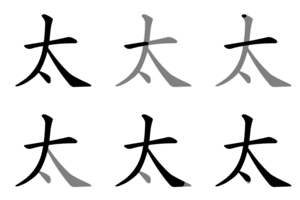 | |||
Han character
太 (radical 37, 大+1, 4 strokes, cangjie input 大戈 (KI), four-corner 40030, composition ⿵大丶)
Derived characters
Descendants
References
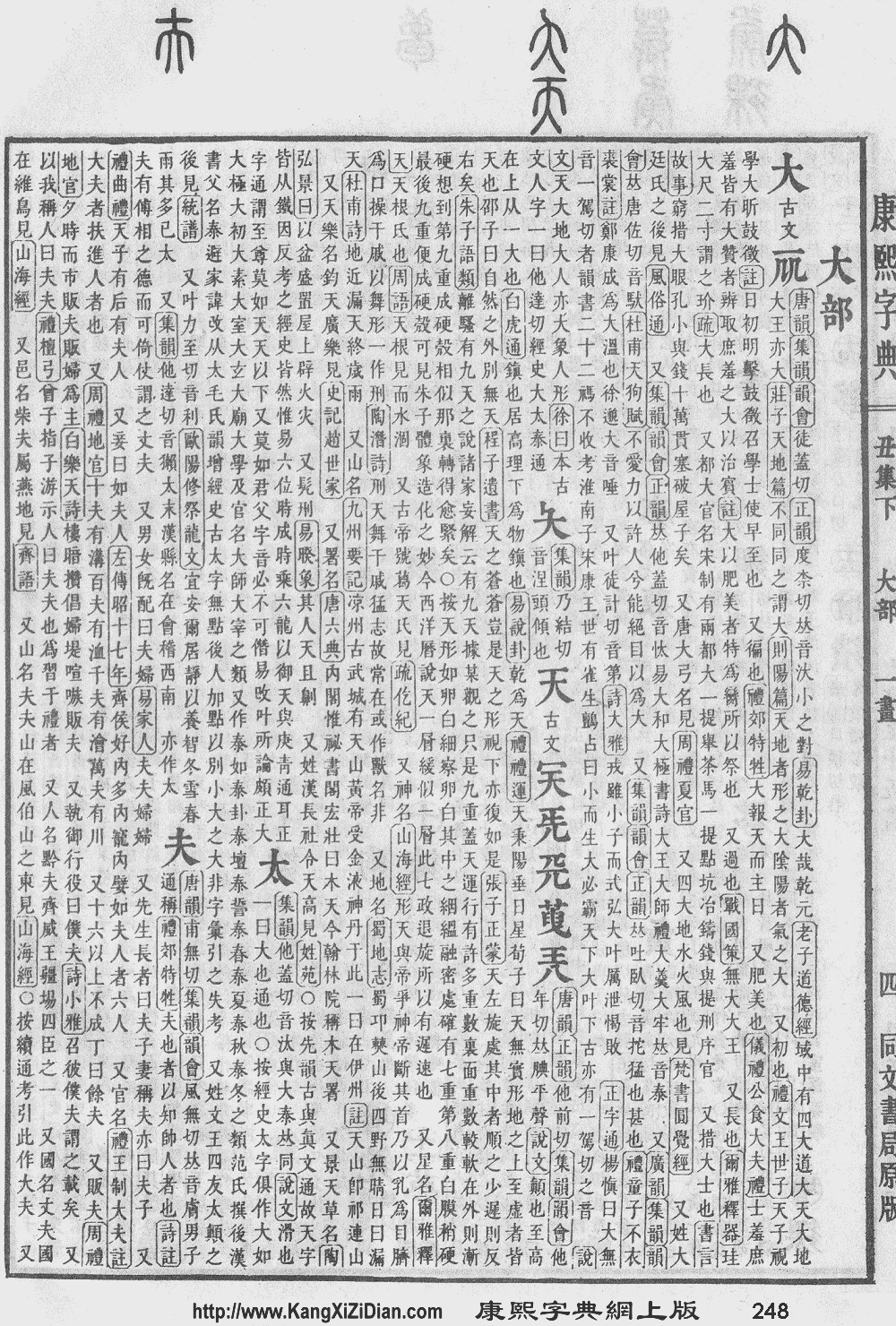
- KangXi: page 248, character 10
- Dai Kanwa Jiten: character 5834
- Dae Jaweon: page 505, character 1
- Hanyu Da Zidian: volume 1, page 524, character 1
- Unihan data for U+592A
Chinese
| simp. and trad. |
太 | |
|---|---|---|
Glyph origin
| Characters in the same phonetic series (大) (Zhengzhang, 2003) | |
|---|---|
| Old Chinese | |
| 馱 | *daːl, *daːds |
| 大 | *daːds, *daːds |
| 忕 | *tʰaːds, *daːds, *djads |
| 太 | *tʰaːds |
| 汰 | *tʰaːds |
| 汏 | *daːds, *tʰaːd |
| 軑 | *daːds, *deːds |
| 釱 | *daːds, *deːds |
| 达 | *tʰeːds |
| 杕 | *deːds |
Phono-semantic compound (形聲, OC *tʰaːds) : phonetic 大 (OC *daːds, *daːds, “big; great”) + semantic 丶 – excessive.
Etymology 1
A superlative derivative of 大 (OC *daːds, *daːds, “big”) – be too great, very great, excessive.
Pronunciation
Definitions
太
- too; so (modifying adjectives; often used with 了 (le) at the end of the sentence for emphasis)
- (usually in negative sentences) very; quite
- most; utmost
- highest; greatest
- senior; noble
- wife; Miss; Mrs
- Short for 太湖 (Tàihú, “Lake Tai, a lake in Southern Jiangsu, China”).
- Short for 太平洋 (Tàipíngyáng, “Pacific Ocean”).
See also
- 很 (hěn)
- (too):
| Dialectal synonyms of 太 (“too; excessively”) [map] | ||
|---|---|---|
| Variety | Location | Words |
| Formal (Written Standard Chinese) | 太 | |
| Mandarin | Beijing | 太、忒 |
| Taiwan | 太 | |
| Tianjin | 太、忒 | |
| Jinan | 太、忒 | |
| Xi'an | 太 | |
| Wuhan | 太、忒 | |
| Chengdu | 太 | |
| Yangzhou | 太 | |
| Hefei | 太 | |
| Cantonese | Guangzhou | 太、得滯 |
| Hong Kong | 太、得滯 | |
| Taishan | 得滯 | |
| Yangjiang | 得滯 | |
| Gan | Nanchang | 太 |
| Hakka | Meixian | 忒 |
| Miaoli (N. Sixian) | 忒 | |
| Liudui (S. Sixian) | 忒 | |
| Hsinchu (Hailu) | 忒 | |
| Dongshi (Dabu) | 忒 | |
| Zhuolan (Raoping) | 忒 | |
| Yunlin (Zhao'an) | 忒 | |
| Jin | Taiyuan | 太 |
| Min Bei | Jian'ou | 太 |
| Min Dong | Fuzhou | 過、恰 |
| Min Nan | Xiamen | 傷 |
| Quanzhou | 傷 | |
| Zhangzhou | 傷 | |
| Taipei | 傷 | |
| Kaohsiung | 傷 | |
| Tainan | 傷 | |
| Taichung | 傷 | |
| Hsinchu | 傷 | |
| Lukang | 傷 | |
| Sanxia | 傷 | |
| Yilan | 傷 | |
| Kinmen | 傷 | |
| Magong | 傷 | |
| Penang | 傷、太 | |
| Chaozhou | 佮 | |
| Shantou | 佮 | |
| Wu | Suzhou | 忒 |
| Wenzhou | 忒 | |
| Xiang | Changsha | 太 |
| Shuangfeng | 太、忒 | |
Compounds
|
|
|
Etymology 2
| For pronunciation and definitions of 太 – see 泰 (“big; large; great; extensive; etc.”). (This character, 太, is the second-round simplified form of 泰.) |
Notes:
|
Japanese
Kanji
- (adjective): fat
Readings
Compounds
Etymology 1
Pronunciation
Noun
Derived terms
Synonyms
- (fat person): でぶ (debu)
- (shamisen): 太棹 (futozao)
- (thread): 太糸 (futoito)
Prefix
太 (hiragana ふと, rōmaji futo-)
- added to words describing gods or the emperor or other exalted subjects to denote greatness or excellence
- c. 759, Man'yōshū (book 17, poem 4031); text here
- 奈加等美乃 敷刀能里⟨等其⟩等 伊比波良倍 安⟨賀⟩布伊能知毛 多我多米尓奈礼
- 中臣の 太祝詞言 言ひ祓へ 贖ふ命も 誰がために汝れ
- なかとみの ふとのりとごと いひはらへ あかふいのちも たがためになれ
- Nakatomi no / futonoritogoto / iiharae / akau inochi mo / ta ga tame ni nare
- Reciting the Nakatomi's excellent ritual offering, whose [long] life was prayed for? Yours.
- 奈加等美乃 敷刀能里⟨等其⟩等 伊比波良倍 安⟨賀⟩布伊能知毛 多我多米尓奈礼
- c. 759, Man'yōshū (book 17, poem 4031); text here
- added to regular nouns to denote fatness or thickness
- 太腿、太箸
- futo-momo, futo-bashi
- the thigh (the thick part of the leg), fat chopsticks (used at New Years)
- 太腿、太箸
Derived terms
Etymology 2
The Old Japanese 終止形 (shūshikei, “terminal (sentence-final) form”) of adjective 太い (futoi, “fat, thick, big”).[2]
Pronunciation
Proper noun
太 (hiragana ふとし, rōmaji Futoshi)
- A male given name.
Etymology 3
Derived from the root word 大 (ō, “great, big”).
Pronunciation
Proper noun
太 (hiragana おお, rōmaji Ō, historical hiragana おほ)
- A surname.
Etymology 4
From Middle Chinese 太 (thajH). Compare modern Mandarin 太 (tài).
Pronunciation
Prefix
太 (hiragana たい, rōmaji tai-)
Usage notes
- Only found in compounds.
Derived terms
Etymology 5
From a colloquial form of 太 in Middle Chinese. Compare the similar corruption in Mandarin 大 (dà).
Pronunciation
- Kan’yōyomi
- IPA(key): [ta̠i]
Prefix
Usage notes
Only found in compounds.
Derived terms
- 太刀 (tachi): a Japanese longsword
- 太郎 (Tarō): a male given name
References
Korean
Hanja
太 • (tae)
- Eumhun:
- Sound (hangeul): 태 (revised: tae, McCune–Reischauer: t'ae)
- Name (hangeul): 클 (revised: keul, McCune–Reischauer: k'ul)
- This term needs a translation to English. Please help out and add a translation, then remove the text
{{rfdef}}.
Vietnamese
Han character
太 (thái)
- This term needs a translation to English. Please help out and add a translation, then remove the text
{{rfdef}}.