系
| ||||||||
Translingual
| Stroke order | |||
|---|---|---|---|
 | |||
| Japanese | 系 係 繋 |
|---|---|
| Simplified | 系 系 系 |
| Traditional | 系 係 繫 |
Han character
系 (radical 120, 糸+1, 7 strokes, cangjie input 竹女戈火 (HVIF), four-corner 20903, composition ⿱丿糸)
Usage notes
In Chinese, this character both exists as a traditional character and as simplification of 係 and 繫. In Japanese, 系 and 係 are seperate characters, while 繫 is inofficially simplified as 繋 (extended shinjitai).
References
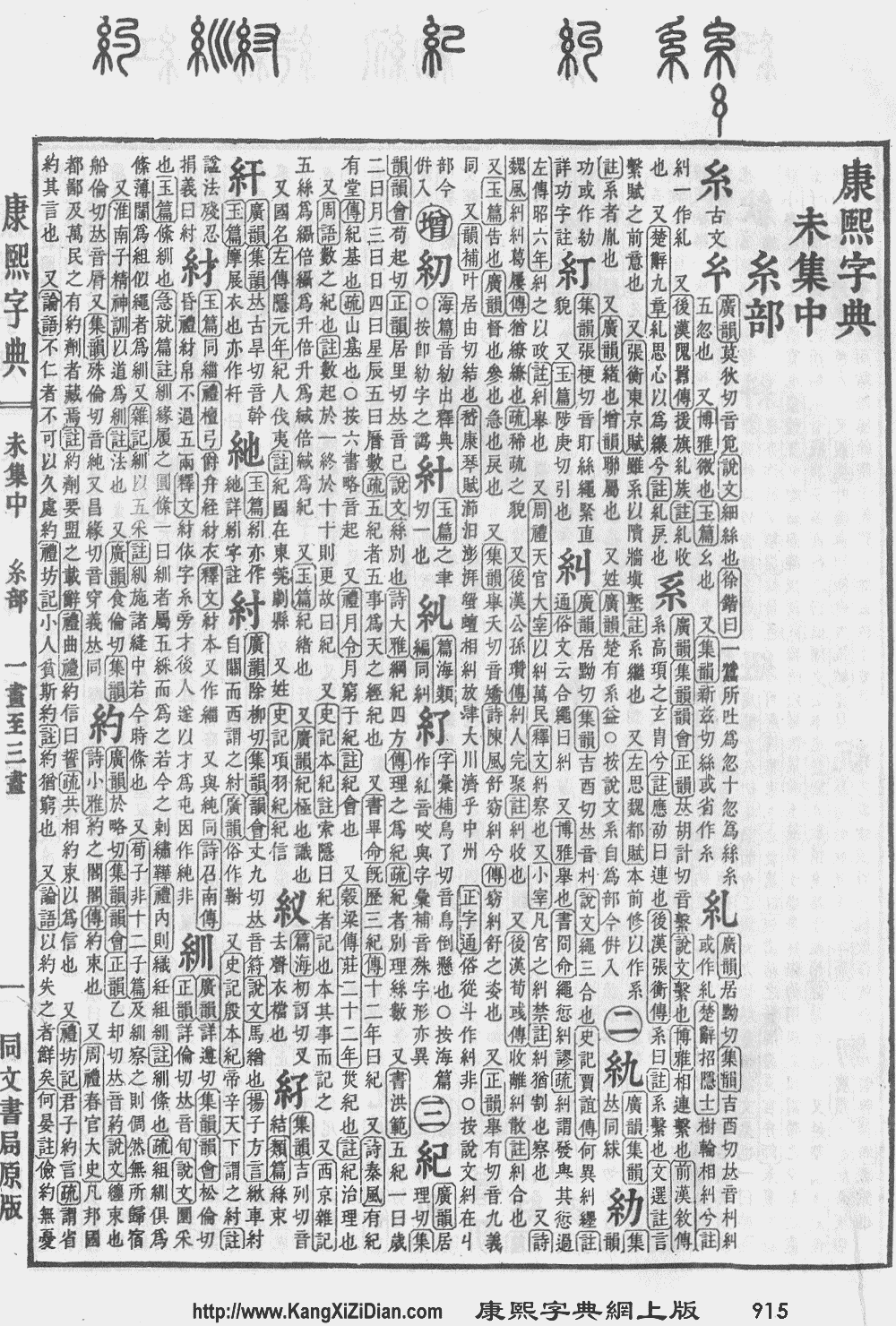
- KangXi: page 915, character 4
- Dai Kanwa Jiten: character 27223
- Dae Jaweon: page 1342, character 3
- Hanyu Da Zidian: volume 5, page 3361, character 2
- Unihan data for U+7CFB
Chinese
Glyph origin
| Characters in the same phonetic series (系) (Zhengzhang, 2003) | |
|---|---|
| Old Chinese | |
| 係 | *keːɡs |
| 系 | *ɡeːɡs |
Exists as a traditional character, with simplified forms:
Etymology 1
| simp. and trad. |
系 | |
|---|---|---|
Pronunciation
Definitions
系
Compounds
Derived terms from 系
|
|
|
Etymology 2
| For pronunciation and definitions of 系 – see 繫 (“to tie, to fasten, to button up; to connect; to link; etc.”). (This character, 系, is the simplified form of 繫.) |
Notes:
|
Etymology 3
| For pronunciation and definitions of 系 – see 係 (“to relate; to bear on; to be; etc.”). (This character, 系, is the simplified form of 係.) |
Notes:
|
Japanese
Kanji
系
Readings
Compounds
Suffix
Korean
Hanja
系 • (gye) (hangeul 계, McCune–Reischauer kye, Yale kyey)
- This term needs a translation to English. Please help out and add a translation, then remove the text
{{rfdef}}.
Vietnamese
Han character
- Hán Việt: hệ
- This term needs a translation to English. Please help out and add a translation, then remove the text
{{rfdef}}.
References
This article is issued from
Wiktionary.
The text is licensed under Creative Commons - Attribution - Sharealike.
Additional terms may apply for the media files.