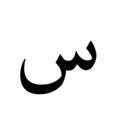
Etymology 1
From Nabataean 𐢝 (š), from Syriac ܫ (š), from Aramaic ש (š), from Imperial Aramaic 𐡔 (š), from the Egyptian 𓌓.
Indeed this letter stood for /ʃ/ in Aramaic and one must ask why 𐢖 from ܣ from ס from 𐡎 from 𓊽 has been lost in the Arabic alphabet.
One must mind the three Proto-Semitic sibilants: ś, š, s. In Arabic the first gave /ʃ/, the second and third merged to /s/. In Old Aramaic all were preserved but the the orthography represented s by 𐢖 / ס / 𐡎 but used 𐢝 / ש / 𐡔 for both ś and š, and this orthography persisted even when by the time of the Nabataeans ś had merged to sound as /s/ as s always did.
So when a scribe wanted to write the Arabic sound /ʃ/ from ś, he did so by using 𐢝 / س to stick to a letter form that looks the same in the cognate Aramaic words. But when he wanted to write an Arabic sound /s/ from Proto-Semitic š, he would have defied the Aramaic spelling for this Proto-Semitic phoneme had he written 𐢖 / ס / 𐡎, whereas Arabic-Aramaic word pairs with the Proto-Semitic s are rare. So the impression was that 𐢝 / ש / 𐡔 / س is the most typical sign to write /s/.
Pronunciation
- (letter name): IPA(key): /siːn/
- (phoneme): IPA(key): /s/
Letter
س / س / س / س • (sīn)
- The twelfth letter of the Arabic alphabet. It is preceded by ز (z) and followed by ش (š).
- X, unknown variable.
Symbol
س / س / س / س • (sīn)
- The fifteenth letter in traditional abjad order, which is used in place of numerals for list numbering (abjad numerals). It is preceded by ن (n) and followed by ع (ʿ).
See also
- (Arabic script letters) ا (ā), ب (b), ت (t), ث (ṯ), ج (j), ح (ḥ), خ (ḵ), د (d), ذ (ḏ), ر (r), ز (z), س (s), ش (š), ص (ṣ), ض (ḍ), ط (ṭ), ظ (ẓ), ع (ʿ), غ (ḡ), ف (f), ق (q), ك (k), ل (l), م (m), ن (n), ه (h), و (w), ي (y)
- Wikipedia article on the Arabic alphabet
- Search en.wiktionary.org for articles beginning with: س
References
- Diem, Werner (1980), “Untersuchungen zur frühen Geschichte der arabischen Orthographie: II. Die Schreibung der Konsonanten”, in Orientalia, volume 49, issue 1, DOI:10.2307/43075525, pages 77–81