事
| ||||||||
Translingual
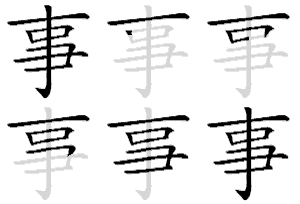
| Stroke order | |||
|---|---|---|---|
 | |||
Han character
事 (radical 6, 亅+7, 8 strokes, cangjie input 十中中弓 (JLLN), four-corner 50007, composition ⿻亅⿳一口⺕)
References
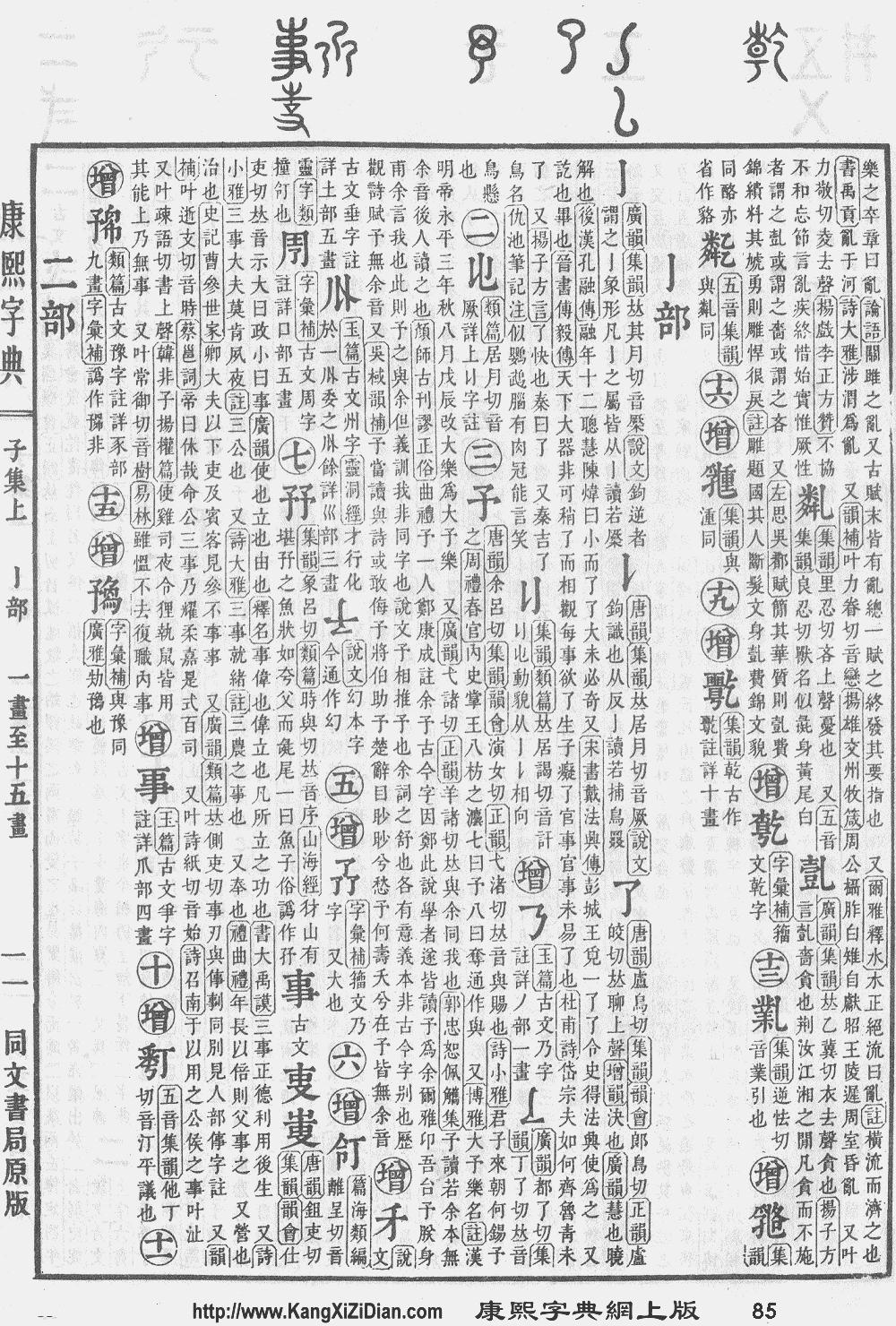
- KangXi: page 85, character 24
- Dai Kanwa Jiten: character 241
- Dae Jaweon: page 174, character 15
- Hanyu Da Zidian: volume 1, page 23, character 3
- Unihan data for U+4E8B
Chinese
| simp. and trad. |
事 | |
|---|---|---|
| alt. forms | 亊 𠭆 | |
Glyph origin
| Historical forms of the character 事 | |||||||||||||||||||||||||||||||||||||||||||||||||||||||||||||||||||||||||||||||||||||||||||||||||||||||||||||||||||||||||||||||||||||||||||||||||||||||||||||||||||||||||||||||||||||||||||||||||||
|---|---|---|---|---|---|---|---|---|---|---|---|---|---|---|---|---|---|---|---|---|---|---|---|---|---|---|---|---|---|---|---|---|---|---|---|---|---|---|---|---|---|---|---|---|---|---|---|---|---|---|---|---|---|---|---|---|---|---|---|---|---|---|---|---|---|---|---|---|---|---|---|---|---|---|---|---|---|---|---|---|---|---|---|---|---|---|---|---|---|---|---|---|---|---|---|---|---|---|---|---|---|---|---|---|---|---|---|---|---|---|---|---|---|---|---|---|---|---|---|---|---|---|---|---|---|---|---|---|---|---|---|---|---|---|---|---|---|---|---|---|---|---|---|---|---|---|---|---|---|---|---|---|---|---|---|---|---|---|---|---|---|---|---|---|---|---|---|---|---|---|---|---|---|---|---|---|---|---|---|---|---|---|---|---|---|---|---|---|---|---|---|---|---|---|---|
| Shang | Western Zhou | Shuowen Jiezi (compiled in Han) | Liushutong (compiled in Ming) | ||||||||||||||||||||||||||||||||||||||||||||||||||||||||||||||||||||||||||||||||||||||||||||||||||||||||||||||||||||||||||||||||||||||||||||||||||||||||||||||||||||||||||||||||||||||||||||||||
| Oracle bone script | Bronze inscriptions | Small seal script | Transcribed ancient scripts | ||||||||||||||||||||||||||||||||||||||||||||||||||||||||||||||||||||||||||||||||||||||||||||||||||||||||||||||||||||||||||||||||||||||||||||||||||||||||||||||||||||||||||||||||||||||||||||||||
 |
 |
 |
 | ||||||||||||||||||||||||||||||||||||||||||||||||||||||||||||||||||||||||||||||||||||||||||||||||||||||||||||||||||||||||||||||||||||||||||||||||||||||||||||||||||||||||||||||||||||||||||||||||
|||
|
References: Mostly from Richard Sears' Chinese Etymology site (authorisation),
| |||||||||||||||||||||||||||||||||||||||||||||||||||||||||||||||||||||||||||||||||||||||||||||||||||||||||||||||||||||||||||||||||||||||||||||||||||||||||||||||||||||||||||||||||||||||||||||||||||


| Characters in the same phonetic series (史) (Zhengzhang, 2003) | |
|---|---|
| Old Chinese | |
| 吏 | *rɯs |
| 倳 | *ʔsrɯs |
| 剚 | *ʔsrɯs |
| 事 | *ʔsrɯs, *zrɯs |
| 史 | *srɯʔ |
| 使 | *srɯʔ, *srɯs |
| 駛 | *srɯʔ, *srɯs |
Ideogrammic compound (會意) : 又 (“hand”) + 中 (“flag or hunting weapon”) – flag or hunting weapon in hand > to perform one's job. Compare 史, 吏.
Etymology
Exopassive of 士 (OC *zrɯʔ, “to give or carry out an assignment; to serve”), literally “what has been assigned” (Schuessler, 2007).
Pronunciation 1
Definitions
事
- thing; matter (Classifier: 件 m c; 樁/桩 m)
- 耶和華神對女人說,你作的是什麼事呢?女人說,那蛇引誘我,我就吃了。 [MSC, trad.]
- From: 新標點和合本 (Chinese Union Version with New Punctuation), 創世記 (Genesis) 2:7
- Yēhéhuá shén duì nǚrén shuō, nǐ zuò de shì shénme shì ne? Nǚrén shuō, nà shé yǐnyòu wǒ, wǒ jiù chī le. [Pinyin]
- And the Lord God said unto the woman, What is this that thou hast done? And the woman said, The serpent beguiled me, and I did eat.
耶和华神对女人说,你作的是什么事呢?女人说,那蛇引诱我,我就吃了。 [MSC, simp.]- 今日我們傳你來,有遵旨問你的事。 [Written Vernacular Chinese, trad.]
- From: Cao Xueqin, Dream of the Red Chamber, mid-18th century CE
- Jīnrì wǒmen chuán nǐ lái, yǒu zūnzhǐ wèn nǐ de shì. [Pinyin]
- We called you here today, because we'd like to follow the emperor's order and ask you some questions.
今日我们传你来,有遵旨问你的事。 [Written Vernacular Chinese, simp.]
- task; work; job; career
- 茅盾的一個親戚,想到我在教書的教會學校裡來找事做了。 [MSC, trad.]
- From: 1935 April, 魏金枝, 《再說“賣文”》, in 《文飯小品》, issue 3
- Máo Dùn de yīge qīnqī, xiǎng dào wǒ zài jiāoshū de jiàohuì xuéxiào lǐ lái zhǎo shì zuò le. [Pinyin]
- A relative of Mao Dun would like to find work in the Catholic school that I teach at.
茅盾的一个亲戚,想到我在教书的教会学校里来找事做了。 [MSC, simp.]
- misfortune; mishap; accident; incident
- (dialectal Hakka, Min Bei) speech; words; language
- to serve; to attend to someone
- 李嶠,字巨山,趙州贊皇人。早孤,事母孝。 [Classical Chinese, trad.]
- From: The New Book of Tang, 1060CE (Song dynasty)
- Lǐ Qiáo, zì Jùshān, Zhàozhōu Zànhuáng rén. Zǎo gū, shì mǔ xiào. [Pinyin]
- Li Qiao, courtesy name Jushan, was a native of Zanhuang, Zhaozhou. His father died when he was young, and he served his mother with filial piety.
李峤,字巨山,赵州赞皇人。早孤,事母孝。 [Classical Chinese, simp.]
- (Beijing Mandarin, erhua-ed) fussy; pernickety; troublesome
- 27th tetragram of the Taixuanjing; "duties"
Compounds
|
|
|
Pronunciation 2
Definitions
事
Japanese
Kanji
Readings
- Goon: じ (ji, Jōyō)
- Kan’on: し (shi)
- Kan’yōon: ず (zu, Jōyō, uncommon)
- Kun: こと (koto, 事, Jōyō); つかう (tsukau, 事う)←つかふ (tukafu, historical); つかえる (tsukaeru, 事える)←つかへる (tukaferu, historical)
- Nanori: ろ (ro)
As an alternative form of 倳 and 剚:
Compounds
- 事案 (じあん, jian): a concern
- 事宜 (じぎ, jigi): a fitting thing
- 事業 (じぎょう, jigyō): a project, an enterprise
- 事局 (じきょく, jikyoku): circumstances
- 事件 (じけん, jiken): an event, an affair
- 事故 (じこ, jiko): an accident, an incident
- 事後 (じご, jigo): after-, post-, after the fact
- 事項 (じこう, jikō): matters, articles
- 事実 (じじつ, jijitsu): a fact, the truth, actuality
- 事々物々, 事事物物 (じじぶつぶつ, jijibutsubutsu): everything
- 事象 (じしょう, jishō): an event, a phenomenon
- 事情 (じじょう, jijō): circumstances, consideration
- 事績 (じせき, jiseki): an achievement, an exploit
- 事迹, 事跡, 事蹟 (じせき, jiseki): evidence, trace
- 事前 (じぜん, jizen): prior, beforehand
- 事相 (じそう, jisō): an aspect, a phase
- 事態, 事体 (じたい, jitai): a situation, a state of affairs
- 事大 (じだい, jidai): subservient to the stronger
- 事典 (じてん, jiten): an encyclopedia
- 事犯 (じはん, jihan): a crime
- 事物 (じぶつ, jibutsu): things, affairs
- 事変 (じへん, jihen): an accident, a disaster
- 事務 (じむ, jimu): business, clerical work
- 事務室 (じむしつ, jimushitsu): an office
- 事由 (じゆう, jiyū): a reason, a cause
- 事理 (じり, jiri): a reason, facts
- 事例 (じれい, jirei): an example, a precedent
- 火事 (かじ, kaji): a fire (as in a house burning down)
- 家事 (かじ, kaji): household affairs
- 幹事 (かんじ, kanji): a manager, an organizer
- 記事 (きじ, kiji): a news article, a news story
- 軍事 (ぐんじ, gunji): military affairs
- 刑事 (けいじ, keiji): a police detective
- 工事 (こうじ, kōji): construction
- 食事 (しょくじ, shokuji): a meal
- 人事 (じんじ, jinji): personnel, human resources (as in a company department)
- 知事 (ちじ, chiji): a prefectural governor
- 判事 (はんじ, hanji): a judge
- 人事 (ひとごと, hitogoto): other people's affairs, other people's business
- 無事 (ぶじ, buji): safety, peace
- 返事 (へんじ, henji): an answer, a reply
- 房事 (ぼうじ, bōji): sex, lovemaking
- 物事 (ものごと, monogoto): things, everything
- 用事 (ようじ, yōji): things to do
- 理事 (りじ, riji): a director, a trustee
- 領事 (りょうじ, ryōji): a consul
- 事新しい (ことあたらしい, koto atarashii): new
- 事誤り (ことあやまり, koto ayamari): getting one's facts wrong
- 事改めて (ことあらためて, koto aratamete): anew
- 事欠く (ことかく, kotokaku): to lack something
- 事柄 (ことがら, kotogara): a matter, a thing
- 事切れる (こときれる, koto kireru): to expire, to die
- 事々, 事事 (ことごと, kotogoto): everything
- 事々しい, 事事しい (ことごとしい, kotogotoshii): bombastic
- 事細か (ことこまか, koto komaka): detailed
- 事立てる (ことだてる, kotodateru): to do something different
- 事足りる (ことたりる, koto tariru): to suffice, to be sufficient
- 事足る (ことたる, koto taru): to suffice, to be enough
- 事共 (ことども, kotodomo): things, matters
- 事無し (ことなし, koto nashi): having nothing to do; light-hearted; having no faults
- 事勿れ (ことなかれ, koto nakare): a desire for peacefulness and nothing out of the ordinary
- 事勿れ主義 (ことなかれしゅぎ, koto nakare shugi): peace-at-any-price-ism, don't-rock-the-boat-ism, the principle of acceding to anything to avoid trouble
- 事無く (ことなく, koto naku): without accident, without incident, without a hitch
- 事珍しく (ことめずらしく, koto mezurashiku): strangely, oddly
anything to avoid trouble
- 事寄せる, 言寄せる (ことよせる, koto yoseru): to use something as an excuse or pretext
- 事寄る (ことよる, koto yoru): to have facts or events wind up pointing one way
Etymology
From Old Japanese. Cognate with 言 (koto, “word”). Possibly cognate with Korean 것 (geot).
Pronunciation
Alternative forms
- 縡 (rare)
Noun
- broadly, any abstract thing, affair, matter, or fact
- a thing, occasion, circumstances, detail, particular
- 些細な事だ。
- Sasai na koto da.
- It is a trivial matter.
- いやしくもなすに足る事なら立派にやるだけの価値がある。
- Iyashiku mo nasu ni taru koto nara rippa ni yaru dake no kachi ga aru.
- If a thing is worth doing at all, it is worth doing well.
- 些細な事だ。
- act of (word used for the nominalization of verbs, adjectives, or phrases)
- ある程度まで私はあなたの言う事に賛成です。
- Aru teido made watashi wa anata no iu koto ni sansei desu.
- I agree with what you say to some extent.
- ある程度まで私はあなたの言う事に賛成です。
- (by extension) experience, having been or done (used with がある, ga aru)
- 京都に行った事が有りますか。
- Kyōto ni itta koto ga arimasu ka.
- Have you ever been to Kyoto?
- 彼は学校に遅刻する事が有る。
- Kare wa gakkō ni chikoku suru koto ga aru.
- He is sometimes late for school.
- 京都に行った事が有りますか。
- event of special importance: affair, something, incident, case, occurrence, trouble
- 大変な事が起こった。
- Taihen na koto ga okotta.
- A terrible accident occurred.
- 大変な事が起こった。
- business matters, affairs, business, work, duty
- 慌てて事を運ぶとミスをしますよ。
- Awatete koto o hakobu to misu o shimasu yo.
- You make mistakes if you do things in a hurry.
- 慌てて事を運ぶとミスをしますよ。
- a thing, occasion, circumstances, detail, particular
Usage notes
This term is often spelled in hiragana. 事 (koto) is used for abstract things, such as an action or concept. 物 (mono) is used for more concrete things, such as physical objects.
Phrases
- 事にしている (ことにしている, koto ni shite iru): make a point of
- 事になる (ことになる, koto ni naru): it has been decided that
- 事とする (こととする, koto to suru): designate something
- 事によると (ことによると, koto ni yoru to): depending on the circumstances
- 事が足りる (ことがたりる, koto ga tariru): be sufficient, answer the purpose
- 事を運ぶ (ことをはくぶ, koto o hakobu): proceed, go ahead
- 事を起こす (ことをおこす, koto o okosu): cause trouble
- 事を好む (ことをこのむ, koto o konomu): revel in trouble and discord
- 事を分ける (ことをわける, koto o wakeru): reason with a person
- 事を成し遂げる (ことをなしとげる, koto o nashitogeru): achieve a task
- 事と次第で (こととしだいで, koto to shidai de): under certain circumstances
- 事も無げ (こともなげ, koto mo nage): careless
- 事である (ことである, koto de aru): it is said, they say
- 事毎に (ことごとに, kotogoto ni): in everything
- 明白な事 (めいはくなこと, meihaku na koto): obvious fact
- 学校の事を話す (がっこのことをはなす, gakkō no koto o hanasu): speak about the school
- 考える事 (かんがえること, kangaeru koto): what one thinks
- 永い事 (ながいこと, nagai koto): for a long time
- 毎日の事 (まいにちのこと, mainichi no koto): daily affairs
- どんな事が有っても (どんなことがあっても, donna koto ga atte mo): under any circumstances
References
- 諸橋轍次 (Morohashi Tetsuji), chief ed. 大漢和辞典 (Dai Kan-Wa Jiten, “Comprehensive Chinese–Japanese Dictionary”). 13 vols. 1955–1960. Revised and enlarged ed. 1984–1986. Tokyo: Taishukan.
Korean
Hanja
事 • (sa) (hangeul 사)
- This term needs a translation to English. Please help out and add a translation, then remove the text
{{rfdef}}.
Vietnamese
Han character
- This term needs a translation to English. Please help out and add a translation, then remove the text
{{rfdef}}.