中
| ||||||||
Translingual
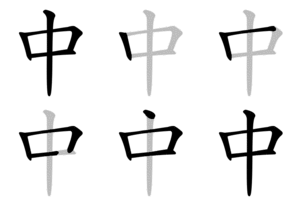
| Stroke order | |||
|---|---|---|---|
 | |||
Han character
中 (radical 2, 丨+3, 4 strokes, cangjie input 中 (L), four-corner 50006, composition ⿻口丨)
Derived characters
References
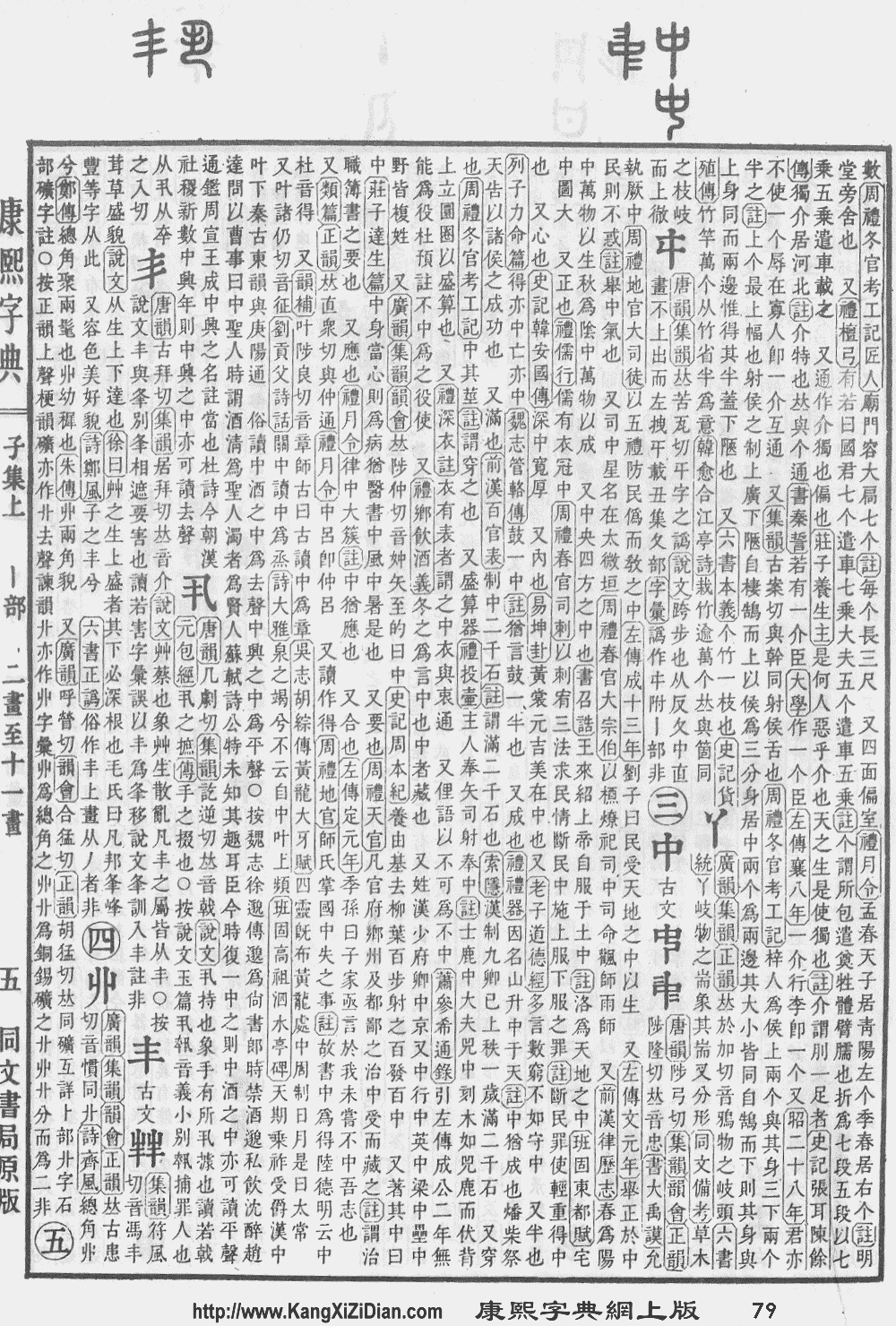
- KangXi: page 79, character 3
- Dai Kanwa Jiten: character 73
- Dae Jaweon: page 158, character 6
- Hanyu Da Zidian: volume 1, page 28, character 10
- Unihan data for U+4E2D
Chinese
| simp. and trad. |
中 | |
|---|---|---|
| alt. forms | 𠁦 𠁧 𠁩 𠔈 𠔗 | |
Glyph origin
| Historical forms of the character 中 | ||||||||||||||||||||||||||||||||||||||||||||||||||||||||||||||||||||||||||||||||||||||||||||||
|---|---|---|---|---|---|---|---|---|---|---|---|---|---|---|---|---|---|---|---|---|---|---|---|---|---|---|---|---|---|---|---|---|---|---|---|---|---|---|---|---|---|---|---|---|---|---|---|---|---|---|---|---|---|---|---|---|---|---|---|---|---|---|---|---|---|---|---|---|---|---|---|---|---|---|---|---|---|---|---|---|---|---|---|---|---|---|---|---|---|---|---|---|---|---|
| Shang | Western Zhou | Spring and Autumn | Warring States | Shuowen Jiezi (compiled in Han) | Liushutong (compiled in Ming) | Libian (compiled in Qing) | ||||||||||||||||||||||||||||||||||||||||||||||||||||||||||||||||||||||||||||||||||||||||
| Bronze inscriptions | Oracle bone script | Bronze inscriptions | Bronze inscriptions | Bronze inscriptions | Chu Slip and silk script | Qin slip script | Shizhoupian script | Ancient script | Small seal script | Transcribed ancient scripts | Clerical script | |||||||||||||||||||||||||||||||||||||||||||||||||||||||||||||||||||||||||||||||||||
 |
 |
 |
 |
 |
 |
 |
 |
 |
 |
 |
 | |||||||||||||||||||||||||||||||||||||||||||||||||||||||||||||||||||||||||||||||||||
|||||||||||
|
References: Mostly from Richard Sears' Chinese Etymology site (authorisation),
| ||||||||||||||||||||||||||||||||||||||||||||||||||||||||||||||||||||||||||||||||||||||||||||||


| Characters in the same phonetic series (中) (Zhengzhang, 2003) | |
|---|---|
| Old Chinese | |
| 中 | *tuŋ, *tuŋs |
| 忠 | *tuŋ |
| 衷 | *tuŋ, *tuŋs |
| 忡 | *tʰuŋ |
| 浺 | *tʰuŋ |
| 盅 | *tʰuŋ, *duŋ, *tjoŋ |
| 种 | *duŋ |
| 沖 | *duŋ |
| 翀 | *duŋ |
| 仲 | *duŋs |
Pictogram (象形) – a flagpole. Based on archaeological evidence, the middle box has been interpreted as a drum (建鼓). This flagpole with a drum was placed in the center of a field to gather people and to detect the direction of the wind. In addition, the pronunciation of 中 (OC *tuŋ, *tuŋs) is reminiscent of the beating of a drum.
Shuowen interprets the character as a vertical stroke 丨 passing through the center of 口, indicating the center.
It has also been interpreted as an arrow in the center of a target.
Etymology
“Middle; centre” (Pronunciation 1) > “to hit the centre; to attain” (Pronunciation 2).
From Proto-Sino-Tibetan *t/duŋ. Cognate with Tibetan གཞུང (gzhung, “middle, center”).
Related to:
Pronunciation 1
Definitions
中
- middle; center
- medium; intermediary
- within; among; in
- while; in the process of; during; in the middle of
- (dialectal) all right; OK
- Short for 中國/中国 (Zhōngguó, “China; Chinese”).
- Short for 中學/中学 (zhōngxué, “middle school”). Used only in the abbreviation of the name.
- 1st tetragram of the Taixuanjing (𝌆)
- A surname. Zhong
Compounds
|
|
|
Pronunciation 2
Definitions
中
Compounds
Japanese
Kanji
Readings
- Goon: ちゅう (chū, Jōyō)←ちゆう (tyū, historical); じゅう (jū, Jōyō, uncommon)←ぢゆう (dyū, historical)
- Kan’on: ちゅう (chū, Jōyō)←ちゆう (tyū, historical); じゅう (jū, Jōyō, uncommon)←ぢゆう (dyū, historical)
- Kun: なか (naka, 中, Jōyō); うち (uchi, 中); あたる (ataru, 中たる)
- Nanori: あたり (atari); あつ (atsu); あつる (atsuru); かなえ (kanae); かなめ (kaname); ただし (tadashi); とうる (tōru); とおる (tōru); ひとし (hitoshi); みつる (mitsuru); わたる (wataru)
Compounds
Common
- 中央 (chūō)
- 中華 (chūka)
- 中核 (chūkaku)
- 中間 (chūkan)
- 中継 (chūkei)
- 中堅 (chūken)
- 中元 (chūgen)
- 中古 (chūko)
- 中国 (chūgoku)
- 中止 (chūshi)
- 中傷 (chūsho)
- 中心 (chūshin)
- 中旬 (chūjun)
- 中枢 (chūsū)
- 中世 (chūsei)
- 中性 (chūsei)
- 中絶 (chūzetsu)
- 中断 (chūdan)
- 中途 (chūto)
- 中東 (chūtō)
- 中道 (chūdō)
- 中毒 (chūdoku)
- 中年 (chūnen)
- 中腹 (chūfuku)
- 中立 (chūritsu)
- 中流 (chūryū)
- 中和 (chūwa)
- 中々 (nakanaka)
- 中庭 (nakaniwa)
- 中身 (nakame)
Common (continued)
- 中産階級 (chūsan kaikyō)
- 間中 (aidajū)
- 御中 (onchū)
- 渦中 (kachū)
- 海中 (kaichū)
- 寒中 (kanchū)
- 空中 (kūchū)
- 宮中 (kyūchū)
- 胸中 (kyōchū)
- 獄中 (gokuchū)
- 最中 (saichū)
- 背中 (senaka)
- 市中 (shichū)
- 車中 (shachū)
- 手中 (shuchū)
- 暑中 (shochū)
- 集中 (shūchū)
- 掌中 (chōchū)
- 心中 (shinjū), 心中 (shinchū)
- 女中 (jochū)
- 陣中 (jinchū)
- 戦中 (senchū)
- 水中 (suichū)
- 対中 (taichū)
- 地中 (chichū)
- 的中 (tekichū)
- 途中 (tochū)
- 日中 (nitchū)
- 熱中 (netchū)
- 年中 (nenjū)
Common (continued)
- 野中 (nonaka)
- 文中 (bunchū)
- 人中 (hitonaka)
- 訪中 (hōchū)
- 町中 (machinaka)
- 命中 (meichū)
- 夢中 (muchū)
- 夜中 (yonaka)
- 連中 (renchū)
- 受付中 (uketsuke-chū)
- 仕事中 (shigoto-chū)
- 営業中 (junbi-chū)
- 準備中 (eigyō-chū)
- 脳卒中 (nōsotchū)
- 一晩中 (hitobanjū)
- 真ん中 (mannaka)
- 世の中 (yononaka)
- お話し中 (ohanashi-chū)
Uncommon
Etymology 1
| Kanji in this term |
|---|
| 中 |
| なか Grade: 1 |
| kun’yomi |
Pronunciation
Noun
Derived terms
- 中今 (nakaima, “the present, as a privileged moment in eternity”)
Proper noun
中 (hiragana なか, rōmaji Naka)
- A surname.
See also
- Appendix:Gikun_Usage_in_Meiji_Version_of_Japanese_Bible/中央
Etymology 2
| Kanji in this term |
|---|
| 中 |
| ちゅう Grade: 1 |
| on’yomi |
From Middle Chinese 中 (MC ʈɨuŋ, ʈɨuŋH).
Pronunciation
Noun
Proper noun
中 (hiragana ちゅう, rōmaji Chū)
Suffix
Etymology 3
| Kanji in this term |
|---|
| 中 |
| じゅう Grade: 1 |
| on’yomi |
Pronunciation
Suffix
中 (hiragana じゅう, rōmaji -jū, historical hiragana ぢゅう)
- during, in the course of, throughout
- all over, everywhere
Usage notes
The distinction between じゅう (jū) and ちゅう (chū) can be somewhat confusing: じゅう (jū) means throughout, in all places, as in 一日中 (ichinichijū, “all day long”) or 体中 (karadajū, “throughout the body”), while ちゅう (chū) means within, but not everywhere, as in 授業中 (jugyōchū, “in class, during class”). Contrast “I worked on this all day long” with “I worked on this in class (but not necessarily for the entire time)”.
Etymology 4
| Kanji in this term |
|---|
| 中 |
| うち Grade: 1 |
| kun’yomi |
Pronunciation
Alternative forms
Noun
Usage notes
内 is the most common kanji for this pronunciation.
Etymology 5
Various nanori readings.
Proper noun
中 (hiragana あたり, rōmaji Atari)
- A surname.
中 (hiragana あたる, rōmaji Ataru)
- A female given name
Etymology 6
| Kanji in this term |
|---|
| 中 |
| ちゅん Grade: 1 |
| Irregular |
Pronunciation
- (Irregular reading)
- IPA(key): [t͡ɕɨ̃ᵝɴ]
Noun
中 (katakana チュン, rōmaji chun)
- (mahjong) red dragon (tile)
See also
References
Korean
Hanja
中 (eumhun 가운데 중 (gaunde jung))
Compounds
Noun
中 • (jung) (hangeul 중)
Vietnamese
Han character
- This term needs a translation to English. Please help out and add a translation, then remove the text
{{rfdef}}.