口
| ||||||||
Translingual
| Stroke order | |||
|---|---|---|---|
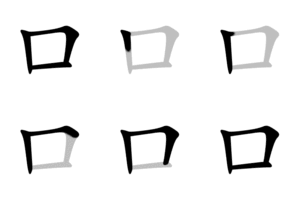 | |||
Usage notes
This character (口) is used within characters; if a square is instead used as an enclosure (around) a character, then the character 囗 is used instead.
Han character
口 (radical 30, 口+0, 3 strokes, cangjie input 口 (R), four-corner 60000)
- Kangxi radical #30, ⼝.
- Shuōwén Jiězì radical №22
Derived characters
- Index:Chinese radical/口
References
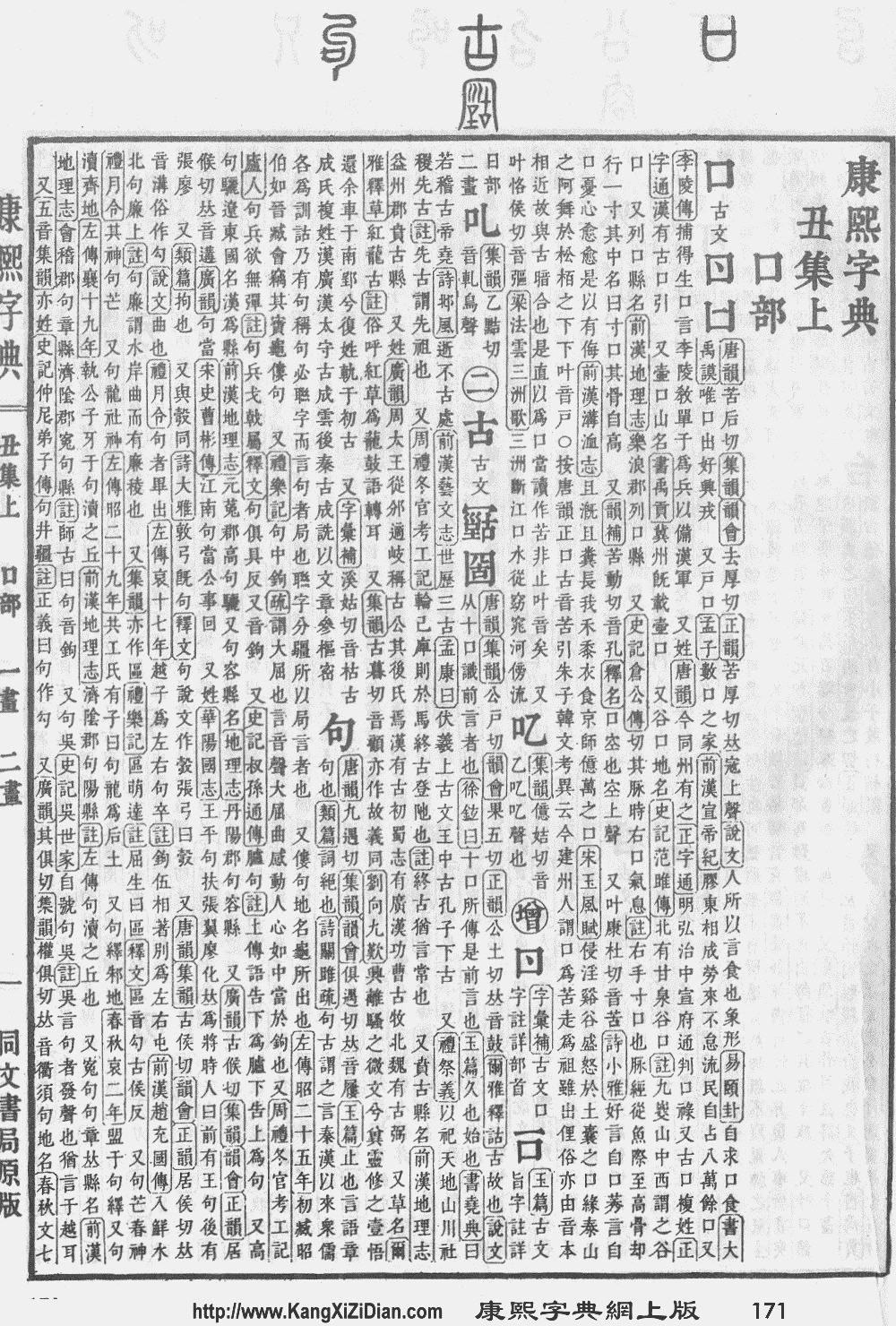
- KangXi: page 171, character 1
- Dai Kanwa Jiten: character 3227
- Dae Jaweon: page 379, character 17
- Hanyu Da Zidian: volume 1, page 566, character 14
- Unihan data for U+53E3
Chinese
| simp. and trad. |
口 | |
|---|---|---|
| alt. forms | 𠙵 𠮚 | |
Glyph origin
| Historical forms of the character 口 | |||||
|---|---|---|---|---|---|
| Shang | Western Zhou | Warring States | Shuowen Jiezi (compiled in Han) | Liushutong (compiled in Ming) | |
| Bronze inscriptions | Oracle bone script | Bronze inscriptions | Chu Slip and silk script | Small seal script | Transcribed ancient scripts |
 |
 |
 |
 |
 |
 |
| Characters in the same phonetic series (口) (Zhengzhang, 2003) | |
|---|---|
| Old Chinese | |
| 口 | *kʰoːʔ |
| 叩 | *kʰoːʔ |
| 扣 | *kʰoːʔ, *kʰoːs |
| 釦 | *kʰoːʔ |
| 筘 | *kʰoːs |
Pictogram (象形) – resembles an open mouth.
Pronunciation
Definitions
口
- (anatomy) mouth (Classifier: 把 c)
- entrance; opening; mouth (of an object)
- hole; cut
- government organ; department
- Classifier for family members, populations and guns.
- Classifier for bites or mouthfuls.
- (neologism, slang) to have oral sex
Synonyms
| Dialectal synonyms of 嘴 (“mouth”) [map] | ||
|---|---|---|
| Variety | Location | Words |
| Classical Chinese | 口 | |
| Formal (Written Standard Chinese) | 嘴 | |
| Mandarin | Beijing | 嘴 |
| Taiwan | 嘴 | |
| Tianjin | 嘴 | |
| Jinan | 嘴 | |
| Xi'an | 嘴 | |
| Wuhan | 嘴、嘴巴、嘴巴子 | |
| Chengdu | 嘴巴 | |
| Yangzhou | 嘴、嘴巴子 | |
| Hefei | 嘴 | |
| Cantonese | Guangzhou | 嘴、口 |
| Yangjiang | 嘴、口 | |
| Gan | Nanchang | 嘴巴 |
| Hakka | Meixian | 嘴 |
| Miaoli (N. Sixian) | 嘴 | |
| Liudui (S. Sixian) | 嘴 | |
| Hsinchu (Hailu) | 嘴 | |
| Dongshi (Dabu) | 嘴 | |
| Zhuolan (Raoping) | 嘴 | |
| Yunlin (Zhao'an) | 嘴 | |
| Jin | Taiyuan | 嘴 |
| Min Bei | Jian'ou | 喙 |
| Min Dong | Fuzhou | 喙 |
| Min Nan | Xiamen | 喙 |
| Quanzhou | 喙 | |
| Zhangzhou | 喙 | |
| Taipei | 喙 | |
| Kaohsiung | 喙 | |
| Philippines (Manila) | 喙 | |
| Chaozhou | 喙 | |
| Wu | Suzhou | 嘴 |
| Wenzhou | 嘴、嘴嘴 | |
| Xiang | Changsha | 嘴巴、嘴巴子 |
| Shuangfeng | 嘴巴 | |
Compounds
|
|
|
Japanese
Kanji
Readings
Compounds
Etymology 1
| Kanji in this term |
|---|
| 口 |
| くつ Grade: 1 |
| kun’yomi |
/kutu/ → /kut͡su/
From Old Japanese. Appears in compound terms listed in the Wamyō Ruijushō of 938 CE.
The ancient combining form of modern reading kuchi.[1] Likely the original form.
No longer productive in modern Japanese. Only found in older compounds.
There are interesting potential phonetic and semantic overlaps with Middle Chinese 窟 (MC kʰuət̚, “hole; cave”), 口 (MC kʰəuX, “mouth; opening; hole”); Korean 굳 (gut), 굿 (gut, “hole; hollow; cavity”); possibly even Ainu クㇳ (kut), クッチ (kutchi, “throat”). One possibility is that these represent prehistoric nativized borrowings from Chinese. However, there is yet no clear evidence of relatedness.
Pronunciation
Noun
Derived terms
Etymology 2
| Kanji in this term |
|---|
| 口 |
| くち Grade: 1 |
| kun’yomi |
*/kutu i/ → /kuti/ → /kut͡ɕi/
From Old Japanese. Appears in the Man'yōshū, completed some time after 759 CE.[2]
Shift from kutu above, probably by fusion with ancient nominal particle い (i). Compare the phonetic development of 神 (kami, “spirit, god”) from kamu + i, 木 (ki, “tree”) from ko + i, 目 (me, “eye”) from ma + i.
Pronunciation
Noun
- mouth
- 1999 July 22, “グレード・ビル [Great Bill]”, in Vol.4 (in Japanese), Konami:
- どんなものでも丸飲みできる大きな口を持っている。
- Donna mono de mo marunomi dekiru ōkina kuchi o motteiru.
- Its massive mouth can swallow whole anything whole.
- どんなものでも丸飲みできる大きな口を持っている。
-
- opening
Derived terms
Etymology 3
| Kanji in this term |
|---|
| 口 |
| く Grade: 1 |
| on’yomi |
From Middle Chinese 口 (MC kʰəuX). The goon, so likely the initial borrowing.
Pronunciation
Noun
Counter
- used to count people
- used to count per-person portions
- used to count open-mouthed containers
- used to count bladed weapons or tools
Etymology 4
| Kanji in this term |
|---|
| 口 |
| こう Grade: 1 |
| on’yomi |
From Middle Chinese 口 (MC kʰəuX). The kan'on, so likely a later borrowing.
Pronunciation
Counter
口 (hiragana こう, rōmaji -kō)
- used to count people
- used to count bladed weapons or tools
References
- ↑ 1988, 国語大辞典(新装版) (Kokugo Dai Jiten, Revised Edition) (in Japanese), Tōkyō: Shogakukan
- ↑ c. 759, Man'yōshū (book 14, poem 3532), text here
- ↑ 2006, 大辞林 (Daijirin), Third Edition (in Japanese), Tōkyō: Sanseidō, →ISBN
- ↑ 1998, NHK日本語発音アクセント辞典 (NHK Japanese Pronunciation Accent Dictionary) (in Japanese), Tōkyō: NHK, →ISBN
- The Oxford Starter Japanese Dictionary. →ISBN
Korean
Hanja
- This term needs a translation to English. Please help out and add a translation, then remove the text
{{rfdef}}.
Compounds
- 口訣 (구결, gugyeol)
References
Okinawan
Kanji
口
Pronunciation
- IPA(key): /ɡut͡ɕi/
Noun
口 (hiragana ぐち, romaji guchi)
Compounds
- 油口 (あんだぐち, andaguchi): compliment
- 油口ゃー (あんだぐちゃー, andaguchā): flatterer
- 沖縄口 (うちなーぐち, uchināguchi): Okinawan language
- うらんだ口 (うらんだぐち, urandaguchi): European language, Western language
- 書ち口, 書口 (かちぐち, kachiguchi): written language
- 口しば (くちしば, kuchishiba): lips
- 島口 (しまぐち, shimaguchi): island language, local language
- 唐口 (とーぐち, tōguchi): Chinese language
- 那覇口 (なーふぁぐち, nāfaguchi): Naha dialect
- 目口 (みーくち, mīkuchi): facial expression
- 大和口 (やまとぅぐち, yamatuguchi): standard Japanese language
Vietnamese
Han character
口 (khẩu)
- This term needs a translation to English. Please help out and add a translation, then remove the text
{{rfdef}}.