来
See also: 來
| ||||||||
Translingual
| 來 | |
| 来 | |
| 来 | |
| 來 |
| Stroke order | |||
|---|---|---|---|
 | |||
| Stroke order | |||
|---|---|---|---|
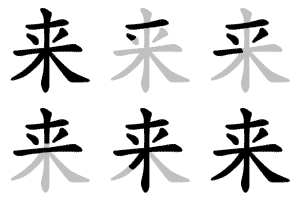 | |||
Glyph origin
Variant of 來.
Han character
来 (radical 75 木+3, 7 strokes, cangjie input 木廿 (DT), composition ⿻未丷 or ⿻木䒑)
References
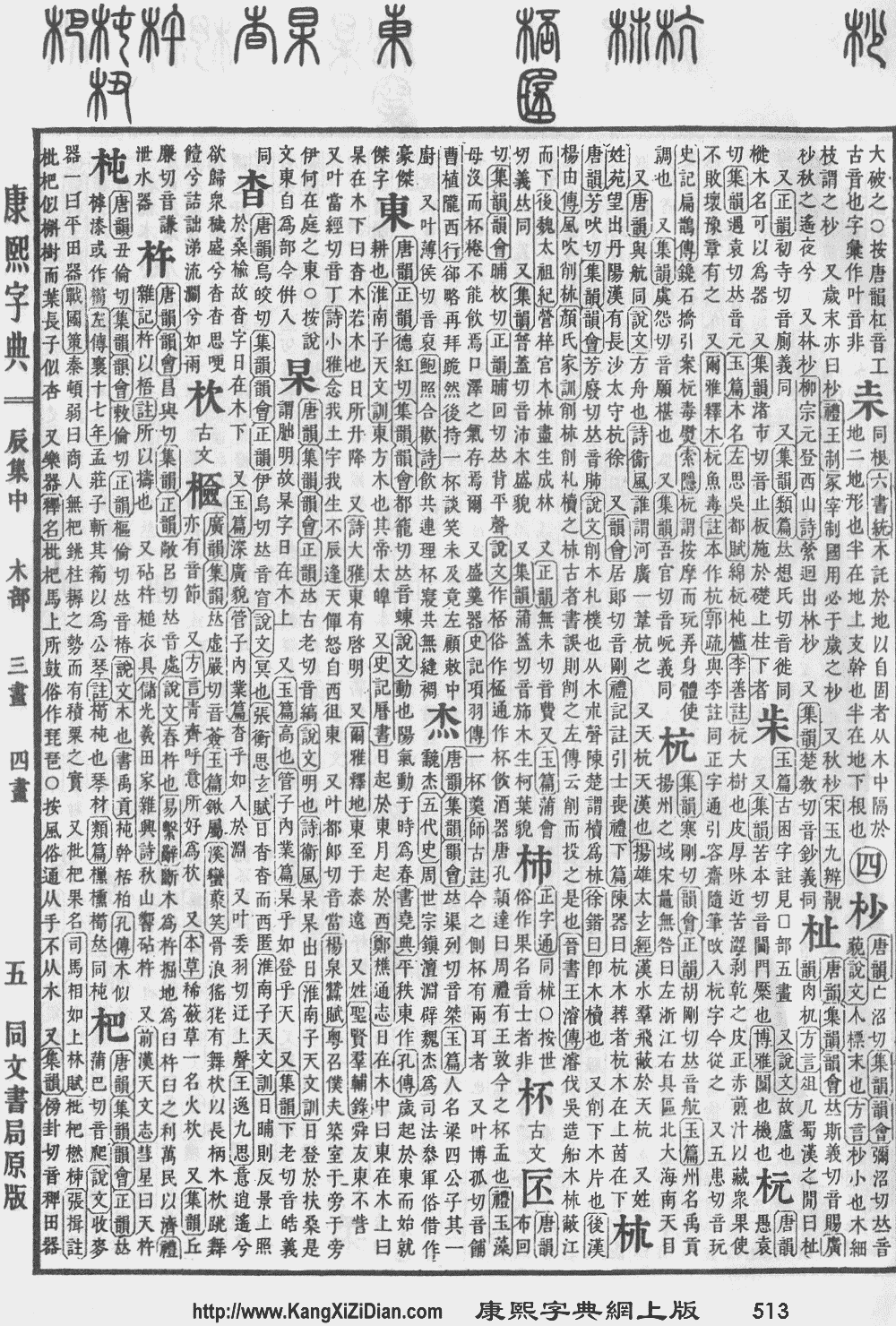
- KangXi: not present, would follow page 513, character 1
- Dai Kanwa Jiten: character 14489
- Hanyu Da Zidian: volume 1, page 21, character 9
- Unihan data for U+6765
Chinese
| For pronunciation and definitions of 来 – see 來 (“to come; to arrive; to happen; to occur; etc.”). (This character, 来, is the simplified and variant form of 來.) |
Notes:
|
Japanese
| 来 | |
| 來 |
Kanji
来
(grade 2 “Kyōiku” kanji, shinjitai kanji, kyūjitai form 來)
- to come
Readings
Compounds
Etymology 1
| Kanji in this term |
|---|
| 来 |
| らい Grade: 2 |
| on’yomi |
From Middle Chinese 來 (*ləi). Compare modern Mandarin 來/来 (lái).
Pronunciation
Prefix
来 (shinjitai kanji, kyūjitai kanji 來, hiragana らい, rōmaji rai-)
Proper noun
来 (shinjitai kanji, kyūjitai kanji 來, hiragana らい, rōmaji Rai)
- A surname.
Suffix
来 (shinjitai kanji, kyūjitai kanji 來, hiragana らい, rōmaji -rai)
Etymology 2
| Kanji in this term |
|---|
| 来 |
| く Grade: 2 |
| kun’yomi |
From Old Japanese. The verb ku is one of the few monosyllabic verb roots in Japanese. This developed into kuru in modern Japanese.
Pronunciation
Verb
来 (shinjitai kanji, kyūjitai kanji 來, irregular conjugation, hiragana く, rōmaji ku)
References
- 1988, 国語大辞典(新装版) (Kokugo Dai Jiten, Revised Edition) (in Japanese), Tōkyō: Shogakukan
- 2006, 大辞林 (Daijirin), Third Edition (in Japanese), Tōkyō: Sanseidō, →ISBN
- ↑ 1944, Osamu Dazai, 「津軽」(Tsugaru), republished 2006, Gutenberg 21 (http://www.gutenberg21.co.jp/ - website in Japanese)
This article is issued from
Wiktionary.
The text is licensed under Creative Commons - Attribution - Sharealike.
Additional terms may apply for the media files.