作
| ||||||||
Translingual
| Stroke order | |||
|---|---|---|---|
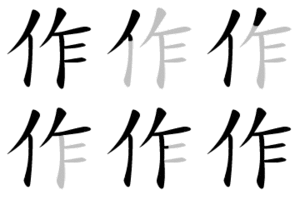 | |||
Han character
作 (radical 9, 人+5, 7 strokes, cangjie input 人竹尸 (OHS), four-corner 28211, composition ⿰亻乍)
References
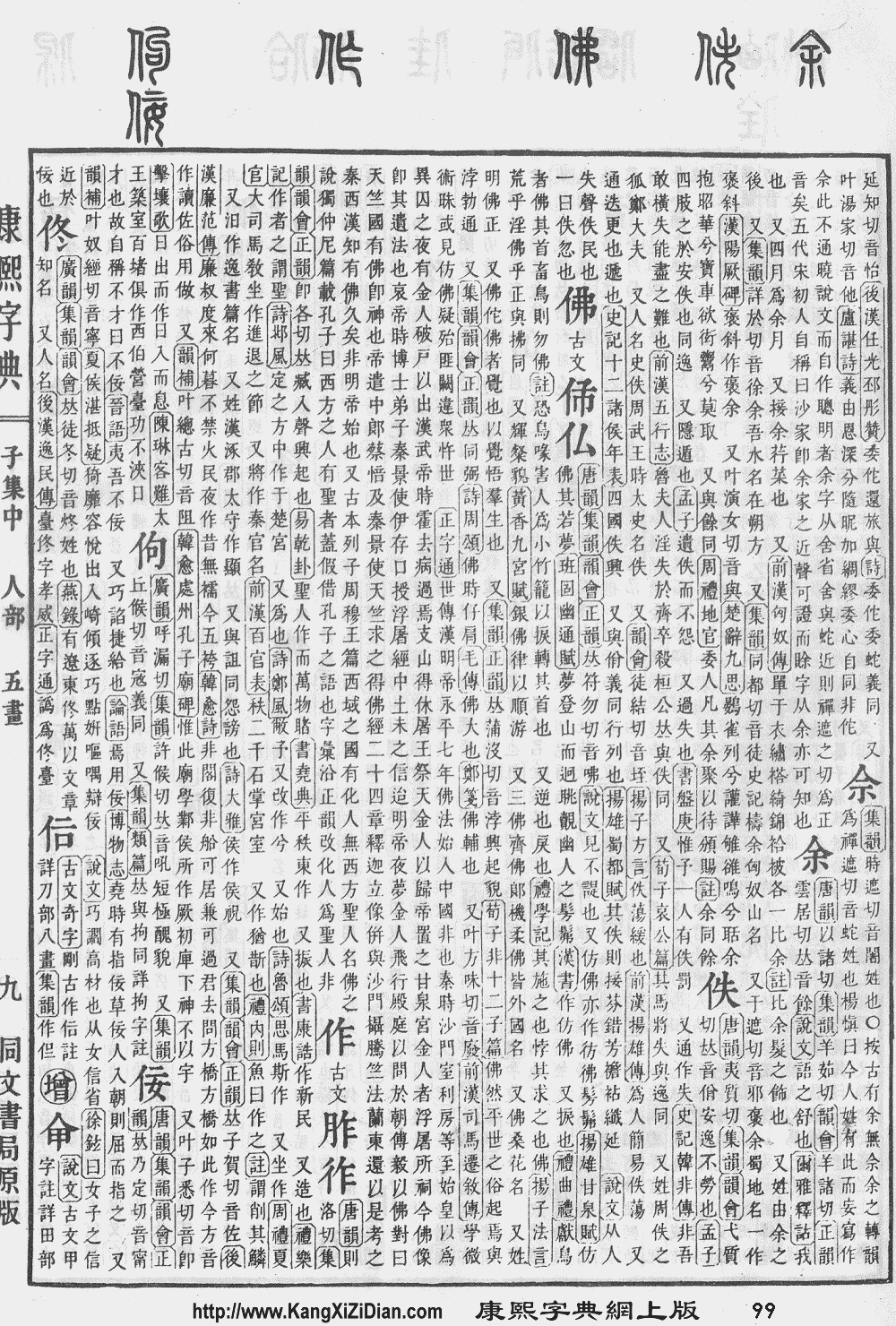
- KangXi: page 99, character 7
- Dai Kanwa Jiten: character 518
- Dae Jaweon: page 210, character 1
- Hanyu Da Zidian: volume 1, page 134, character 6
- Unihan data for U+4F5C
Chinese
| simp. and trad. |
作 | |
|---|---|---|
Glyph origin
| Historical forms of the character 作 | ||||||||||||||||||||||||
|---|---|---|---|---|---|---|---|---|---|---|---|---|---|---|---|---|---|---|---|---|---|---|---|---|
| Shang | Western Zhou | Warring States | Shuowen Jiezi (compiled in Han) | Liushutong (compiled in Ming) | ||||||||||||||||||||
| Oracle bone script | Bronze inscriptions | Chu Slip and silk script | Small seal script | Transcribed ancient scripts | ||||||||||||||||||||
 |
 |
 |
 |
 | ||||||||||||||||||||
||||
|
References: Mostly from Richard Sears' Chinese Etymology site (authorisation),
| ||||||||||||||||||||||||


| Characters in the same phonetic series (乍) (Zhengzhang, 2003) | |
|---|---|
| Old Chinese | |
| 作 | *ʔsaːɡs, *ʔsaːɡs, *ʔsaːɡ |
| 鲊 | *ʔsraːʔ |
| 痄 | *ʔsraːʔ |
| 厏 | *ʔsraːʔ, *zraːʔ |
| 詐 | *ʔsraːɡs |
| 咋 | *ʔsraːɡs, *zraːɡ, *ʔsreːɡ |
| 笮 | *ʔsraːɡs, *zaːɡ, *ʔsraːɡ |
| 榨 | *ʔsraːɡs |
| 炸 | *ʔr'aːɡs, *zreːb |
| 乍 | *zraːɡs |
| 拃 | *ʔsraːnʔ |
| 酢 | *sʰaːɡs, *zaːɡ |
| 祚 | *zaːɡs |
| 胙 | *zaːɡs |
| 阼 | *zaːɡs |
| 飵 | *zaːɡs, *zaːɡ |
| 秨 | *zaːɡs, *zaːɡ |
| 迮 | *ʔsaːɡ, *ʔsraːɡ |
| 柞 | *ʔsaːɡ, *zaːɡ |
| 昨 | *zaːɡ |
| 怍 | *zaːɡ |
| 砟 | *zaːɡ |
| 莋 | *zaːɡ |
| 岝 | *zaːɡ, *zraːɡ |
| 鈼 | *zaːɡ |
| 筰 | *zaːɡ |
| 葃 | *zaːɡ, *zreːɡ, *zaɡ |
| 舴 | *ʔr'aːɡ, *ʔsraːɡ |
| 窄 | *ʔsraːɡ |
| 蚱 | *ʔsraːɡ |
| 齚 | *zraːɡ |
| 泎 | *zraːɡ |
Phono-semantic compound (形聲, OC *ʔsaːɡs, *ʔsaːɡs, *ʔsaːɡ) : semantic 亻 (“man”) + phonetic 乍 (OC *zraːɡs).
Etymology
Derivative: 做 (“to do”) (the departing-tone variant).
Pronunciation 1
Definitions
作
- † to get up (from a place)
- † to get up (in the morning) and go to work
- † to begin to grow; to come into being
- † to arise; to come about; to happen; to occur; to break out
- to do; to perform; to carry out
- to work; to exert oneself
- to make; to manufacture
- to compose; to write
- † to brace oneself; to boost
- † to feign; to pretend
- to work as; to serve as
- † to build; to construct
- † to play; to perform
- † to emit; to give out
- † to start; to launch
- † to be like; similar
- † Alternative form of 詛/诅 (zǔ, “to curse; to damn”).
- work; composition; article
- † affair; matter
- † measure; action
Synonyms
Compounds
|
|
|
Pronunciation 2
Definitions
作
- workshop; studio; workroom
- (neologism, originally dialectal) contrived; artificial; affected; pretentious; dramatic; high-maintenance
Compounds
Japanese
Kanji
Readings
Compounds
Related terms
- 抜け作
Etymology 1
| Kanji in this term |
|---|
| 作 |
| さく Grade: 2 |
| on’yomi |
From Middle Chinese 作 (tsak, “to do, to work”). Compare modern Cantonese reading zok3, Wu tsoq (T4).
Pronunciation 1
Noun
- a work, a production (particularly a cultural work, such as a work of art, of literature, or of theatre)
Pronunciation 2
Noun
Etymology 2
| Kanji in this term |
|---|
| 作 |
| つく(り) Grade: 2 |
| kun’yomi |
The 連用形 (ren'yōkei, “continuative or stem form”) of verb 作る (tsukuru, “to make; to build; to work the land, to grow something”), itself from Old Japanese.[2]
Pronunciation 1
Noun
作 (hiragana つくり, rōmaji tsukuri)
- the workmanship or make of something, how something is made
- 作りのいい家具
- tsukuri no ii kagu
- furniture of good make or workmanship, well-made furniture
- 作りのいい家具
- make-up, dress, comportment: how one dresses and comports oneself
- 派手な作りは嫌いだ。
- Hade na tsukuri wa kirai da.
- I dislike colorful / flashy dress.
- 派手な作りは嫌いだ。
- a helping or serving of fresh sashimi, usually several slices
- 鮭の作りを楽しみにしている。
- Shake no tsukuri o tanoshimi ni shite iru.
- I'm looking forward to a helping of salmon sashimi.
- 鮭の作りを楽しみにしている。
Usage notes
Pronunciation 2
Suffix
作 (hiragana づくり, rōmaji -zukuri)
- the making of something, particularly as in cultivation
- 庭作り、バラ作り
- niwazukuri, barazukuri
- gardening / garden cultivation, rose cultivation / growing roses
- 庭作り、バラ作り
Usage notes
References
Korean
Hanja
作 • (jak, ju) (hangeul 작, 주, McCune–Reischauer chak, chu)
- This term needs a translation to English. Please help out and add a translation, then remove the text
{{rfdef}}.
Vietnamese
Han character
- This term needs a translation to English. Please help out and add a translation, then remove the text
{{rfdef}}.