見
| ||||||||
| ||||||||
Translingual
| Stroke order | |||
|---|---|---|---|
 | |||
Han character
見 (radical 147, 見+0, 7 strokes, cangjie input 月山竹山 (BUHU), four-corner 60210, composition ⿱目儿)
- Kangxi radical #147, ⾒.
Derived characters
Descendants
References
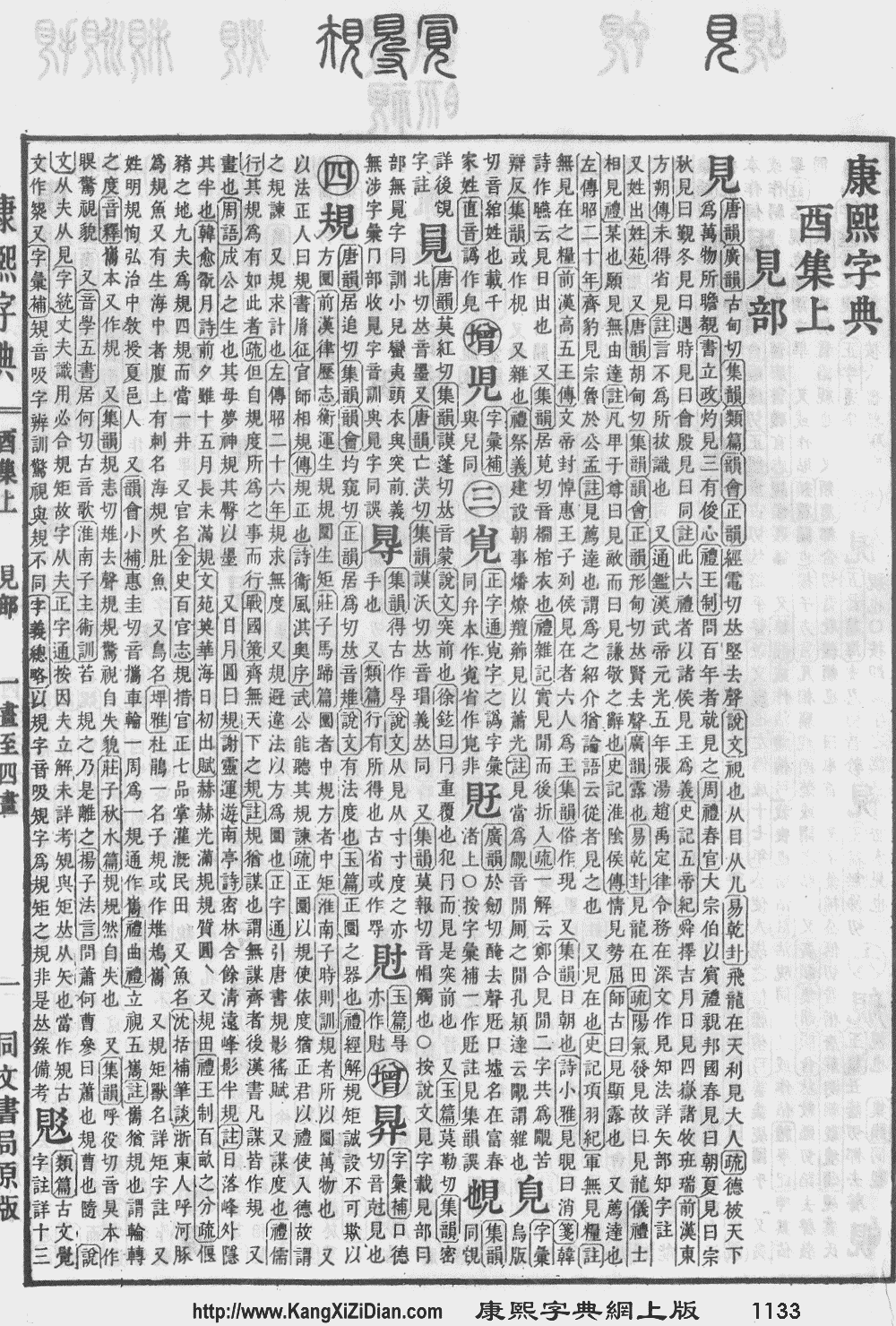
- KangXi: page 1133, character 1
- Dai Kanwa Jiten: character 34796
- Dae Jaweon: page 1599, character 8
- Hanyu Da Zidian: volume 6, page 3663, character 1
- Unihan data for U+898B
Chinese
| trad. | 見 | |
|---|---|---|
| simp. | 见 | |
Glyph origin
| Historical forms of the character 見 | ||||
|---|---|---|---|---|
| Shang | Western Zhou | Warring States | Shuowen Jiezi (compiled in Han) | Liushutong (compiled in Ming) |
| Oracle bone script | Bronze inscriptions | Chu Slip and silk script | Small seal script | Transcribed ancient scripts |
 |
 |
 |
 |
 |
| Characters in the same phonetic series (見) (Zhengzhang, 2003) | |
|---|---|
| Old Chinese | |
| 涀 | *ɡeːlʔ, *kʰeːns, *ɡeːns |
| 莧 | *ɡreːns |
| 粯 | *ɡreːns |
| 晛 | *ŋl'eːns, *ɡeːnʔ |
| 筧 | *keːnʔ |
| 絸 | *keːnʔ |
| 垷 | *keːnʔ, *ɡeːnʔ |
| 挸 | *keːnʔ |
| 見 | *keːns, *ɡeːns |
| 俔 | *kʰeːns, *ɡeːnʔ |
| 蜆 | *kʰeːns, *qʰeːnʔ, *ɡeːnʔ |
| 硯 | *ŋɡeːn, *ŋɡeːns |
| 峴 | *ɡeːnʔ |
| 哯 | *ɡeːnʔ |
| 睍 | *ɡeːnʔ |
| 現 | *ɡeːns |
目 (“eye”) + 儿 (“human”) – an eye on a pair of legs. Originally a human figure with a large eye for a head.
Etymology
From Proto-Sino-Tibetan *ken ~ m-kjen.
Pronunciation 1
Definitions
見
Compounds
Derived terms from 見
|
|
|
Pronunciation 2
Definitions
見
Compounds
Derived terms from 見
Japanese
Kanji
見
- to see
Readings
Compounds
Etymology 1
| Kanji in this term |
|---|
| 見 |
| み Grade: 1 |
| kun’yomi |
[mi1] invalid IPA characters (1) → /mi/
From Old Japanese. Attested in the Man'yōshū, completed some time after 759 CE.[1]
The 連用形 (ren'yōkei, “continuative or stem form”) of verb 見る (miru, “to see; to look at”).[2][3][4] Ultimately cognate with 目 (ancient ma, modern me, “eye”).[2]
Pronunciation
Noun
Etymology 2
| Kanji in this term |
|---|
| 見 |
| けん Grade: 1 |
| on’yomi |
From Middle Chinese 見 (MC kenH, ɦenH, “see; seem; opinion”).
Pronunciation
Noun
- seeing, looking
- a view, perspective, thought, or opinion about something
- (noh) the visual impact the performers have on the audience
- window-shopping
- a window-shopper
Synonyms
References
Korean
Hanja
- This term needs a translation to English. Please help out and add a translation, then remove the text
{{rfdef}}.
Hanja
見 (eumhun 뵈올 현 (boe-ol hyeon))
- This term needs a translation to English. Please help out and add a translation, then remove the text
{{rfdef}}.
Vietnamese
Han character
- This term needs a translation to English. Please help out and add a translation, then remove the text
{{rfdef}}.
This article is issued from
Wiktionary.
The text is licensed under Creative Commons - Attribution - Sharealike.
Additional terms may apply for the media files.