母
| ||||||||
Translingual
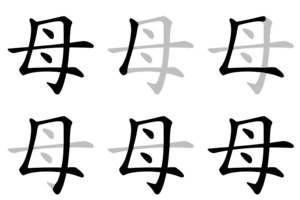
| Stroke order | |||
|---|---|---|---|
 | |||
Han character
母 (radical 80 毋+1, 5 strokes, cangjie input 田卜戈 (WYI), four-corner 77500)
Derived characters
Descendants
References
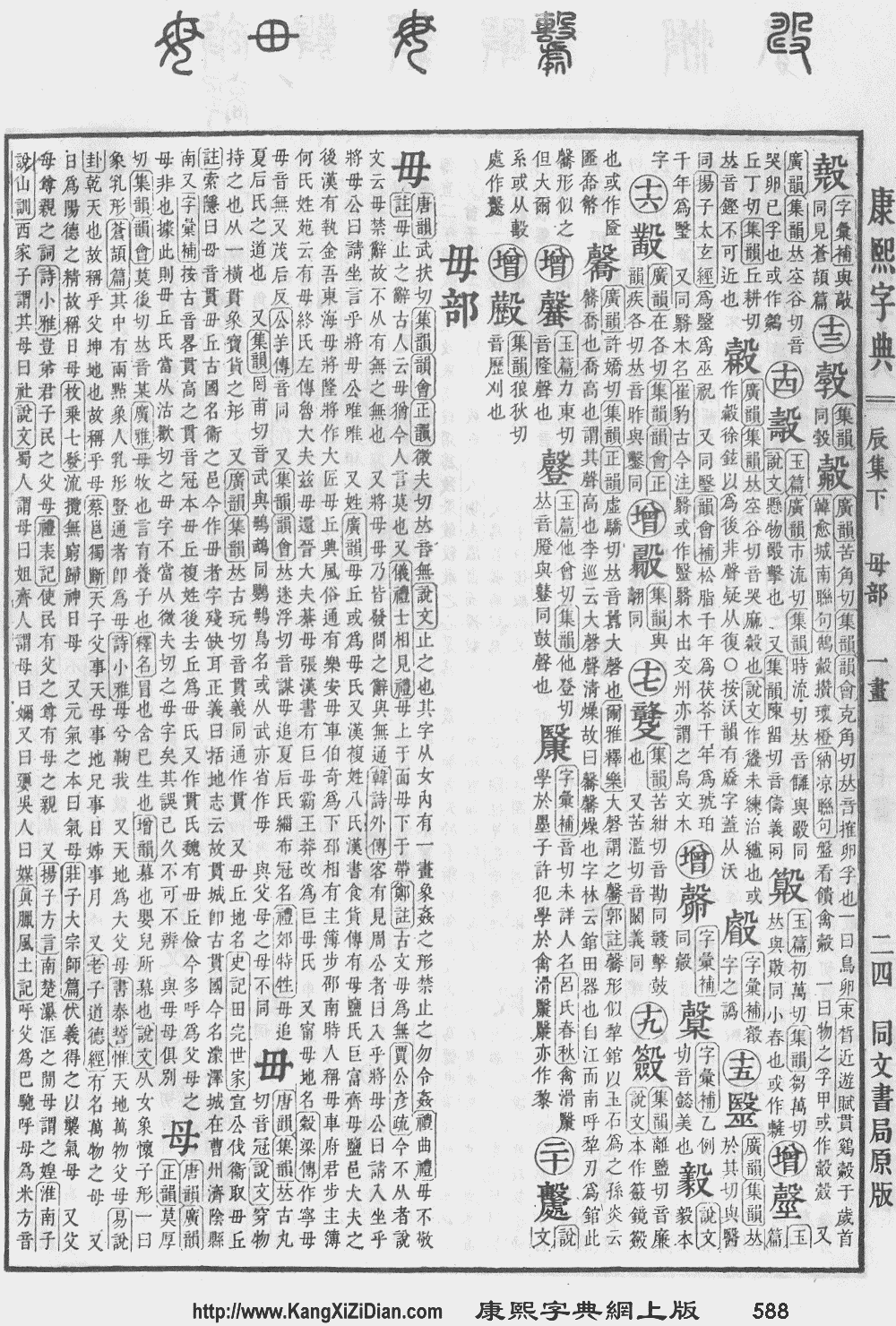
- KangXi: page 588, character 25
- Dai Kanwa Jiten: character 16723
- Dae Jaweon: page 980, character 32
- Hanyu Da Zidian: volume 4, page 2380, character 3
- Unihan data for U+6BCD
Chinese
| simp. and trad. |
母 | |
|---|---|---|
Glyph origin
| Historical forms of the character 母 | |||
|---|---|---|---|
| Shang | Western Zhou | Shuowen Jiezi (compiled in Han) | Liushutong (compiled in Ming) |
| Oracle bone script | Bronze inscriptions | Small seal script | Transcribed ancient scripts |
 |
 |
 |
 |
| Characters in the same phonetic series (母) (Zhengzhang, 2003) | |
|---|---|
| Old Chinese | |
| 脢 | *mɯːs, *mɯː, *mɯːs |
| 挴 | *mlɯːʔ, *mɯːʔ |
| 海 | *hmlɯːʔ |
| 毐 | *ʔmɯː, *ʔmɯːʔ |
| 呣 | *mɯ |
| 拇 | *mɯʔ |
| 母 | *mɯʔ |
| 胟 | *mɯʔ |
| 姆 | *mɯʔ, *mɯs, *maːʔ |
| 畮 | *mɯʔ |
| 踇 | *mɯʔ |
| 苺 | *mɯs, *mɯːʔ, *mɯːs |
| 莓 | *mɯs, *mɯː, *mɯːs |
| 敏 | *mrɯʔ, *mrɯŋʔ |
| 鰵 | *mrɯŋʔ |
| 慜 | *mrɯŋʔ |
| 毋 | *ma |
| 梅 | *mɯː |
| 酶 | *mɯː |
| 鋂 | *mɯː |
| 每 | *mɯːʔ |
| 毎 | *mɯːs |
| 痗 | *mɯːs, *hmɯːs |
| 晦 | *hmɯːs |
| 誨 | *hmɯːs |
| 悔 | *hmɯːʔ, *hmɯːs |
| 霉 | *mrɯl |
Pictogram (象形) : a woman with breasts with nipples kneeling or standing. In modern form turned on left side. Compare 女 (OC *naʔ, *nas, “woman”), which has developed similarly, but does not include dots for nipples and has lost one breast in the modern form.
Etymology
From Proto-Sino-Tibetan *mow (“woman, female”).
Pronunciation
Definitions
母
Synonyms
Compounds
|
|
|
Japanese
Kanji
Readings
Compounds
Usage notes
In isolation, the character 母 has 5 strokes in modern Japanese – it is not simplified. In shinjitai compound characters, such as 毎 or 海, it is simplified to 4 strokes, as 毋, but this simplification is not used in isolation. In hyōgaiji characters such as 姆, however, the component is not simplified.
Alternative forms
Etymology 1
| Kanji in this term |
|---|
| 母 |
| はは Grade: 2 |
| kun’yomi |
Old Japanese. /haha/: */papa/ → /fafa/ → /fawa/ → /fafa/ → /haha/
Medial /f/ [ɸ] regularly changes to /w/ [ɰᵝ], resulting in /fawa/ → /hawa/, the expected final form; see hawa below. This form first appears in the Heian period. However, likely due to spelling influence or reduplication associations, the earlier /fafa/ resurfaced in the late 16th century towards the end of the Muromachi period, with both forms seen until recent times, when hawa falls into disuse.[1] Initial /f-/ [ɸ] regularly becomes [h], resulting in modern [ha̠ha̠].
Pronunciation
Noun
- (humble) mother
- 931–938, Wamyō Ruijushō, book 1, page 116:
- 母 尔雅云、母爲妣、卑履反、去聲之重、和名波々、日本紀私記云、以路波
- 1603–1604, Nippo Jisho (page 196)
- Fafa. l, faua. ハハ. または、ハワ(母) 母.
- 931–938, Wamyō Ruijushō, book 1, page 116:
Usage notes
Only ever used to refer to one's own mother when speaking to someone else. Still widely used in modern Japanese.
Antonyms
Derived terms
- 母上 (ははうえ, hahaue): mother (when addressing one's own mother)
- 母親 (ははおや, hahaoya): a mother
- 母方 (ははかた, hahakata): a relative on one's mother's side
- 母君 (ははぎみ, hahagimi): mother (when addressing one's own mother; more honorific than hahaue)
- 母子 (ははこ, hahako): mother and child
- 母御 (ははご, hahago): mother (when addressing someone else's mother)
- 母御前 (ははごぜん, hahagozen): mother (when addressing someone else's mother)
- 母島 (ははじま, Hahajima): the main island of the Ogasawara Islands
- 母者 (ははじゃ, hahaja): a person who is a mother: a term of endearment
- 母者人 (ははじゃひと, hahaja hito): a person who is a mother: a term of endearment
- 母刀自 (ははとじ, hahatoji): mother (honorific)
- 母の日 (ははのひ, Haha no Hi): Mother's Day
- 母御息所 (ははみやすどころ, haha miyasudokoro): an imperial concubine or other female member of the imperial household who is also a mother
- 母物 (ははもの, hahamono): a book, play, or other entertainment in which motherly love is a central theme
- 生みの母, 産みの母 (うみのはは, umi no haha): a birth mother
- 国の母 (くにのはは, kuni no haha): the emperor's mother; (figuratively) the mother of the country
- 代理母 (だいりはは, dairi haha): a foster mother
- 父母 (ちちはは, chichi haha): one's own parents
- 父母 (ててはは, tete haha): one's own parents (uncommon)
- 法師が母 (ほうしがはは, Hōshi ga Haha): the title of a 狂言 (kyōgen, “short farcical performance played as an intermission in a noh play”)
- 瞼の母 (まぶたのはは, mabuta no haha): the image of one's mother in dreams or memory, such as when one's mother is far away or has passed away
- 継母 (ままはは, mamahaha): a stepmother, a foster mother
Etymology 2
| Kanji in this term |
|---|
| 母 |
| はわ Grade: 2 |
| kun’yomi |
From Old Japanese. See etymology for haha above for details.
Pronunciation
Noun
母 (hiragana はわ, rōmaji hawa)
- (humble) mother
- 1603–1604, Nippo Jisho (page 213)
- Faua. ハワ (母) 母親.
- 1603–1604, Nippo Jisho (page 196)
- Fafa. l, faua. ハハ. または、ハワ(母) 母.
- 1603–1604, Nippo Jisho (page 71)
- Caca. カカ (かか) Faua (母)に同じ. 母. これは子供の言葉である. また、尊敬すべき婦人、あるいは、年長で一家の主婦のような婦人の意に取られる.
- 1603–1604, Nippo Jisho (page 60)
- Bogui. ボギ (母儀) Faua (母)に同じ. 母.
- 1603–1604, Nippo Jisho (page 213)
Usage notes
Obsolete in mainstream Japanese. May persist in dialects.
Etymology 3
| Kanji in this term |
|---|
| 母 |
| は Grade: 2 |
| kun’yomi |
Old Japanese. Possibly an abbreviation of haha, or possibly the original form.
Pronunciation
Noun
- (obsolete) mother
- 931–938, Wamyō Ruijushō, book 1, page 116:
- 母 尔雅云、母爲妣、卑履反、去聲之重、和名波々、日本紀私記云、以路波
- 931–938, Wamyō Ruijushō, book 1, page 116:
Usage notes
Not found in isolation, only found in compounds. Obsolete and unused in modern Japanese.
Derived terms
Etymology 4
| Kanji in this term |
|---|
| 母 |
| あも Grade: 2 |
| kun’yomi |
From Old Japanese. Obsolete and unused in modern Japanese. Already falling into disuse by the writing of the Man'yōshū in 759, where it is only found in pieces written in eastern dialects.[1] Possibly cognate with Korean 엄마 (eomma, “mother”), 어머니 (eomeoni, “mother”).
Pronunciation
Noun
母 (hiragana あも, rōmaji amo)
- (obsolete) mother
Derived terms
- 母父 (あもしし, amoshishi): one's parents (obsolete; eastern dialect)
- 母刀自 (あもとじ, amotoji): mother (honorific; obsolete; eastern dialect)
Etymology 5
| Kanji in this term |
|---|
| 母 |
| おも Grade: 2 |
| kun’yomi |
From Old Japanese. Obsolete and unused in modern Japanese. Appears to be an alteration from amo above.
Pronunciation
Noun
- (obsolete) mother
- a woman who breastfeeds and raises a child in place of a parent: a wet nurse
- c. 759, Man'yōshū (book 12, poem 2925)
- 緑児之 為社乳母者 求云 乳飲哉君之 於毛求覧
- c. 759, Man'yōshū (book 12, poem 2925)
Derived terms
- 母父 (おもちち, omochichi): one's parents
- 母調子 (おもちょうし, omo chōshi): the main or thematic key in a piece of 雅楽 (gagaku) music
- 母刀自 (おもとじ, omotoji): mother (honorific)
- 母同胞 (おもはらから, omoharakara): a sibling from the same mother
- 母屋, 母家 (おもや, omoya): the main residence in a manor; the main or central building in a palace; the main household in an extended family; the main store in a chain
- 母良 (おもら, omora): in ancient times, a woman serving at the 伊勢神宮 (Ise Jingū, “Ise Grand Shrine”)
Synonyms
- (wet nurse): 乳母 (うば, uba)
Etymology 6
| Kanji in this term |
|---|
| 母 |
| かか Grade: 2 |
| kun’yomi |
Unknown. One theory holds that this is a corrupted and abbreviated form of 御方様 (okatasama), a term to refer to or address someone else's wife (now extremely formal, but much more everyday in the Edo period), possibly influenced by children's speech:
/okatasama/ → /katasama/ → /kakasama/ → /kaka/
Pronunciation
Noun
母 (hiragana かか, rōmaji kaka)
- (childish) mommy, mummy
- 1603–1604, Nippo Jisho (page 71)
- Caca. カカ (かか) Faua (母)に同じ. 母. これは子供の言葉である. また、尊敬すべき婦人、あるいは、年長で一家の主婦のような婦人の意に取られる.
- 1603–1604, Nippo Jisho (page 71)
- (obsolete) wife
- Seen in the Edo period among the lower socioeconomic classes. Used to refer both to one's own wife when talking to others, and to refer to someone else's wife.[1]
Derived terms
- 御母様 (おかかさま, okakasama): mother; someone else's wife
- お母さん (おっかさん, okkasan) (formerly one of the most common terms for “mother”, now considered somewhat archaic)
- お母さん (おかあさん, okāsan) (one of the most common terms for “mother” in modern Japanese)
- 母様 (かかさま, kakasama): mother; someone else's wife (less formal than okakasama)
- 母さん (かかさん, kakasan): mother (children's word)
Etymology 7
| Kanji in this term |
|---|
| 母 |
| かあ Grade: 2 |
| kun’yomi |
Alteration of kaka[1]: /kaka/ → /-kka/ → /kaː/
Pronunciation
Noun
Usage notes
Almost never seen in isolation. Most commonly seen with honorific prefix o- and honorific suffix -san, as お母さん (okāsan).
Derived terms
- 母さん (かあさん, kāsan): mother (informal form of address; would only be used when addressing one's own mother)
- 母ちゃん (かあちゃん, kāchan): mother (childish, informal form of address; used when addressing one's own mother)
- お母 (おかあ, okā): mother (informal form of address; would only be used when addressing one's own mother)
- お母さん (おかあさん, okāsan): mother (most common term; could be used to address or refer to one's own mother, or to refer to someone else's mother)
References
Korean
Hanja
母 • (mo)
- This term needs a translation to English. Please help out and add a translation, then remove the text
{{rfdef}}.
Vietnamese
Han character
- This term needs a translation to English. Please help out and add a translation, then remove the text
{{rfdef}}.